

RECENT POSTS
29.August.2026
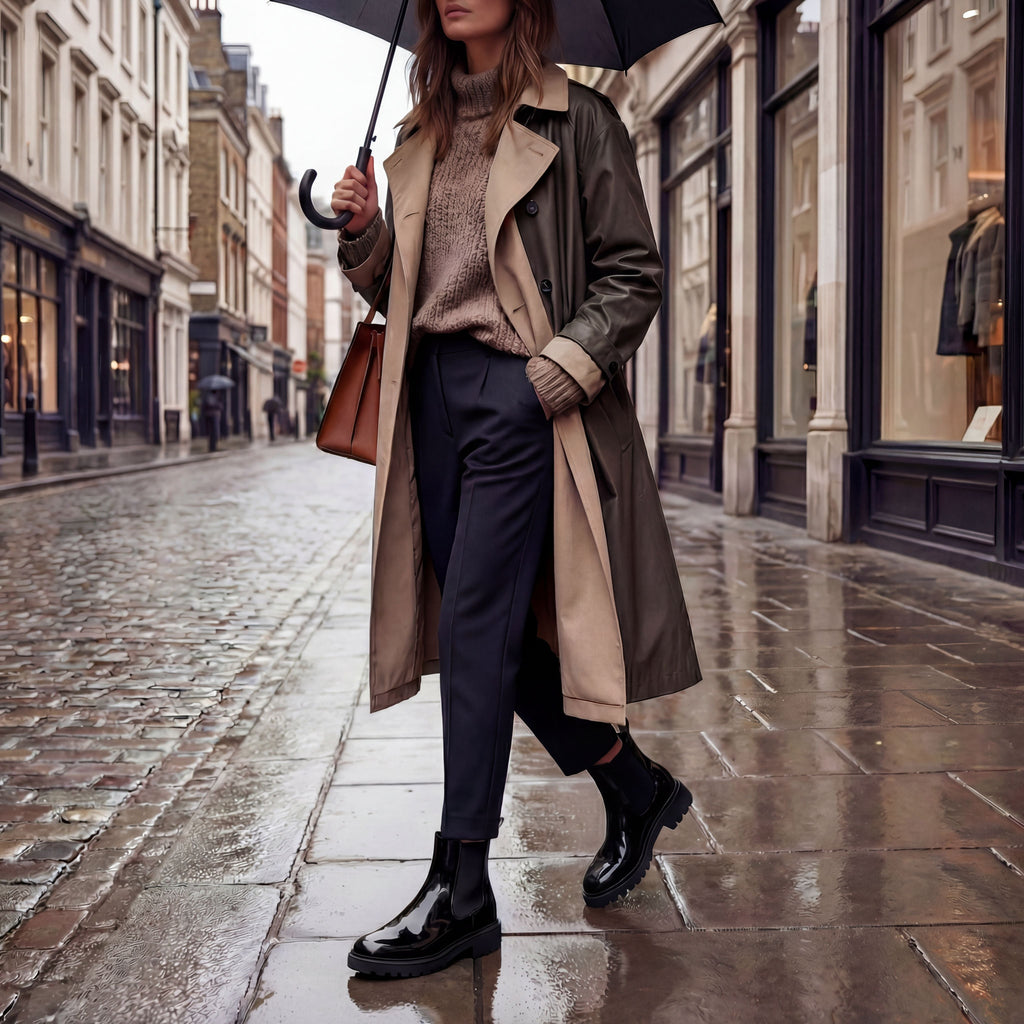
Custom Women's Boots for Fall: Choosing Between Two Black Chelsea Silhouettes
0 Comments







Is EW the Same as 4E? A Definitive Guide to Footwear Sizing
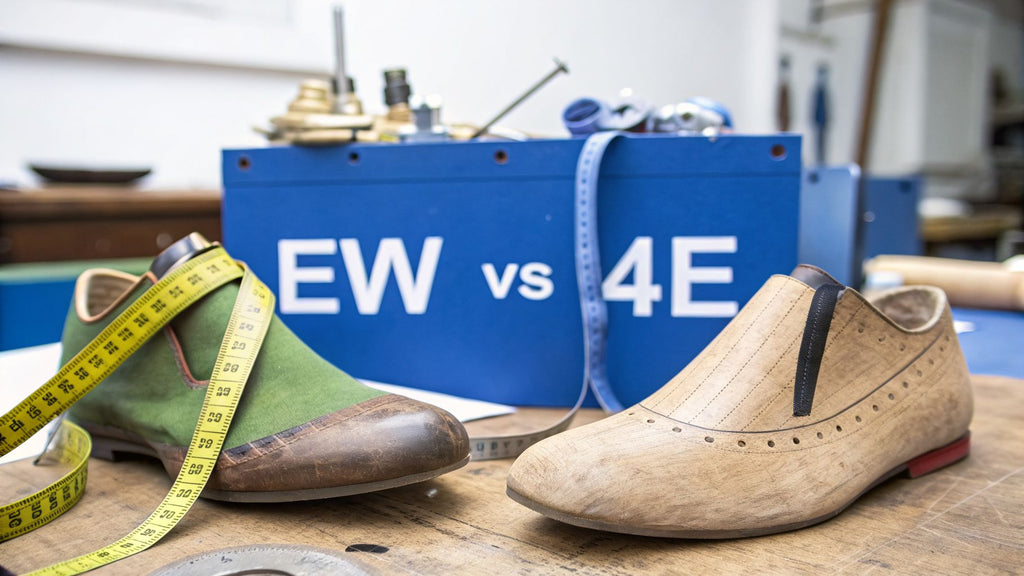
When you’re on the hunt for a shoe that actually fits, stumbling across terms like “EW” and “4E” can be more confusing than helpful. Let's cut right to the chase: yes, in the US sizing system, EW is the same as 4E. Both are meant to signify an "extra-wide" shoe for men, giving you a roomier fit than a standard 'D' or even a 'EE' width.
Decoding EW and 4E Shoe Widths

So, if they mean the same thing on paper, why does a 4E sneaker sometimes feel completely different from an EW dress shoe? The inconsistency comes down to how these terms are used. "EW" is simply an abbreviation for Extra Wide—an approachable, consumer-facing label. On the other hand, "4E" is a more technical term used by manufacturers during the crafting process.
This is where the real-world experience gets messy. The perceived fit isn't just about the width label; it's deeply influenced by the brand, the style of the shoe, and the last (the artisan's mold) it was built on.
This lack of a universal standard is one of the biggest frustrations in buying shoes off the rack. Even when you know your "size," finding a genuinely comfortable, high-quality fit often turns into an endless cycle of trying on and returning shoes.
Quick Comparison EW vs 4E Sizing
To help clear things up, here’s a simple table breaking down the relationship between these two common width designations.
| Attribute | EW (Extra Wide) | 4E (Quadruple E) |
|---|---|---|
| Meaning | An abbreviation for "Extra Wide" | A technical sizing designation |
| Primary Use | Consumer-facing marketing and branding | Manufacturing and technical specifications |
| Gender | Primarily used for men's shoe sizing | Primarily used for men's shoe sizing |
| US Equivalence | Directly equivalent to 4E in the US system | Directly equivalent to EW in the US system |
While the table confirms they are equivalent, it doesn’t tell the whole story of fit and feel.
The fundamental issue isn't the label itself, but how it's applied. A 4E athletic sneaker is built on a different mold, or 'last,' than an EW leather dress shoe, leading to a different fit experience despite having the same width designation.
This is exactly the problem that a personalized, bespoke approach solves. By moving past generic labels and focusing on your unique measurements, achieving a perfect fit is no longer a guessing game.
At Alexander Noel, we bypass the ambiguity of mass-market sizing entirely. We connect you directly with global artisans who craft footwear made specifically for your feet. This educational and bespoke process ensures that the fit, quality, and style you receive are never a compromise.
Understanding the Origins of Shoe Widths
To really grasp the difference between EW and 4E, it helps to take a quick trip back in time. Before the 20th century, all shoes were bespoke, crafted by a local cobbler. There was no universal system for widths, making a comfortable fit a matter of craftsmanship and luck, not a standard.
Things started to get more scientific with the invention of new measurement tools. The Brannock Device, introduced in the 1920s, was a huge leap forward. For the first time, retailers could consistently measure not just the length of a foot, but its width, too. This single invention laid the foundation for the sizing systems we use today.
The Rise of Modern Sizing
The real shift happened after World War II. As shoe manufacturing exploded, factories needed a simple, repeatable way to produce millions of consistent pairs. This demand gave birth to the letter-based and alphanumeric width systems that often cause confusion today.
This is where the two different labeling conventions came from:
- Letter-Based Labels (A, B, D, EE, EW): These were designed to be simple and clear for the average shopper. Seeing "EW" for Extra Wide on a box is intuitive and easy to understand.
- Alphanumeric Codes (2E, 3E, 4E): This was a more technical shorthand for manufacturers, providing precise, granular measurements for creating shoe lasts and managing production lines.
This dual-track development is why we're even having this conversation. The EW vs. 4E question goes back to post-war standardization efforts around 1948. It was then that measurement tools officially defined EW widths as being equivalent to the 4E technical spec, meaning a width over 3/16ths of an inch wider than a standard EE. This push for better, wider fits continues to shape the USD 94.1 billion luxury footwear market today, where custom and wide options are key.
Why Two Labels Converged
So, how did two different labels end up meaning the same thing? It’s pretty simple. "EW" became the go-to marketing term—the one printed on boxes and used in online descriptions. Meanwhile, "4E" remained the internal code used by designers and artisans to build the shoe. Over the years, both terms made their way into the public conversation, making it seem like they were two separate things when they were really just two sides of the same coin.
The coexistence of 'EW' and '4E' is a relic of footwear's industrial history—one term was for the customer, the other for the creator. Both aimed to solve the same problem: defining a specific extra-wide fit.
Understanding this history clears up a lot of the confusion around modern sizing charts. It's not that the labels are wrong; they just come from two different traditions that eventually merged. For a deeper dive into how footwear has evolved over centuries, you might be interested in our article on the origins of footwear in our world. This historical context sets the stage for a more detailed technical analysis of the measurements themselves.
Comparing EW and 4E Measurements in Detail
On paper, EW and 4E are often used interchangeably. But as anyone who has struggled to find a good fit knows, theory and reality can be two very different things. Let’s look at the numbers to see how they line up—and more importantly, why your real-world experience might be telling a different story.
So, to tackle the "is EW the same as 4E" question head-on, we need to get into the measurements. 'EW' simply stands for Extra Wide, and historically, it corresponds to a toe box width of about 4.4 inches for a men's size 10 shoe. This just so happens to be the exact same measurement standard for a '4E' width.
It's a simple conversion, but getting it right has a huge impact. One survey even found that 72% of people reported a perfect fit after finally switching to a properly sized 4E/EW shoe. It just goes to show how critical that extra space can be.
This data really brings home a crucial point: the labels might be the same, but how shoe companies execute that width can vary wildly from brand to brand.
EW vs 4E Width Measurements by Shoe Size (US Men's)
To make this crystal clear, here’s a breakdown of how the standard D width compares to the EW / 4E width across common US men's shoe sizes. As you can see, the measurements are identical for both EW and 4E designations.
| US Shoe Size | D (Medium) Width | EW / 4E Width |
|---|---|---|
| 8 | 3.9" (99mm) | 4.3" (109mm) |
| 9 | 4.0" (102mm) | 4.5" (114mm) |
| 10 | 4.2" (107mm) | 4.7" (119mm) |
| 11 | 4.4" (112mm) | 4.9" (124mm) |
| 12 | 4.5" (114mm) | 5.0" (127mm) |
| 13 | 4.7" (119mm) | 5.2" (132mm) |
The table confirms it: EW and 4E represent the same width measurement. The difference you feel doesn't come from the label, but from the artistry and construction of the shoe itself.
Why Fit Varies Between Brands
Ever tried on two pairs of shoes, both labeled '4E', and had them feel completely different? You’re not imagining things. This isn't an error; it's a direct result of how a shoe is designed and built from the ground up.
Several things are at play here:
- The Shoe's Last: Every single shoe is constructed around a "last." Think of it as a three-dimensional foot model that gives the shoe its final shape, volume, and overall feel. A last for a sleek Italian loafer will always be narrower and lower volume than one for a bulky running sneaker, even if the width at the ball of the foot is technically labeled '4E'.
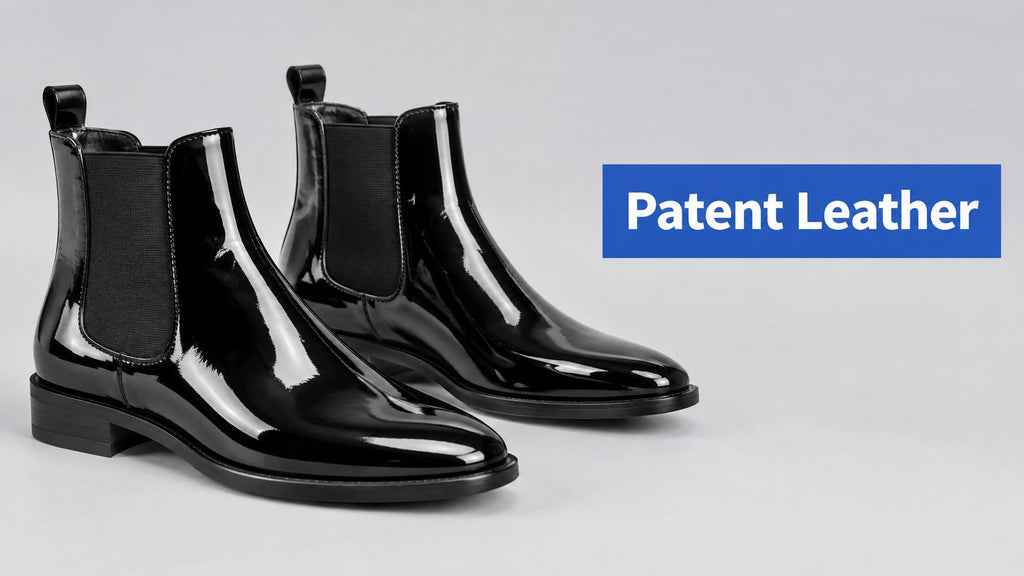
- Material Choices: The materials are just as important. A soft, unlined suede will give and stretch to your foot's shape in a way that rigid patent leather never could. Likewise, an elastic knit upper on a sneaker has far more flexibility than a structured leather boot.
- Construction Style: How a shoe is put together also dictates the fit. An athletic shoe is packed with padding and support structures that take up space. A simple, unlined dress shoe, crafted with traditional techniques, has a much different internal environment for your foot.
This infographic shows just how much the demand for better-fitting, wider shoes has grown since the Brannock Device first appeared back in 1948.

It’s clear that today’s customer is more aware and interested than ever in finding footwear that actually fits.
The label '4E' or 'EW' only tells you one dimension of a complex three-dimensional object. It's a single data point that ignores the shoe's internal volume, shape, and material behavior, which are the elements you actually feel.
This is the fundamental problem with buying shoes off the rack. When you rely only on a simple label, you're missing the artistry and craftsmanship that truly define how a shoe will fit your unique foot. For a deeper dive into how all these pieces fit together, take a look at our comprehensive shoe width sizing guide.
In the end, there's only one way to guarantee a perfect fit: using precise, individual measurements to craft a shoe for your foot. That principle is the very heart of the Alexander Noel custom experience.
Why the Right Shoe Width Is a Mark of True Style
Beyond the technical charts and manufacturing details, the question of shoe width gets to the heart of something more personal: how you carry yourself. A shoe that fits perfectly isn't just about avoiding pinched toes. It's the foundation for genuine style, long-term health, and the confidence you need to get through your day.
For any modern professional, a day is rarely spent sitting down. Whether it’s long hours in a boardroom or hustling through an airport for a business trip, your feet take the brunt of your ambition. Squeezing into shoes that are too narrow doesn't just cause a bit of discomfort—it leads to serious foot fatigue that can drain your energy and kill your focus.
The Impact of Proper Fit on Your Day
An ill-fitting shoe forces the bones and muscles in your feet into unnatural, cramped positions. This constant constriction is a recipe for common but painful issues like bunions, hammertoes, and nerve pain. Over time, these aren't just minor annoyances; they can throw off your posture, affect your gait, and impact your overall wellness.
Choosing the correct width, whether that ends up being an EW or a 4E, is a proactive step. You're not just buying a shoe; you're investing in your foot health. A proper fit lets your foot spread out and function as it should, giving you a stable, comfortable base to stand on throughout a demanding day. This is where the true value of accessible luxury really shines.
Style and Substance in Harmony
A well-fitting shoe is also a clear sign of a polished appearance. When your shoes are too tight, the leather bulges and stretches in all the wrong places. It creates a strained, sloppy look that immediately undermines an otherwise sharp outfit.
On the other hand, a shoe that fits your width perfectly holds its intended shape and elegance. The lines stay clean, the leather sits smoothly, and the whole look feels effortlessly sophisticated. This kind of attention to detail shows you’re someone who values quality and understands that true style is built from the ground up.
This principle is just as crucial for men's dress shoes as it is for women's heels. We're seeing a clear trend in the luxury footwear market toward prioritizing fit without giving up an inch on style. For women, especially those in elegant heels like our Cascabel Red stilettos, the right width is everything. In fact, a 2025 survey found that 37% of professional women aged 35-55 prefer 4E widths for all-day wear without pain.
And it’s not just for heels. In the U.S., 25% of executives now say that EW/4E sizing is an essential feature for their business travel footwear. This reinforces the need for accessible, well-fitting luxury options. You can read more about these trends in the luxury footwear market analysis from GMI.
Perfect sizing is not merely a feature; it's an essential investment in your daily comfort, long-term health, and personal presentation. It transforms footwear from a simple necessity into a cornerstone of your professional identity.
By embracing a fit that is truly yours, you're choosing to value both substance and style. It’s a decision that pays off in comfort and confidence, every single day.
How Alexander Noel Delivers Your Perfect Custom Fit

The constant confusion around shoe widths like EW and 4E highlights a fundamental problem with off-the-rack shoes. Trying to find your fit based on these inconsistent labels is often a gamble. At Alexander Noel, we remove the guesswork by stepping away from mass-market sizing altogether.
We replace that ambiguity with precision. Instead of forcing your foot into a standard-sized shoe, we build the shoe to fit your foot. It all starts with our at-home fitting system, a simple but highly accurate way to capture the unique dimensions of your feet—length, width, and overall shape. Once we have your specific measurements, the whole "is EW the same as 4E" question becomes completely unnecessary.
This personalized approach means that whether you need more room in the toe box, a snugger heel, or any other unique adjustment, your footwear is built specifically for you. You're not just buying a product; you're commissioning a piece of personal artistry.
From Precise Fit to Personalized Style
Getting the perfect fit is just the beginning. With your exact measurements secured, the real creative journey begins in our Design Lab, an interactive online studio where you become the designer. This is where your guaranteed fit meets your personal style.
Our Design Lab gives you control over every last detail. Here, you can explore and select from a curated library of premium materials sourced by our artisan partners across the globe.
- Select Your Leather: Choose from full-grain Italian calfskin, rich suedes, or even exotic textures to give your shoe its unique character.
- Customize Your Color: Work from a palette of classic blacks and browns or make a statement with bolder, more expressive hues.
- Refine the Details: You decide on every element, from the type of sole and welt stitching down to the color of the laces.
This process gives you a clear, high-definition preview of your design, so you know the final product will match your vision perfectly.
Crafting Your Vision into Reality
Once your design is complete, your unique specifications are sent directly to one of our master shoemakers. These are skilled craftsmen from the world’s most respected shoemaking regions in Spain, Portugal, and Italy, using techniques passed down for centuries. They meticulously handcraft each pair to your exact measurements and style choices.
By connecting you directly with world-class artisans and eliminating the retail markup, we make true bespoke luxury accessible. It’s a seamless blend of personalization, quality, and traditional craftsmanship.
This direct-to-you model not only guarantees a fit and finish you can't find on a shelf but also honors the heritage of fine shoemaking. You receive a shoe that is uniquely yours, from its physical dimensions to its design DNA.
To see how this process turns an idea into a tangible piece of luxury, you can learn more about how our Design Lab creates bespoke shoes in as little as 48 hours.
Common Shoe Sizing Questions Answered
Even when you know that EW and 4E are technically identical, practical questions always come up. The real-world nuances of how a shoe is built, what styles are available, and how to get a truly perfect fit can still feel confusing. Let's tackle some of the most common questions to clear up any lingering doubts.
Why Does My 4E Sneaker Fit Differently Than My EW Boot?
This is probably the most frequent question we hear, and it’s a great one. You’ve just learned that EW is the same as 4E on a sizing chart, yet you can feel a clear difference between two pairs of shoes. You're not imagining things. This perfectly illustrates why the shoe's construction and purpose matter far more than the label inside.
Here’s what’s really going on:
- Shoe Last and Volume: An athletic sneaker is built on a completely different mold, or "last," than a structured leather boot. Sneaker lasts are usually designed with more overall interior volume and a taller toe box to allow your foot to move and swell during activity. A boot's last, on the other hand, is often sleeker for a more refined profile.
- Material and Lining: Think about the materials. A sneaker’s upper is often a flexible, forgiving mesh with a soft, padded interior that stretches and adapts to your foot. A well-made boot, crafted from thick, structured leather, has very little give. This makes the internal space feel much more restrictive, even if the width measurement at the ball of the foot is identical.
- Intended Function: The shoe’s job dictates its fit. A sneaker is engineered for motion, impact, and flexibility. A dress boot is made for support, durability, and a formal silhouette.
The label '4E' or 'EW' only tells you the width at the widest part of your foot. It says nothing about the shoe's internal volume, the rigidity of its materials, or its overall shape—which are the factors that truly define how a shoe feels.
Ultimately, this common problem is the best argument for a custom-made solution. When we capture the complete three-dimensional profile of your foot, these inconsistencies between styles and brands become a non-issue.
Can I Find Women's Styles Like Stilettos in a 4E Width?
Absolutely—but you'll almost never find them in a standard retail store. The mass market has a huge blind spot when it comes to offering wider widths in more delicate or high-fashion women's styles, like stilettos, pumps, and elegant flats. This is a major gap that custom shoemakers like Alexander Noel are perfectly suited to fill.
Our direct-to-consumer model connects you directly with artisans who can build any style to your precise measurements. This means you are no longer limited by what a buyer for a big-box store thinks will sell. You can design a pair of stunning stilettos, classic heels, or chic flats that deliver the 4E width you need without sacrificing an ounce of style. This is the beauty of separating a shoe's design from its fit. With this in mind, you can browse collections of Elegant Classic Shoes and start imagining what a perfect fit truly feels like.
How Does an At-Home Fitting System Work?
An at-home fitting system is a modern, incredibly convenient way to capture your exact foot measurements without ever needing to visit a specialist. It’s a simple but highly effective process that bridges the gap between your unique feet and our global artisans.
Our system makes it easy to get every detail right, and you can learn more in our article about how to measure your shoe size at home.
The measurements we gather give our craftsmen the precise data needed to build a shoe last that is a true three-dimensional model of your foot. This method is far more reliable than just trusting generic size labels, as it accounts for all the subtle asymmetries and unique contours that make your feet yours alone. It’s the key to unlocking a level of comfort and precision that off-the-rack footwear can never hope to match.
At Alexander Noel, we believe the perfect shoe begins with a perfect fit. Our custom, handcrafted approach eliminates the guesswork of standard sizing so you can focus on what matters—designing a shoe that is uniquely yours. Start creating your ideal pair today.
Related post
12
Sep
12
Sep
12
Sep
29
Aug
