

RECENT POSTS
29.August.2026
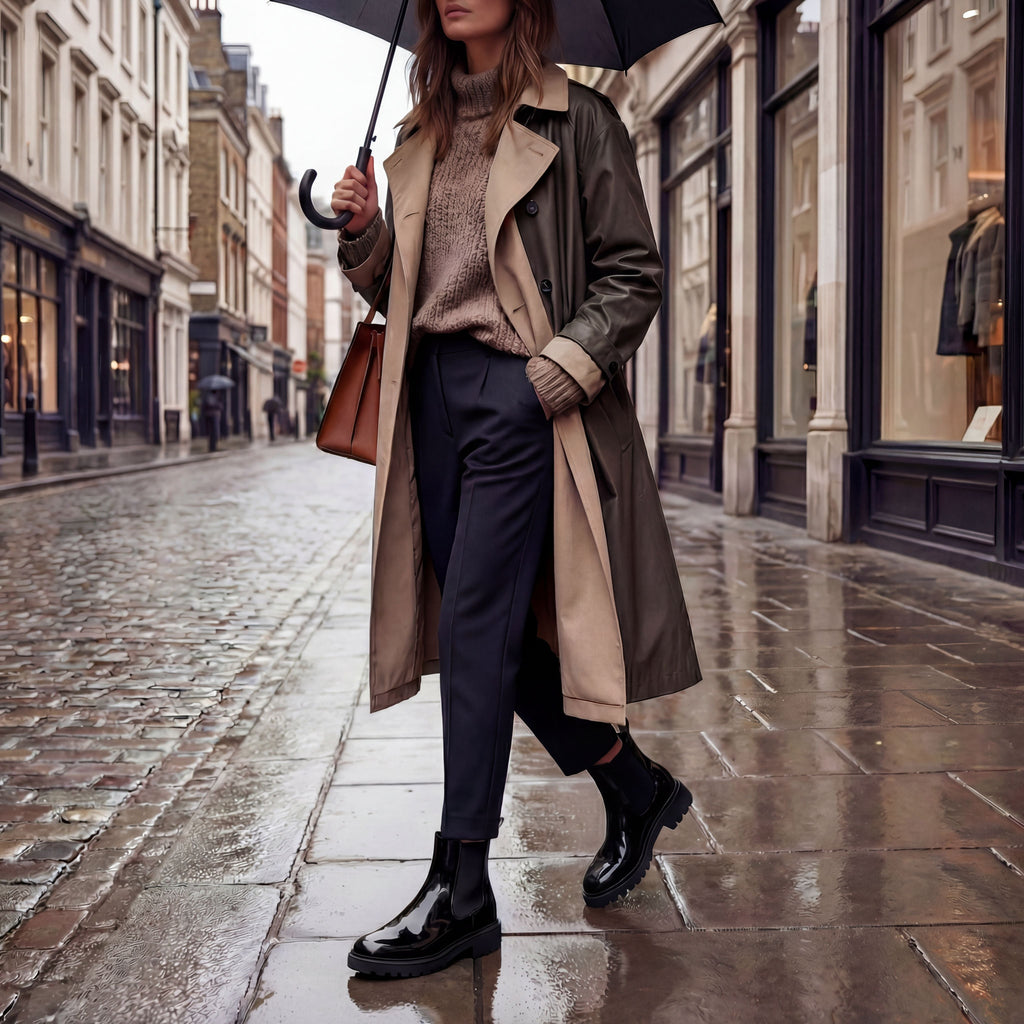
Custom Women's Boots for Fall: Choosing Between Two Black Chelsea Silhouettes
0 Comments
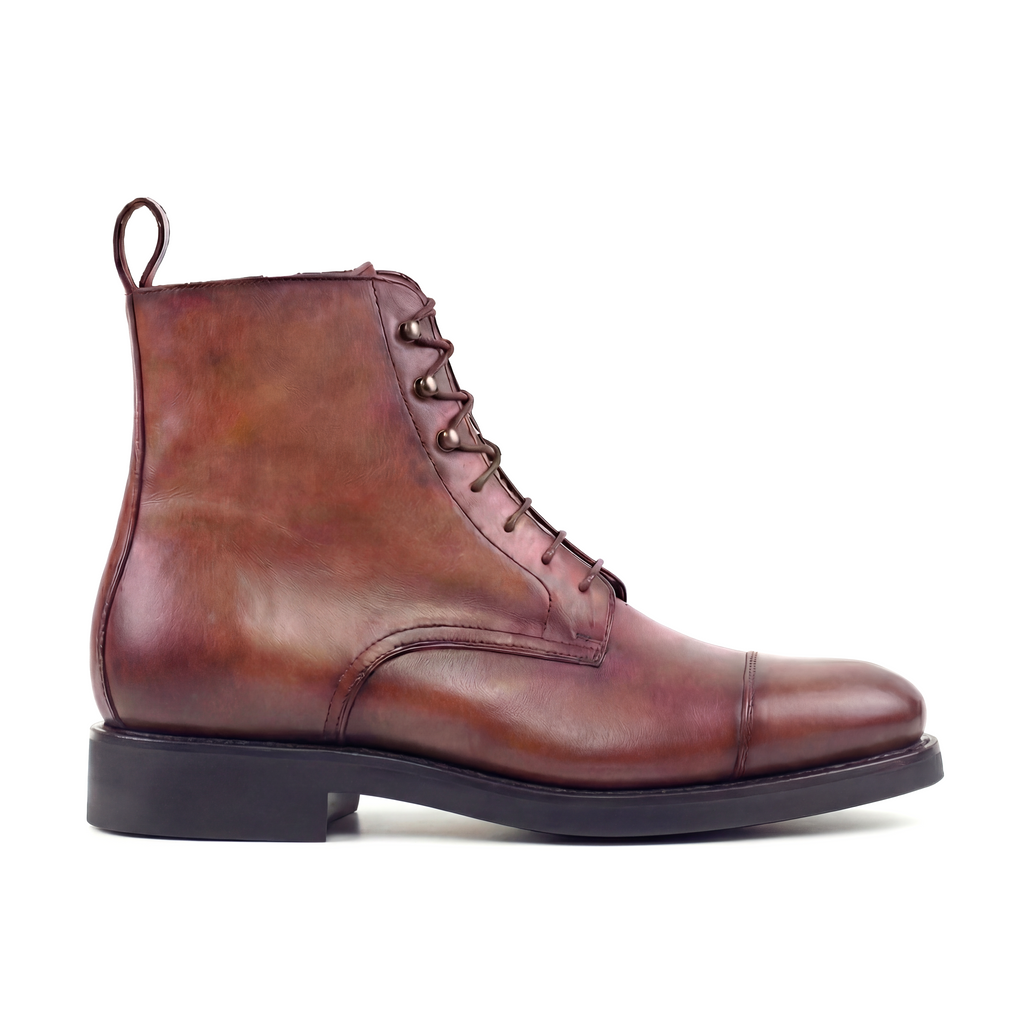
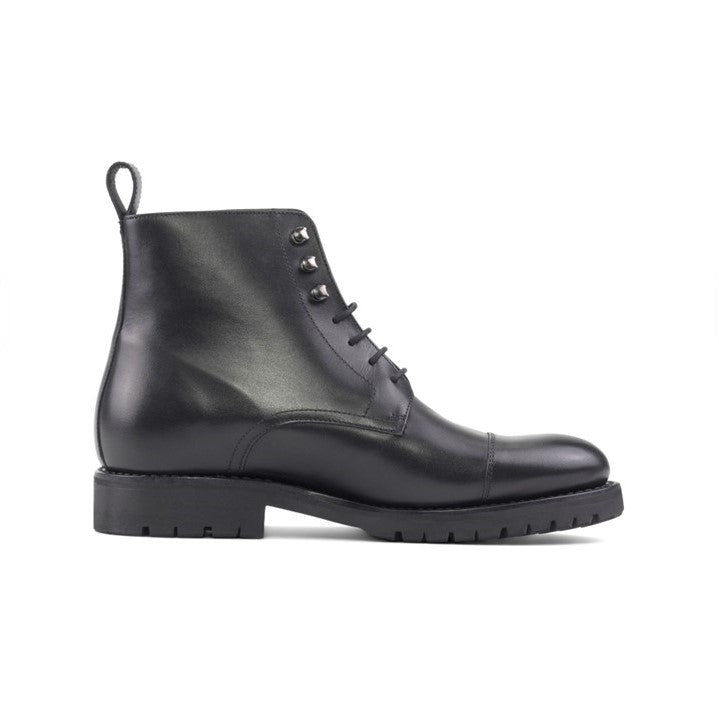


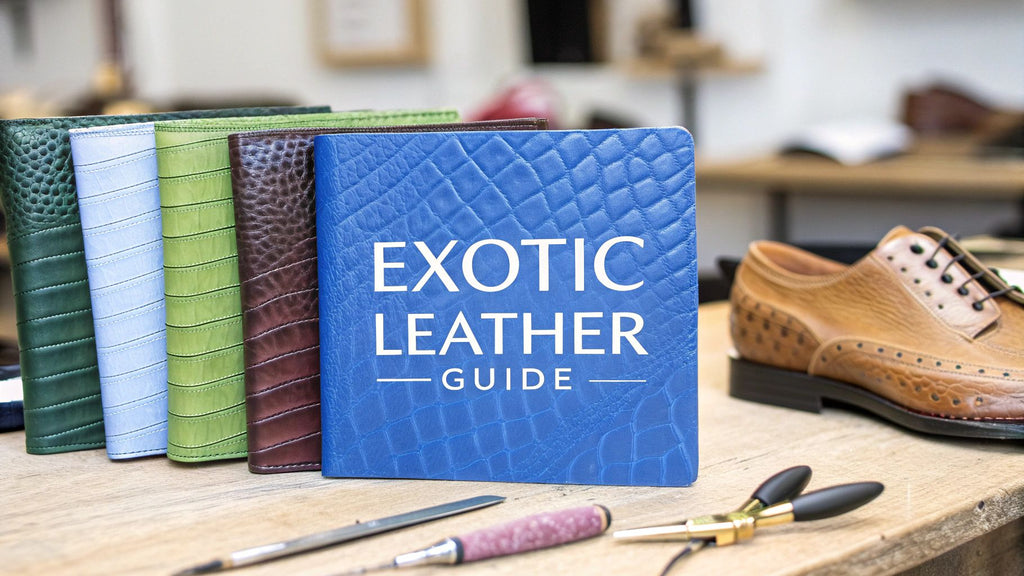
A Guide to Exotic Leathers: Ostrich, Alligator & Beyond for Custom Shoes
Welcome to the world of exotic leathers—a place where footwear transcends function and becomes a true statement piece. If you've ever been captivated by the unique texture of ostrich or the bold pattern of alligator, this guide is your personal consultation. We're here to pull back the curtain on these incredible materials.
Think of this as an educational journey into what makes each leather a hallmark of distinction, from its signature look and feel to its surprising durability. By the end, you'll have a much deeper appreciation for the blend of traditional craftsmanship and modern innovation that goes into a truly one-of-a-kind shoe.
Why Choose Exotic Leathers for Custom Footwear
Opting for an exotic leather like ostrich, alligator, or lizard isn't just a material choice; it's a declaration of individuality and a nod to exceptional craftsmanship. Unlike standard cowhide, every single exotic skin has a pattern and texture that's entirely its own. This means no two pairs of shoes will ever be identical. That inherent uniqueness is the very soul of bespoke luxury.
For anyone who values true personalization—which is the heart of the Alexander Noel experience—understanding these materials is the first step. It empowers you to make design choices that truly reflect your style. Whether you're picturing a pair of commanding alligator boots or some refined ostrich loafers in our Design Lab, it all starts with product education.
The Appeal of Distinctive Textures
Much of the allure of exotic leathers comes down to how they look and feel. The raised quill pattern of ostrich leather, for instance, offers a soft, pliable feel that’s instantly recognizable. On the other hand, the bold, symmetrical scales of an alligator hide project undeniable strength and structure.
These aren't just cosmetic details. These characteristics directly influence a shoe's comfort, how it flexes with your foot, and ultimately, how long it will last.
The best exotic leather for your footwear depends entirely on your lifestyle, your personal taste, and how you plan to wear them. A tough, scuff-resistant hide is perfect for a daily-wear boot, while a skin with a high shine and elegant pattern is made for more formal occasions.
This chart gives you a quick visual breakdown of some of the most popular choices in the world of exotics.
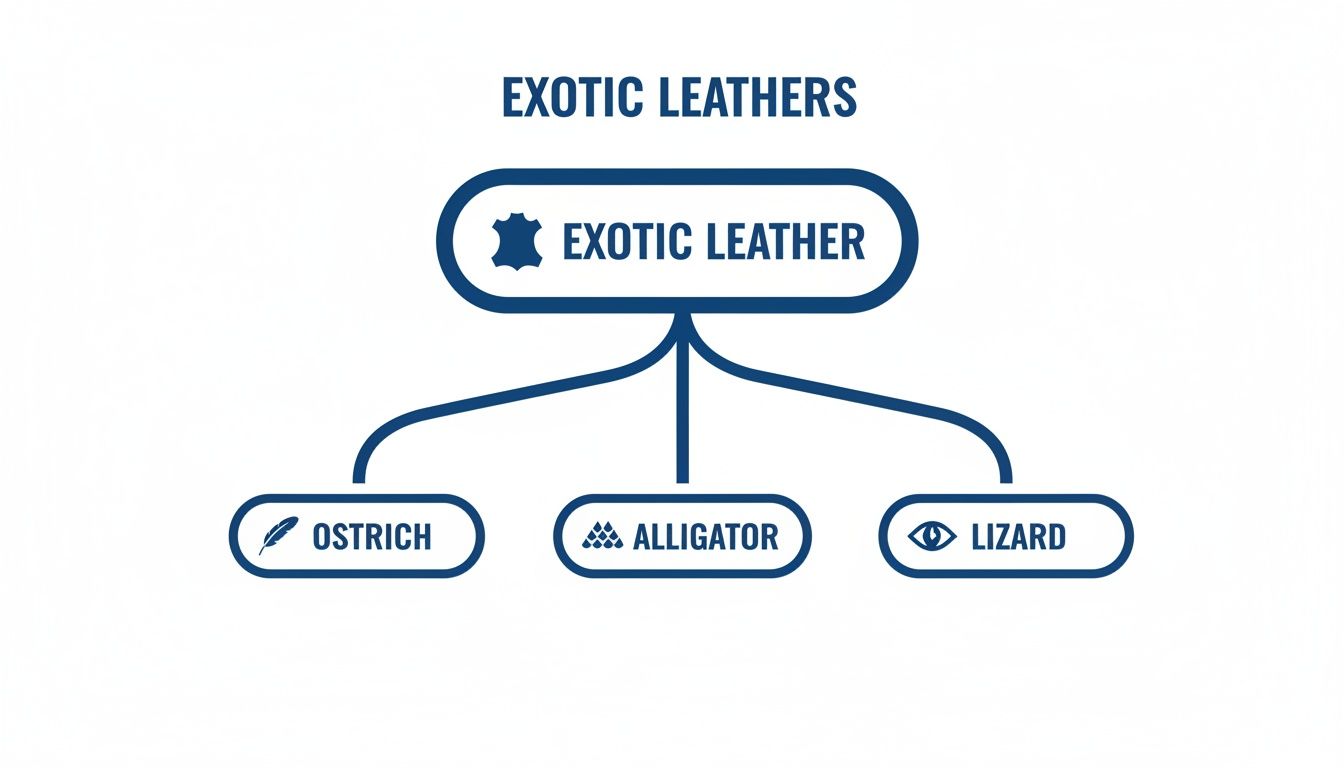
As you can see, each leather offers a completely different starting point for your custom design. Before we get into the specifics of each one, it helps to understand the full range of materials we work with. You can get a great overview by checking out the many leathers and fabrics of Alexander Noel, which will give you a solid foundation for the creative process.
Quick Comparison of Popular Exotic Leathers
To help you get a feel for the options, here's a quick summary of the key characteristics for the most sought-after exotic leathers in custom footwear.
| Leather Type | Key Feature | Best For (Footwear Style) | Durability |
|---|---|---|---|
| Alligator | Large, symmetrical square scales | Dress shoes, boots, statement loafers | Very high; extremely tough and resistant to scuffs. |
| Ostrich | Soft feel with distinctive "quill" bumps | Loafers, dress boots, comfortable dress shoes | High; pliable and surprisingly resistant to scratches. |
| Lizard | Small, glossy, and uniform scales | Sleek dress shoes, formal loafers, elegant boots | Moderate; requires more care to prevent scales from drying. |
| Python | Large, intricate, and flexible scales | Fashion-forward boots, unique loafers | Moderate; scales can lift if not properly maintained. |
| Stingray | Beaded, pebbly texture with a unique "crown" | Formal shoes, durable boots, unique accents | Exceptional; one of the most abrasion-resistant leathers. |
This table is just a starting point, of course. The real magic happens when you start imagining these textures and patterns on a shoe style that is uniquely you.
Discovering The Most Coveted Exotic Leathers
Stepping into the world of exotic leathers is a bit like entering a gallery of natural art. Each hide has a story to tell through its unique texture, pattern, and feel, bringing a distinct personality to your custom footwear. We'll walk through the characteristics that make these materials the absolute pinnacle of luxury, starting with some of the most sought-after options in the Alexander Noel Design Lab.
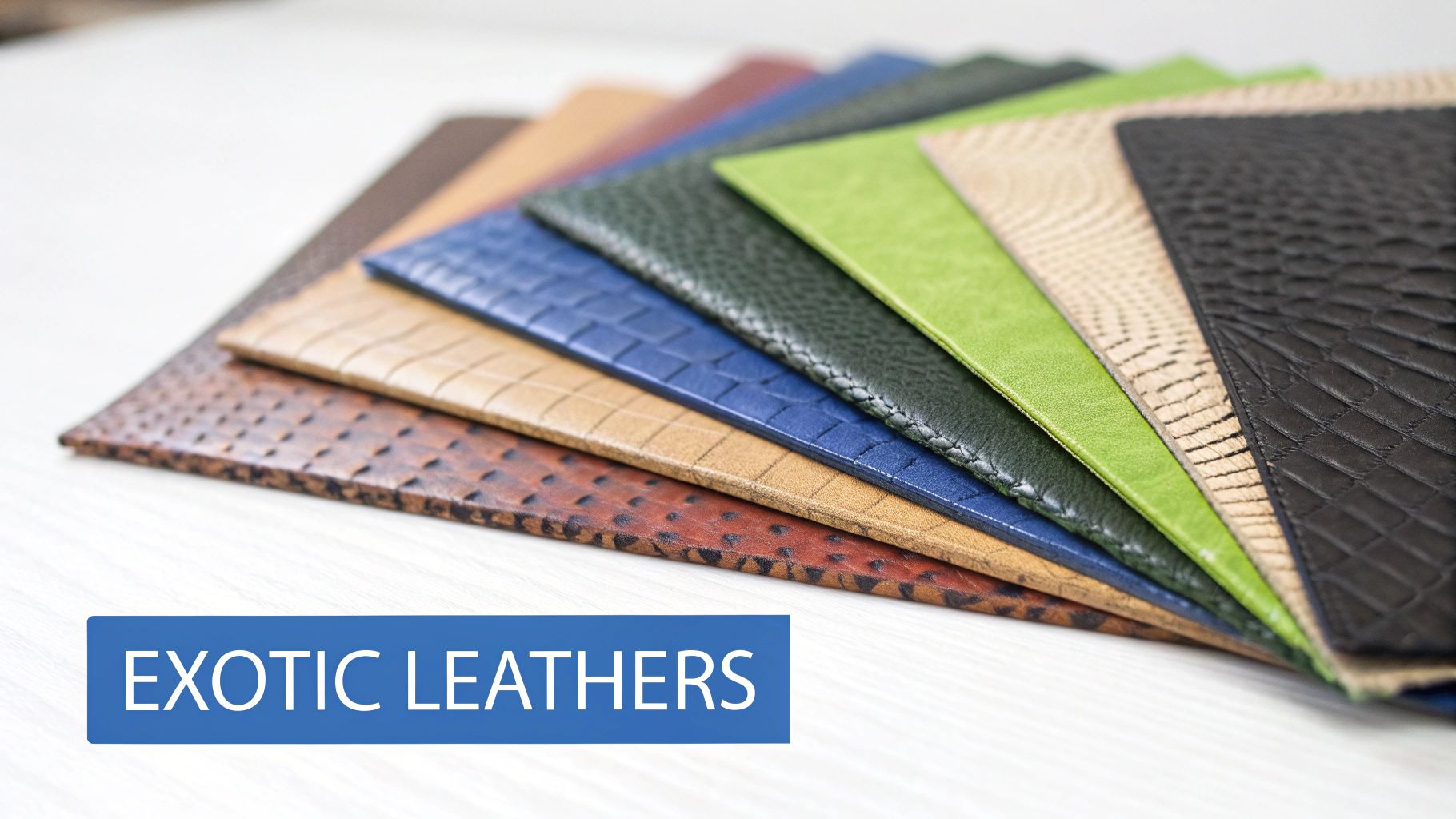
Think of this as a look inside our artisan's toolkit. It’s the foundational knowledge you need to design with confidence, understanding not just how a leather looks, but how it will live and breathe as a bespoke shoe.
Ostrich The Epitome of Softness and Durability
You know ostrich leather the moment you see it. That iconic full quill pattern—the raised bumps left behind where the feathers once were—is an unmistakable hallmark of luxury. But its appeal runs much deeper than just looks. Ostrich is unbelievably soft and pliable, making it one of the most comfortable exotic leathers right out of the box.
Despite that supple feel, it's also incredibly tough. The leather is full of natural oils that help it resist cracking and drying out, promising a long, beautiful life for your shoes. This blend of comfort and resilience makes it a fantastic all-arounder, perfect for anything from a sharp dress boot to a laid-back, elegant loafer.
Ostrich is also the most traded exotic leather by a wide margin. South Africa is the global epicenter, home to at least 70% of the world's ostriches and responsible for exporting 90% of all ostrich products. With anywhere from 200,000 to 600,000 skins produced annually, its scale is massive. You can learn more about this unique material's global market by checking out the world of ostrich leather on LeatherMag.com.
Alligator and Crocodile The Apex Predators of Luxury
Often spoken of in the same breath, alligator and crocodile leathers are the very definition of prestige in footwear. With their bold, glossy scales and commanding presence, these hides are synonymous with power and refinement. They are incredibly tough and resistant to scuffs and wear, making any pair a true investment piece.
While they look similar, there are subtle ways to tell them apart. American alligator, the gold standard, usually has softer, more uniform rectangular scales on the belly. But the real giveaway is the umbilical scar—a small, web-like pattern found only on genuine alligator. Artisans often make this unique mark a centerpiece of the design.
The skill required to work with alligator or crocodile is immense. Our global artisan partners must meticulously match the scale patterns across different pieces of the shoe to create a seamless, symmetrical finish—a true mark of master craftsmanship.
Lizard and Python Sleek and Intricate Patterns
For those who appreciate a finer, more detailed texture, lizard and python are wonderfully elegant choices. These leathers are prized for their intricate scale patterns that bring a sleek, polished look to any shoe.
- Lizard Leather: Known for its small, uniform, and glossy scales. It’s a thinner, more delicate leather that’s perfect for formal dress shoes and elegant loafers where you want a sophisticated, non-bulky profile.
- Python Leather: Features larger, more dramatic scales with beautiful, flowing patterns. Its natural flexibility makes it a favorite for fashion-forward boots and statement pieces where the design can really shine.
These reptilian leathers are stunning, but they do require a bit more attention than their tougher cousins to keep the scales from drying out or lifting. With the right care, however, they will keep their striking appearance for years.
Stingray The Indestructible Gem of The Sea
Stingray might just be the most unique and durable material in our entire collection. Its surface is covered in tiny, bead-like calcium pearls that feel like fine caviar to the touch. This stuff is exceptionally tough—in fact, it's one of the most abrasion and puncture-resistant leathers on the planet.
The focal point of every stingray hide is the "crown" or "eye," a cluster of larger, whitish pearls marking where the dorsal fin was. This natural medallion is often used as a centerpiece in designs, adding an unmistakable touch of rarity. Its incredible toughness makes it perfect for shoes that need to last a lifetime without sacrificing a one-of-a-kind, luxurious look.
While we're focused on reptilian and avian leathers here, another material known for its durability and beautiful aging is shell cordovan. You can find out more in our guide where Alexander Noel introduces Shell Cordovan, another premium option we love for custom footwear.
Understanding Ethical Sourcing and CITES Certification
In the world of approachable luxury, true value comes from more than just beautiful materials. It's rooted in responsibility. When you invest in a pair of bespoke alligator boots or ostrich loafers, you're not just buying a product; you're supporting a global chain of artisans and suppliers. Making sure this entire chain operates ethically and sustainably is a non-negotiable part of modern craftsmanship.
This is where global standards come into play, and the most important one is CITES—the Convention on International Trade in Endangered Species of Wild Fauna and Flora. Think of it as a global passport for exotic leathers. It’s the only way to guarantee every hide is sourced legally and doesn't threaten the survival of a species.
CITES is an international agreement between governments, providing the highest level of assurance that these precious materials are traded responsibly. When a leather product is CITES-certified, it comes with a permit that tracks its entire journey, from its origin to the final creation. This gives you complete transparency and, more importantly, peace of mind.
Farm-Raised Versus Wild-Caught Leathers
The conversation around ethical sourcing often boils down to one key question: are the leathers from farm-raised or wild-caught animals? Both have a role in a well-regulated market, and understanding the difference helps clarify their real-world impact.
-
Farm-Raised Leathers: The vast majority of high-grade exotic leathers—especially alligator and crocodile—come from controlled farms. These operations are carefully managed to ensure a consistent supply and predictable quality, which is absolutely crucial for perfectly matching the patterns in bespoke footwear. More importantly, these farms often directly support conservation by reducing pressure on wild populations.
-
Wild-Caught Leathers: Some leathers are still sourced from the wild, but only under strict CITES quotas. Wildlife authorities manage these programs to maintain healthy, balanced ecosystems. By giving local communities a legal, economic stake in a species' survival, this regulated trade becomes a powerful tool against illegal poaching.
At Alexander Noel, our commitment to ethical practices is unwavering. We exclusively partner with global artisans and tanneries that strictly adhere to CITES regulations. This ensures that every material used in your custom footwear is sourced with integrity and a deep respect for nature.
Why Sourcing Matters for Quality and Longevity
Ethical sourcing isn't just about conservation; it's also directly tied to the quality of the shoe on your foot. Well-managed farms produce hides with far fewer blemishes, scars, and imperfections, giving our artisans a cleaner canvas to work with.
This superior material quality allows for more precise, detailed craftsmanship, resulting in a more beautiful and durable shoe. It’s a commitment to quality that starts at the source and carries through every single step of production.
By ensuring our materials meet the highest ethical and quality benchmarks, we can confidently craft footwear that not only looks exceptional but is truly built to last. For a deeper dive into how this philosophy shapes our work, you can review our full process in our article on Alexander Noel's sourcing, production, and quality assurance. This knowledge empowers you to choose consciously, knowing your bespoke creation is both a work of art and a product of responsible luxury.
The True Investment Value of Exotic Leather
When you commission a pair of bespoke exotic leather shoes, you're doing more than just buying footwear. You're making a real investment in masterful craftsmanship, style that lasts, and a level of quality you just don't find off the shelf. But what really justifies the price? It all comes down to a mix of rarity, the painstaking production process, and the master-level skill needed every step of the way.
Understanding these factors helps pull back the curtain on the world of luxury. You start to see the purchase not as an expense, but as acquiring a piece of wearable art. The journey from a raw, precious hide to a perfectly finished shoe is a long and demanding one, built on expertise that's been passed down through generations.
The Economics of Scarcity and Skill
The biggest factor driving the value of exotic leathers is simple: scarcity. Unlike standard cowhide, materials like alligator, ostrich, or stingray are just not as available. This limited supply, which is tightly controlled by ethical and legal frameworks like CITES, naturally makes them more valuable. Each hide is also smaller, meaning our artisans have to be incredibly precise to avoid any waste.
On top of that, the tanning process for these leathers is far more complex and takes much longer than it does for traditional materials. Every single skin type needs its own specialized formula and handling to preserve its unique texture—whether it’s the famous quill pattern on an ostrich hide or the glossy scales of a lizard.
The real cost of an exotic leather shoe isn't just the material. It's the countless hours of specialized labor. It's the artisan's eye for matching patterns perfectly, the steady hand for flawless stitching, and the strength to shape a challenging material into a masterpiece of comfort and durability.
This is a process that simply can't be rushed or automated. It demands a human touch and an artist's vision, and that's a huge part of your investment.
Durability as a Return on Investment
Beyond their striking looks and rarity, exotic leathers give you a real return on your investment through their incredible lifespan. When you take proper care of them, many of these materials will easily outlast conventional leather, making them a smarter, more sustainable choice over time.
- Alligator and Crocodile: These hides are incredibly tough and resist scuffs and scrapes, which is perfect for dress shoes and boots that you'll wear for years. Their dense fiber structure helps them keep their shape and shine for decades.
- Ostrich: Ostrich leather is naturally full of oils, so it resists cracking and drying out. This built-in advantage gives it a remarkable lifespan, often lasting up to three years or more even with regular wear. For comparison, standard calfskin often only lasts one to two years.
- Stingray: As one of the toughest, most abrasion-resistant leathers you can find, stingray is nearly indestructible. Its unique, pebbled surface can handle immense wear and tear while still looking incredible.
Investing in a shoe made from these materials means you’re getting something that can be worn, enjoyed, and even passed down—not just replaced.
The Alexander Noel Advantage: Direct Artisan Partnership
This is where Alexander Noel's direct-to-consumer model really makes a difference. We cut out the traditional retail markups—which often double or even triple the cost of luxury goods—to make this level of quality more accessible. You're investing directly in the material and the artisan's skill, not in the high costs of a physical storefront.
Our approach is especially important in today's market. The global exotic leather sector is a booming part of the luxury world. Valued at $928.74 million in 2025, it's projected to climb to an incredible $1.719 billion by 2034, growing at a strong 7.08% each year. This growth is all about the rising demand for unique, bespoke items. You can learn more about this trend and what it means for luxury with these insights on the exotic leather market.
With our model, you can be sure that as the value of these materials grows, your investment stays focused on real quality and craftsmanship. We're making true bespoke luxury an attainable reality.
Caring For Your Bespoke Exotic Leather Footwear
When you commission a pair of custom exotic leather shoes, you're not just buying footwear; you're investing in a piece of wearable art designed to last a lifetime. Making sure they age as gracefully as they were made is all down to proper care. A solid maintenance routine is what protects the leather's unique character and keeps your shoes looking incredible for years to come.
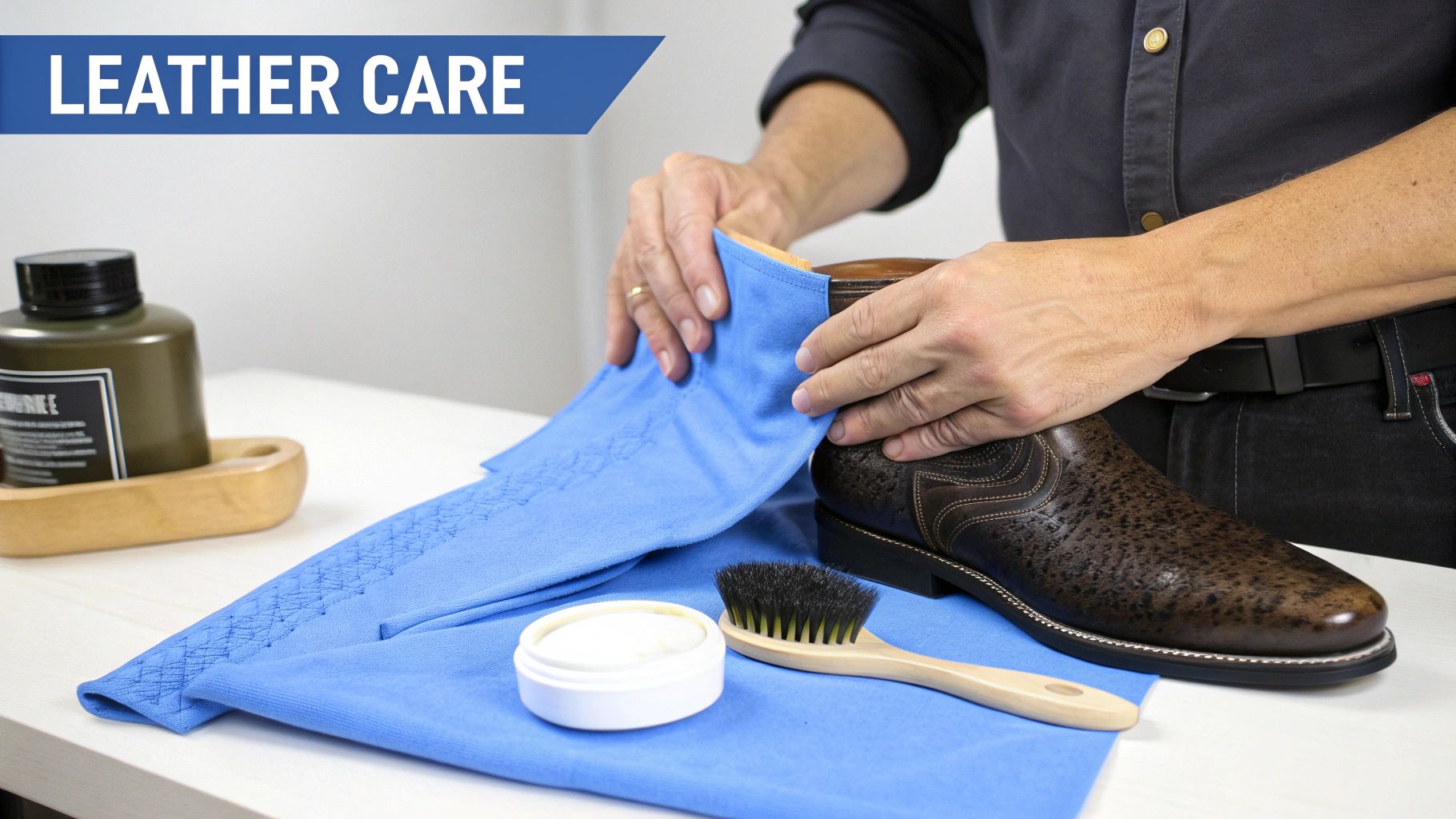
Unlike your standard calfskin, every exotic hide has its own set of rules. You can't just use a one-size-fits-all approach here. To truly maintain the integrity of these remarkable materials, you need to learn the right way to clean, condition, and store them.
General Care and Cleaning Principles
Before we get into the specifics for each type of leather, there are a few universal ground rules. Think of these as the foundation of any good shoe care regimen—they'll protect your investment from everyday enemies like dust and moisture.
Get in the habit of giving your shoes a quick wipe-down with a soft, dry microfiber cloth after you wear them. It’s a simple step, but it removes the surface dust that can slowly grind away at the finish. If you need a bit more cleaning power, a lightly damp cloth will do the trick, but always let the leather air dry naturally. Never place them near a heater or in direct sunlight.
Storage is just as important as cleaning. Always, and I mean always, use high-quality cedar shoe trees. They are non-negotiable for helping your shoes keep their shape, wicking away moisture, and smoothing out creases.
Speaking of creases, they're a natural part of wearing shoes, but managing them is key to keeping your bespoke pair looking sharp. For some great general tips, check out a material-expert's guide to removing creases from leather shoes.
Tailored Tips For Specific Leathers
Now for the details. Each exotic material in your collection demands a slightly different touch. Using the wrong product or technique can do some serious damage, so it's vital to know what you're working with.
Here are a few practical tips for the most common exotics you'll find.
-
Ostrich Leather: Those signature quill marks are beautiful, but they can trap dust. Grab a very soft-bristled brush and gently clean around the bumps before wiping down the rest of the shoe. Ostrich leather is naturally oily and supple, so you won't need to condition it as often as other types.
-
Alligator and Crocodile: The golden rule with these reptile skins is to always wipe with the grain of the scales, not against it. This prevents them from lifting or snagging. You'll want to use a conditioner made specifically for reptile leathers to keep the skin from drying out and to maintain that signature gloss.
-
Lizard and Python: Just like their larger reptile cousins, these delicate skins need a gentle hand. A light touch with a damp cloth is usually all you need for cleaning. Regular conditioning, however, is essential. It’s what keeps those fine scales from becoming brittle and starting to flake.
-
Stingray: This is one of the toughest leathers on the planet and, luckily, pretty low-maintenance. A simple wipe-down is often enough to keep it looking great. Steer clear of heavy creams or waxes, as they can fill in and dull its unique, pebbled texture.
To do the job right, you need the right tools. We've put together a guide on what you'll need; we highly recommend exploring our post on assembling the perfect leather shoe care kit. Stick to these simple guidelines, and your bespoke footwear will remain as stunning as the day our artisans finished them.
Bringing Your Vision to Life in The Design Lab
This is where the real fun begins. You've learned about the different exotic leathers, their unique personalities, and what makes each one special. Now, it's time to take that knowledge and turn it into something real in the Alexander Noel Design Lab.
Think of our Design Lab as your personal digital workshop. It’s where your ideas become a blueprint for a one-of-a-kind pair of shoes, ready to be brought to life by our skilled artisan partners across the globe. Every single detail, from the exact hide down to the color of the thread in the stitching, is yours to command.
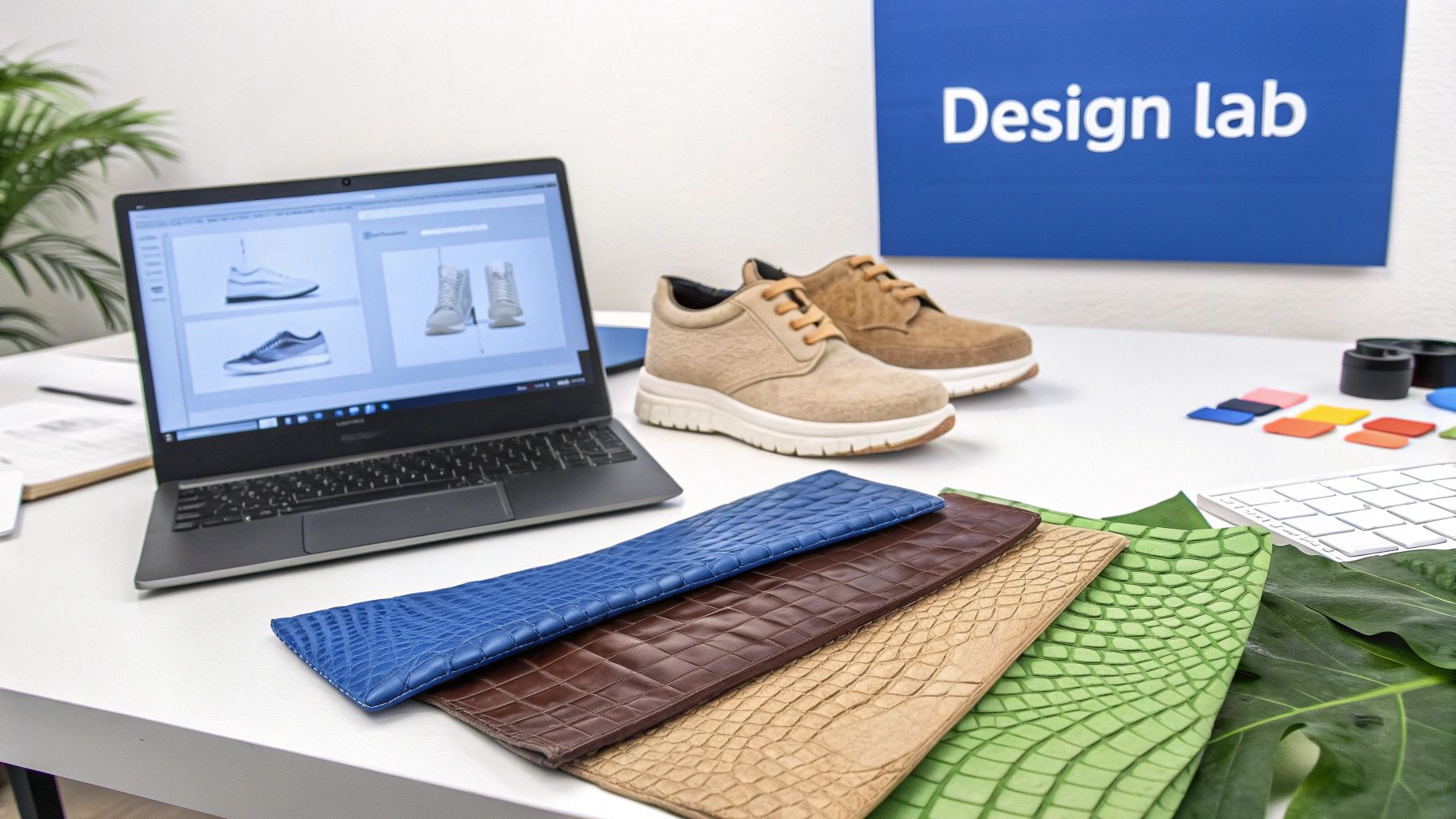
This isn't just about picking out materials from a catalog. It's a genuine collaboration. You bring your personal style, and we bring generations of master craftsmanship. The result is something truly unique, blending timeless techniques with your modern vision.
Matching The Leather to The Shoe Style
The first, and maybe most exciting, decision you'll make is pairing the perfect exotic leather with your chosen shoe silhouette. Every material has a different character, and getting this match right is the key to an incredible design. Certain leathers just work better for certain styles, providing the right mix of structure, feel, and visual impact.
Here are a few classic combinations to get you started:
- Alligator for a Power Dress Shoe: There's no mistaking the bold, symmetrical scales of alligator. It just screams structure and authority, making it the perfect choice for a powerful Oxford or a commanding dress boot built for the boardroom.
- Ostrich for a Sophisticated Boot or Sneaker: Ostrich is loved for being incredibly soft and supple. That flexibility makes it fantastic for footwear that needs to move with you, like a refined Chelsea boot or even a high-end sneaker that bridges the gap between casual and luxury.
- Lizard for an Elegant Loafer: The fine, glossy scales of lizard skin give off a sleek, polished vibe. It’s a brilliant match for a formal loafer or any streamlined dress shoe where you want subtle texture without adding bulk. It’s pure refinement.
Your design isn't just a shoe; it's a statement. Consider how the leather's natural pattern will interact with the shoe's lines. The large, open vamp of a wholecut shoe, for instance, provides the perfect canvas to showcase the uninterrupted beauty of a full-quill ostrich hide.
Personalizing Every Detail
Once you’ve locked in your primary material, the real customization begins. The Design Lab puts you in the driver's seat, letting you dial in every last element to make sure the final product is a true reflection of you.
This is your chance to play with color, texture, and all the finishing touches that set your pair apart:
- Color and Finish: Will you go for a classic, high-gloss black alligator or a more modern matte navy ostrich? The choice is yours.
- Sole Selection: A chunky commando sole can give your design a rugged, contemporary edge. A traditional leather sole, on the other hand, keeps things timeless and formal.
- Hardware and Accents: Select the finish for your buckles, add a personal monogram on the heel, or even pick a contrasting leather for a subtle pop of character.
Our artisans know that creating flawless bespoke footwear, especially with tricky materials, means using the right tools for the job. Achieving that perfect, durable stitch often requires things like specialized industrial machine needles for leather to ensure every detail is just right.
The market for these premium materials can be wild. Ostrich leather, for instance, has swung from a high of $26 per square foot down to $18 when supply was high. Today, the best grades with a perfect crown quill pattern can fetch $42 per square foot in Europe—a 110% jump that shows just how rare it is. Because of our direct-to-consumer model, we can absorb these market shifts and make sure you still get incredible value.
Your Questions Answered
Diving into the world of exotic leathers can bring up a few questions. It’s a specialized area, after all. Here are some quick, clear answers to the most common things people ask, drawing from the key ideas we've covered.
Which Exotic Leather Is The Most Durable For Shoes?
While just about every exotic leather is impressively tough, stingray is legendary for being one of the most scratch-resistant materials on the planet. Its beaded, armor-like surface is almost impossible to scuff, making it an incredible choice for shoes that are meant to be worn, not just admired.
If you're looking for an amazing blend of toughness and day-one comfort, ostrich is right up there. It's exceptionally durable but also remarkably soft and flexible, which is why it's a go-to for boots and dress shoes you plan on wearing regularly.
How Can I Be Sure My Exotic Leather Is Ethically Sourced?
The gold standard here is to look for CITES certification. Think of CITES as a passport for the leather; it's a global agreement that tracks the hide from a verified, sustainable source all the way to the finished product. This ensures that the trade doesn't threaten the survival of the species.
At Alexander Noel, we are uncompromising on this. We only work with artisans and tanneries who strictly follow these international regulations. This commitment ensures every piece of exotic leather we offer is sourced responsibly and legally, so you can wear your custom shoes with complete confidence.
Can I Combine Different Exotic Leathers On One Shoe?
Absolutely! This is where the real fun begins. Our Design Lab was built for exactly this kind of creativity, letting you mix and match materials to create something no one else has.
Picture a classic Oxford with a rich alligator body, but with subtle, soft ostrich accents on the tongue and heel. Our 3D designer lets you see these ideas come to life in real-time, so you know exactly how it will look before our artisans even touch the leather. This hands-on personalization is what the Alexander Noel experience is all about—putting you in the designer's seat.
Ready to craft a masterpiece that’s entirely your own? At Alexander Noel, our interactive Design Lab puts the power of bespoke shoemaking right at your fingertips. Explore our collection of responsibly sourced exotic leathers and start building the custom shoes you’ve always imagined.
Begin your design journey at https://www.shopalexandernoel.com.
Related post
26
Sep
26
Sep
26
Sep
26
Sep
26
Sep
