


RECENT POSTS

29.August.2026
Custom Women's Boots for Fall: Choosing Between Two Black Chelsea Silhouettes
0 Comments















Patent Leather Boots Mens: The Ultimate Buyer's Guide
You’re probably here because you need something sharper than an ordinary dress boot.
Maybe an invitation just landed. Black tie optional. Formal wedding. Gallery opening. Important dinner where a standard cap-toe feels safe, but forgettable. You’ve seen patent leather boots mens styles online and liked the look, then immediately hesitated. Too glossy? Too formal? Too delicate? Too hard to pull off outside one event?
Those doubts are reasonable. Patent leather has a reputation for being all shine and no practicality. That reputation is incomplete.
A well-made patent boot can deliver formality, edge, weather resistance, and a very specific kind of confidence that plain leather rarely matches. The catch is that patent leather punishes bad choices. Wrong fit, wrong shape, wrong outfit, wrong care routine. Every mistake shows.
That’s why it helps to understand the material the way a cordwainer does. Not as a trend piece, but as leather with a particular finish, a particular behavior on the foot, and a particular role in a wardrobe.
Beyond Black Tie The Modern Appeal of Patent Leather Boots
A client once described the problem perfectly. He had a dark suit ready for an evening wedding, but his footwear options were split between two bad answers. His plain black Oxfords felt a touch flat for the room. His shiny loafers looked too playful for the season. He wanted something formal enough for the event, but strong enough to wear again with tailoring and dark denim.
That’s where patent boots make sense.

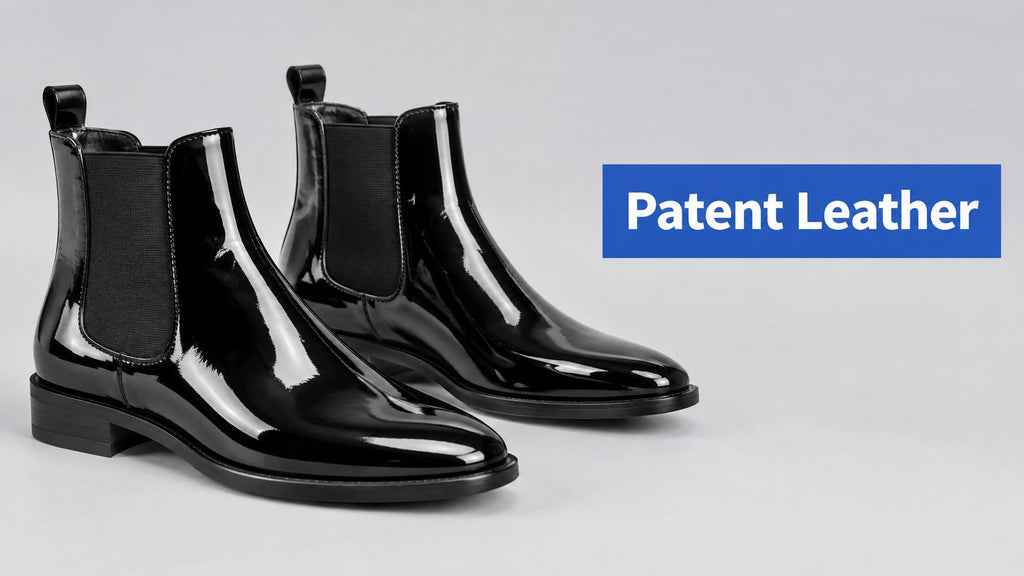
A black patent Chelsea boot, for example, sits in a useful middle ground. It’s dressier than an ordinary leather Chelsea because the surface reflects light in a clean, deliberate way. But it’s also less predictable than a standard formal shoe. You still get elegance. You also get shape, presence, and a touch of modernity.
That mix is why patent leather keeps returning. It carries old-world polish, yet it doesn’t feel trapped in old rules.
Why men get hesitant
Most men don’t worry about whether patent leather looks good. They worry about whether they can live with it. That’s a different question.
Common concerns usually sound like this:
- Too formal: “Will I only wear these once?”
- Too flashy: “Will they look like stage shoes?”
- Too fragile: “Will the shine crack or scuff the first time out?”
- Too unforgiving: “What if the fit is slightly off?”
All four concerns are valid. All four have workable answers when you choose the right silhouette and treat patent leather like a distinct material, not just shiny leather.
Patent leather boots work best when the shine supports the outfit instead of becoming the whole outfit.
Where they fit today
The strongest modern use for patent leather boots isn’t only black tie. It’s refined evening wear, dress-forward business social settings, and smart-casual wardrobes that benefit from one polished statement piece.
Think of them as the footwear equivalent of a finely cut dinner jacket. Not everyday in the strict sense. But far more versatile than most men assume.
What Exactly Is Patent Leather
Patent leather is standard leather finished with a high-gloss protective coating. That outer layer is what gives the material its clean reflection, slick hand feel, and greater resistance to surface moisture than ordinary dress leather.
For boots, that distinction matters more than many men expect. You are not just buying calfskin with extra polish. You are buying a leather base plus a finished surface, and each part affects how the boot fits, bends, creases, and ages in real life.
The origin of the shine
The material has a long formal history, but its appeal was never limited to ceremony. According to this history of patent leather origins, Seth Boyden developed patent leather in 1818 using a linseed-oil and lacquer process to create a shiny, more water-resistant finish.
That background helps explain why patent leather still occupies an unusual place in menswear. It was made to look striking under light, but it also answered a practical need. Men wanted leather that could present well and stand up to damp conditions better than untreated dress leathers.
How it’s made
Modern patent leather usually starts with a smooth, fine-grained hide, often calfskin. The leather is prepared carefully, then coated with a glossy synthetic or lacquer-based finish and cured until the surface becomes even, reflective, and stable.
A bootmaker pays close attention to the base hide because the coating does not hide weak leather for long. In fact, the gloss often makes flaws easier to spot. Any uneven grain, loose fiber structure, or poor clicking choice tends to show itself once light hits the surface.
Here is the basic process:
- Choose a clean base leather. Smooth, consistent hides produce the sharpest final finish.
- Correct and prepare the surface. Dust, scars, and irregular texture become more visible under gloss.
- Apply the patent coating. This layer creates the shine and much of the water resistance.
- Cure the finish. Proper curing helps the surface stay clear, flexible, and less prone to premature failure.
If you want to understand why base material still matters under a glossy top layer, this primer on leather grades, sourcing, production, and quality assurance gives useful context.
Why it feels different on the foot
Patent leather often surprises first-time buyers because it behaves differently from standard dress leather from the first wear. The coating firms up the surface. That can make the boot feel a touch stiffer and less forgiving until the pattern, lining, and last begin to work with your foot.
This is also why fit deserves more attention with patent boots. If the vamp is too tight or the instep is fighting your foot, the material has fewer ways to disguise that mismatch. Poor fit usually shows up faster as hard creases, stress lines, or pressure points. A well-shaped last and a precise fit do more than improve comfort. They help the shine stay handsome by controlling where the boot flexes.
How it differs from polished leather
A polished calfskin boot gets its sheen from creams, waxes, brushing, and finishing skill. Patent leather gets its shine from the built-in topcoat itself. The result is a more uniform reflection, a sharper visual line, and a different wearing experience.
| Material | Where the shine comes from | Visual effect | Feel in wear |
|---|---|---|---|
| Polished leather | Surface care and polish | Softer glow | Usually more forgiving |
| Patent leather | Built-in glossy coating | Mirror-like reflection | Usually firmer and less adaptable |
A simple way to read the difference is this. Polished leather lets you tune the finish over time. Patent leather arrives with its character already set, so the quality of the pattern, fit, and finish matters from day one.
The gloss is not decoration added after the fact. It is part of the material itself, which is why patent leather rewards precise shoemaking and an equally precise fit.
The Benefits and Drawbacks of Patent Leather
A patent leather boot can be the smartest pair in your wardrobe at 7 p.m. and the fussiest pair by 7:30 if the fit is wrong. That is the fundamental bargain you make with this material. You get clarity, polish, and easy surface cleanup, but you give up some of the forgiveness that makes ordinary calfskin easy to live with.
What it does exceptionally well
The first advantage is visual precision. Patent leather reflects light almost like a finished piano or a well-lacquered carriage panel. On a boot, that sharp surface gives the silhouette cleaner edges, so well-fitted trousers look neater and the whole outfit reads more deliberate.
It also has a practical side that fashion coverage often skips. The glossy topcoat acts as a shield on the surface, so light rain, dust, and everyday city grime are less likely to sink in quickly. In daily ownership, that usually means a faster wipe-down after dinner, a commute, or an event.
Patent leather can also be useful outside strict formalwear. On a sleek Chelsea or a refined lace-up boot, the shine adds interest to otherwise simple outfits such as dark denim, fine-gauge knitwear, or charcoal wool trousers. The trick is restraint. Clean lines let the material speak without turning the boot into a costume piece.
For readers comparing finishes across different hides and uses, this guide to the best leather for boots gives helpful context.
Where owners get disappointed
Patent leather asks more from the fit. A poor flex point shows up faster here because the glossy finish makes every bend easier to see. On soft calf, a mismatch may settle into the background. On patent, the same mismatch can read like a bright underline across the vamp.
Scuffs are the next common complaint. The surface resists a fair amount of casual contact, but once a sharp scrape cuts or mars that glossy layer, your eye goes straight to it. A matte leather can hide small mistakes. Patent rarely does.
Heat and comfort can also become issues, especially during long wear indoors. Because the upper is more sealed on the surface, it often feels less breathable than more natural, open-finished leathers. If you attend weddings, evening events, or dinners that involve several hours on your feet, lining quality and fit matter just as much as shine.
Then there is the matter of creasing. Patent leather does crease. The goal is not to prevent all movement, which no real shoe can do. The goal is to make the boot flex in the right place, in a controlled way, with enough room for the foot to move naturally. That is why a well-shaped last and a personalized fit matter so much with this material.
A realistic ownership profile
Patent leather works best for a man who wants:
- Sharp visual definition: The boot stands out cleanly in low light and evening settings.
- Easy surface cleaning: Dust and light marks usually wipe away faster than they do on standard dress leather.
- Dress-to-smart-casual range: A refined pair can work with black tie, dark tailoring, and selective off-duty outfits.
It suits him less well if he wants a travel-beaten boot he can stuff into a weekender, knock against curbs, and ignore in the closet afterward.
Practical rule: Buy patent leather when you want controlled shine, deliberate styling, and a fit precise enough to keep creasing honest.
How to Choose the Right Mens Patent Leather Boots
A man usually decides whether patent leather boots feel elegant or awkward before he takes ten steps. The decision happens in the fitting stage. Patent leather behaves like polished lacquer on fine furniture. Every line looks sharper, so the shape underneath has to be right.
Start by choosing the role the boot needs to play in your wardrobe, then choose the shine. If you want one pair that can handle evening events, dinners, and a careful smart-casual outfit, a clean silhouette will serve you better than ornate details.
Start with the right silhouette
A Chelsea boot is the safest entry point for most men. The uninterrupted vamp, elastic side panels, and close ankle fit give patent leather a clean surface to reflect from. That keeps the boot refined instead of busy, and it also makes trouser pairing easier.
A Derby boot offers a little more flexibility in fit because the open lacing can accommodate different insteps. That practical point matters with patent leather, which is less forgiving than softer dress calf. Style-wise, a patent Derby looks slightly less formal than a Chelsea, which helps if you want to wear it with flannel trousers or dark selvedge denim.
A combat-inspired boot needs real caution. Patent leather already attracts the eye. Add bulky soles, oversized hooks, or aggressive hardware, and the result can feel more costume than wardrobe. If you like that category, choose a slimmer last and restrained detailing.

Look at construction, not just finish
Patent leather can distract the eye. Good construction keeps the boot handsome after the novelty of the shine wears off.
Use a simple inspection checklist:
| What to inspect | Why it matters |
|---|---|
| Last shape | Controls the profile of the toe and where the boot wants to bend |
| Heel balance | Helps you stand naturally instead of feeling pitched forward |
| Sole attachment | Affects durability, repair options, and how stable the boot feels over time |
| Upper pattern | Cleaner panels usually suit glossy leather better than fussy seaming |
If you want a pair you can keep for years, a Goodyear welted boot is still a strong option. It gives the sole structure, makes resoling easier, and supports the upper so the patent finish is less likely to look misshapen from weak build quality. In a material that highlights every contour, that support matters.
Fit matters more here than many men expect
Patent leather does not forgive vague sizing. A standard dress boot in soft calf can relax a little and hide small errors. Patent leather tends to record them.
Retailers that sell formal patent styles, including this men’s patent leather boots selection, show how often these boots are bought for dress occasions. That is exactly why fit deserves more care than a quick try-on under bright shop lights. A boot that feels acceptable for two minutes can create harsh creases across the vamp after one evening if the flex point and instep hold are wrong.
A better way to judge fit
Do not stop at, “Is it tight or loose?” That question is too blunt for this material.
Judge the boot the way a maker would:
- Watch where it flexes. The break should align with the ball of your foot. If it bends too far back or too far forward, the creasing will look forced.
- Check heel grip. A small amount of movement can be normal at first, but the heel should not lift enough to make you claw with your toes.
- Feel the instep hold. The instep should feel supported, like a firm handshake rather than a clamp. Too little hold lets the foot slide. Too much pressure creates strain lines and discomfort.
- Study the toe shape on your foot. Some lasts lengthen the foot elegantly. Others make patent leather look blunt and heavy, especially in larger sizes.
Try boots on later in the day, with the exact socks you expect to wear. Walk on a hard surface if possible. Patent leather is a poor place to gamble on “they’ll probably break in.”
If your feet are wide, high-volume, or hard to fit in standard sizing, patent leather rewards precision. It punishes compromise.
The smartest first purchase
For a first pair, keep the variables under control. Choose black, choose clean lines, and choose a shape that matches how you dress.
A black patent Chelsea works for most men because it handles formal use with ease and still has enough restraint for selective smart-casual wear. A lightly structured patent Derby is the better choice if your instep is high or you want a touch more flexibility in fit. In both cases, the best boot is not the shiniest one in the room. It is the one shaped well enough to crease neatly, fit securely, and still look composed after a full evening on your feet.
Styling Patent Leather Boots from Formal to Casual
Patent leather boots become much easier to wear once you stop treating them as ceremonial objects. They’re still dress-forward footwear, but they can cover more ground than a man expects when the rest of the outfit stays disciplined.

Formal evening dress
For evening events, black patent leather works because it reflects low light beautifully and finishes formal tailoring with precision. The easiest version is a black patent Chelsea boot under a dark tuxedo or sharply cut dark suit. The trouser hem should sit cleanly and not bunch over the ankle.
Keep everything else controlled:
- Shirt choice: Crisp white and simple.
- Trousers: Proper break, or very slight break.
- Accessories: Black belt if needed, minimal hardware, no competing shine.
- Outerwear: A dark overcoat, never a technical jacket.
If the event leans black tie optional, patent footwear usually looks more convincing than ordinary business shoes because it acknowledges the formality of the room without trying to steal attention.
Smart-casual with structure
Patent boots often surprise people.
A black patent Chelsea can work with charcoal wool trousers and a fine-gauge black knit. It can also work with dark, clean denim and a structured jacket, provided the jeans are slim enough to keep the line clean. The shine becomes the refined element in an otherwise simple palette.
Three outfit formulas that work well:
- Black patent Chelsea boots + charcoal trousers + black turtleneck + dark wool overcoat
- Patent Derby boots + dark indigo jeans + white Oxford shirt + navy blazer
- Black patent boots + slim black jeans + charcoal crewneck knit + suede trucker jacket
Notice what these outfits avoid. No loud patterns. No distressed denim. No aggressive buckles. Patent leather already gives you one strong visual note.
The cleaner the outfit, the more natural patent leather feels.
Modern edge without costume
A lot of men go wrong by pairing glossy boots with too many “statement” pieces at once. Patent leather doesn’t need help from oversized lapels, flashy jewelry, or exaggerated trousers. It needs restraint.
The best modern styling approach is contrast by texture, not by noise. Pair the smooth, reflective boot with matte wool, brushed cotton, cashmere, or washed denim. That gives the eye a pleasing mix without turning the outfit into a performance.
A simple comparison helps:
| If you want this effect | Wear the boots with | Avoid |
|---|---|---|
| Formal polish | Tuxedo, dark suit, dress shirt | Casual chinos |
| Refined evening casual | Dark denim, knitwear, blazer | Graphic tees |
| Fashion-forward but wearable | Monochrome layers, clean outerwear | Too many shiny accessories |
Small styling rules that matter
- Match the formality of the boot. High gloss asks for clean clothing.
- Let the trouser opening frame the ankle. Too wide, and the boot disappears awkwardly.
- Repeat black somewhere else. Belt, jacket, knitwear, or coat can anchor the look.
- Keep leather accessories in harmony. Patent and heavily distressed leather rarely speak the same language.
A patent boot isn’t difficult to style. It’s specific. Once you accept that, getting dressed becomes simpler.
A Simple Guide to Patent Leather Care and Maintenance
A patent leather boot often looks immaculate right up to the moment it doesn’t. One rainy commute, one dusty evening, or one careless scrape against a chair leg can cloud that mirror finish faster than many first-time owners expect. The good news is that patent leather is usually easier to keep presentable than calfskin, provided you treat it like a polished surface rather than ordinary open-grain leather.

The main mistake is simple. Owners see the shine and assume the finish protects itself. In practice, patent leather needs regular light care, because dust, friction, and heat show up quickly on a reflective surface. A matte boot can hide neglect for a while. A glossy boot cannot.
If you want a broader foundation before focusing on patent finishes, this guide on how to clean leather boots is a useful companion.
The basic routine
Routine care should feel closer to wiping down a watch case than polishing a rugged work boot. Gentle handling preserves the surface.
- Wipe after wear. Use a soft cloth, lightly dampened, to lift dust, road film, and fingerprints.
- Let the boots dry at room temperature. Keep them away from radiators, heating vents, and direct sunlight.
- Use a cleaner made for patent leather when the surface looks cloudy or marked. Standard creams and heavy conditioners can leave residue.
- Buff with a clean microfiber or soft cotton cloth. Use light pressure. The aim is a clear finish, not aggressive shine-building.
That first wipe matters more than many men realize.
Patent leather works like lacquer on fine furniture. The gloss sits on the surface, so grime stays visible on top of it instead of disappearing into the grain. If you remove that grime early, the boots usually keep their crisp look with very little effort.
Dealing with scuffs and transfer marks
Not every mark is a true scratch. Many are transfer marks from floors, chair legs, pedals, or another shoe. Those often sit on the finish and can be reduced with a careful wipe and a patent-safe product.
Use restraint. Too much rubbing creates haze, and too much product attracts more residue later.
If the surface has a deeper scratch, or if the finish looks cracked rather than marked, stop home experiments. A skilled repairer can tell the difference between superficial damage and a break in the coating. That matters, because patent leather does not respond well to the trial-and-error methods people sometimes use on standard leather.
Never scrub patent leather aggressively. The finish is smooth by design, and rough treatment can leave it duller than the original mark.
A visual walkthrough can help if you prefer to see the process before trying it yourself.
Storage prevents half the wear
Storage shapes how patent boots age. Creasing, sticking, pressure marks, and surface dullness often begin in the closet, not on the street.
- Use shoe trees. They support the vamp and help the boot keep its intended shape.
- Store each boot with space around it, or in cloth bags. Glossy surfaces can scuff when they rub against other shoes.
- Keep them in a cool, dry place. Heat can stress the finish and encourage stiffness.
- Avoid stacking shoes on top of them. Pressure leaves marks more quickly on a high-shine surface.
For men ordering custom or close-fitting patent boots, storage matters even more. A well-fitted boot creases more cleanly across the flex point, but only if it keeps its shape between wears.
What owners often overdo
The usual problems are overcleaning and overproduct use. Patent leather does not need the heavy feeding routine that unfinished leather sometimes does. It responds best to a light hand, a clean cloth, and a product made for its surface.
Treat it like a formal material with everyday habits. Wipe it down. Let it rest. Store it carefully. Done consistently, that small routine keeps the shine sharp and the creasing more controlled over time.
The Bespoke Advantage Crafting Your Custom Boots
You spot the problem the first time you sit down in a mirror-bright pair of patent boots. The flex line breaks too high, the vamp pinches, and the shine makes every fitting flaw easy to read. Patent leather has that effect. It behaves like polished lacquer on fine furniture. Beautiful, precise, and unforgiving of poor proportions.
That is why custom work matters more here than it does with many other dress leathers.
Off-the-shelf boots are made on standard lasts built to suit a broad middle range of feet. Real feet rarely follow that template. One foot may be slightly longer than the other. The forefoot may need more room while the heel needs less. A high instep can turn a handsome boot into a struggle every time you pull it on. In softer calf, a wearer can sometimes tolerate those compromises. In patent leather, the material records them.
A well-made custom pair addresses the parts that matter most.
- Last shape: The maker chooses or adjusts the last so the boot follows your foot instead of forcing your foot to adapt.
- Flex point: Proper placement helps the boot crease where the foot bends, which keeps the front cleaner-looking over time.
- Instep and heel fit: This pairing is often the difference between a secure boot and one that slips at the heel while pressing on top of the foot.
- Shaft and opening: On Chelsea, Derby, and other close-cut styles, the top line can be tuned so the boot looks sharp without feeling restrictive.
The best way to understand bespoke is to compare it to tailoring. A ready-made tuxedo can look good on many men. A custom-fitted one hangs cleanly because the balance is corrected at the shoulders, waist, and sleeve. Bespoke boots follow the same logic at the foot. Width, pitch, arch position, and toe spring are adjusted so the boot carries your weight properly and bends in the right place.
That matters for appearance, but it also matters for ownership. A custom patent boot that fits correctly is easier to wear for longer evenings, less likely to develop harsh pressure wrinkles, and more useful outside black tie because it feels stable enough for real use. That practical side is often overlooked. Men buy patent leather for a formal event, then leave it in the wardrobe because the fit never felt quite right.
Custom changes that outcome.
It also gives you more control over how formal the boot reads. A sharp, narrow-waisted patent Chelsea with a sleek last belongs comfortably with evening wear. A slightly fuller Derby boot with a simpler line can work with dark dress trousers, fine knitwear, and a clean overcoat. The shine stays refined because the shape and proportions are chosen with your wardrobe in mind, not just a single occasion.
For readers considering that route, this guide to bespoke shoes for men offers a useful starting point.
Good custom footwear removes guesswork. With patent leather, that precision is not a luxury in the abstract. It is the difference between a boot that merely shines and one that perfectly fits your life.
Frequently Asked Questions About Patent Leather Boots
Can patent leather boots stretch or break in much
Not much. They may soften slightly with wear, but patent leather is less forgiving than many traditional dress leathers because of the glossy outer finish. If the fit is wrong at the start, don’t assume time will solve it.
Are patent leather boots good for rain
They’re generally more water-resistant than standard dress leather because of the coated surface. That doesn’t make every pair a true wet-weather boot. Construction still matters. If you expect regular rain, pay attention to seams, sole design, and overall build quality.
Can you wear patent leather boots with a business suit
Yes, but keep the suit sharp and the rest of the outfit quiet. Dark suits work best. A black patent Chelsea or refined Derby boot usually looks more natural than a highly embellished style in a conservative office or evening business setting.
Do patent leather boots scuff easily
They can show scuffs clearly because the surface is meant to be smooth and reflective. The answer isn’t to avoid wearing them. It’s to wear them with awareness, wipe them down after use, and store them so they don’t rub against other shoes.
Are they only for black tie events
No. That’s the most common use, but not the only one. A clean patent boot can also work for dressy dinners, creative professional settings, and polished smart-casual outfits built around dark, simple clothing.
What’s the safest first pair to buy
For most men, it’s a black patent Chelsea boot with restrained shape and minimal detailing. It gives you the broadest range without forcing you into a highly specific look.
If you’re ready for a pair that doesn’t force you into standard sizing or stock designs, explore Alexander Noel. Their direct-to-consumer approach, artisan partnerships, and custom Design Lab make it possible to create patent leather boots that match your style, your fit, and the way you’ll wear them.
Related post
12
Sep
12
Sep
12
Sep
29
Aug
