

RECENT POSTS
29.August.2026
Custom Women's Boots for Fall: Choosing Between Two Black Chelsea Silhouettes
0 Comments
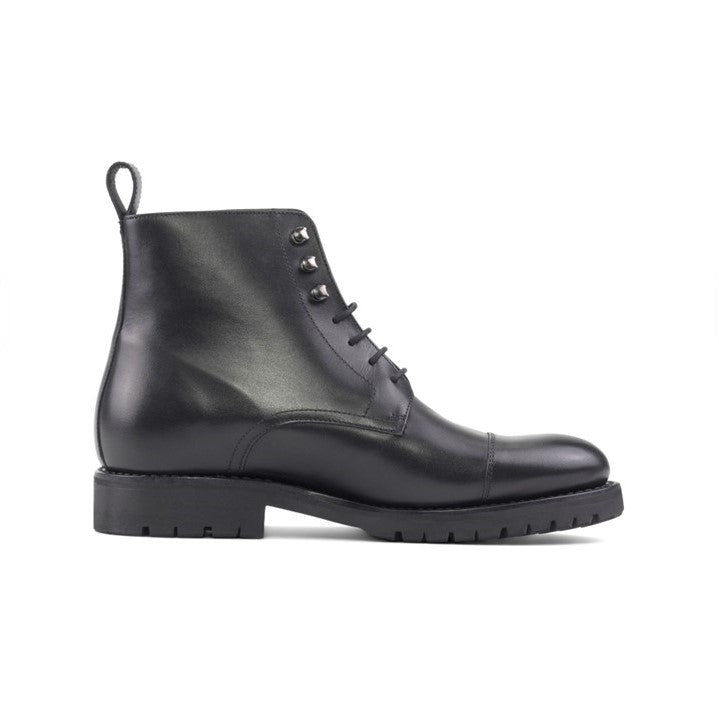
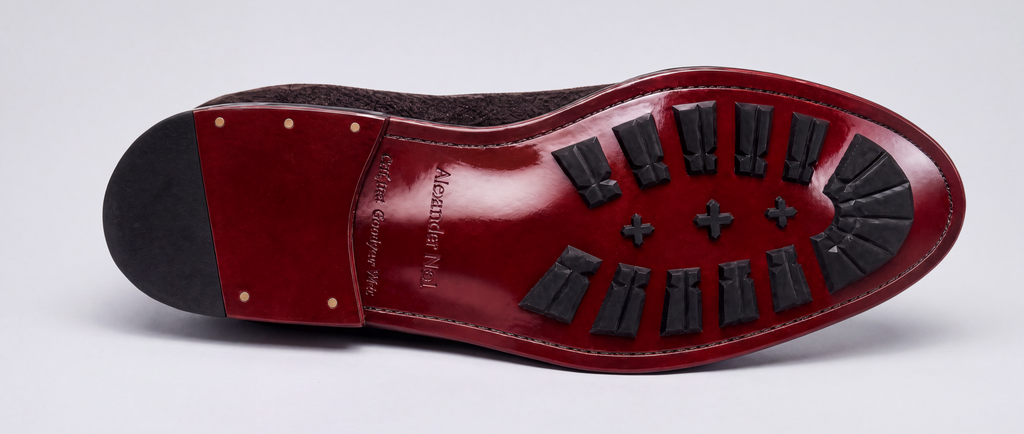
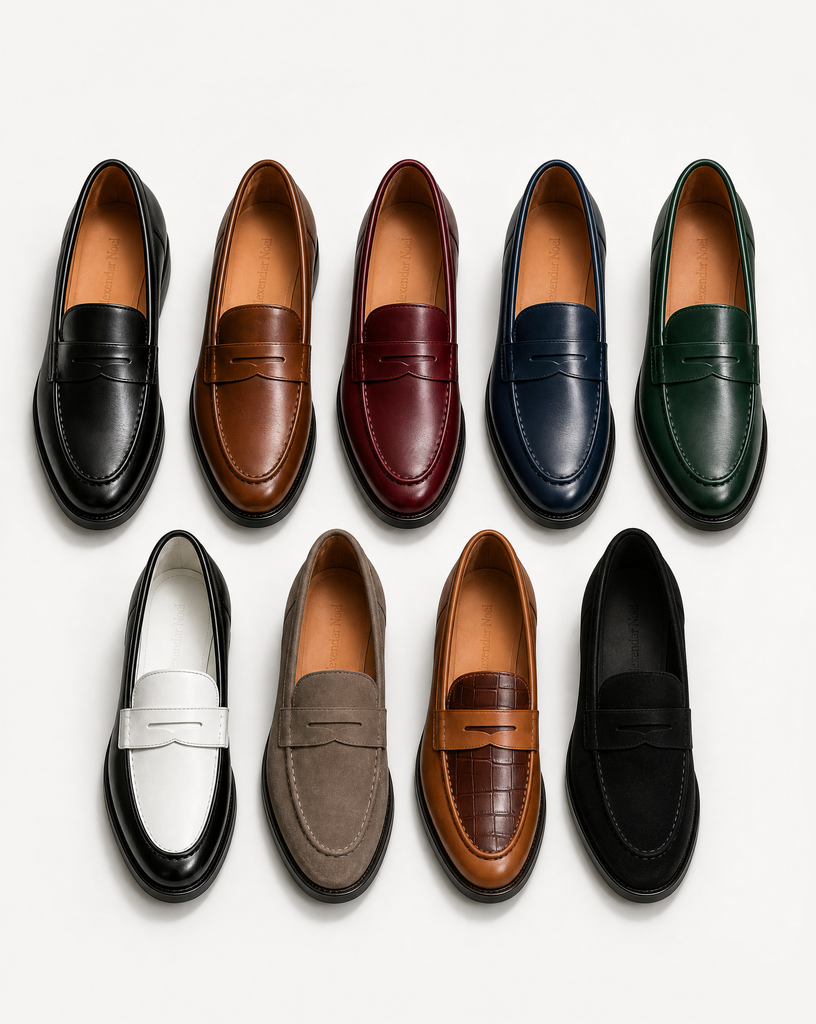
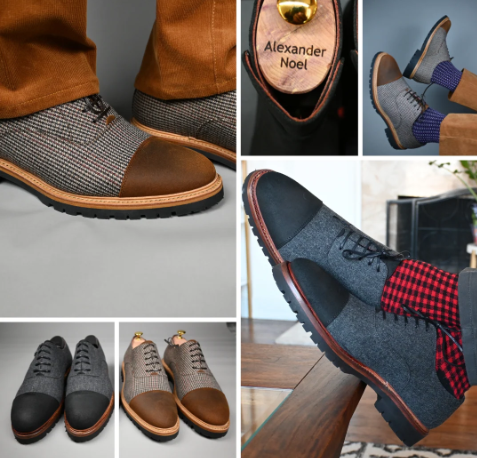






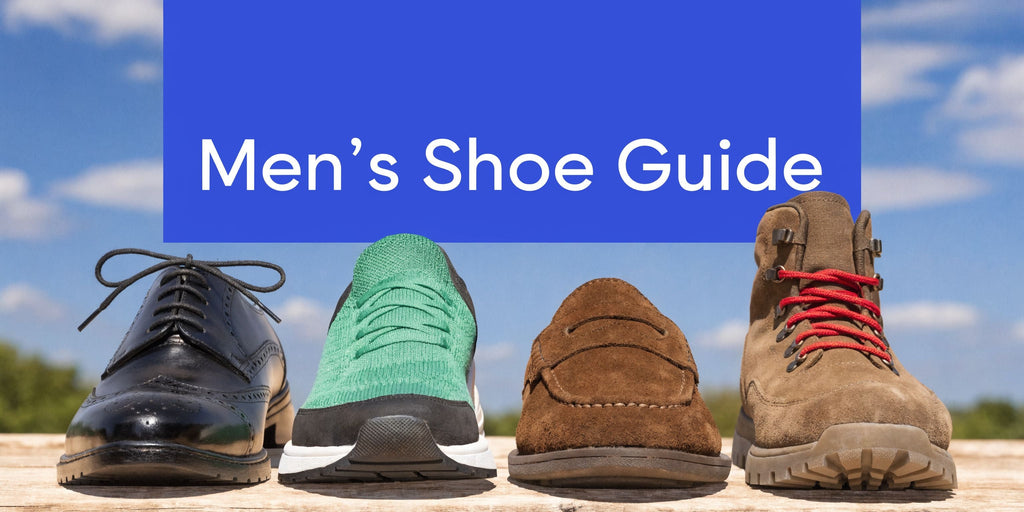
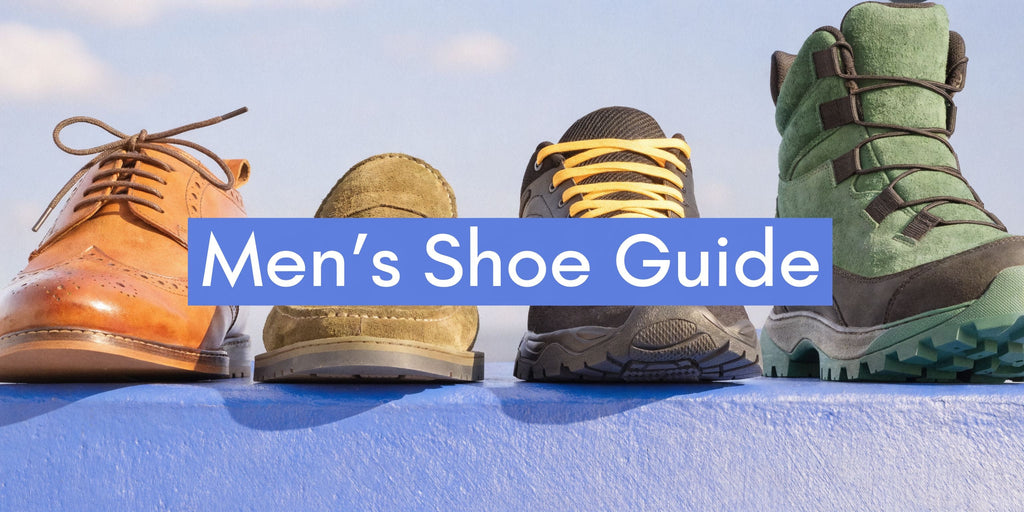


Designer Ankle Boots for Women Fit Guide
The most popular advice about designer ankle boots for women is usually wrong. A striking heel, a fashionable toe, or a recognizable logo won't rescue a boot that lets your heel slide, compresses your forefoot, or locks your ankle into an unnatural gait. True luxury starts beneath the surface, with a last that respects your anatomy, materials that age properly, and construction that remains comfortable after the novelty fades.
Ankle boots have earned their permanence. Fashion histories trace their popularity in women's wardrobes to around 1804, and by the Victorian era elastic-sided ankle boots had become mainstream enough for Queen Victoria to help popularize them for both women and men. By 1977, ankle boots reportedly represented about 20% of women's shoe sales, a sign that the silhouette had moved from niche dress wear to a major footwear staple (fashion history of ankle boots). The right pair, then, isn't a disposable seasonal accent. It's a structural foundation for work, travel, and evening dressing.
Redefining Luxury in Women's Footwear
Fashion editors often reduce designer boots to surface details. Hardware, unusual color, and seasonal embellishment attract attention, but they don't determine whether a boot deserves a place in your wardrobe. Luxury footwear should solve problems, not merely decorate an outfit.
A premium ankle boot must hold the heel without friction, give the toes usable space, support the arch without creating pressure, and allow the foot to move through its walking cycle. It should also use materials that become more characterful with wear rather than brittle, shiny, or misshapen. Those standards matter more than a fleeting trend because a boot worn repeatedly exposes every weakness in its design.
Style is only the visible layer
The modern professional woman asks more of an ankle boot than formal polish. She may wear the same pair with trousers during the day, travel through an airport, walk across uneven pavement, and continue into dinner. A narrow, rigid fashion boot can look elegant in a product photograph yet become mechanically demanding during extended wear.
Research on boot gait mechanics found that walking in boots reduces ankle angular velocity and ankle power generation while increasing hip extensor and dorsiflexor moments (research on boot biomechanics). In practical terms, excessive stiffness can shift work away from the ankle and toward the hip and knee. A stable ankle isn't automatically a comfortable ankle.
The luxury test: If the boot looks exceptional but makes you change how you walk, it isn't finished footwear.
Buy for repeated use
The commercial strength of the category reflects this practical role. In the United Kingdom, women's ankle boots are estimated at roughly £1.0 to £1.5 billion in retail value and represent about 20% to 25% of total women's footwear spending, according to UK ankle boot market analysis. In the European Union, fashion or casual booties and Chelsea boots together account for about 55% to 65% of demand, while premium and mid-market tiers capture more than half of revenue, according to the same market source.
That demand rewards versatility. Choose a boot for the work it must perform, then refine the visual language through leather, color, heel shape, and finish. The most convincing designer pair is the one you reach for because it feels right, not the one you protect from ordinary life.
Choosing the Right Silhouette for Your Lifestyle
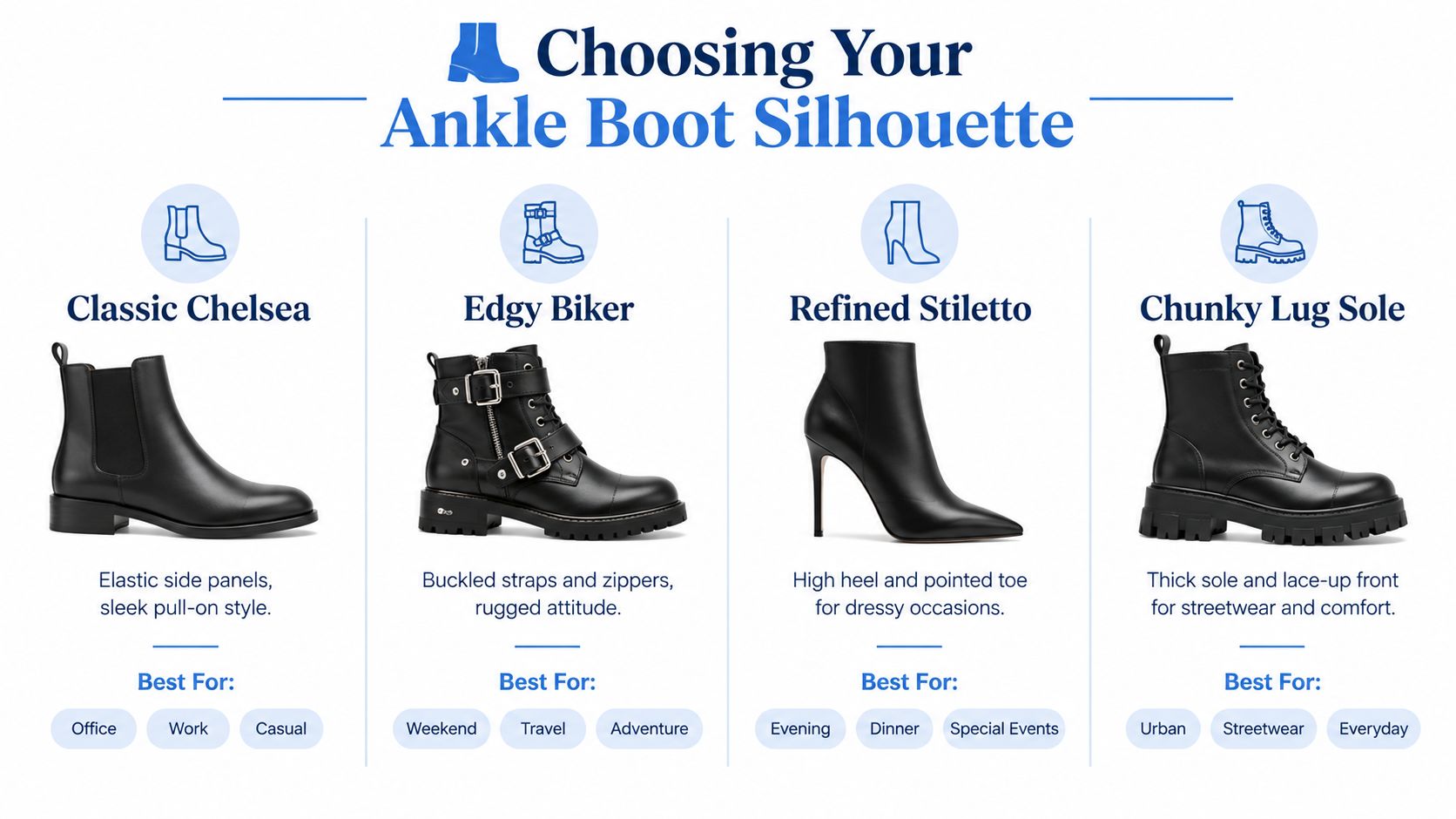
Start with your wardrobe rather than the shop window. Look at the trousers, skirts, dresses, and coats you wear, then identify the missing shape. A sleek Chelsea boot fills a different gap from a refined stiletto bootie or a lace-up artisan style.
Chelsea boots for disciplined versatility
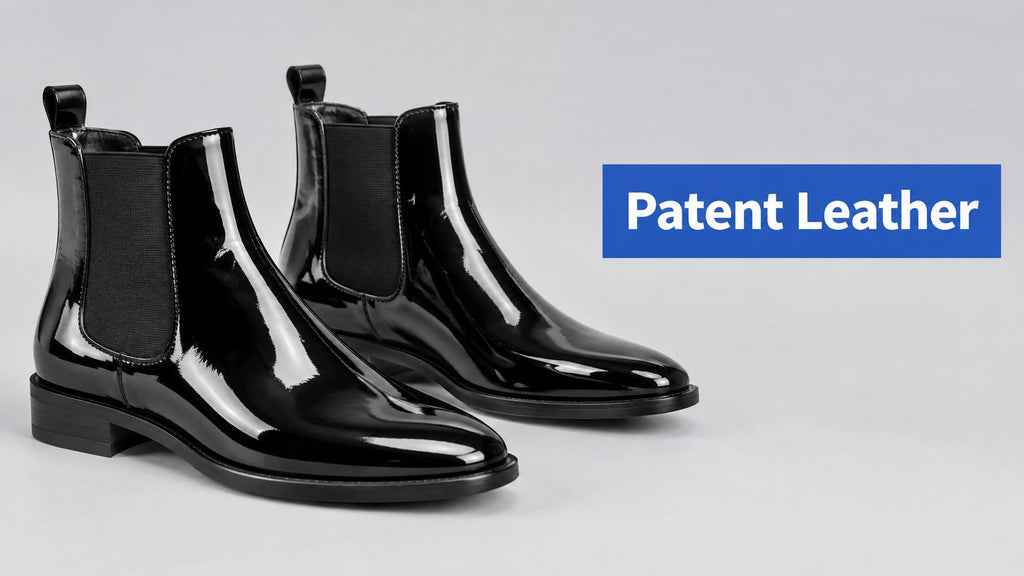
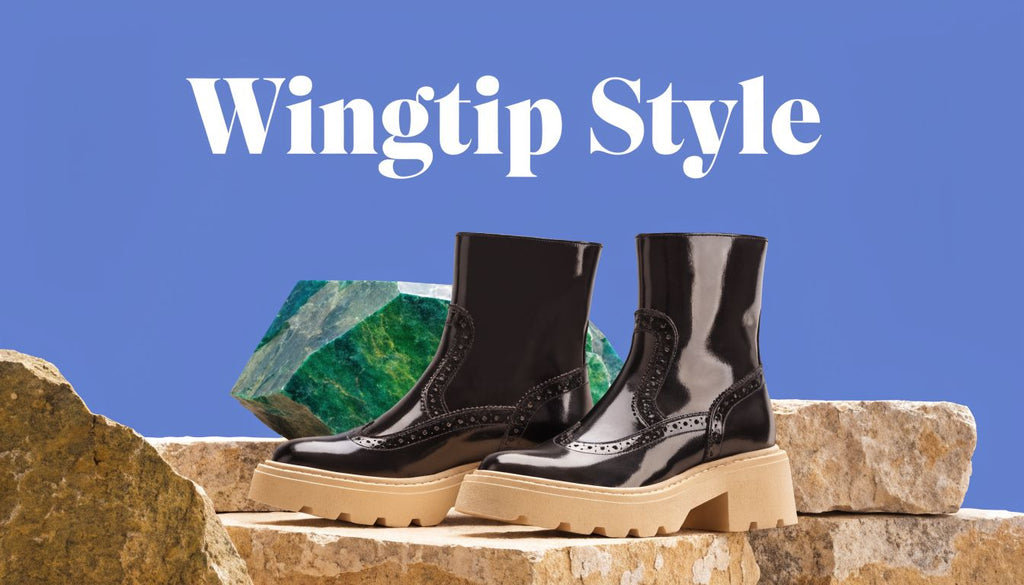
A Chelsea boot has the strongest office-to-weekend range. Its clean shaft and elastic side panels sit neatly beneath cropped trousers, while a modest heel gives a dress or midi skirt enough visual weight. A rounded or softly almond-shaped toe feels more forgiving than an aggressive point, especially during long days.
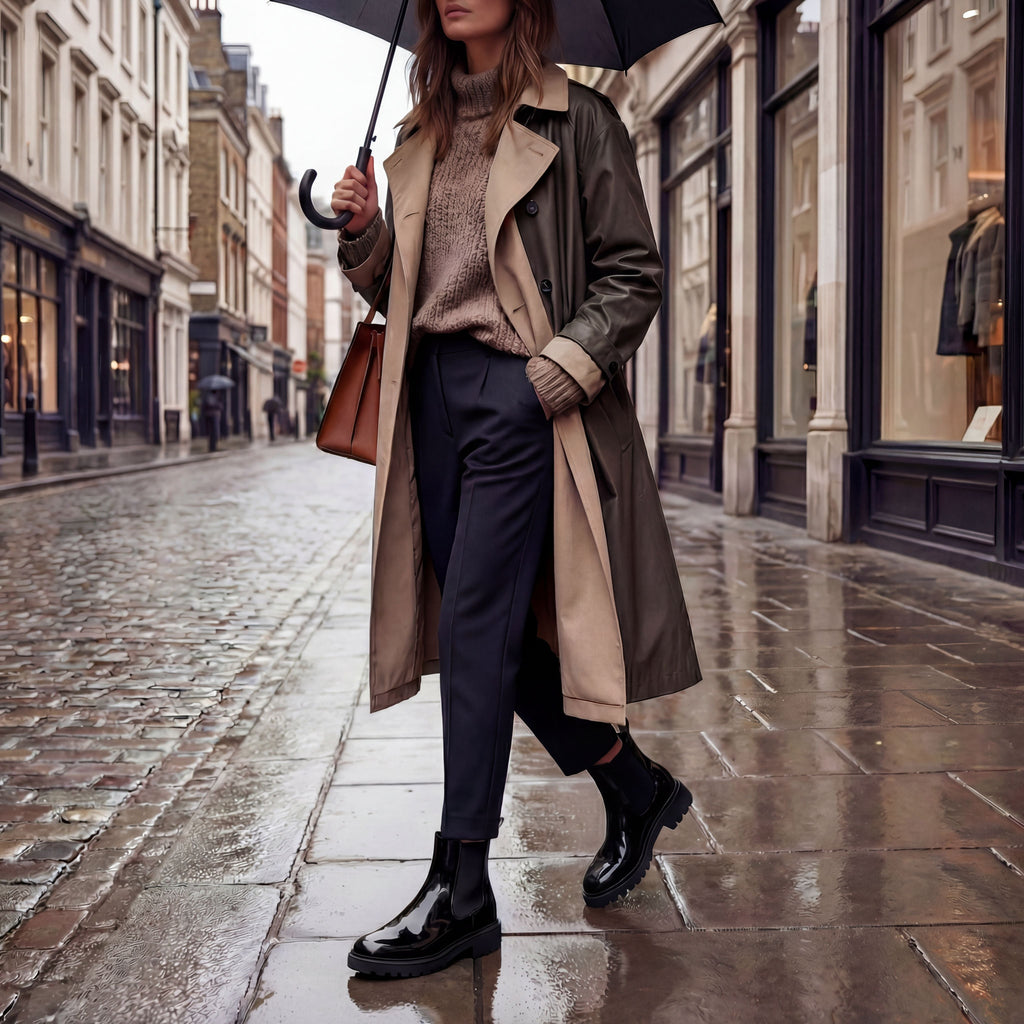
Choose a smooth black or deep brown leather if you want one pair to anchor a professional capsule wardrobe. A restrained sole keeps the boot formal, while a lugged version introduces useful contrast with denim, relaxed tailoring, or a heavier coat. Chelsea boots also transition well across seasons because their design doesn't depend on heavy insulation or overt winter detailing.
Block-heel booties for evening and office movement
A block heel distributes load more securely than a narrow heel and gives a polished bootie a grounded stance. It works with wide-leg trousers because the heel preserves length and prevents the hem from overwhelming the foot. With a midi skirt, the same silhouette creates a deliberate vertical line without demanding the drama of a stiletto.
Select a heel height you can control on stairs and uneven ground. The shaft should follow the ankle without cutting into it, and the vamp should hold the foot without forcing the toes forward. For evening wear, prioritize proportion and finish over excessive height. A beautifully burnished leather and precise toe shape often look more polished than a taller but unstable heel.
Lace-up and biker shapes for texture
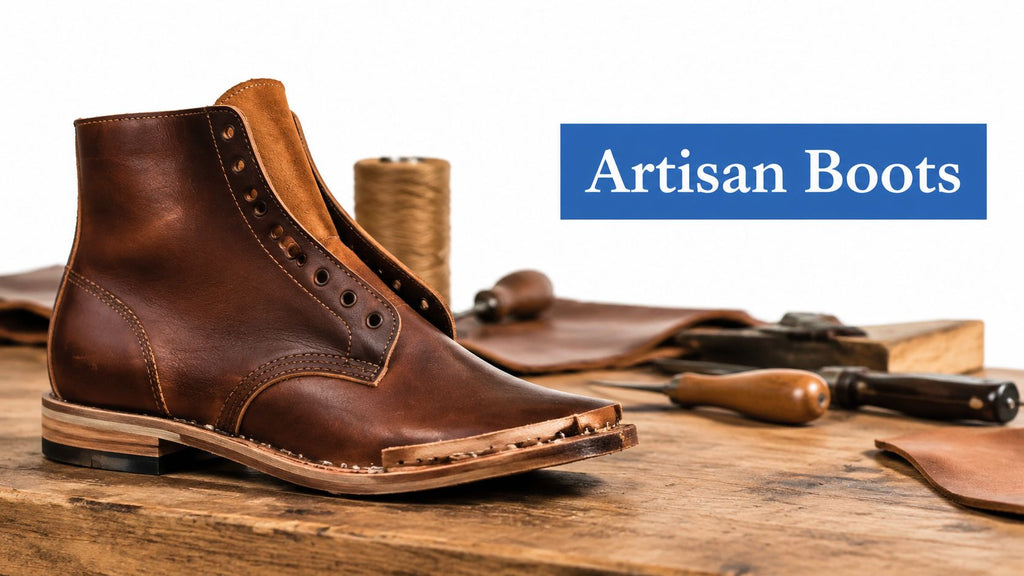
Lace-up artisan boots and biker-inspired styles bring structure to fluid clothing. Pair a rugged boot with a flowing midi skirt, a fine knit dress, or relaxed tailoring to create contrast without adding decorative noise. Buckles and zippers should serve adjustment or entry, not compensate for a poorly designed fit.
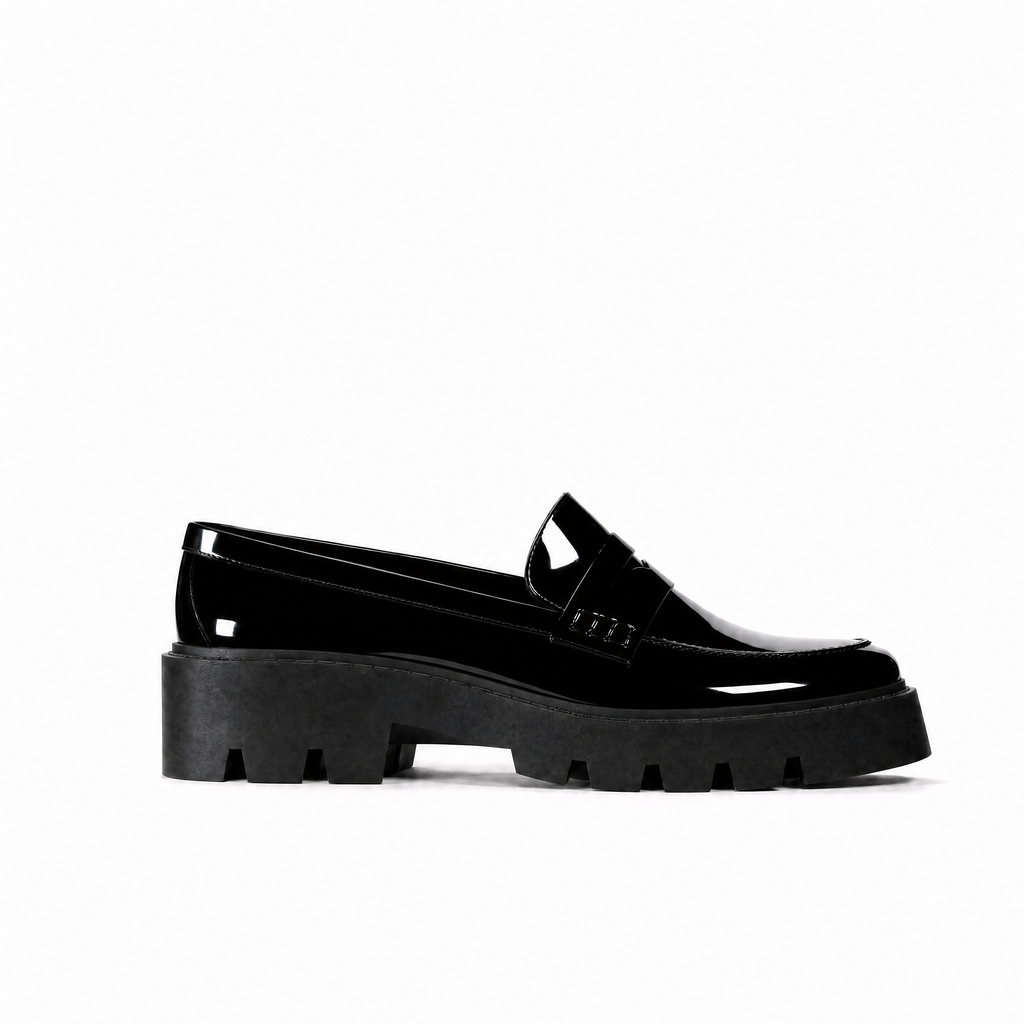
A chunky lug sole suits urban walking and casual wardrobes, but it adds visual mass. Balance it with a shorter hem, a narrow trouser, or a coat with clear shoulder structure. If most of your wardrobe is formal, this may be a second pair rather than the foundation pair.
A practical selection audit
| Your main need | Strongest silhouette | What to prioritize |
|---|---|---|
| Office and travel | Minimal Chelsea | Flexible sole, secure heel, restrained finish |
| Meetings and evening | Block-heel bootie | Stable heel, refined toe, clean shaft |
| Weekend and urban wear | Lace-up or lug sole | Traction, adjustable closure, durable upper |
| Formal events | Stiletto or fitted sock boot | Precise fit, controlled heel, elegant line |
The strongest first investment is usually a flexible Chelsea or block-heel bootie. Add a lugged or stiletto shape only when your wardrobe and schedule justify the specialized role.
Materials and Artisan Construction Methods
Leather quality begins with the hide, but it ends with how the maker cuts, skives, reinforces, and assembles it. Full-grain leather retains the natural surface of the hide and can develop a richer patina when maintained. Corrected grain has been mechanically altered to create a more uniform appearance, and lower-quality finishes may eventually crack, peel, or conceal the material's actual character.
Ask what the upper, lining, insole, and outsole are made from. A premium upper paired with an abrasive lining can still produce blisters. A beautiful leather mounted on an inflexible sole can still create fatigue. Material selection must support the entire architecture of the boot.
Read the construction description carefully
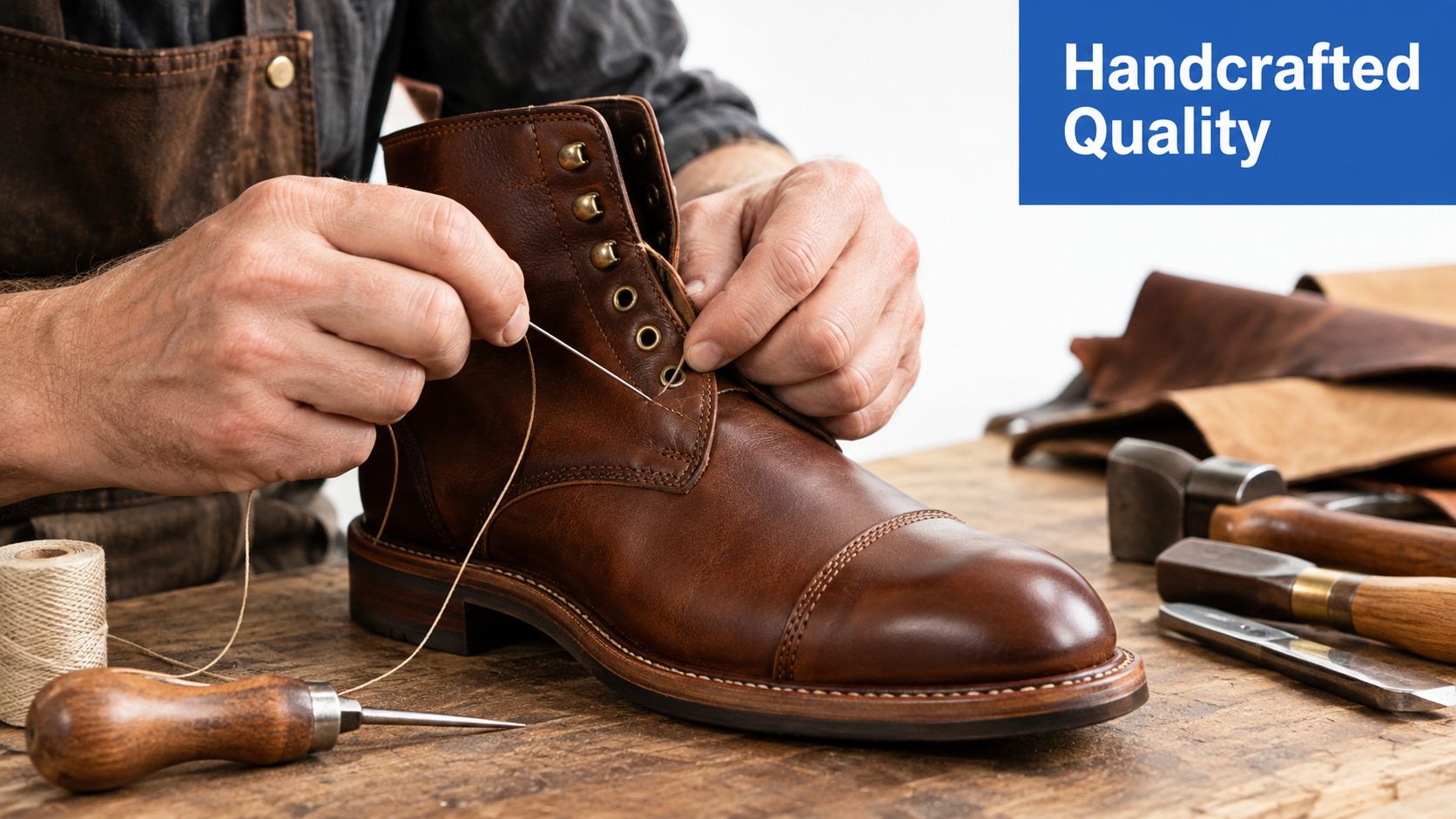
A cemented sole is bonded directly to the upper. This method can produce a light, flexible boot and works well when the design depends on a slim profile, but future repair options depend heavily on the adhesive, sole material, and maker's service capability.
A stitched construction gives the buyer more useful information. Blake stitching attaches the upper, insole, and outsole through the shoe's interior, creating a close-fitting profile. Goodyear welting uses a separate welt to join the upper and sole, offering an assembly that can be maintained and resoled when the surrounding components remain sound.
The construction isn't automatically better because it has a traditional name. Examine the execution. Stitching should be even, the welt should follow the perimeter cleanly, the heel should sit squarely, and the upper shouldn't buckle where it meets the sole.
Choose materials for your climate and routine
Smooth leather is adaptable and can be conditioned. Suede offers a softer hand and distinctive depth but needs more careful protection from moisture. Vegan leather can reduce reliance on animal hides, while recycled linings and other lower-impact materials are becoming important considerations in major markets. The right choice depends on your values, weather, maintenance habits, and desired aging process.
A shearling or wool-rich lining adds warmth but changes interior volume. Breathable textile linings can feel more suitable for transitional wear. Don't choose insulation because it sounds luxurious. A warm lining inside a tight forefoot can reduce usable space and make the boot less comfortable.
For a detailed evaluation of leather grades, sourcing, production, and quality assurance, consult this leather sourcing and quality guide.
The Biomechanics of a Perfect Fit
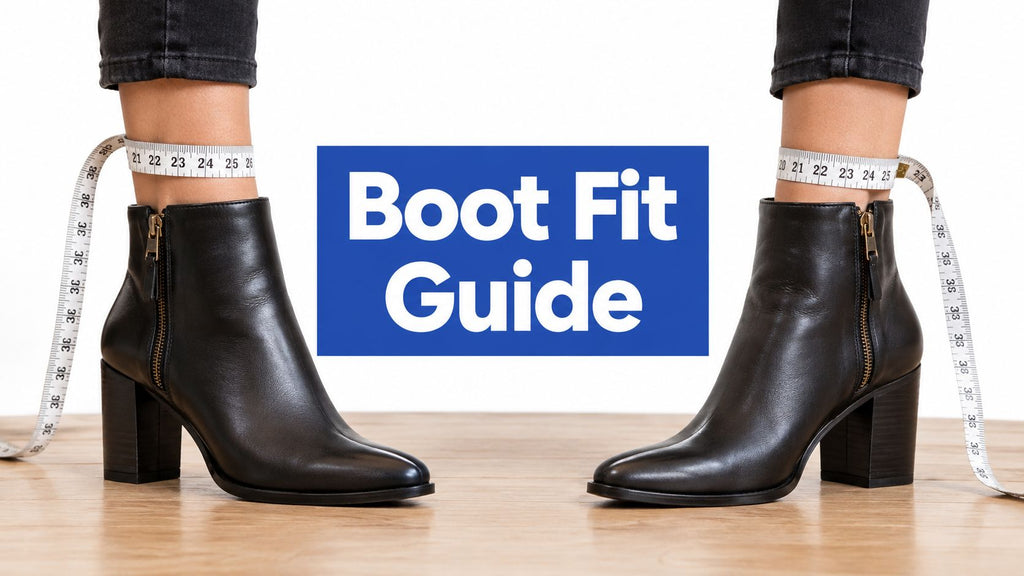
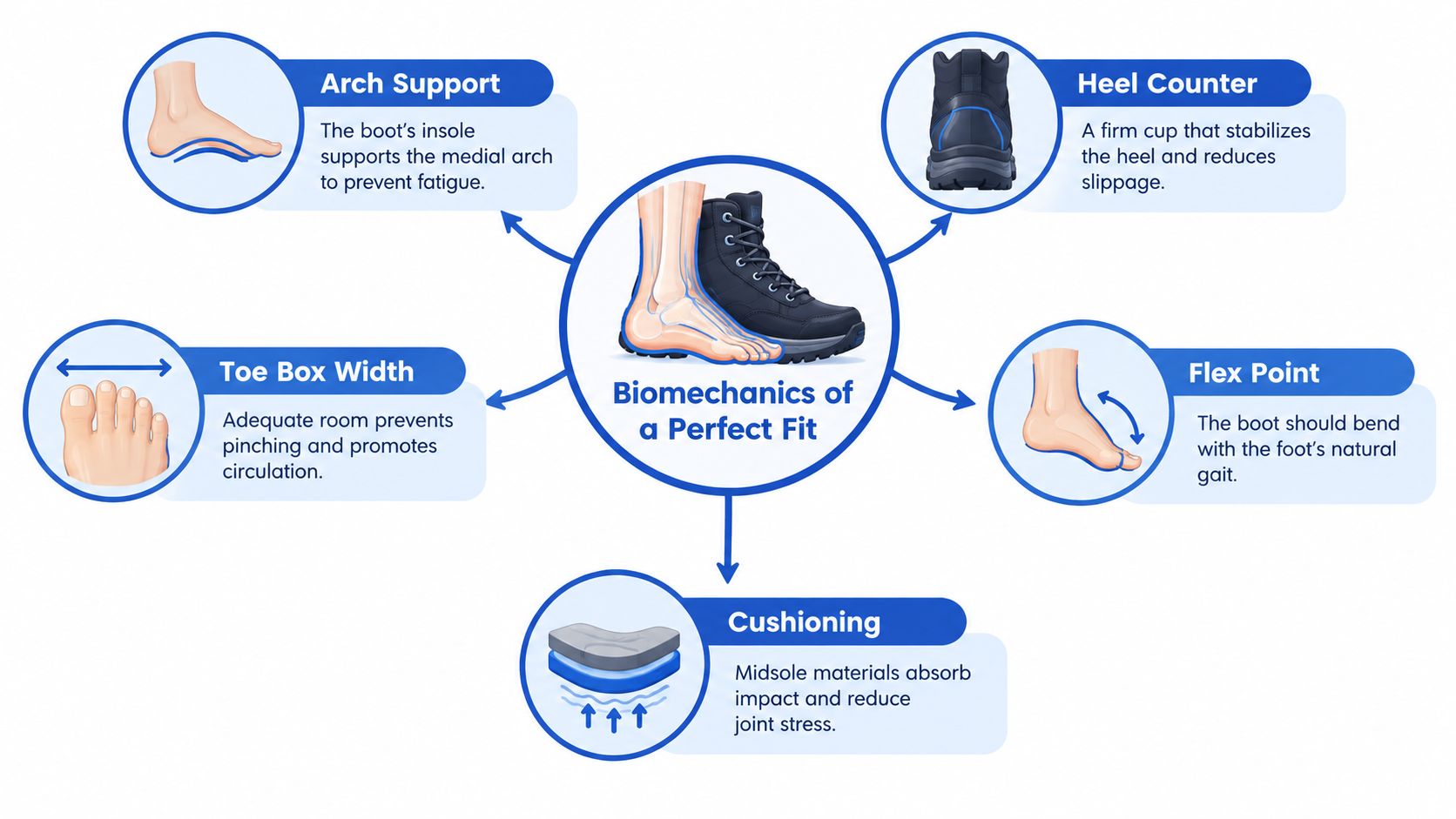
Length is only the beginning. A boot can measure correctly from heel to toe and still fail because the heel cup is loose, the instep is too low, or the forefoot is too narrow. Women's boots often need a different relationship between heel space, arch geometry, and forefoot volume than men's boots, so a single length number can't describe a successful fit.
Use this evaluation sequence before you commit to a pair.
Start with the heel and ankle
Put the boot on with the socks you expect to wear. Walk slowly, climb a few steps, and notice whether the heel lifts excessively. A small amount of movement may occur in a new leather boot, but repeated sliding creates friction and can undermine stability.
The heel counter should hold the rearfoot without pinching the Achilles area. The shaft should support the ankle without acting like a rigid brace. If the boot feels secure only because you tightened it aggressively, the underlying shape probably doesn't match your foot.
Test width, pressure, and volume separately
Your forefoot should feel held, not compressed. The widest part of your foot should align with the widest part of the boot, and your toes should have enough room to spread without striking the front. Pressure over the metatarsals usually signals inadequate width or volume, not a need to tolerate a difficult break-in.
Treat these as independent variables:
- Width: The upper must accommodate the ball of the foot without bulging or squeezing.
- Heel hold: The rearfoot should remain stable without friction-producing slippage.
- Instep volume: The vamp must close comfortably without pressing on the top of the foot.
- Arch geometry: The insole should support the foot without creating a hard pressure point.
- Flex point: The sole should bend where your foot naturally bends.
A practical at-home shoe measurement guide can help establish a starting point, but measurements don't replace movement testing.
The most important principle is controlled flexibility. A boot that prevents all ankle motion may feel stable at first, yet the gait research cited earlier shows that restricted ankle mechanics can increase compensatory demand elsewhere in the body. Look for a secure counter, adequate toe room, and a sole assembly that permits a natural ankle rocker.
Solving Sizing Challenges with Custom Design Labs
Standard retail sizing asks your foot to fit the manufacturer's assumptions. That works for some people, but it fails quickly when you have a narrow heel, a broad forefoot, a high instep, or meaningful differences between your feet.
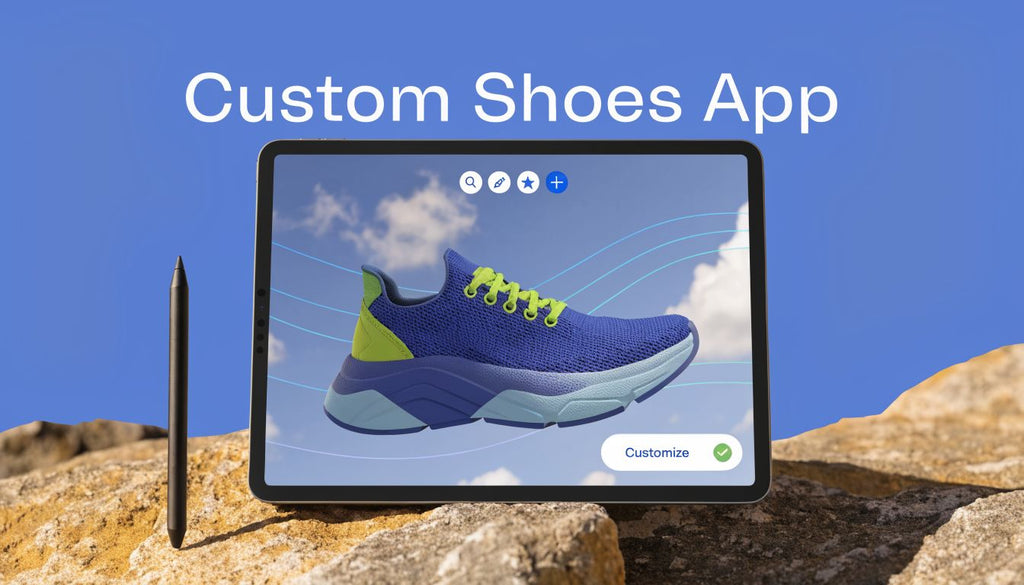
A direct-to-consumer Design Lab changes the order of operations. You begin with the fit problem, then select the visual details. Instead of accepting the nearest available width, you can consider how the heel, shaft, toe shape, material, and sole should work together.
Build from anatomy, not decoration
A sensible custom process begins with at-home measurements and a clear description of your usual discomfort. Don't report that a boot feels "wrong." Identify whether your heel slips, whether the toe box pinches, whether the instep feels compressed, or whether the ankle can't move naturally.
The online visualization stage then turns those decisions into a tangible design. A direct-to-consumer shoe customizer can allow choices such as more than 100 colors and materials, mismatched colors, and personal inscriptions, as described in this custom footwear technology example. For a bespoke ankle boot, the valuable choices aren't only decorative. They include upper material, lining, sole character, heel shape, and the visual balance of the shaft.
See the result before production
Modern customization can connect old-world making with digital analysis. One public footwear example combines real-time foot analysis, cloud-based data-driven design, and 3D printing to adapt shoes to individual foot structure and walking parameters (digital footwear innovation example).
That combination matters because visualization reduces ambiguity. You can judge whether a pointed toe, contrast panel, or lug sole supports your wardrobe before committing to production, while precision sizing addresses the anatomical issues ordinary product photography can't reveal.
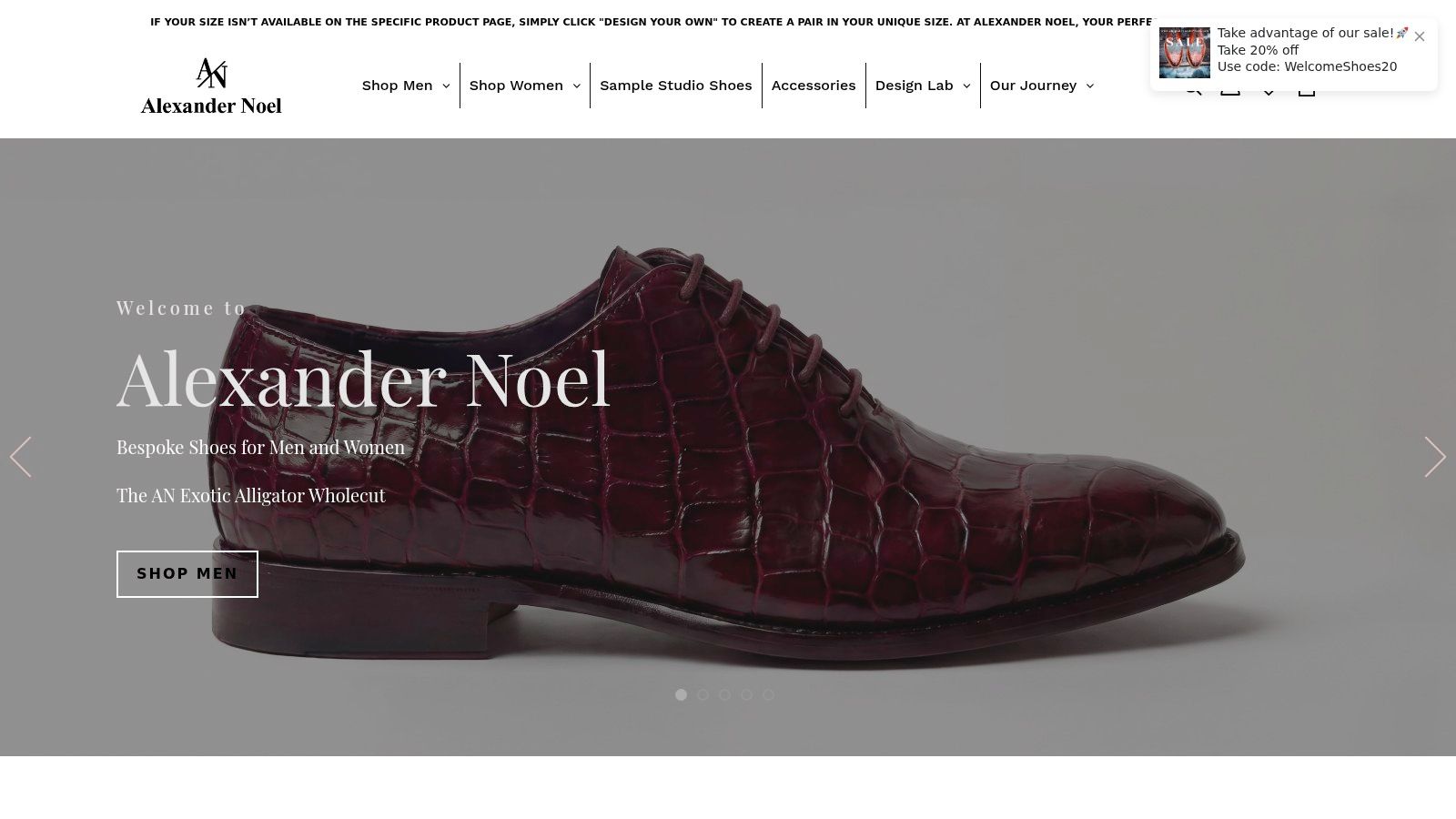
Alexander Noel's Design Lab bespoke footwear experience illustrates this direct-to-consumer approach through personalized materials, colors, and styling choices. The meaningful benefit isn't novelty. It's the ability to specify a boot around your foot and your daily use rather than compromise between whatever the shelf offers.
Versatile Outfit Pairing for the Modern Professional
A versatile boot earns its place by changing character with proportion. The same pair can look formal under trousers, relaxed with denim, and considered with a skirt if the shaft, toe, and heel maintain a coherent line.
Start with a fitted sock boot under wide-leg trousers. The close shaft keeps the ankle visually clean while the trouser drape supplies volume above it. Choose a heel that gives the hem enough clearance without making walking feel precarious. This pairing works especially well for presentations, client meetings, and evening dinners because the boot stays discreet beneath the trouser.
Use contrast deliberately
A smooth Chelsea boot with a midi skirt creates a sharper, more architectural silhouette. Add a fine knit or crisp shirt, then let the boot's leather finish provide the visual anchor. The outfit doesn't need conspicuous hardware because the proportion already creates interest.
A lace-up artisan boot produces a different result. Wear it with a flowing midi skirt or relaxed dress to contrast movement with structure. The boot grounds the fabric, while the skirt prevents the footwear from looking overly utilitarian. Keep the rest of the accessories edited so the texture feels intentional rather than costume-like.
Build a working capsule
For professional wardrobes, color deserves more attention than trend forecasting. Black gives the widest formal range, deep brown softens navy and camel, and a muted tonal color can make a simple outfit feel designed without limiting combinations. Select the finish according to your routine. A polished surface reads formal, while a matte or softly grained leather handles travel and casual settings with less visual fuss.
The professional dressing guide offers a useful reference for balancing polish, proportion, and workplace context. Apply the same discipline to the boot itself.
A versatile pair should disappear into an outfit when required, then provide structure when the clothing needs an anchor.
For trans-seasonal wear, avoid over-insulated interiors unless your climate demands them. A breathable lining, adaptable leather, and a sole with controlled traction can move from cool mornings to heated offices without making the boot feel like specialist winter equipment.
Making the Investment in Bespoke Footwear
The cheapest-looking decision often becomes the expensive one. Replacing boots that crack, deform, slip, or cause pain creates repeated costs in money, time, and wardrobe disruption. A carefully specified pair costs more attention at the beginning, but it gives you a better chance of wearing the boot across workdays, travel, and social occasions.
The market's scale supports a premium category. One forecast projects the global ankle boots market at US$100.4 billion in 2026 and US$145.1 billion by 2033 (global ankle boots market forecast). Those figures don't tell you which boot to buy. They do show why the category supports recurring seasonal reinvention alongside premium materials and specialized construction.
Use this pre-purchase checklist
- Material: Confirm the upper, lining, insole, and outsole materials. Decide whether you want patina, softness, weather resistance, or lower-impact alternatives.
- Construction: Ask whether the sole is cemented, Blake stitched, or welted, and learn what repairs the maker supports.
- Fit: Evaluate heel hold, forefoot width, instep volume, arch contact, shaft comfort, and flex point separately.
- Purpose: Decide whether the boot is for office wear, travel, evening use, wet weather, or a combination of these.
- Customization: Look for meaningful choices in width, materials, colors, lining, sole, and heel rather than decoration alone.
- Service: Confirm how measurements are taken, how quality is inspected, and what happens if the finished fit needs adjustment.
Direct-to-consumer production can connect global artisan partnerships with a more personalized buying experience. Traditional shoemaking remains essential, but modern visualization, at-home sizing, and made-to-order manufacturing can make bespoke footwear more accessible than the old retail model suggests. The strongest purchase respects both your style and your anatomy.
Choose the boot that earns repeated wear. A refined silhouette, durable materials, controlled flexibility, and individualized fit will outlast a trend-led detail every time.
Alexander Noel offers custom women's boots and other handcrafted footwear through a direct-to-consumer Design Lab, with personalized choices for materials, colors, and styling details. Visit Alexander Noel to design ankle boots around your measurements, professional wardrobe, and comfort priorities.
Related post
19
Sep
19
Sep
19
Sep
19
Sep
19
Sep
