

RECENT POSTS

29.August.2026
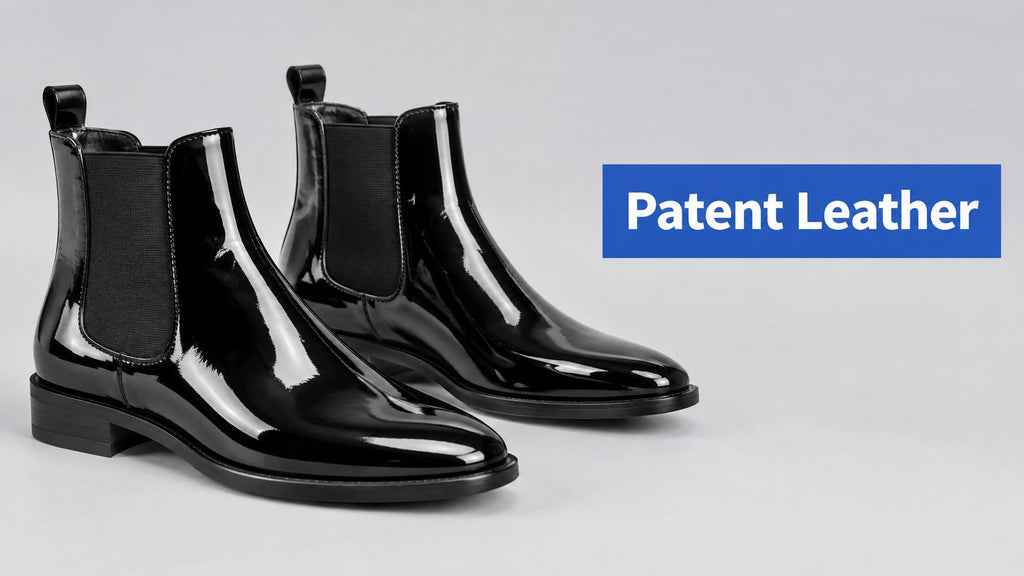
Custom Women's Boots for Fall: Choosing Between Two Black Chelsea Silhouettes
0 Comments








Black Patent Leather Loafers Womens: Style and Care
You're standing in a fitting room with a glossy pair of loafers on your feet, one hand on the bench, one eye on the mirror. They look polished in the best way, but the questions show up fast. Will the shine survive daily wear, will the toe box pinch, and will they feel too formal once you leave the store?
That hesitation is exactly why black patent leather loafers for women deserve a careful look. They sit in that narrow space between a dress shoe and a casual flat, so the finish, shape, and fit all matter at once. The good news is that once you understand how patent leather behaves, the shoe gets much easier to judge.
The Mirror Finish Moment Everyone Has Had
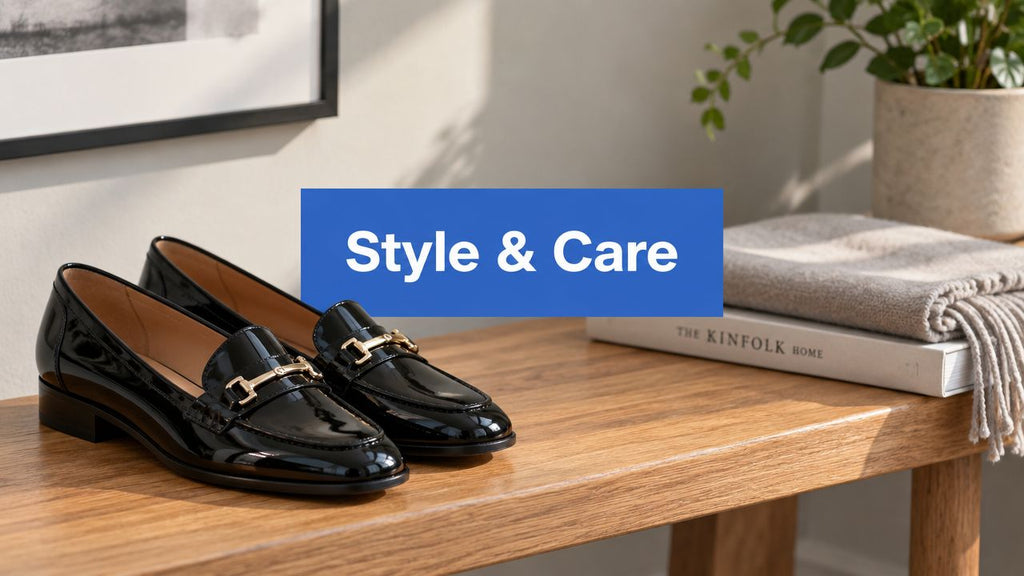
The first reaction is usually visual. The shoe catches light, the black looks deeper than matte leather, and suddenly the pair feels sharper than the rest of the outfit. That glossy surface is part of why women's black patent loafers keep showing up across major retailers and marketplaces, from Zappos and John Lewis to Nordstrom, ASOS, and Next, with listings that span everything from mass-market to luxury pricing Zappos women's black patent leather loafers.
A first-time buyer often worries that the shine means fragility. That's understandable, because patent leather reads delicate even when it's made to be worn. The practical question isn't whether the shoe looks special, it's whether the finish suits the way you move, sit, commute, and stand.
Practical rule: if you'd reach for the shoe only when you want to look dressed up, it's working as a statement pair. If you want it for workdays and errands, the last and the width matter more than the shine.
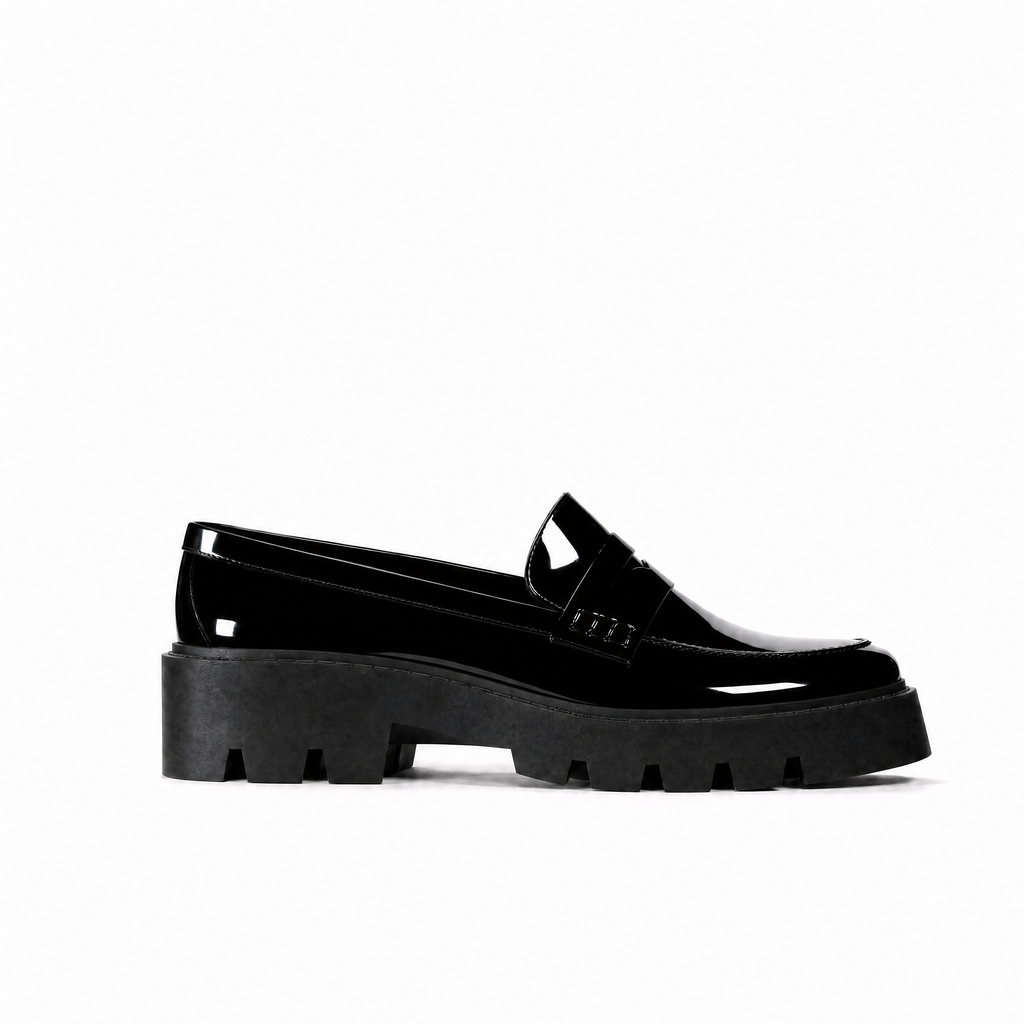
The shape also changes the answer. A black patent penny loafer can feel restrained and office-ready, while a chunky version looks more modern and can carry casual fabrics with less effort. A useful reference point for caring for glossy leather is the basic polishing logic used on other leather footwear, like the method described in how to polish leather boots, but patent leather needs gentler handling than smooth leather.
If you're choosing between “pretty” and “practical,” don't split the difference too early. First decide whether the shine fits your wardrobe, then check whether the shoe can handle your foot shape.
What Patent Leather Actually Is
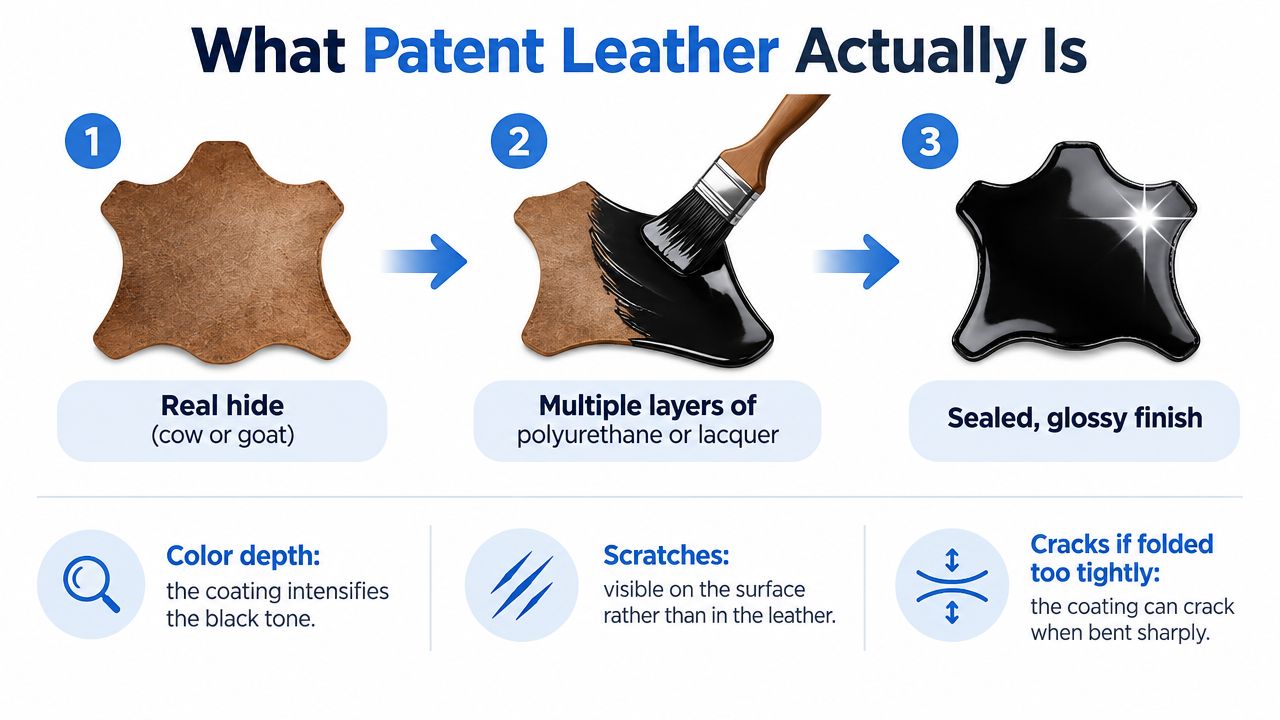
A mirror finish starts with real hide. Patent leather is leather sealed under a glossy coating, usually with polyurethane or lacquer layers, so the surface reflects light cleanly and reads sharper than untreated leather. That coating also gives black patent loafers much of their water resistance, and it is why the shoe can handle damp conditions better than many other dress leathers Carl Friedrik patent leather care guide.
How the coating changes the feel
The coating changes how the shoe looks and how it behaves. It makes the surface smoother, less porous, and more reflective than smooth calf leather, so the black often looks deeper in daylight. The depth of a true black finish is a styling asset in its own right, much like the appeal when you explore mysterious black noir fragrances.
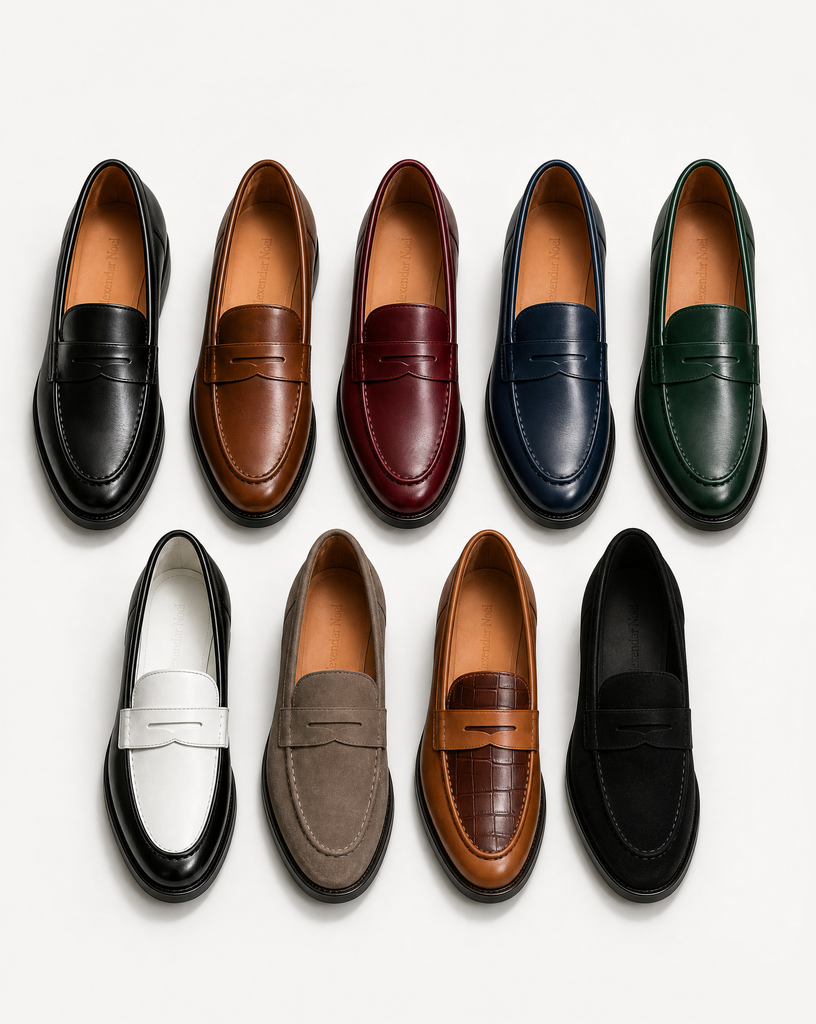
Small marks can sit on top of the finish instead of sinking in, so they may stand out even when the shoe is still sound. A cleaner polish routine for glossy leather is described in the many leathers and fabrics of Alexander Noel, and it helps show why finish choice matters as much as construction.
Patent leather also bends differently. It can flex, but it does not relax the way soft, uncoated leather does, so a tight crease line can show plainly instead of softening over time. If the fit is off at the start, the shoe will usually keep reminding you.
A patent finish is a coating system, not a promise that the shoe will adjust to every foot shape.
That point is easy to miss when you shop fast. A standard black loafer in smooth leather may feel forgiving after a few wears, while a patent version tends to keep its shape more stubbornly. Retail listings often spell that out with labels like black patent, black crinkled patent, or black patent leather loafers, as seen across broad women's loafer assortments Stylight patent leather loafers for women.
Why Fit Goes Wrong on Patent Loafers
Most fit problems show up in the same three places. The ball of the foot feels squeezed, the vamp presses over a high instep, or the toe box leaves no depth above the toes. Because patent leather doesn't give much, those pressure points don't “fix themselves” later the way they sometimes do in softer leather.
The three pressure points that matter most
| Fit Triggers on Patent Loafers | What You Feel | Best Response |
|---|---|---|
| Foot width across the ball | Tightness at the widest part of the foot, even if the length seems right | Look for width options or a custom last |
| Instep height at the vamp | Pressure across the top of the foot, especially when sitting and walking | Choose a higher vamp opening or made-to-order sizing |
| Toe-box depth | Toes feel compressed or lifted against the upper | Prioritize a deeper toe shape, not just a longer size |
A lot of buyers assume size is the whole story, but width changes the experience more than length in many loafers. A narrow heel with a wider forefoot can make the shoe slip at the back while pinching at the front, which is a frustrating combination because tightening the fit in one area can worsen it in another.
A useful fit check is simple. Stand up, feel the ball of the foot, and notice whether your toes can lie flat without scraping the upper. Then walk a few steps and see whether the heel stays seated without rubbing. If the answer is no before you've left the shop, the shoe probably won't become comfortable later.
For a more systematic approach to trying shoes on, how to fit shoes properly is a helpful reference point for the order in which to test length, width, heel hold, and toe room.
If you already know your feet are hard to fit, don't treat patent loafers like a forgiving casual flat. Treat them like a structured shoe with a polished surface, because that's what they are.
Choosing the Right Silhouette for Your Wardrobe
The same black patent loafer can look disciplined, relaxed, or a little fashion-forward depending on its shape. That is why the first question is not the shine, it is the silhouette you will wear most often. A buyer who lives in trousers needs a different profile from someone who wears cropped denim and roomy outerwear. The shape has to work with the clothes already hanging in the closet.
Match shape to the clothes you wear most
| Loafer Silhouette | Visual Weight | Best Paired With | Occasion |
|---|---|---|---|
| Penny loafer | Slim and steady | Tailored trousers, pencil skirts | Office, meetings |
| Tassel loafer | Slightly playful | Cropped pants, fine knitwear | Smart casual |
| Horsebit loafer | More formal | Dresses, evening trousers | Dressed-up days |
| Chunky-sole loafer | Heavier and grounded | Wide-leg denim, structured coats | Off-duty, transitional weather |
Toe shape changes the message
Toe shape changes the whole read of the shoe. An almond toe draws the eye forward and feels polished. A square toe looks more current and a little architectural. A round toe softens the profile and makes the loafer feel less severe. That is useful when your wardrobe swings between sharp tailoring and relaxed layers, because the shoe should echo the clothes instead of competing with them.
If your week is built around suiting and neat hems, penny and horsebit styles usually fit the easiest. If you wear looser denim, oversized coats, or cropped trousers, a chunkier sole can balance the volume better. For a wider look at how women's footwear shapes shift across seasons and markets, women shoe trends 2026 women boots for 2026 discuss global discuss usa shows how shape language keeps changing even when polished materials stay relevant.
Some shoppers also overlook how finish and silhouette work together. Patent leather already brings visual weight, so a very heavy sole can feel more assertive than expected, while a slimmer shape can keep the shoe looking neat and versatile. That balance is why heritage styles keep showing up in patent finishes across the category, including on Stylight patent leather loafers for women.
If your size or width is hard to find off the rack, a custom path can solve the mismatch between shape, fit, and finish without asking you to settle for a close enough pair.
Outfit Formulas That Make Them Work
Black patent loafers look best when the rest of the outfit gives them room. If everything else is shiny, loud, or highly detailed, the shoe starts to feel costume-like. If the clothes stay restrained, the gloss reads as intentional.
Office, evening, and weekend
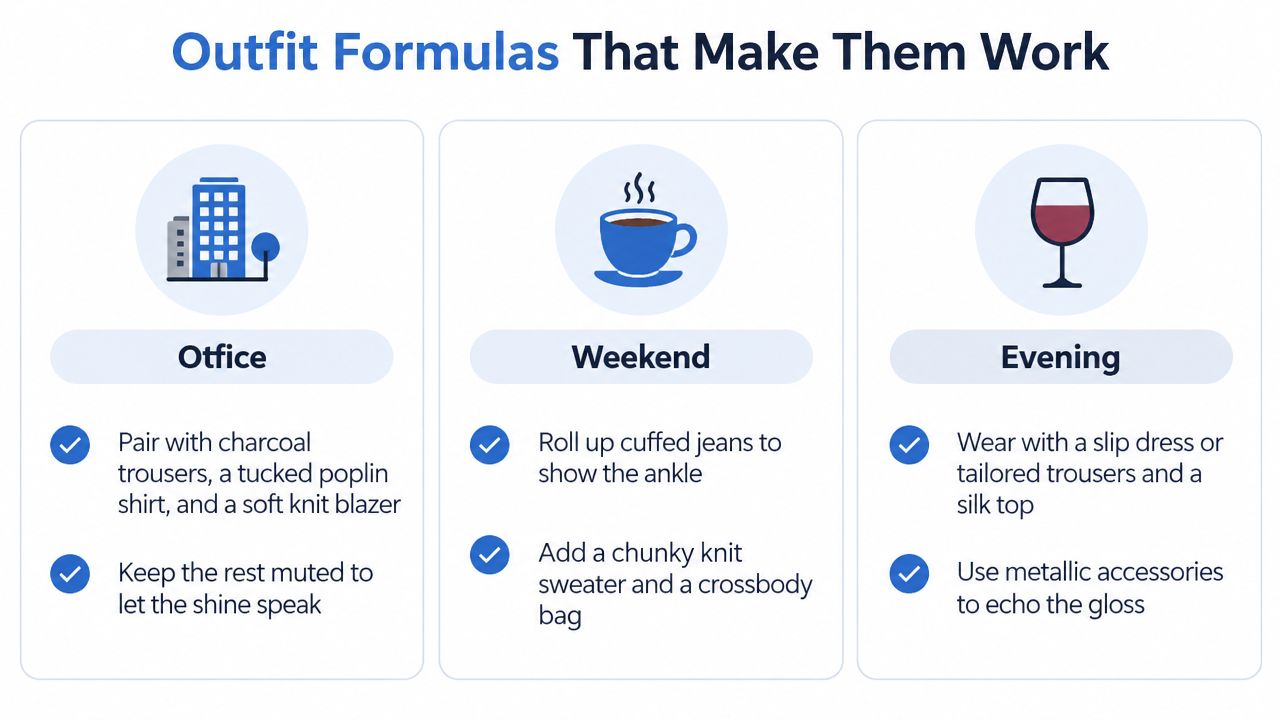
For the office, pair them with charcoal trousers, a tucked poplin shirt, and a soft knit blazer. The matte layers let the gloss act like a single sharp accent, which keeps the look polished without becoming stiff. Bare ankles or a tonal no-show liner usually works better than a visible sock when the hemline is cropped neatly.
For evening, a slip-style midi dress in a muted color keeps the shoe from competing with sequins or heavy embellishment. The loafer can carry the light in the look, especially if jewelry stays minimal and the silhouette of the dress stays clean. That contrast is what makes the outfit feel deliberate.
For weekends, straight-leg jeans, a crisp white tee, and an unstructured trench are enough. The denim and cotton lower the formality, while the glossy finish keeps the outfit from reading too casual. You're not dressing the shoe up, you're letting it sharpen simple clothes.
A short video can also help when you're testing proportions and movement:
The pattern is consistent across all three looks. Keep hemlines clean, keep the palette restrained, and let the patent finish be the focal point rather than one more competing detail.
Keeping the Shine Without Babying the Shoe
Patent leather lasts well when you treat it like a finished surface, not like leather that needs to soak up cream. After each wear, wipe the upper with a soft, lint-free cloth so dust does not sit on the coating and leave fine marks. That small habit does more for appearance than most special products.
A low-effort care routine
- After wearing: Wipe the shoe with a soft cloth or microfiber, not a hard brush, because patent leather scratches more easily than smooth-grain leather Carl Friedrik patent leather care guide.
- For light scuffs: Use a black patent-leather cleaner or polish, then let it dry briefly before buffing, because black pigment can help hide micro-scratches on the surface Shoe Care Shop patent leather guide.
- For storage: Keep the loafers on cedar shoe trees and inside a cloth bag so they hold shape and stay away from color transfer from nearby shoes.
- Avoid: Hard-bristled brushes, alcohol-based cleaners, direct heat, and paper stuffing, which can cloud or stress the coating.
Practical rule: if a cleaner sounds aggressive, it is probably wrong for patent leather.
Water is another point buyers often worry about. The finish resists it well, but droplets can still leave spots if they sit on the surface too long, so a quick wipe after damp weather or a spill is the smart habit.
A monthly refresh with a patent-specific cleaner is usually enough if you wear the pair regularly. The goal is not to condition the shoe like traditional leather, because the coating does not absorb cream in the same way. The goal is to keep the gloss clear and the surface clean.
For bagged storage, black gloss metallic foil bags are a useful reference for why a smooth outer layer helps finishes stay pristine.
When Custom Is the Smartest Answer
Some feet don't cooperate with off-the-rack loafers. If one foot is slightly wider, the instep sits high, or the heel slips while the forefoot feels cramped, a made-to-order path solves the problem more directly than size hopping. That's where a Design Lab approach becomes practical instead of indulgent.
What gets adjusted
A custom process usually starts with foot tracings, instep measurements, and a note about toe-box preference. From there, the pattern can be built around the last rather than forcing the foot into a standard shape, which matters most for patent loafers because the finish leaves little room for stretching later. Choice also extends to the material itself, from genuine mirror-finish patent to corrected-grain patent, plus sole options that change the shoe from dressy and slim to more grounded and sturdy.
The business logic behind that is clear in footwear returns. Independent footwear-market analysis says fit problems drive 40 to 60% of footwear returns, and it compares return rates by sizing strategy, with custom or bespoke shoes at 1 to 3% versus standard shoes at 12 to 18% Winchee Shoes return analysis. In other words, fit isn't just a comfort issue, it changes the economics of the shoe itself.
That's why made-to-order can make sense for a polished pair you'll wear often. Instead of treating black patent loafers as a novelty, you treat them as a repeat piece and solve the discomfort before it starts.
A fitting pair is worth more than a beautiful pair that stays in the box.
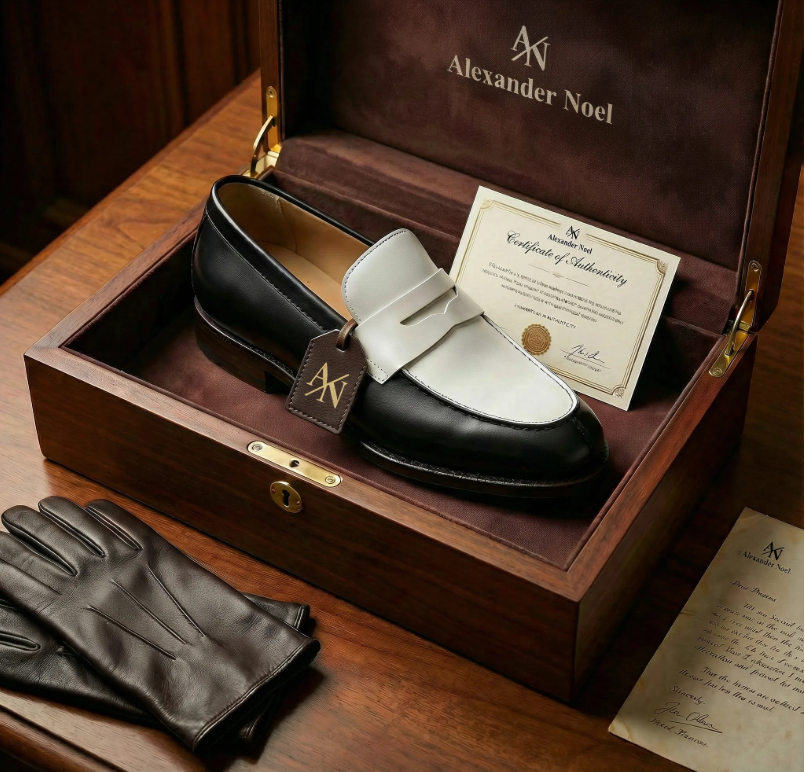
A direct-to-consumer custom model also changes the buying process by making footwear after purchase and reducing inventory overhead, while digital design tools let shoppers configure the shoe before it's made TailorStep custom footwear overview. Alexander Noel also uses a women's custom shoe design lab for material, color, and sole selection, which fits the same made-to-order logic without forcing you into a standard shelf size.
Quick Answers to Common Buyer Worries
Yes, black patent loafers can hold up for regular wear if you rotate them and keep them clean. The finish is durable, but it's the care routine and storage that keep the surface from looking tired too soon.
If you step in water, wipe the shoe as soon as you can. The coating resists moisture, but spots can still show if liquid dries on the surface, so carrying a soft cloth is smart.
Sensitive feet sometimes do better with a different lining, and chrome-tanned leather is common, while vegetable-tanned linings also exist. If you're prone to irritation, check the lining material before you think about the finish.
Break-in should be minimal when the last matches your foot shape. Patent loafers don't usually soften and stretch much, so a shoe that feels wrong on day one usually stays wrong.
Buying checklist: correct last, daylight mirror check, snug heel, slight toe clearance, and matching hardware tone.
If you're choosing among pairs in person, sit down, stand up, and walk a few steps before you decide. That's the quickest way to see whether the shoe is flattering only in the mirror, or workable for your feet.
If you want help finding a black patent loafer that fits your foot shape instead of just your size label, explore the made-to-order options at Alexander Noel. Their custom design approach is built for shoppers who need more than a standard last and want a pair that matches both fit and finish.
Related post
19
Sep
19
Sep
19
Sep
19
Sep
19
Sep
