

RECENT POSTS



29.August.2026
Custom Women's Boots for Fall: Choosing Between Two Black Chelsea Silhouettes
0 Comments











Cow Hide Clogs: A Buyer's & Styling Guide for 2026
Some shoes fill a gap in your wardrobe. Others become the reason the outfit works at all. Cow hide clogs belong in the second group.
A buyer usually reaches them after a familiar kind of fatigue. You've worn polished loafers that feel too proper, sneakers that feel too casual, and anonymous mules that look fine online but say nothing once they're on your feet. Then you see a pair of cow hide clogs. The pattern is irregular. The texture catches light differently from smooth leather. The silhouette feels grounded and sculptural at the same time.
That difference matters. Hair-on-hide footwear doesn't read as factory-flat. It reads as selected. A spotted pair with dark denim feels sharp and relaxed. A richer brown pair under cream trousers feels warmer and more polished. Even before you start thinking about fit or construction, you can tell these shoes have personality.
What makes them worth understanding is that their appeal isn't only visual. A well-made clog asks the material, the footbed, and the sole to do different jobs at once. If one part is off, the whole shoe feels clumsy. If the maker gets it right, the clog feels stable, distinctive, and easy to wear far beyond the first exciting try-on.
An Introduction to Unmistakable Style
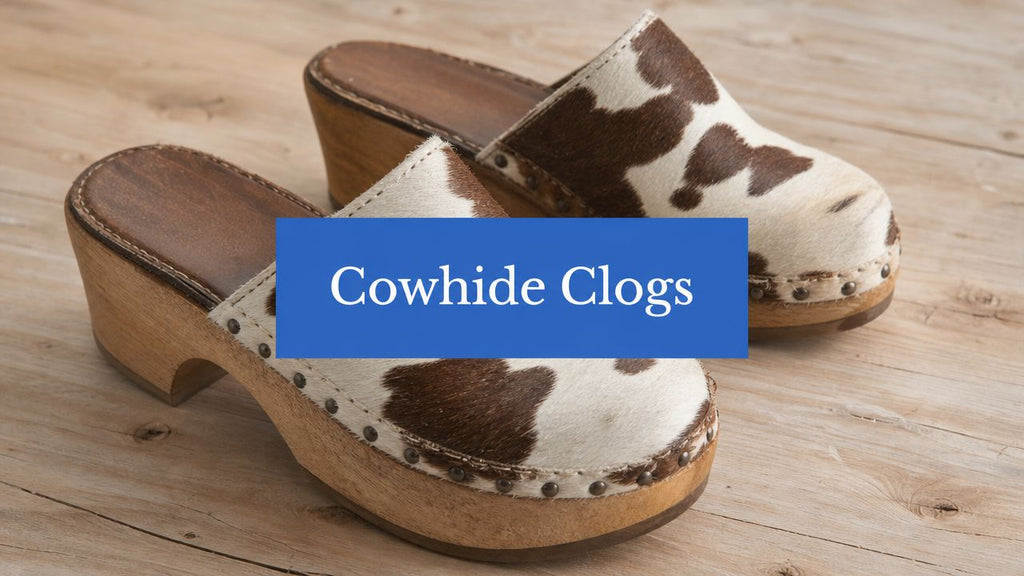
The first thing people notice about cow hide clogs is usually the surface. No two pairs look exactly alike, and that's the point. The hide may show speckling, broad patches of color, or tighter mottling. Those natural variations give the shoe a sense of depth that smooth leather rarely offers.
That uniqueness is why cow hide clogs often feel more personal than trend-driven. They aren't trying to disappear into an outfit. They add shape and texture, and they do it without needing loud hardware or heavy branding.
Why they feel different from most shoes
Mass-market footwear often aims for consistency above all else. Every pair should look identical on the shelf, and every finish should be predictable. Cow hide clogs move in the opposite direction. The pattern variation is part of the value, not a defect to be corrected.
Practical rule: If you want footwear that starts conversations without looking theatrical, cow hide clogs sit in a useful middle ground. They're expressive, but still rooted in classic materials.
They also carry a certain calm confidence. The clog shape is simple. The material is what gives it life. That balance keeps the shoe from feeling costume-like.
A luxury that still feels usable
Approachable luxury isn't about fragility. It's about choosing something distinctive that still belongs in daily life. A good pair of cow hide clogs can work with denim, soft tailoring, knitwear, and dresses because the form is sturdy and readable.
That's why experienced buyers often stop asking, “Can I pull these off?” and start asking better questions. Will the fit hold me securely? Is the sole right for my day? How should I care for the hair-on-hide so it keeps its character? Those are the questions that turn curiosity into confident ownership.
What Are Cowhide Clogs Anyway
Cowhide clogs are clogs made with an upper cut from cowhide, often in a hair-on-hide finish. That means the leather retains its natural hair, creating a tactile surface with visible pattern and variation. It isn't the same as suede, and it doesn't behave like polished calfskin either.
Suede has a buffed nap. Smooth leather has a finished face. Hair-on-hide keeps a more natural visual identity. That's why one pair may look boldly patterned while another feels quieter and more tonal.
What “hair-on-hide” actually means
Some buyers hear “cowhide” and assume a stiff, rugged boot leather. In clogs, that's not usually what they're getting. The term often refers to the visible outer character of the hide, complete with hair and natural markings, used as the statement material on the upper.
A few things help separate expectation from reality:
- Natural variation matters: Pattern placement will differ from pair to pair.
- Texture is part of the design: The surface looks more dimensional than flat leather.
- Personality comes built in: The material does much of the visual work, so the clog can stay structurally simple.
The most successful hair-on-hide shoes don't fight their own material. They let the hide be the focal point.
Why the clog form suits this material so well
Clogs have enough visual presence to carry a distinctive upper without becoming busy. The structured base gives the patterned hide a frame. That's one reason the pairing feels so convincing.
It also helps that clogs are not new arrivals in footwear history. Clogs possess a documented European history stretching back to at least the 13th century. The oldest surviving wooden footwear from the Netherlands dates to the 1200s, and records show clogs were worn across Europe as early as 1230 AD, as noted in this history of clogs from The Genealogist.
Rustic and refined at once
That long history explains why clogs still feel believable today. They began as practical footwear, but the form adapted well to modern dressing. Add hair-on-hide, and you get a shoe that balances craft tradition with a more fashion-aware surface.
A smooth black loafer looks controlled. A cow hide clog looks chosen. That's a small distinction on paper, but on the foot it changes the whole mood of an outfit.
The Anatomy of a Well-Made Clog
A clog should never be judged by the upper alone. Buyers often fall for the hide pattern first, then realize later that comfort lives elsewhere too. The true test is how the upper, the platform, and the footbed work together.

The upper and why softness matters
A good cowhide upper should feel substantial without feeling board-like. Market examples describe cowhide as very soft, durable, and breathable, and open-heel styles are favored in warm conditions because they allow air circulation. Some European-made examples pair cowhide uppers with wooden outsoles and PU treads to preserve the classic platform while adding traction and wear resistance, as described in this Swedish cowhide clog listing.
That combination explains a lot about how clogs wear. The upper gives where your foot needs movement. The base resists collapse. Neither part can do the other's job.
For buyers trying to judge material quality more closely, Alexander Noel's overview of leather grades, sourcing, production, and quality assurance is a useful reference for understanding what separates decorative leather talk from meaningful construction choices.
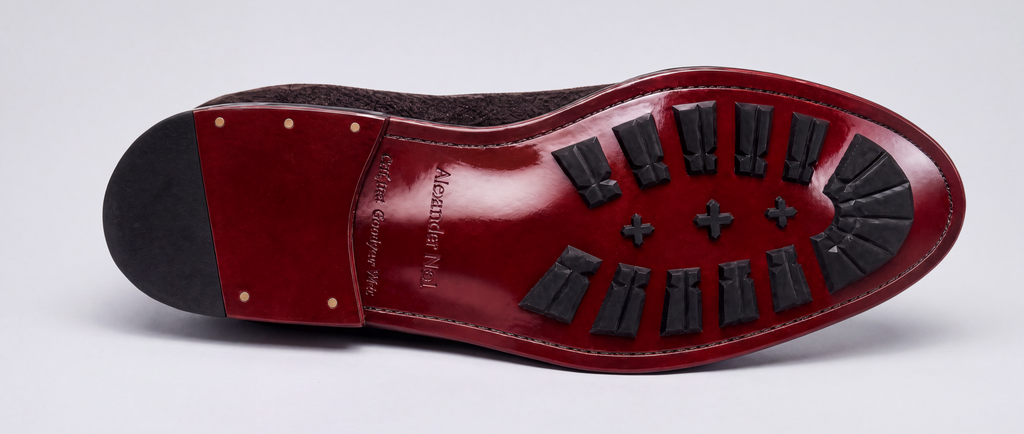
The platform and outsole
Many newer clog buyers get confused. They expect the sole to flex like a sneaker. A clog usually won't, and it shouldn't. The platform is meant to provide a stable base.
Here's a simple comparison:
| Component | What it does | What to watch for |
|---|---|---|
| Cowhide upper | Adds softness, breathability, and visual character | Clean attachment, even shaping, no twisting |
| Wooden or rigid base | Creates support and a stable platform | Balanced pitch, smooth underside transition |
| PU or rubber tread | Improves traction and wear resistance | Secure bonding, practical grip for daily use |
The interior decides whether you can wear them all day
You don't see much of the interior when shopping online, but that's where long-wear comfort gets sorted out. The foot has to sit securely enough that the clog moves with you rather than slapping against the floor or forcing you to grip with your toes.
A well-made clog feels deliberate underfoot. The upper welcomes the foot in. The base carries the structure. The tread finishes the job by making the platform more practical on modern surfaces.
How to Choose Your Perfect Pair
Fit is where enthusiasm can turn into regret, especially with clogs. Many buyers assume they can order their usual size and be done with it. Sometimes that works. Often, it doesn't.
At least one retailer explicitly tells buyers to measure their feet at home before ordering clogs, which suggests sizing uncertainty is common in this category, as seen on the Intentionally Blank Shift product page. That's sensible advice, because clog fit depends not only on length but also on instep, width, heel openness, and how much movement the design is meant to allow.

Start with your foot, not the photo
Before you choose pattern or heel shape, measure your foot at home on a hard floor. Pay attention to the foot you stand on more heavily if one runs slightly larger. Then compare that measurement to the maker's own chart, not a generic conversion table you found elsewhere.
Look at these fit clues on the product page:
- If the maker says the style runs large: take that seriously
- If the toe box looks shallow: consider your instep height
- If the clog is standard width: wide feet may need extra caution
What comfort details actually matter
Some higher-quality cowhide clogs use structured interiors to manage fit and comfort. One model pairs a cowhide upper with calfskin lining, a latex insole, and a memory-foam padded footbed, and the maker notes that the style can run large enough that buyers should size down in some ranges, according to the Marc Nolan Solana 2 product page.
That tells you what to look for even beyond that specific shoe. Interior materials shape the wearing experience.
- Calfskin lining feels smoother against the foot than a rough interior.
- Latex insole can help with localized cushioning and rebound.
- Memory-foam padding softens pressure at the forefoot and heel.
- Structured shape helps the foot feel placed, not loose.
Buy the pair that matches your foot mechanics, not only your outfit ideas.
Match the sole to your actual life
A chunky, rigid clog may look fantastic, but your day matters. If you stand and walk in short bursts, a more sculptural base may be fine. If you're moving between office, pavement, and errands for hours, prioritize tread, secure fit, and a well-finished footbed over dramatic profile.
The best online purchase usually comes from asking three plain questions. Does my heel feel secure enough? Does the footbed support me rather than just pad me? Does the sole suit where I'll wear them?
Styling Cowhide Clogs for Any Occasion
Cow hide clogs work best when the rest of the outfit gives them room. They already bring pattern, texture, and shape. You don't need to pile on more statements around them.

A simple example proves the point. Straight-leg denim, a clean knit, and a patterned clog feels complete because the shoe breaks up the familiarity of the jeans. The outfit isn't loud. It's just more considered.
Easy outfits that don't overwork the shoe
For women, cow hide clogs pair especially well with wide-leg trousers, ankle-length denim, soft midi dresses, and cropped jackets. The clog has visual weight, so hems that stop above the floor help show that shape.
For men, think of them as a substitute for the shoe that feels too predictable. Try them with cuffed chinos, dark denim, relaxed tailoring, or textured trousers. A plain oxford shirt or merino knit keeps the look clean.
A few combinations tend to work well:
- Dark denim and a cream sweater: lets the hide pattern stand out without clutter
- Olive chinos and a white tee: casual, grounded, and easy to repeat
- Black trousers and a soft camel coat: sharper, with enough restraint for the shoe to carry interest
- A slip dress and oversized cardigan: soft clothing against a structured base creates balance
Business casual without looking stiff
Many underestimate clogs. A neat pair in a restrained hide can work well in creative offices or polished casual settings. The trick is to keep the rest of the silhouette crisp.
If you're drawn to other textured footwear, Alexander Noel's article on pony hair boots is a useful companion read because it shows how hair-on-hide materials can shift an outfit without requiring dramatic styling elsewhere.
Here's a closer look at how the shape moves in wear:
Let one element lead
The easiest styling mistake is trying to “match” the hide too closely. Don't search for identical tones elsewhere in the outfit. Instead, pull one color family from the clog and let the rest stay quiet.
A patterned clog usually looks better with calm clothing than with equally busy accessories.
That's why they become surprisingly versatile once they're in the wardrobe. They do more work than a plain neutral shoe, but they don't ask much in return.
Maintaining the Beauty of Your Clogs
Hair-on-hide makes buyers nervous for a reason. Many product pages celebrate the uniqueness of the material but say little about abrasion, water sensitivity, stain removal, or how the surface may change with wear. That gap leaves people unsure how practical the shoes really are, a problem visible in the way many listings emphasize uniqueness without giving much lifecycle guidance, such as this studded cowhide clogs and mules listing.
The good news is that careful ownership is usually more important than complicated ownership. You don't need a laboratory routine. You need a gentle one.

What to do after regular wear
Start with dry care. A soft brush or dry cloth is usually the right first move because it lifts dust without flattening the character of the hide more than necessary. Work in the direction the hair naturally lies.
Then check the edges, welt area, and sole junction. Dirt often gathers there first. If the pair has a leather interior or surrounding leather trim, a broader leather clothing care guide can be helpful for understanding gentle cleaning habits and storage principles that apply to natural materials more generally.
How to handle common problems
Use restraint. Too much moisture is usually a bigger risk than too little action.
- For light surface dust: use a soft brush, then wipe the sole edge separately.
- For a small spot: dab carefully with a barely damp cloth. Don't soak the hide.
- For flattened hair: let the shoe dry fully, then brush lightly with the grain.
- For storage: keep them away from direct heat and avoid crushing the upper under heavier shoes.
If you want a dedicated maintenance setup for your leather footwear more broadly, Alexander Noel's overview of a leather shoe care kit can help you think through the basic tools worth keeping at home.
Simple don'ts that save a pair
The biggest mistakes are easy to avoid:
- Don't scrub aggressively: friction can roughen or thin the hair-on-hide surface
- Don't saturate the upper: water can alter appearance and leave marks
- Don't dry them beside direct heat: the material can stiffen unevenly
- Don't ignore the sole: a clog wears from the ground up as much as from the upper down
Gentle, regular care beats occasional heavy cleaning.
That's the principle to remember. Cow hide clogs aren't fragile museum pieces, but they do reward a lighter hand.
Beyond the Rack The Art of Customization
The hardest part of buying clogs isn't wanting them. It's finding the pair that matches your foot and your taste at the same time. Maybe the hide is beautiful but the fit is loose. Maybe the sole looks right but the silhouette feels too heavy. Maybe you want the character of hair-on-hide with cleaner proportions than most ready-made options offer.
That's where customization starts to make practical sense. Not as ornament for ornament's sake, but as a way to solve real footwear problems.
Why custom helps with clogs
A clog asks for precise balance. The upper has to hold the foot without pinching. The platform has to suit your gait. The visual scale has to work with your wardrobe. Off-the-rack shoes can get close, but they can't account for every preference in width, pitch, lining, or finish.
Customization lets you narrow those variables. You can choose a more restrained or bolder hide, a sleeker or chunkier base, and details that make the shoe easier to wear with what you already own.
Personal taste is part of fit
People often treat style and fit as separate topics. In reality, they overlap. If a shoe feels too visually loud for your wardrobe, you won't wear it often. If the structure fights your foot, you'll admire it from the shelf. A personalized approach reduces both problems.
For buyers who want that route, Alexander Noel offers a made-to-order process through its guide to designing your own footwear, where material, styling direction, and fit preferences can be part of the conversation.
The appeal of custom cow hide clogs comes down to control. You keep the individuality that makes the material special, but you shape the final result around how you dress and walk. That's often the difference between a striking purchase and a lasting one.
If this guide helped you clarify what to look for in cow hide clogs, explore Alexander Noel for a closer look at made-to-order footwear and a design process built around fit, materials, and personal style.
Related post
04
Oct
04
Oct
26
Sep
26
Sep
26
Sep
