

RECENT POSTS
29.August.2026
Custom Women's Boots for Fall: Choosing Between Two Black Chelsea Silhouettes
0 Comments



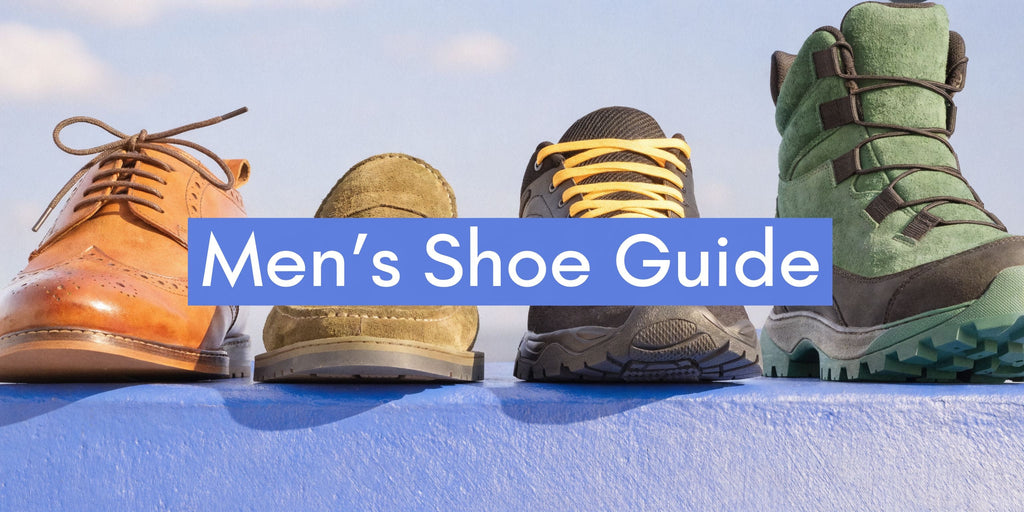


Shoes for Men;s: The Ultimate Buyer's Guide for 2026
A man usually starts thinking about shoes for men s at the worst possible moment. He’s already dressed. The meeting starts in an hour. The black pair feels stiff across the toes, the brown pair looks too relaxed, the sneakers are comfortable but a touch too casual, and the boots only seem right with different trousers.
That frustration isn’t vanity. It’s a fit problem, a style problem, and often a buying problem. Most men aren’t short on shoes. They’re short on the right shoes.
That’s why footwear deserves more care than it usually gets. A good pair changes posture, sharpens a silhouette, and carries you through a long day without asking for attention. A poor pair does the opposite. It pinches, collapses, creases badly, and makes even a fine suit look unfinished.
Your Guide to Navigating the World of Men’s Footwear
A client once described his wardrobe to me in a sentence I’ve heard many times: “I own enough shoes, but none of them solve the problem in front of me.” That’s the modern state of men’s footwear. You may have several pairs, yet still feel underprepared.
That tension makes sense. Men are buying actively and thinking more carefully about what belongs in their rotation. In recent consumer surveys, 42% of men purchased 3 or more pairs of shoes in the past year, and men spent $295 on footwear on average, which is 15% above the overall average according to Simon-Kucher’s footwear consumer demographic data.
The numbers matter because they confirm what many wardrobes already show. Men aren’t treating shoes as an afterthought. They’re buying for work, travel, weekends, exercise, and social life. The confusion comes from not knowing which pairs deserve space in the closet.
A useful place to begin is to stop thinking of shoes as decoration. Think of them as equipment for your personal life.
- For formal work you need structure, polish, and restraint.
- For flexible office dress you need versatility without sloppiness.
- For off-duty wear you need comfort that still looks intentional.
- For hard-to-fit feet you need shape and support, not just a bigger size.
A strong wardrobe doesn’t start with more shoes. It starts with fewer mistakes.
If you’ve been buying on impulse, the answer isn’t another random pair. It’s a better framework. A good place to continue that education is this guide to stylish and versatile men's footwear, which helps translate broad style categories into practical choices.
The central lesson is clear. The perfect shoe usually isn’t stumbled upon in a hurry. It’s chosen with purpose, and sometimes crafted with your life in mind.
Building Your Essential Men's Shoe Collection
A well-built shoe wardrobe works like a small, disciplined toolkit. Each pair should solve a clear problem. If two pairs do the same job, one of them is probably unnecessary.
The broader market supports that practical view. The global men's footwear market was valued at USD 131.44 billion in 2023 and is projected to reach USD 211.08 billion by 2031, while leather shoes continue to dominate because professional settings and formal dress codes still require them, as noted by Packlane’s footwear market overview.
The five pillars of a balanced collection
Some men start with sneakers and try to force them into every occasion. Others buy one formal pair and wear it far past its proper use. Both approaches create friction.
A cleaner collection usually rests on five categories.
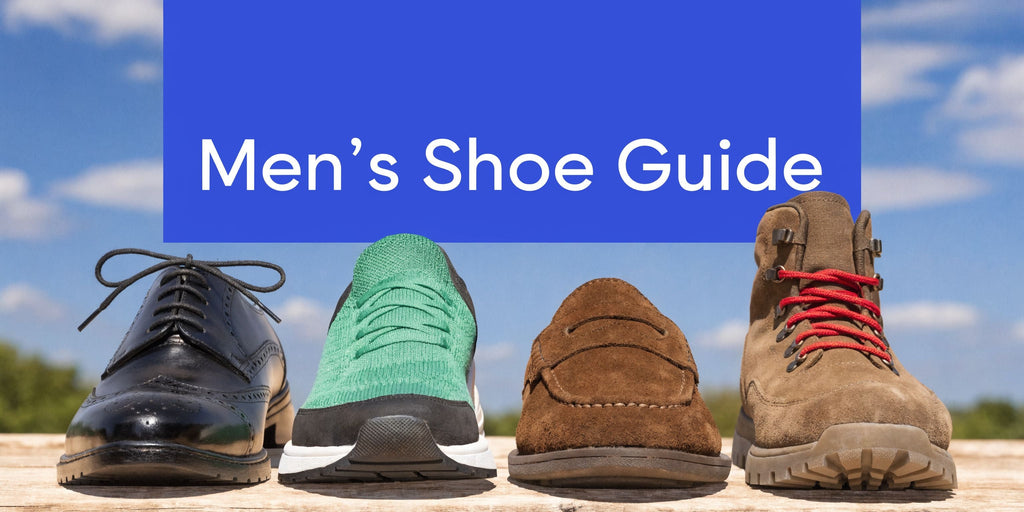
Oxfords
The Oxford is the formal anchor. Its defining trait is closed lacing, which gives the upper a neat, composed appearance. In black leather, it belongs with business suits, evening wear, ceremonies, and serious professional settings.
If your work involves boardrooms, client meetings, or formal events, this is the pair that earns its place first.
Derbies
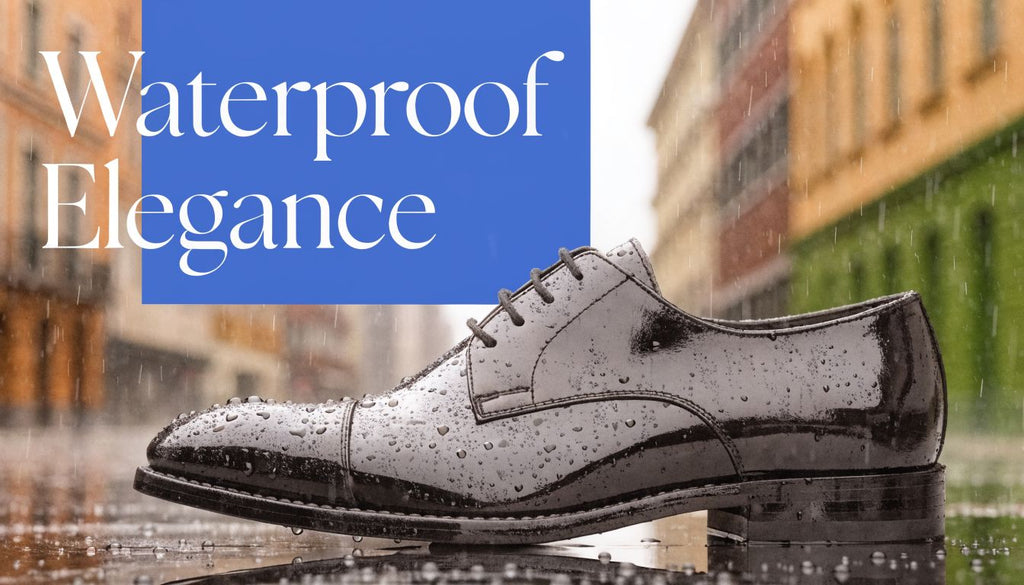
The Derby is slightly more open and forgiving in appearance. The open lacing makes it feel less rigid than an Oxford, which is why it pairs so well with business-casual wardrobes.
Think of the Derby as the diplomatic shoe. It works with trousers, textured smart casual, and many office environments where polish matters but strict formality doesn’t.
Loafers
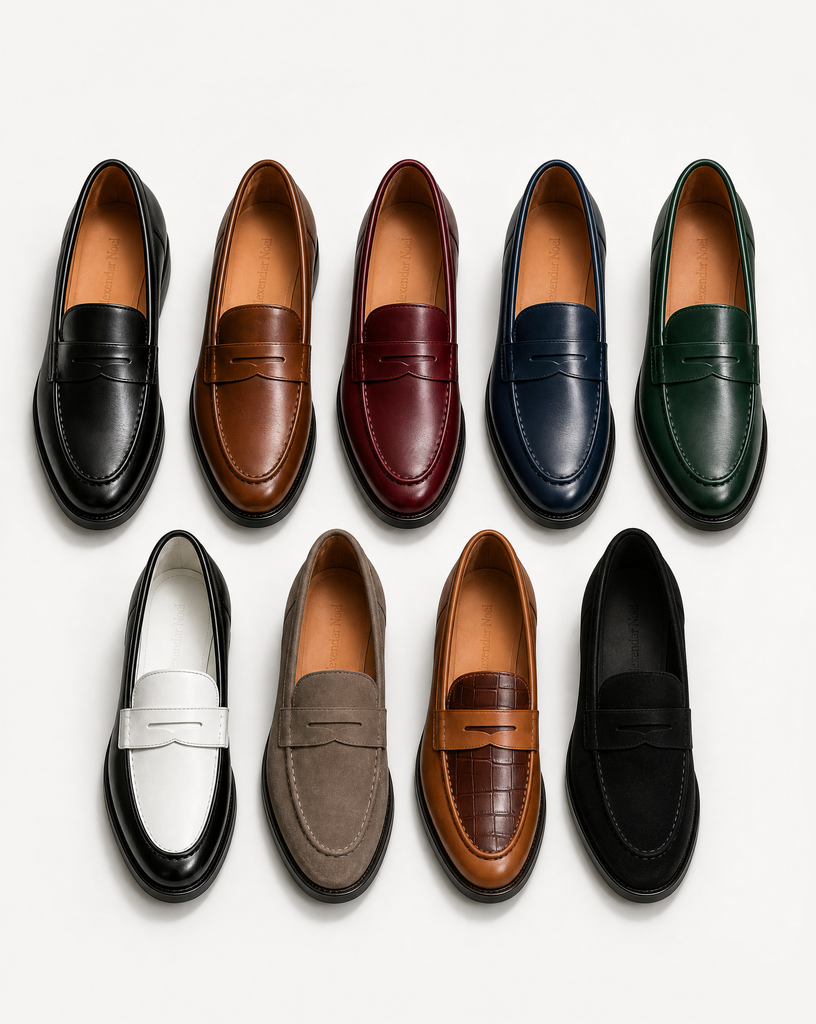
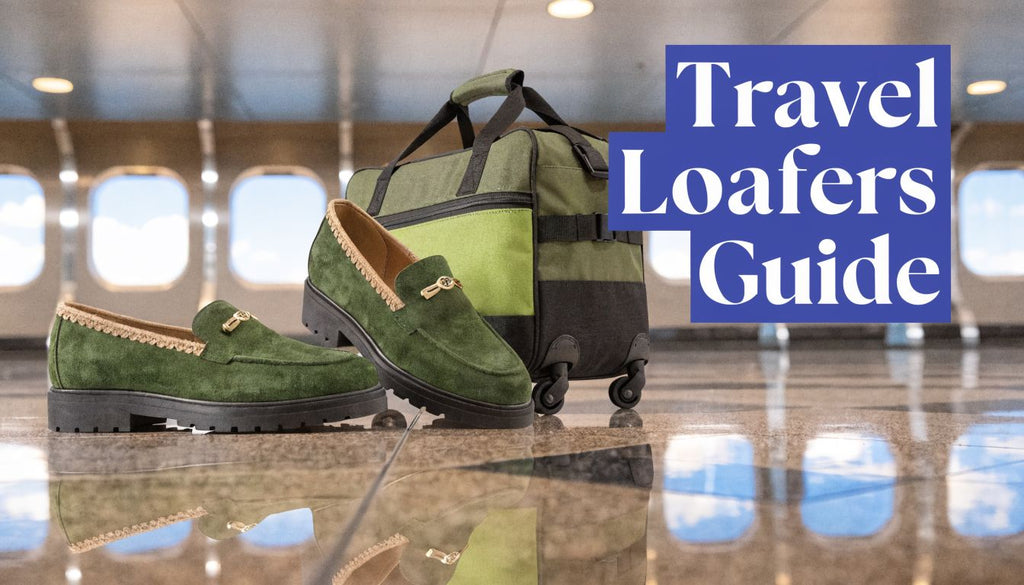
Loafers remove the laces and keep the refinement. They’re ideal when you want ease without carelessness.
Dark brown loafers with navy chinos are one of the most reliable combinations a man can own. They also travel well, slipping between lunch, office, and dinner with very little effort.
Boots
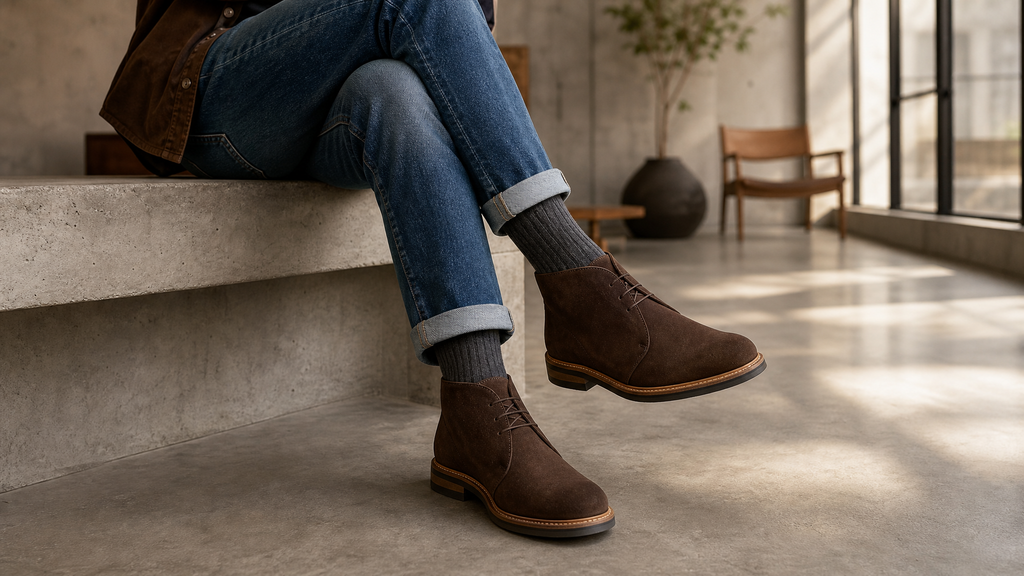
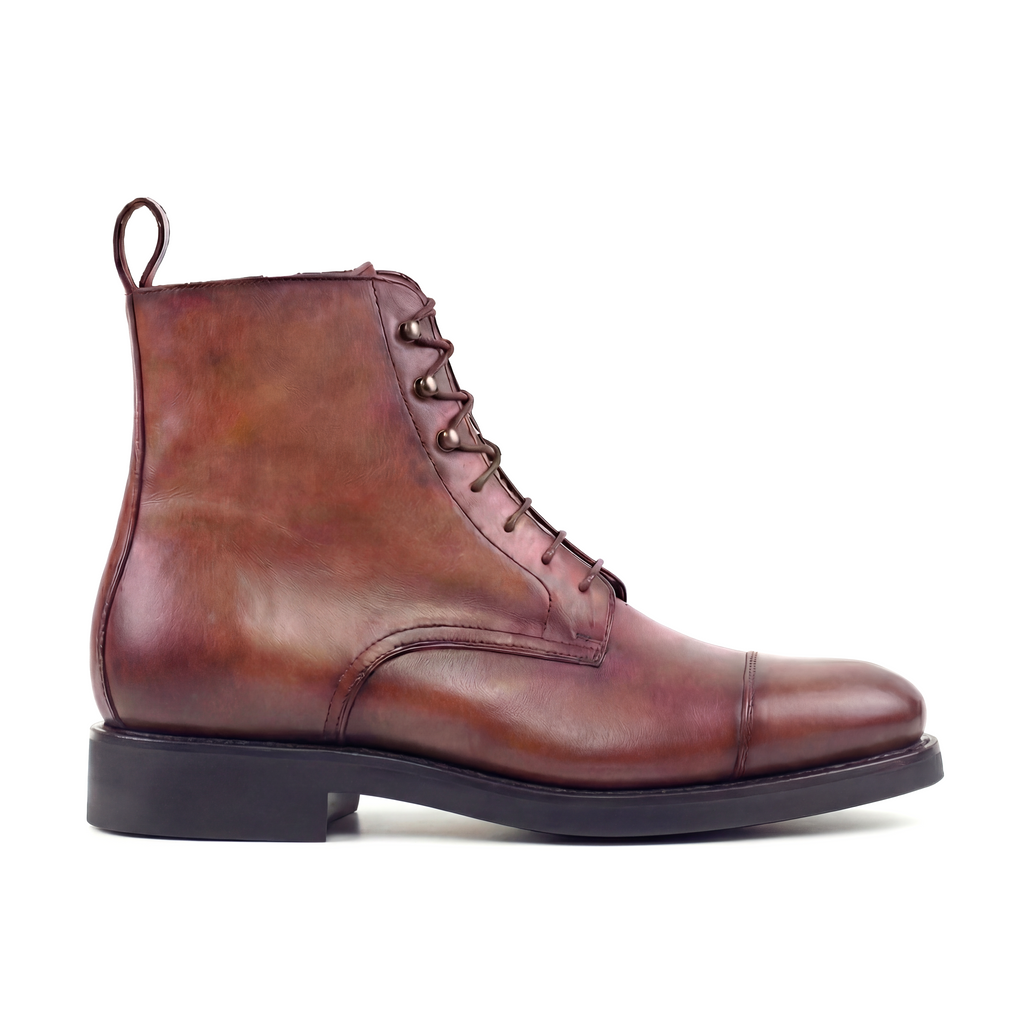
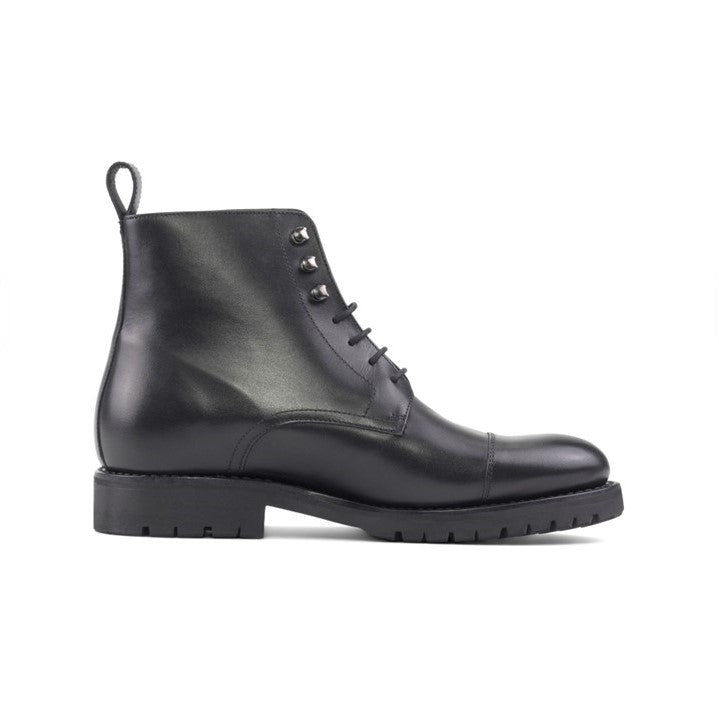
Boots cover a wider range than many men realize. A sleek chukka can work with refined casual clothing. A more substantial artisan boot brings weight and character to denim, corduroy, flannel trousers, and colder-weather outfits.
The mistake is assuming all boots are rugged. Some are. Others are among the most elegant shoes in a man’s wardrobe.
Luxury sneakers
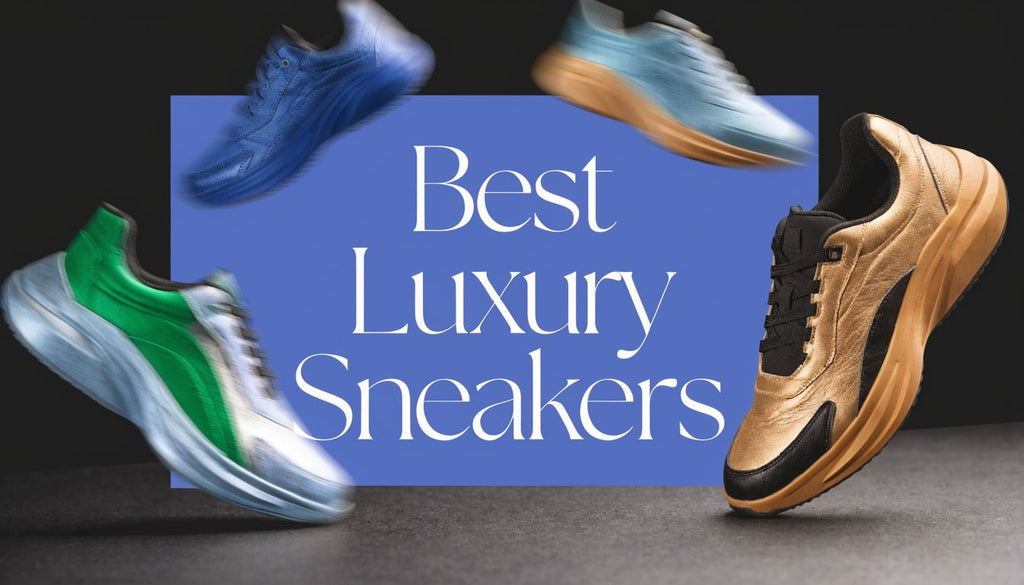
A refined sneaker has a place now, especially in offices and cities where dress codes have softened. The key is restraint. Clean lines, premium materials, and minimal branding let a sneaker support an outfit rather than dominate it.
This is not the gym shoe’s job. It’s the quiet casual shoe that can stand beside structured separates.
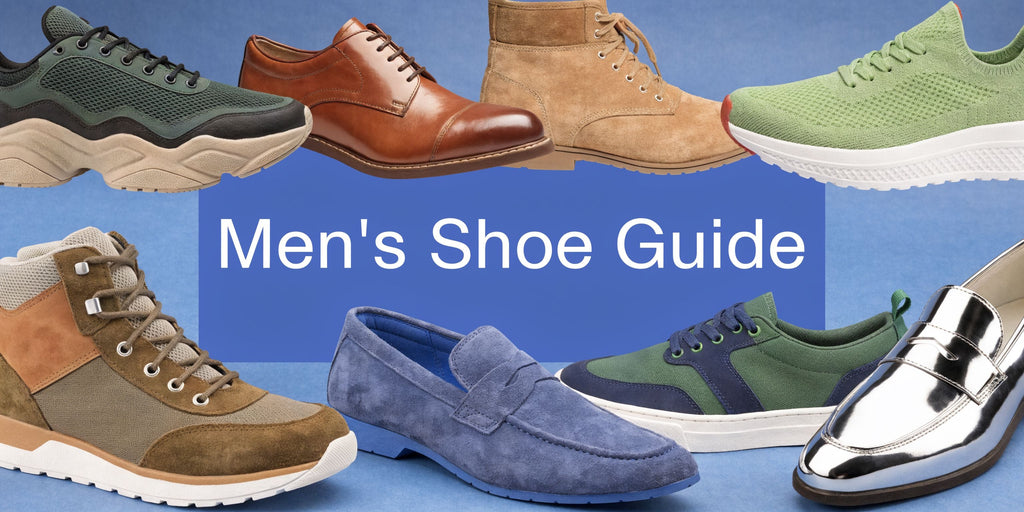
Men's Shoe Formality Guide
| Shoe Type | Formality Level | Best Worn With |
|---|---|---|
| Oxford | High | Suits, formal wear, eveningwear |
| Derby | Medium to high | Business suits, sport coats, wool trousers |
| Loafer | Medium | Chinos, unstructured wear, smart casual looks |
| Boot | Medium to high | Denim, flannel trousers, casual wear |
| Luxury Sneaker | Low to medium | Clean casual wear, travel outfits, modern business casual |
Where most wardrobes go wrong
Men often build a collection backward. They buy the exciting pair first. Then they discover they still lack the dependable pair.
Use this order instead:
- Start with necessity. Buy the pair that answers your most frequent dress code.
- Add range. Choose a second pair that covers a different level of formality.
- Then add personality. Bring in boots, loafers, or sneakers that express taste.
Practical rule: If a shoe only works with one outfit, it’s a specialty item, not a foundation piece.
Once you understand each category’s role, shoes for men s become much less confusing. You stop shopping by impulse and start building by purpose.
Understanding Quality Materials and Construction
Most men inspect a shoe from the top down. They notice the color first, then the shape, then perhaps the brand. A shoemaker looks from the bottom up. Materials, lining, sole attachment, edge finishing, and internal structure tell you whether the pair will age well or merely look good under store lighting.
That difference is what separates a temporary purchase from a reliable piece of wardrobe equipment.
Materials that reward wear
The finest uppers don’t just survive use. They improve with it. Good leather takes on character, softens in the right places, and develops a surface that reflects the life of the wearer.

Here’s what to look for when judging materials:
- Upper leather should feel supple, not papery. It should bend with a clean, natural fold rather than a harsh, plastic-looking crease.
- Lining materials matter just as much. Natural linings such as leather and cork help with comfort and moisture management over long wear.
- Suede and softer finishes can be elegant, but they should still feel dense and consistent, not fuzzy and weak.
- Edge and sole finishing should be clean. Sloppy edges often signal rushed production elsewhere too.
A shoe made from honest materials rarely needs to shout. It shows its worth in touch, smell, flexibility, and how it wears after months of use.
Construction changes how a shoe lives
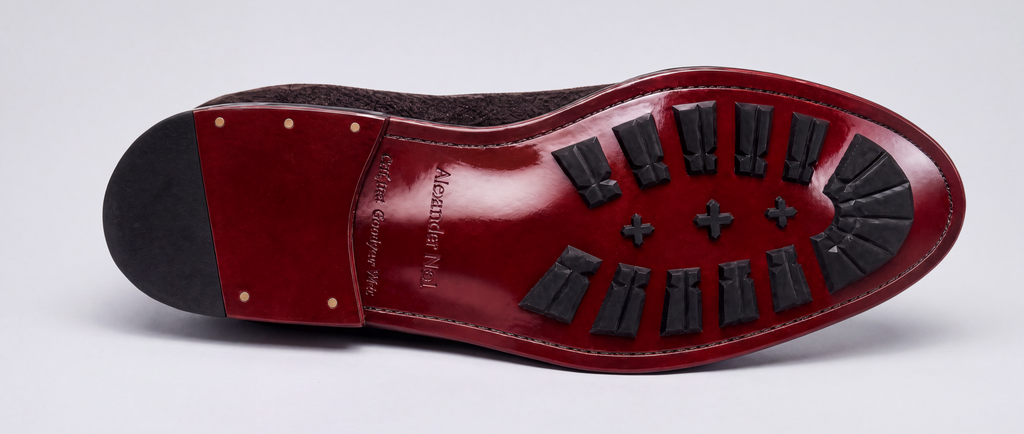
Construction is where many buyers get lost. They hear terms like Blake stitch or Goodyear welt and treat them as marketing language. They’re not. They describe how the upper and sole are joined, and that directly affects flexibility, durability, maintenance, and long-term value.
The clearest benchmark in custom shoemaking comes from the spec sheet. In that process, the technical blueprint defines the build in exact terms, including stitching and sole structure. One example: a Goodyear welt provides 3x the resoleability compared to cemented constructions because the welt creates a stitched buffer zone that absorbs impact forces up to 20% more effectively, reducing foot fatigue, as described in this explanation of shoe construction methods.
That single point explains a great deal.
Goodyear welt
A Goodyear welted shoe has more structure. It usually feels more substantial in the hand and underfoot. It’s well suited to dress shoes and boots that are meant to be worn for years and serviced over time.
Choose it when you want:
- Long service life
- Resoling potential
- A more substantial, traditional build
- Better resistance to hard daily wear
Blake stitch
A Blake-stitched shoe is often slimmer and more flexible. It tends to sit closer to the foot and can feel lighter, especially in sleek dress silhouettes.
Choose it when you want:
- A cleaner, sharper profile
- More immediate flexibility
- A lighter feel for indoor or office wear
- A dress shoe with less visual bulk
Construction isn’t a hidden detail. It is the reason one shoe can be repaired and another is replaced.
Small details reveal large truths
A premium shoe usually wins on the details buyers overlook at first glance.
Look for:
- Even stitching
- Balanced toe shape
- Symmetrical pattern placement
- A heel that sits straight
- A sole edge finished with care rather than haste
If you want to buy fewer, better shoes for men s, train your eye to judge the structure before the shine. Polish can be added. Good construction cannot.
How to Find Your Perfect Shoe Fit
You leave for work in a pair that felt acceptable in the shop. By lunchtime, your heel is lifting, the front of the shoe feels crowded, and you are walking with the faint caution of a man negotiating with his own footwear. That experience is common because many ready-made shoes ask the foot to adapt to the shoe, rather than the other way around.
Fit starts with size, but it does not end there.
A well-fitted shoe has to account for length, width, instep height, heel shape, toe room, and overall volume. The last works like the mold for the entire shoe. If that mold does not resemble your foot, the shoe can be the correct size on the box and still feel wrong in every practical sense.

Why standard sizing disappoints so many men
Ready-made footwear is built around standard lasts. That system keeps manufacturing efficient, but it also explains why so many professionals own shoes they tolerate rather than enjoy. Real feet vary in ways standard sizing does not capture well. One man has a high instep. Another has a narrow heel and a broad forefoot. A third needs more depth through the vamp but not more length.
The result is familiar. Men size up to gain width, then lose heel security. They choose a softer shoe to avoid pressure, then spend the day sliding inside it. They assume discomfort is normal because the market has trained them to expect compromise.
Custom shoemaking solves that problem at its source. A custom last is shaped around the foot itself, so pressure is distributed more evenly and the shoe supports your stride instead of interrupting it. That is the quiet luxury many men seek. Not decoration. Relief, stability, and a cleaner fit under structured clothing.
What to check when you try on shoes
A proper fitting is less about pain and more about contact. Where the shoe touches matters. How it holds matters more.
Use this checklist:
- Heel hold. The heel should stay secure as you walk, with only slight movement during the first try-on.
- Ball alignment. The widest part of your foot should match the widest part of the shoe. If those points miss each other, the shoe will flex in the wrong place.
- Instep pressure. The upper should rest over the instep with gentle control, not squeeze it like a clamp.
- Toe depth and length. Your toes need room to lie naturally. They should not press upward or bunch together.
- Walking feel. Walk, turn, and stop. A shoe can feel fine while seated and fail the moment your foot begins to move.
For a more detailed explanation of measurements, width, and common sizing mistakes, see this guide on how to choose the right shoe size.
Fit problems men often misread
Men often blame the wrong part of the shoe. Heel slip does not always mean the shoe is too long. It can point to a heel shape that is too open for your foot. Pressure across the top of the foot does not always mean the shoe is too small. It may mean the last lacks depth.
That distinction matters.
A shoe should feel settled on the foot, the way a well-cut jacket sits on the shoulders. You notice the harmony more than the object itself. Once fit is right, style becomes easier too, because the shoe moves with confidence and keeps its shape more cleanly through the day. The same logic applies across a wardrobe. Proportion and comfort work together, whether you are choosing oxfords or styling men's accessories.
If your shoes distract you by noon, the fit was never correct. The right pair feels balanced from the first steps and remains steady through a full day at the office. That is where custom footwear closes the gap between mass-market guesswork and true personal comfort.
A Styling Guide for the Modern Gentleman
Style becomes easier once you stop asking whether a shoe is fashionable and start asking whether it is appropriate. Good dressing is less about novelty and more about harmony.
The shoe should support the line of the outfit. It shouldn’t interrupt it.

Formal dress
When the clothing is formal, the footwear should become quieter. Black Oxfords with a charcoal or navy suit remain one of the cleanest choices a man can make. The closed lacing and restrained shape echo the discipline of the attire.
Dark leather, a simple toe, and a well-maintained finish usually do more than aggressive details ever will.
Match the seriousness of the shoe to the seriousness of the occasion.
Business casual
Many men misstep in business casual. They treat business casual as a free-for-all. It isn’t. It allows more texture, more variation, and a little more personality.
Good combinations include:
- Brown Derbies with wool trousers for office settings that favor polish without formality.
- Dark loafers with navy chinos for a relaxed but sharp weekday uniform.
- Chukka boots with brushed cotton trousers when you want structure without stiffness.
The shoe should still look intentional. If it looks like what you’d wear to run errands, it probably won’t hold the outfit together.
Casual dressing with standards
Casual doesn’t mean careless. Clean luxury sneakers, soft suede loafers, and refined boots can all work beautifully off duty. The difference is in proportion and cleanliness.
A sleek sneaker works well with tapered trousers, knitwear, and travel layers. A sturdy boot gives weight to denim and outerwear. Loafers can soften a weekend look without making it slack.
Accessories matter here too. Men often get the shoes right and forget the finishing touches. If you’re thinking more carefully about styling men's accessories, especially belts and how they shape an outfit, that small adjustment helps footwear feel integrated rather than isolated.
Three rules that save most outfits
Keep leather tones in conversation
Your belt and shoes don’t need to be chemically identical, but they should belong to the same visual family. A rich brown belt with rich brown shoes feels intentional. A cool black belt with warm tan shoes usually doesn’t.
Respect the trouser line
Slimmer shoes suit slimmer trousers. More substantial boots or sneakers pair better with fuller hems and heavier fabrics. The shoe should balance the pant opening.
A visual example helps when you’re deciding how much shape and formality your footwear should carry:
Let one item lead
If the shoe has strong texture or color, keep the rest of the outfit calmer. If the suit or jacket is doing the talking, let the shoe be disciplined.
A stylish man usually looks composed, not crowded. Shoes for men s work best when they complete the outfit instead of competing with it.
Caring for Your Handcrafted Footwear Investment
A fine shoe doesn’t stay fine by accident. Leather dries, soles wear, edges scuff, and shape softens if you neglect it. None of that means the shoe was poor. It means the material was real.
Care is part of ownership. Men who understand this get far more value from each pair.
What to do after wearing them
The first habit is simple. Let the shoes rest. Don’t wear the same pair hard day after day if you can avoid it.
Then use shoe trees. They help the upper recover its shape and reduce the deep, collapsed creasing that makes good shoes look tired too early.
A practical care routine
You don’t need an elaborate ritual. You need consistency.
- Brush off dirt early. Dust and grit act like abrasives if left on the leather.
- Clean by material. Smooth leather wants gentle wiping and conditioning. Suede wants the correct brush and a lighter touch.
- Polish with restraint. Cream nourishes. Wax adds shine and some surface protection. Too much product clogs the finish.
- Store with care. Keep shoes dry, ventilated, and off the floor.
- Repair before failure. Replace heels and resole good constructions before damage spreads upward.
Well-cared-for shoes don’t merely last longer. They look calmer, richer, and more convincing on the foot.
If you want a straightforward maintenance routine for different materials and finishes, this shoe care guide from Alexander Shoe Store is a useful reference.
Why maintenance protects value
A handcrafted shoe is one of the few garments you can actively preserve. Apparel can be altered, but not indefinitely. Knitwear stretches. Shirts fray. Shoes, if made well, can often be refreshed repeatedly.
That’s why proper care is not fussy behavior. It is rational behavior. If you’ve paid for good leather, strong construction, and elegant form, a few minutes of upkeep protect all three.
The Ultimate Upgrade Designing Your Custom Shoes
A familiar scene plays out in many careers. A man buys dress shoes that look right in the mirror, then spends the next month negotiating with them at his desk, on the train, and during long days on his feet. Heel slip, pressure across the instep, a toe box that feels fine at 9 a.m. and punishing by 4 p.m. He adds insoles, changes socks, and keeps a "meeting pair" separate from a "walking pair," even though he wanted one shoe to do both.
Custom design solves a different problem than ordinary retail. It does not ask you to choose the least inconvenient option from what happens to be on the shelf. It starts with your foot, your workday, and your taste, then builds a shoe around those facts.

Why bespoke changes the decision
By the time a man considers bespoke, he usually has a pattern to fix. Standard widths may pinch in one area and float in another. A sleek last may suit his eye but punish his forefoot. He may want a proper business shoe with enough support for long commutes, client meetings, and travel.
Bespoke addresses the cause instead of the symptom. That difference matters.
A ready-made shoe is built for an average foot that does not exist. Bespoke works like custom suiting. Off-the-rack clothing can come close, but close is not the same as right. With shoes, that gap is even more serious because small errors in width, instep height, heel hold, or balance affect every step.
Customization also serves men with needs the mass market handles poorly. Some professionals need refined dress shoes that can accommodate orthotics, extra depth, or structural support without looking medical. Bespoke can incorporate those requirements into the design itself. The result is a shoe that respects both appearance and comfort, instead of forcing a choice between them.
What you can control
The appeal of custom footwear is simple. You gain authorship over the parts that shape wear.
Depending on the maker, you can usually specify:
- Last shape for a cleaner, fuller, longer, or more forgiving profile
- Leather type based on use, texture, finish, and formality
- Color and patina to match the tones already in your wardrobe
- Sole construction for flexibility, weather resistance, elegance, or easier long-term repair
- Interior details such as lining feel, depth, and room for orthotics
- Structural accommodations for asymmetry, pressure points, or support needs
Those choices are not decoration alone. They determine whether the shoe becomes a regular companion or an expensive compromise.
How the design process should feel
A sound custom process feels orderly. Good shoemaking has romance in the finished object, but the method behind it should be exact.
Measurement
Everything begins with the foot. Length is only one part of the story. A skilled maker also studies width, instep, heel shape, toe spread, arch behavior, and any difference between the left and right foot.
That stage often explains years of frustration in a few minutes.
Design
Once the fit problem is clear, style choices become sharper. An Oxford can be shaped with more generosity where your foot needs room. A loafer can be refined without becoming unstable. A boot can carry more presence without turning heavy or clumsy.
Here, personal style becomes practical rather than abstract.
Specification
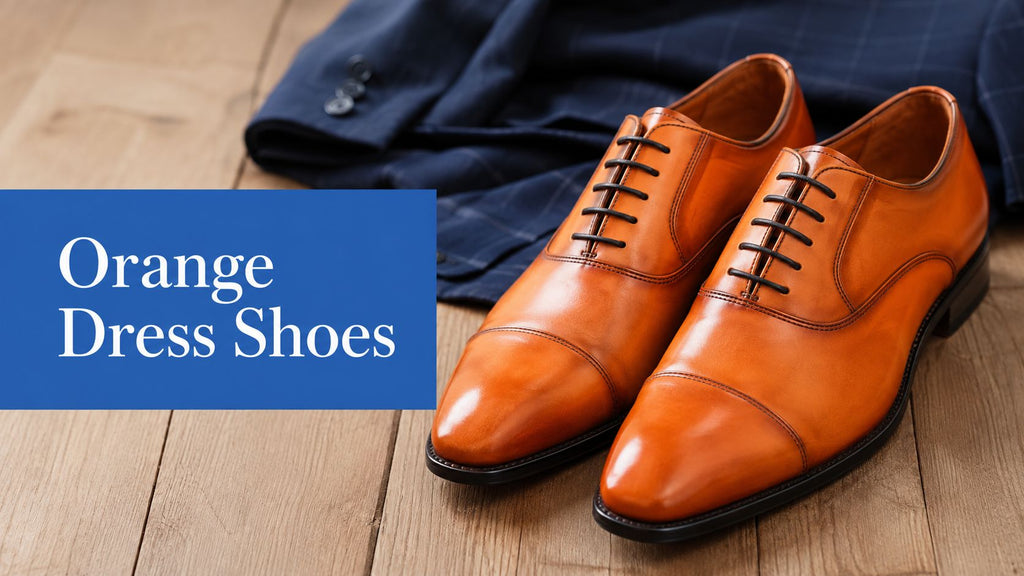
The maker then turns preferences into instructions. Leather, lining, sole, proportions, stitching, edge treatment, and fit accommodations are set with purpose. In shoemaking terms, this is the blueprint stage. It is the difference between "I like brown shoes" and "I need a dark brown cap-toe Oxford with a supportive waist, moderate toe shape, and enough depth for long office wear."
Production
Only after those decisions are settled should the shoe be made. Craft matters here, but discipline matters just as much. Clean clicking, accurate closing, balanced lasting, and careful finishing all affect how the shoe looks and how it behaves over time.
Where direct-to-consumer custom fits in
For many professionals, custom footwear used to seem reserved for men with unlimited time, boutique access, and a willingness to attend multiple fittings. Direct-to-consumer models have narrowed that gap.
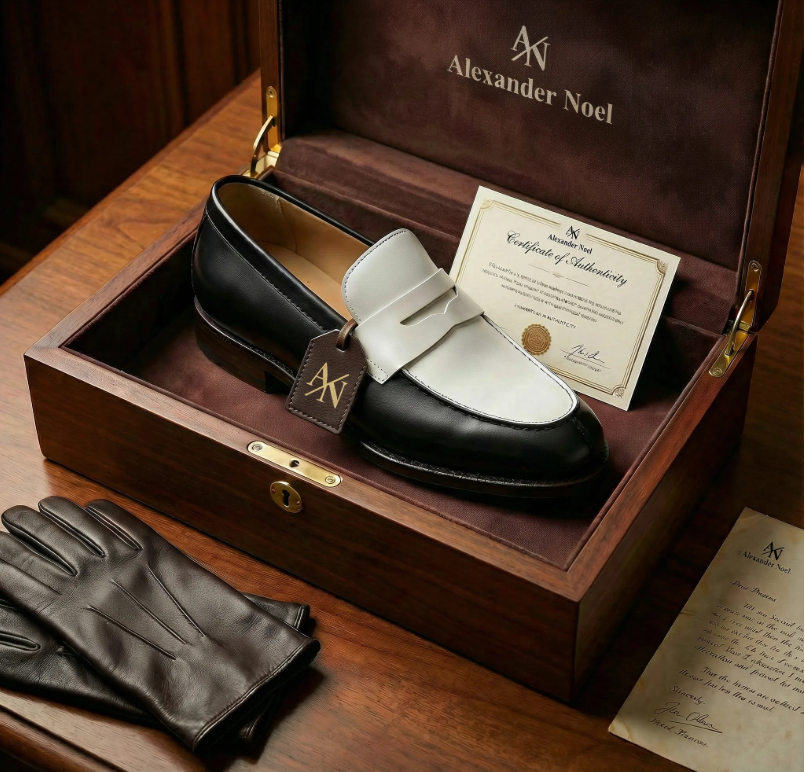
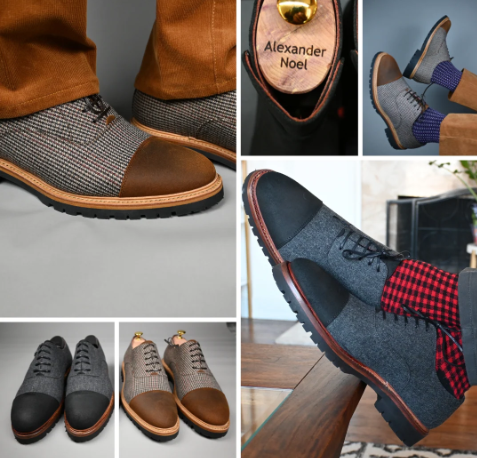
Alexander Noel is one example. Its offering includes a Design Lab, at-home fitting, made-to-order production, and categories such as dress shoes, sneakers, boots, and loafers. The point is not novelty. The point is access. More men can now order footwear built around their measurements and preferences without the usual retail detours that make custom feel distant or intimidating.
That shift matters because the usual retail experience creates confusion. You compare dozens of pairs, each with a different last, leather quality, sole, and sizing logic, then try to infer which compromise will hurt least. A well-run custom process replaces guesswork with specification.
Custom choices that matter most for professionals
Professionals usually get better results by setting priorities in the right order.
- Start with use. A shoe for boardrooms, flights, city walking, and evening events may need different balance, sole choices, and leather than a shoe meant mainly for formal occasions.
- Choose the last carefully. The last determines the relationship between style and comfort. If the shape is wrong, fine leather and handsome finishing will not rescue the experience.
- Match leather to your actual week. Smooth calf remains the standard for formal business wear. Grain or suede can make more sense for frequent travel, mixed weather, or a softer office dress code.
- Build around your wardrobe, not a fantasy purchase. A custom pair should work with several suits, trousers, or jackets you already own.
- State physical requirements early. Orthotics, extra depth, sensitive joints, asymmetry, or heel instability should be discussed before aesthetic details are finalized.
Luxury in bespoke is precision.
When custom is the sensible choice
Custom footwear makes particular sense when retail keeps producing the same disappointment. You may have hard-to-fit feet. You may need dress shoes that remain comfortable through long professional days. You may want fewer pairs, but each pair must cover more ground and do it with better materials and clearer design intent. You may also need support features that standard brands rarely integrate gracefully into formal shoes.
In those cases, made-to-order footwear is not an indulgence. It is a rational response to a repeated problem.
Shoes for men s become easier to understand once you stop asking what the market stocked this season and start asking a better question. What shape does your foot require, what does your work demand, and what kind of presence do you want your shoes to carry? Custom footwear answers all three at once.
Related post
12
Sep
12
Sep
12
Sep
29
Aug
