

RECENT POSTS
29.August.2026
Custom Women's Boots for Fall: Choosing Between Two Black Chelsea Silhouettes
0 Comments






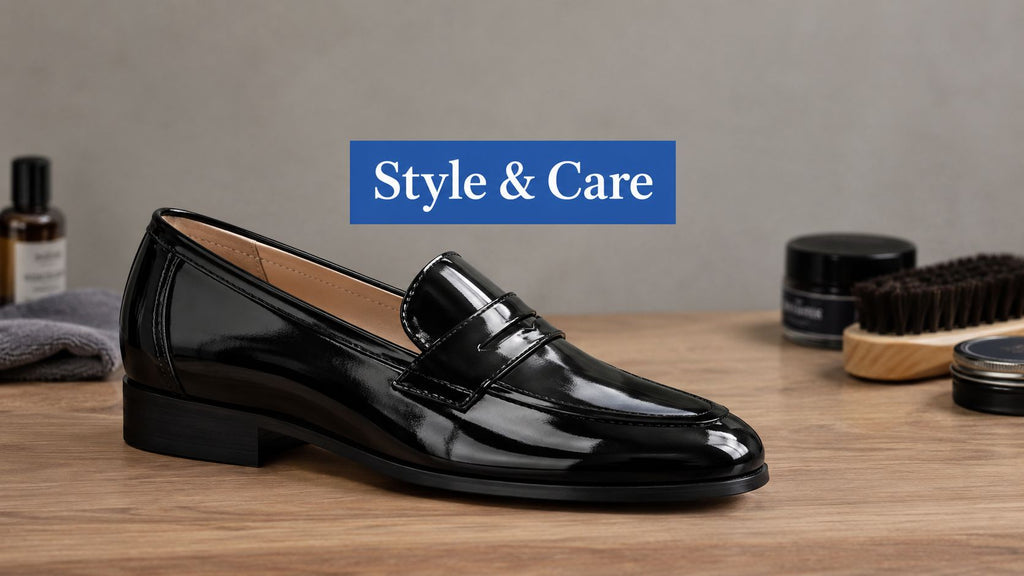
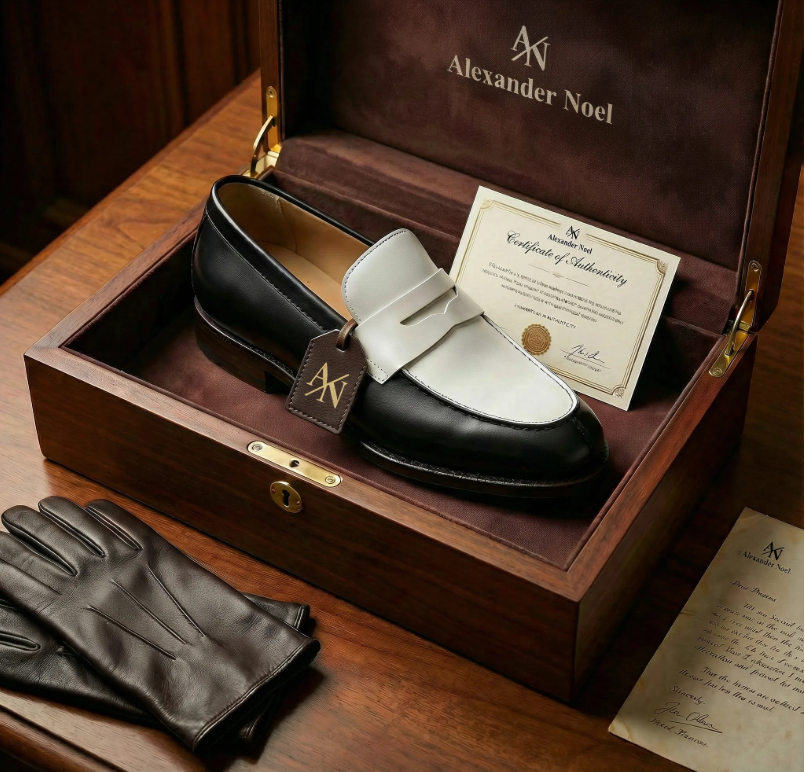
Black Patent Leather Loafer: A Style & Care Guide
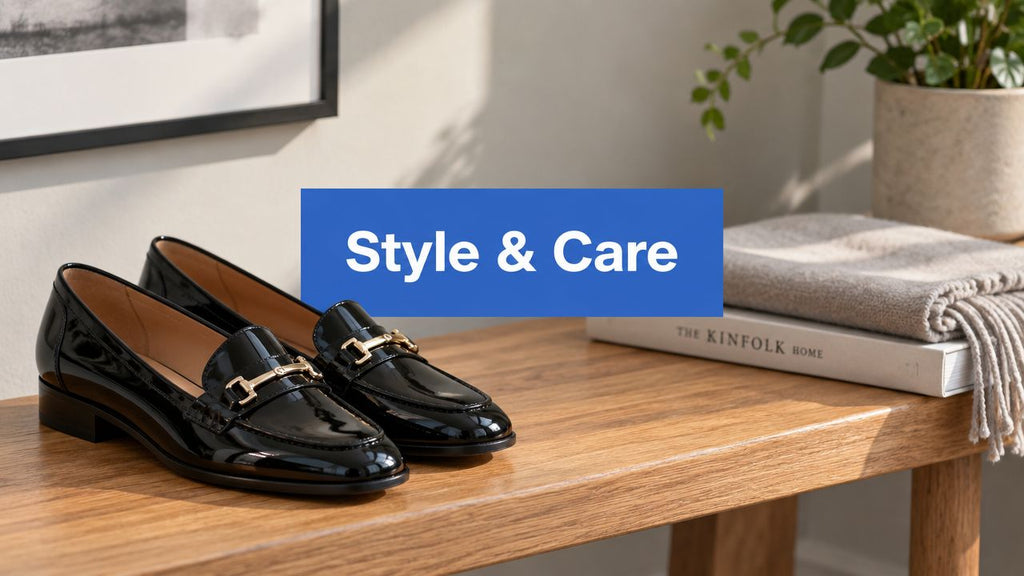
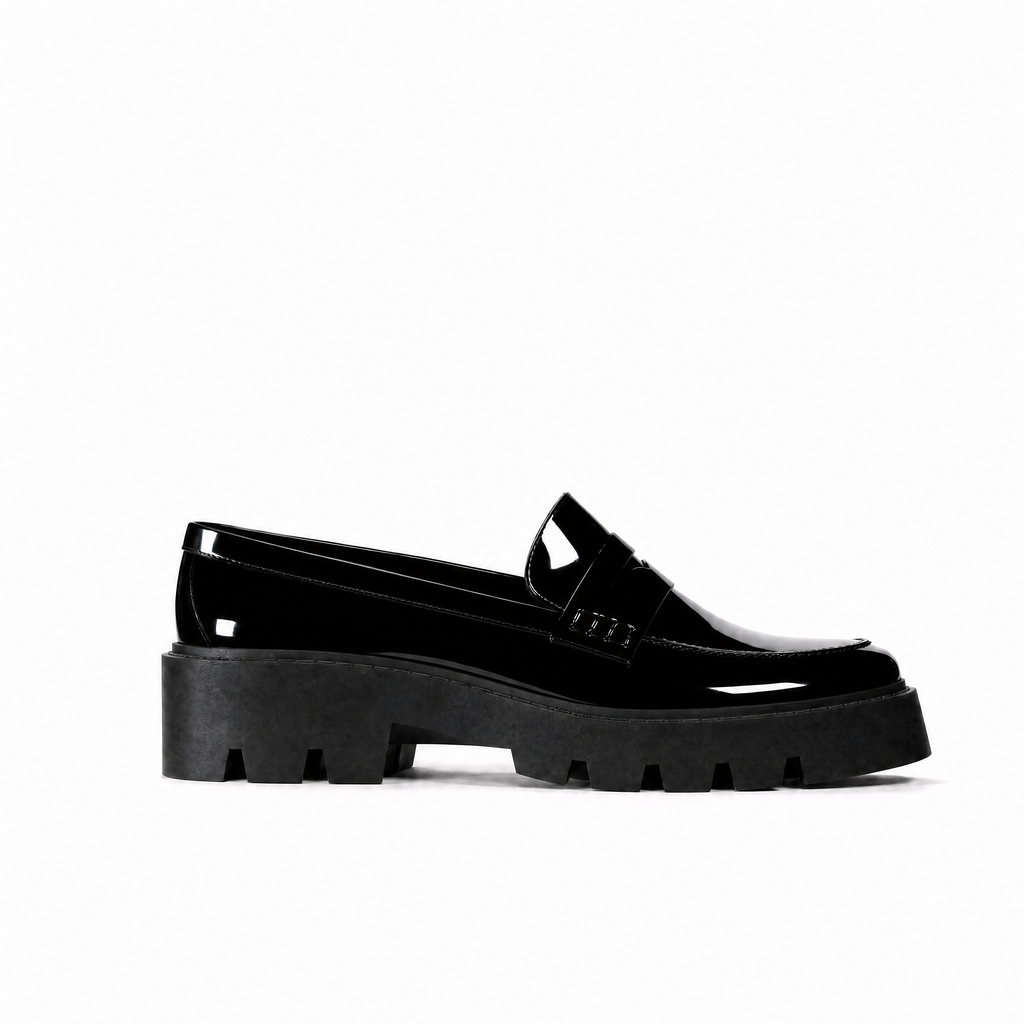
You're standing in front of your wardrobe, dressed for an evening reception or an important meeting, and the usual matte leather shoes feel predictable. A black patent leather loafer offers another answer. Its polished surface catches the light, its slip-on construction feels relaxed, and its formal character gives even a simple outfit a deliberate finish.
The appeal comes with practical questions. Will the shine look too formal? Can patent leather handle commuting? How should you clean it, and what happens when the fit is slightly wrong? The right pair is more than a glossy accent. It's a considered piece of footwear that brings together style, material knowledge, maintenance, and personal fit.
The Enduring Allure of the Patent Loafer
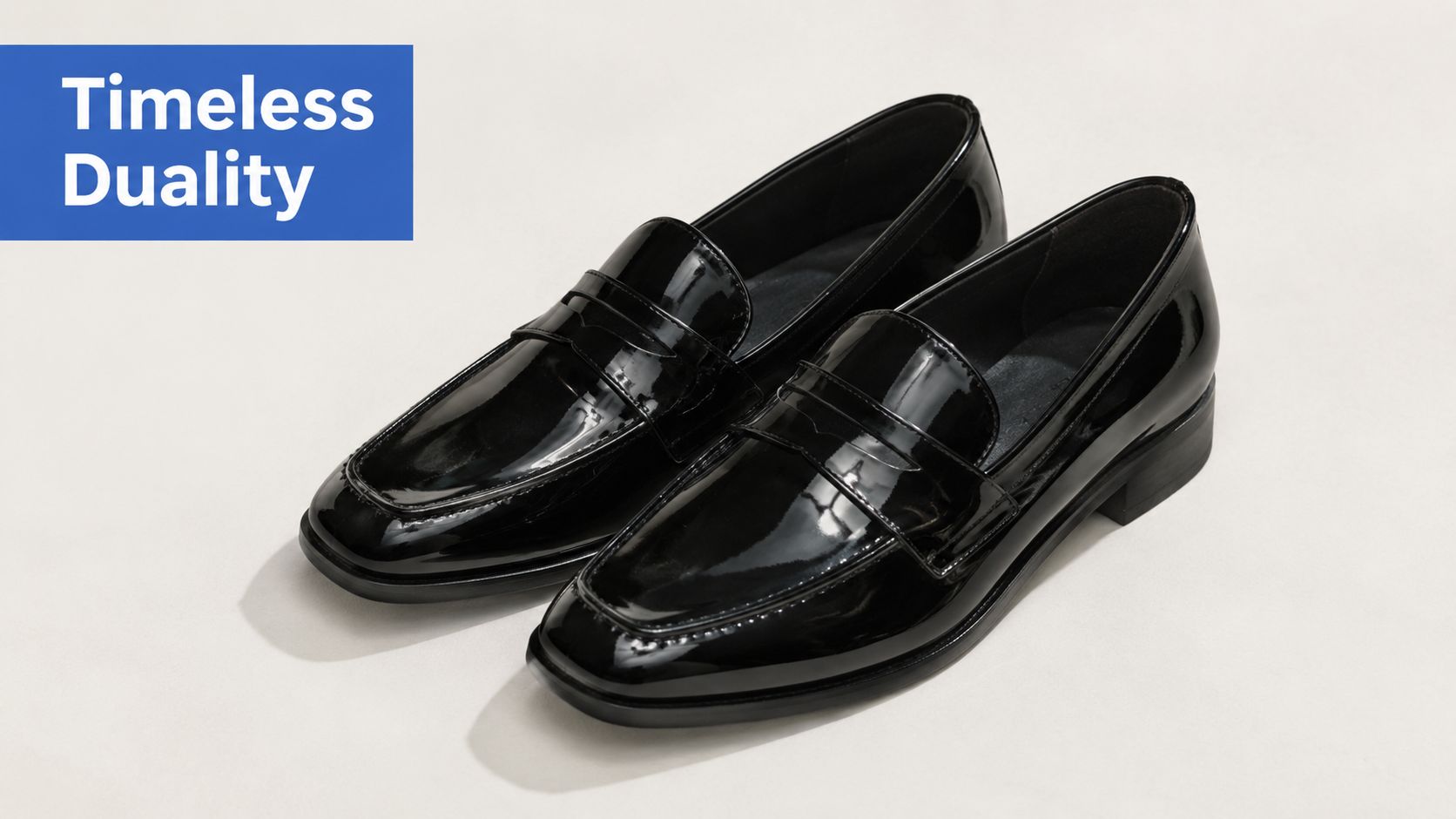
A black patent leather loafer occupies an unusually flexible place in a wardrobe. It can support a tuxedo, sharpen a dark suit, or provide contrast against quieter pieces such as wool trousers and a fine-gauge knit. The trick is balance. Because the upper already has visual intensity, the rest of the outfit usually benefits from clean lines and restrained texture.
The loafer's history helps explain its staying power. Its modern lineage traces back to Norway, then gained a defining American chapter in 1936, when G.H. Bass introduced the Weejun, widely described as the first penny loafer. By the 1950s, Gucci had refined the form into a black formal loafer, helping move it from casual campus clothing into luxury and business dress. The Gentleman's Journal traces this evolution from Norwegian roots to the Weejun and Gucci's formal refinement.
A formal shoe with cultural weight
Black patent leather loafers are more than a seasonal novelty. The National Museum of African American History and Culture documents a pair of size 10 black patent leather dress loafers worn by Reverend Ike and dated circa 2004, placing the shoe within a recognized cultural and formal record. The museum object record documents the pair and its provenance.
That history gives the silhouette substance, but its contemporary relevance comes from its dual character. A glossy finish can look ceremonial with evening tailoring, yet it can also make a relaxed outfit feel intentional. For complementary styling ideas, browse the Classy Black accessories collection, especially when you want to echo the loafer's dark, polished character without matching its shine too precisely.
Style principle: Let the loafer be the brightest surface in the outfit, then use texture and proportion to keep the look grounded.
Patent leather also has a long manufacturing history in the United States, where development is credited to Seth Boyden. That established material tradition supports the shoe's enduring place in formal dressing, while the loafer shape keeps it approachable. For more context on the return of refined footwear, explore the renaissance of classic styles in men's footwear fashion.
How to Style Your Black Patent Leather Loafer
You are dressing for an evening event, but the outfit feels unfinished until the black patent leather loafer brings its polished surface into view. Begin with the occasion, then build around the shoe. Its shine communicates refinement immediately, so the surrounding clothes should establish whether that refinement is formal, professional, or deliberately relaxed. A slim profile and restrained upper work best when the loafer carries the visual focus.
Match the finish to the setting
For a black-tie or evening event, pair the loafer with a tuxedo or a sharply cut black suit. Keep the trousers clean through the leg, with enough length to meet the shoe without creating a heavy break. A white shirt, black evening accessories, and minimal hardware preserve the formal line.
For business dressing, the loafer works naturally with charcoal, black, or deep navy tailoring. Choose a crisp shirt and matte fabrics such as wool, so the outfit does not become uniformly reflective. The patent surface then acts as a precise finishing detail rather than competing with the entire look.
Smart-casual styling depends on contrast. Try dark denim with a soft blazer and plain shirt, or combine smart trousers with a fine knit. Matte cotton, brushed wool, suede accessories, and textured outerwear give the eye somewhere to rest. Avoid combining the shoe with several other glossy elements.
| Setting | Clothing direction | Why it works |
|---|---|---|
| Evening formal | Tuxedo or dark sharply cut suit | The shine suits the occasion's polished vocabulary |
| Business dressing | Charcoal or navy tailoring with matte fabrics | Texture tempers the reflective upper |
| Smart casual | Dark denim, blazer, or smart trousers | Relaxed pieces make the loafer feel current |
| Weekend evening | Fine knit, straight trousers, and minimal accessories | The outfit stays comfortable without losing definition |
Use current high-shine styling intelligently
Fashion coverage for 2026 places black patent leather loafers within a broader high-shine movement. The finish now appears beyond formalwear, including everyday silhouettes, so the shoe can serve a modern wardrobe rather than ceremonies alone. Marie Claire's coverage discusses patent finishes across contemporary loafer styling.
A high-shine shoe looks strongest when the rest of the outfit is edited. If you worry about appearing overdressed, keep the palette quiet and choose casual pieces with an excellent fit. Dark denim and an unstructured blazer reduce formality without making the loafer look misplaced. For more outfit ideas, use this practical guide to casual men's loafers.
Socks change the impression too. Dark, fine socks create a continuous line with formal trousers, while discreet low-cut options suit a relaxed warm-weather look when the setting allows. Custom fitting and personal adjustments can also help refine how the loafer sits, creases, and expresses your style, a useful advantage when choosing a made-to-order pair from Alexander Noel.
Before wearing the shoe for a full day, consider the environment. Patent leather offers more surface water resistance than untreated leather, but its coated construction can feel less breathable and more rigid. It suits formal events, evening-smart casual dressing, and selected urban settings better than hot, humid days spent constantly on foot.
Preserving the Shine A Practical Care Guide
Patent leather needs a different routine from untreated leather because the visible surface is a coating. Expert material guidance describes patent leather as leather covered by a smooth, glossy layer, often using plasticized lacquer systems such as polyurethane or acrylic. This layer creates the mirror-like finish and improves water resistance, but it also reduces breathability and increases rigidity. Eiken's patent leather guide explains the coating and its maintenance implications.
That distinction changes what you should put on the shoe. Standard leather creams are designed to nourish exposed leather, while patent leather care should protect and clean the surface coating. Greasy products can dull the finish or leave an unwanted film.
A simple routine that protects the finish
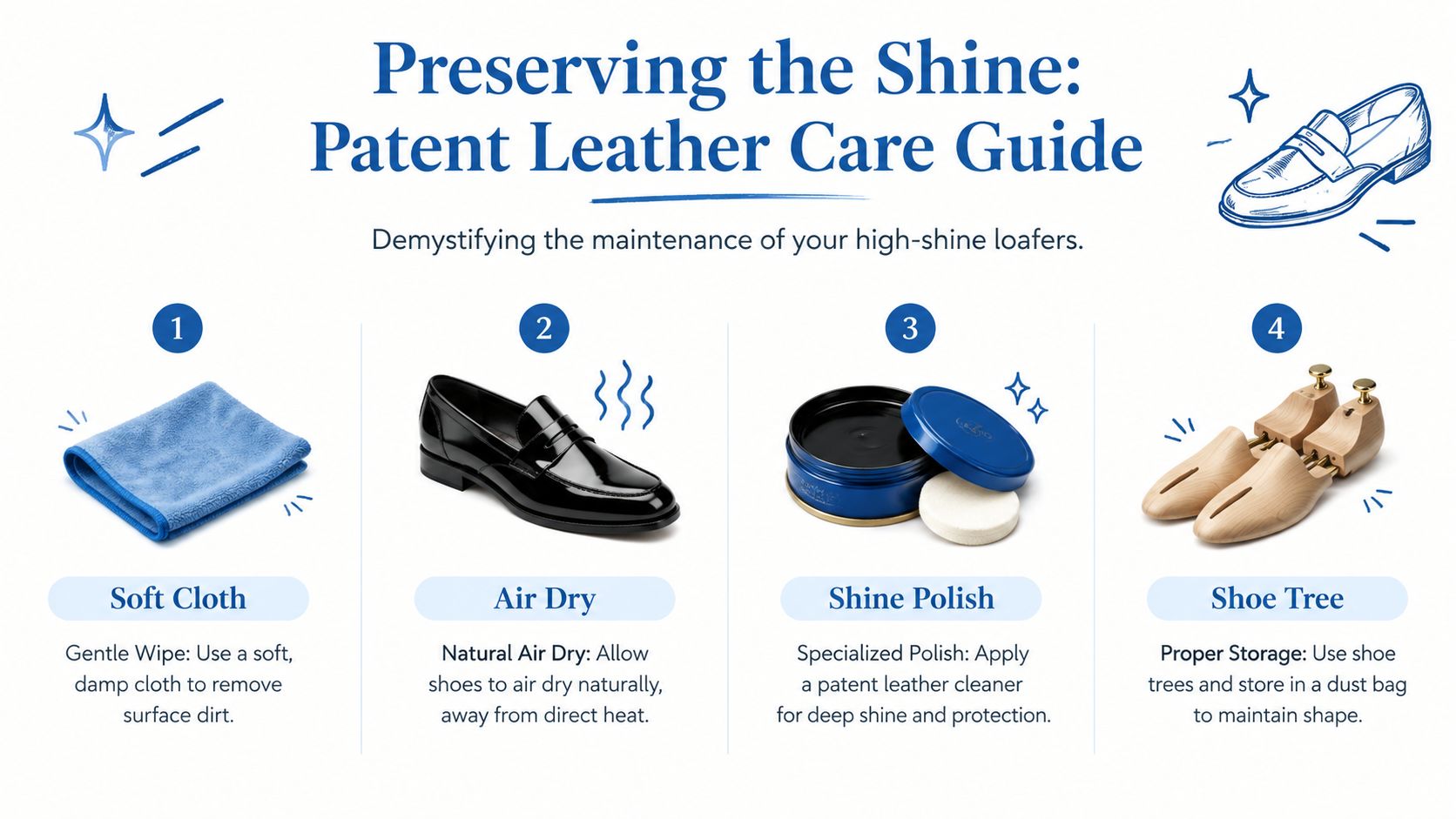
- Remove loose dirt first. Use a clean, soft cloth to lift dust before applying moisture. Rubbing grit across the coating can create fine marks.
- Wipe gently. Dampen the cloth lightly, then work across the upper with controlled passes. Don't soak the shoe, and don't press hard against scuffs.
- Allow natural drying. Let the loafers dry away from radiators, hairdryers, and direct heat. Sudden heat can stress the coated surface and encourage cracking or distortion.
- Use a patent-specific cleaner. Apply a non-greasy product intended for patent leather, following the product's own directions. A small amount is preferable to repeated heavy application.
- Store with shape support. Shoe trees help the loafer retain its form, while a dust bag limits exposure to surface scratches and airborne dirt. Keep glossy uppers from pressing against one another.
A short inspection after each wear is useful. Look for dust at the welt, marks around the vamp, and creases where the foot bends. Addressing surface dirt promptly is easier than trying to remove an old mark later.
Maintenance rule: Clean the coating, not the imagined leather underneath it.
The same disciplined approach applies to other polished personal pieces. If you're building a wider care routine for accessories, the EP Fine Jewelry care guide offers a useful reference for gentle handling, storage, and routine inspection. For a more footwear-focused checklist, consult this leather shoe care kit guide.
Why a Perfect Fit is Non-Negotiable
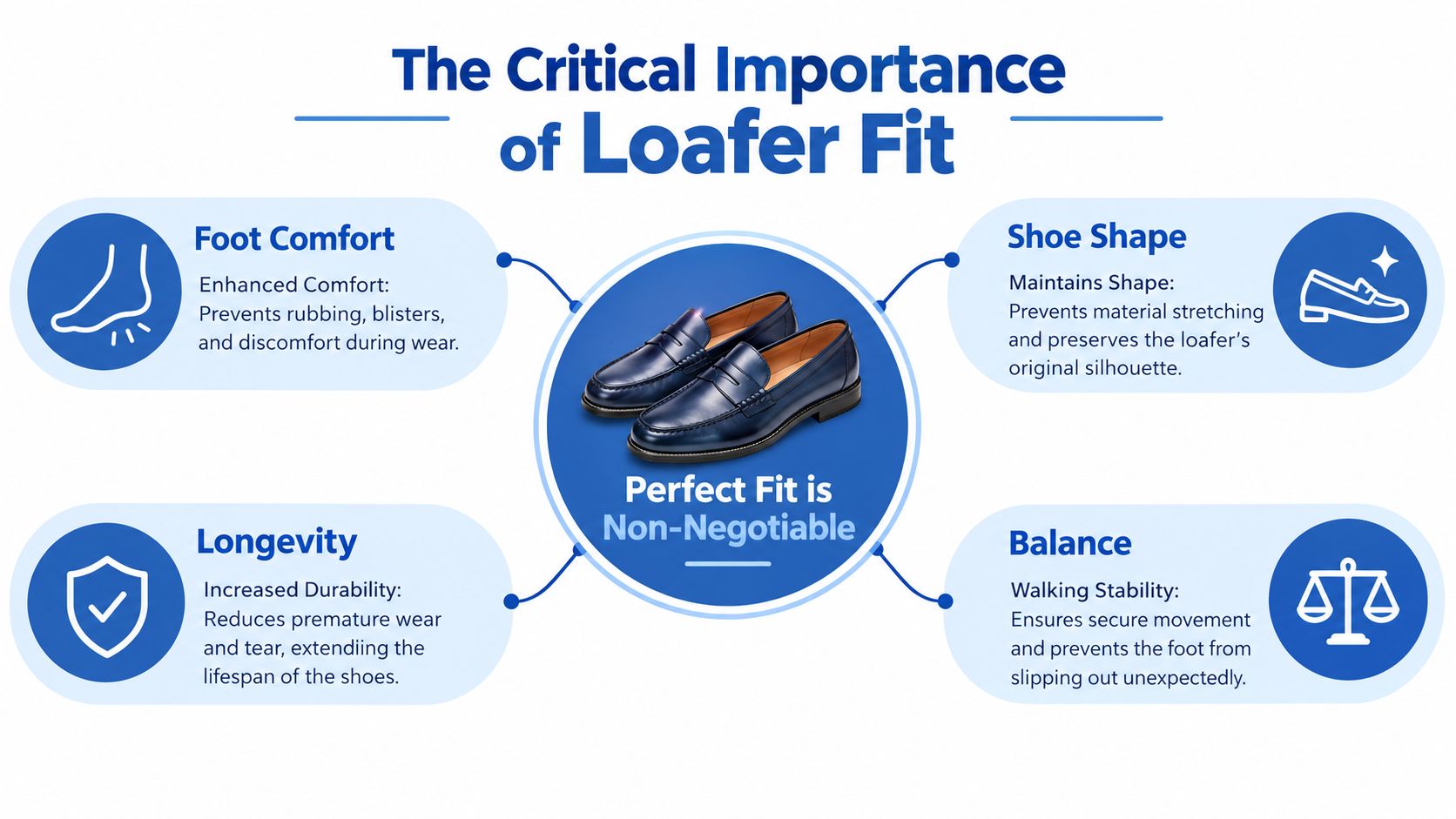
A loafer has no laces to compensate for an uncertain fit. The shoe must hold the foot securely through the topline, vamp, heel, and overall last shape. If the fit is too loose, the heel can lift and the foot may slide forward. If it's too tight, the structured patent coating can make pressure points feel sharper than they would in a softer upper.
Poor fit also affects appearance. Excess movement can create uneven creasing across the vamp, stretch the opening, and disturb the clean silhouette that makes the black patent leather loafer appealing. A correct fit doesn't eliminate natural creasing, but it helps the upper fold in a controlled place and keeps the shoe balanced under the foot.
Why standard sizing can fall short
A printed size is only one part of fit. Foot width, instep height, heel shape, toe preference, and the way someone walks all influence whether a slip-on feels secure. Two people wearing the same nominal size can need different internal proportions.
A bespoke last addresses that structural problem. Bespoke footwear providers take the client's measurements, then artisans create a wooden last exclusively for that customer. The last becomes the foundation for the shoe, guiding its shape, balance, and construction. Altan Bottier explains how a client-specific last supports fit, balance, and comfort.
Customization goes beyond color
Personalization isn't limited to choosing black patent leather. A thoughtful design process can consider the toe shape, vamp proportions, sole profile, lining, and decorative restraint. Those choices matter because the loafer's visual simplicity leaves little for poor proportion to hide.
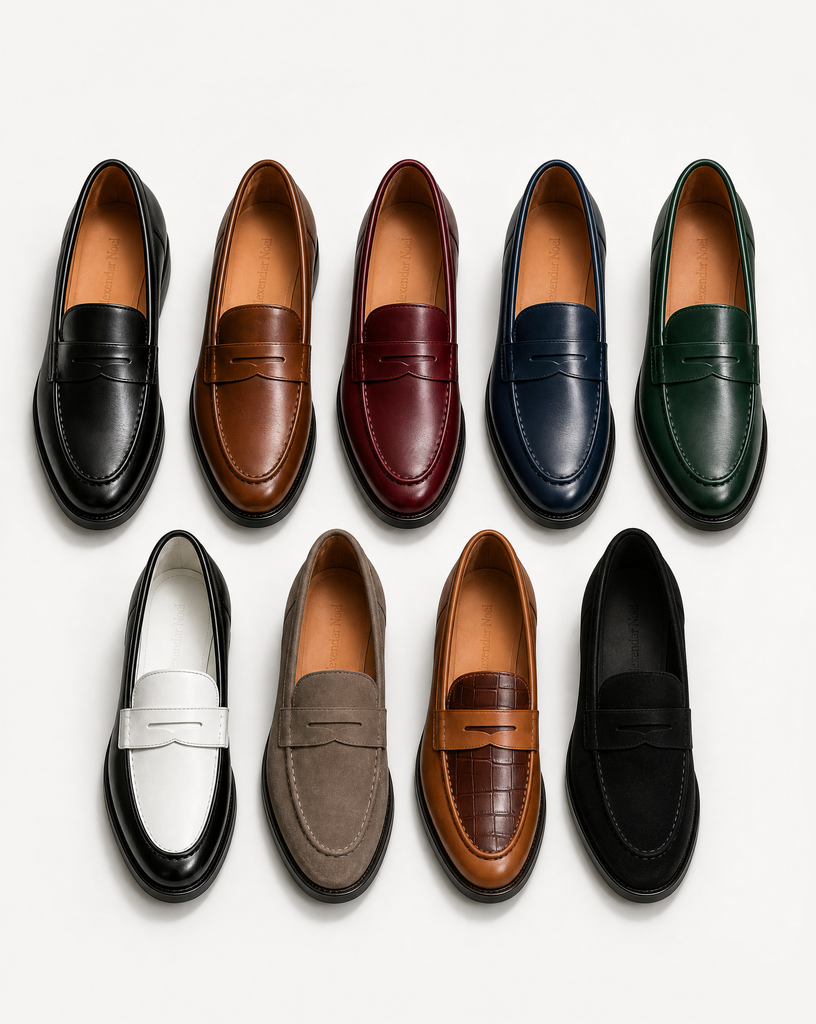
Alexander Noel's direct-to-consumer model connects custom design with global artisan partnerships, allowing a wearer to use a Design Lab to explore materials, colors, and styling details before made-to-order production. The broader footwear education behind digital tools is visible in MICAM Academy's progression from 3D software and immersive environments to virtual customization, then into physical work such as 3D-printed soft soles, machine-knitted uppers, and QR-code traceability. MICAM Academy documents this connection between digital visualization and hands-on manufacturing.
Fit check: Your heel should stay secure without gripping painfully, and the vamp should support the foot without forcing it against the toe.
Try the shoes with the socks you expect to wear, walk on a safe indoor surface, and assess both feet. For practical measuring and fit checks, use this guide to fitting shoes properly. A well-shaped custom foundation can turn a striking shoe from an occasional compromise into a dependable part of your wardrobe.
Your Next Step to Timeless Style
The black patent leather loafer earns its place through balance. Its Norwegian lineage, American popularization, and later luxury refinement give it historical depth, while its reflective finish makes it feel immediate in a wardrobe shaped by modern high-shine styling. It can support formal tailoring, add focus to smart-casual clothing, and bring a sharper finish to an otherwise quiet outfit.
Ownership becomes easier when you respect the material. Patent leather's coated surface needs a soft damp wipe, natural drying, and a cleaner made for the finish. It doesn't need the same conditioning routine as exposed natural-grain leather, and it shouldn't be treated with heavy, greasy products. Storage matters too, because shape support and separation help preserve the loafer's clean profile.
Fit remains the deciding factor. A slip-on that doesn't hold the heel securely will crease poorly, feel unstable, and spend more time in the wardrobe than on your feet. A made-to-measure last addresses the shape of the wearer rather than asking the wearer to adapt to a generic form.
The most intelligent purchase, then, isn't just the shiniest pair. It's a loafer with a finish suited to your lifestyle, an outsole appropriate to the surfaces you walk on, a care routine you'll adhere to, and proportions that reflect your foot and personal style. Industry footwear training reinforces that quality comes from the complete chain, including design, pattern creation, leatherwork, sole attachment, and finishing, not from appearance alone. The footwear production curriculum from PEDSWA outlines these connected stages.
If you're planning seasonal content or a wardrobe update around this style, work backward from demand rather than waiting for the season to arrive. One industry planning guide recommends publishing SEO content 3–6 months before peak demand, beginning email campaigns 6–8 weeks before the season opens, and launching paid search about 4 weeks before peak, with social content intensifying during the buying window. Bigeye's seasonal marketing guide provides these planning intervals.
Alexander Noel offers custom-made footwear through a direct-to-consumer model, combining a Design Lab with made-to-order production and partnerships with artisans in Italy, Portugal, Spain, and India. Visit Alexander Noel to explore a personalized black patent leather loafer designed around your measurements, preferred proportions, and everyday wardrobe.
Related post
26
Sep
26
Sep
26
Sep
26
Sep
26
Sep
