

RECENT POSTS
29.August.2026
Custom Women's Boots for Fall: Choosing Between Two Black Chelsea Silhouettes
0 Comments






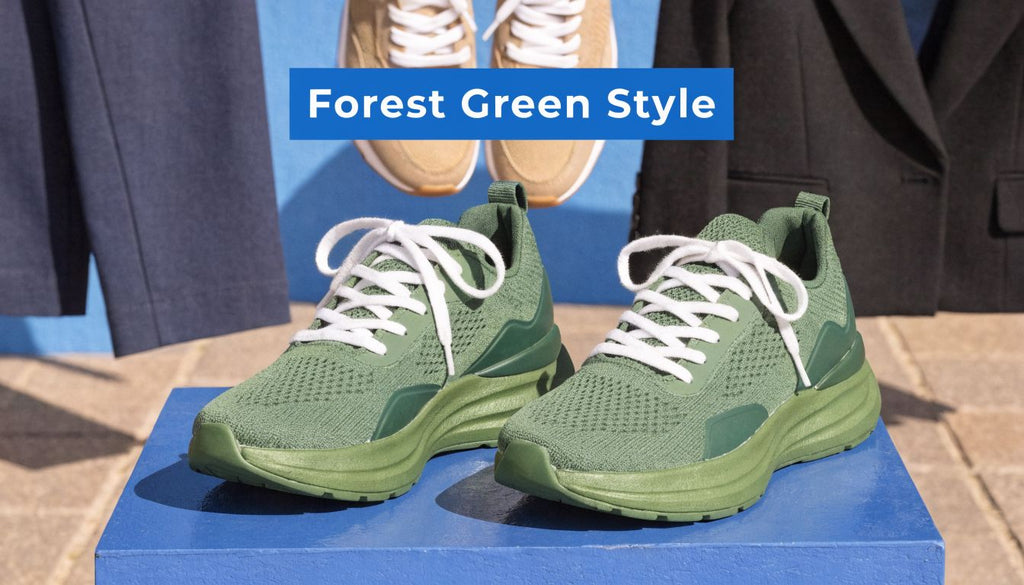
Forest Green Sneakers: Your Ultimate Style Guide for 2026
Most advice about forest green sneakers gets the question wrong. People ask, “Can I pull that color off?” when the better question is, “Why am I still treating a deep earth tone like a risky statement piece?”
Forest green isn't hard to wear. Loud lime is hard to wear. Neon is hard to wear. Forest green sits much closer to the logic of navy, burgundy, and dark brown. It has color, yes, but it also has restraint. That's what makes it useful in a grown-up wardrobe.
The shift is clear. Forest green sneakers don't belong only with joggers and weekend hoodies. In the right material, with the right shape, they can anchor business-casual outfits, sharpen travel wardrobes, and add depth to clothes that would look predictable with white sneakers. If you care about style but don't want to look like you're chasing trends, this is one of the smartest colors you can choose.
Beyond the Trend Why Forest Green Sneakers Belong in Your Wardrobe
The biggest misconception about forest green sneakers is that they're seasonal. They aren't. They're versatile, grounded, and increasingly established within the larger sneaker market.
One market summary projects that the global fashion sneakers market will grow from $79.6 billion in 2021 to over $142 billion by 2033, while green shades, including forest green, are highlighted as a major color direction for 2025 and beyond, according to this sneaker market overview. That matters because it moves forest green out of the “interesting niche” category and into the “serious wardrobe option” category.

A lot of men hesitate because they assume any green shoe will dominate the outfit. Forest green usually does the opposite. It settles an outfit. It adds richness without demanding attention the way bright blue, red, or orange sneakers do.
Forest green works best when you stop treating it like a novelty color and start treating it like a darker neutral with personality.
That's why it fits so naturally into modern wardrobes built around navy tailoring, charcoal trousers, off-white denim, brown outerwear, and soft knitwear. It offers more depth than white sneakers and more individuality than black, without becoming theatrical.
If you've been tracking broader men's shoe trends for 2026, you've probably noticed a larger move toward richer color and more expressive neutrals. Forest green sits right in that sweet spot. It feels current, but it doesn't look disposable.
The New Neutral How Forest Green Elevates Your Style
Forest green earns its place in a wardrobe the same way navy does. It's colored, but controlled. It has presence, but not noise. That balance is rare.
Most men understand instinctively that burgundy loafers can work almost like a neutral. The same logic applies here. A deep green sneaker carries enough saturation to feel intentional, yet enough earthiness to blend with the tones most professional wardrobes already use.
Why the color feels easier than you expect
Forest green has two advantages. First, it's dark. Dark colors recede visually, which means they don't shout from the bottom half of an outfit. Second, it's earth-based. Earth tones tend to cooperate with one another, even when the wearer isn't trying too hard.
That's why forest green sneakers often look more natural with well-fitted clothing than brighter “fashion” colors do. They don't interrupt the outfit. They deepen it.
A simple way to look at it:
| Wardrobe color | Effect with forest green sneakers |
|---|---|
| Navy | Refined and confident |
| Charcoal | Urban and clean |
| Cream | Soft contrast, relaxed elegance |
| Brown | Warm, textured, quietly luxurious |
When forest green reads luxury and when it reads sport
The difference usually isn't the color alone. It's the finish.
A matte suede or premium leather forest green sneaker tends to read refined. A shiny synthetic upper tends to read athletic. That's why two sneakers in the same shade can send completely different messages.
According to this shoe color matching guide, color works best when you judge it in context with material, shape, and the rest of the outfit. That principle matters even more with forest green because the shade can swing elegant or casual depending on what surrounds it.
Practical rule: If you want forest green sneakers to feel polished, pair them with matte textures and restrained colors, not high-contrast gymwear.
The confidence factor
Men often reach for white sneakers because they feel safe. Safe is useful, but it can become flat. Forest green gives you another option. It still behaves like a neutral, yet it makes the outfit look considered.
That's where the true value lies. Not novelty. Not trend-chasing. Just more depth, more character, and a stronger sense that your clothes were chosen rather than defaulted.
Choosing Your Canvas Leather Suede and Other Materials
Color gets the attention. Material decides the outcome.
A forest green sneaker in smooth leather can look sharp enough for a creative office. The same color in shaggy suede feels softer and more relaxed. Put that shade on technical mesh with an aggressive sole, and you're suddenly in sport territory. If you've ever wondered why one green sneaker looks elegant and another looks juvenile, material is usually the answer.
Full-grain leather, suede, and textile each tell a different story

Here's the quick read:
- Full-grain leather gives forest green sneakers a cleaner, more architectural look. The surface reflects light more evenly, so the color appears denser and dressier.
- Suede softens the color. Because the nap absorbs light, forest green suede often looks richer, deeper, and more nuanced.
- Canvas and other textiles make the shoe feel lighter and more casual. They're useful for warm weather and informal outfits, but they rarely look as premium as leather or suede.
If you want one pair that can move between smart-casual and business-casual settings, leather is usually the easiest starting point. If you already own simple white leather sneakers and want something more textured, suede is often the more interesting move.
Construction matters as much as surface material
High-end sneakers often combine materials for a reason, not just for style. Some use nubuck leather overlays for abrasion resistance and a mesh base for breathability, while the midsole combines soft EVA foam with a polyurethane rim to balance shock absorption with longer-term shape retention, as described in this product construction example from Farfetch.
That combination helps explain why some forest green sneakers feel fine for half an hour and others stay comfortable all day. The upper controls airflow, structure, and flexibility. The midsole controls fatigue.
A practical comparison helps:
| Material or component | What you notice on foot | Best use |
|---|---|---|
| Smooth leather upper | More structure, cleaner profile | Office, travel, smart casual |
| Suede upper | Softer feel, richer texture | Weekend, dinner, relaxed tailoring |
| Mesh base | Better airflow, lighter feel | Long days, warmer climates |
| EVA with PU support | Softer step with better shape retention | Frequent wear, urban walking |
For a deeper material breakdown, Alexander Noel's overview of leathers and fabrics used in footwear is useful because it shows how upper choice changes both comfort and appearance.
A shoemaker's way to choose
Don't start with color alone. Start with your life.
If you need a pair to wear with wool trousers, knit polos, and unstructured jackets, choose a smoother leather or a refined nubuck. If you want a softer, more tactile sneaker for denim, chinos, and overshirts, choose suede. If your wardrobe is mostly casual and climate matters more than polish, textile can make sense.
The right forest green sneaker isn't just the right shade. It's the right shade on the right surface.
That's the distinction people often miss.
How to Style Forest Green Sneakers for Any Occasion
Most men don't need another gallery of product photos. They need outfit logic. Forest green sneakers become easy the moment you see them in complete looks rather than in isolation.

One of the biggest gaps in existing advice is that it doesn't explain how to wear a saturated color in an elegant way. Forest green is one of the few shades that can act like a neutral, and it pairs especially well with navy, charcoal, cream, and brown, particularly in matte suede or premium leather when you want the result to read as luxury rather than sport, as noted in this discussion of the styling gap around forest green shoes.
Business casual that doesn't look accidental
Start with charcoal wool trousers, a white or soft blue Oxford shirt, and an unstructured navy blazer. Add forest green leather sneakers with a clean sole.
Why this works: charcoal and navy create a sober frame. The green sits inside that frame as a deep accent rather than a disruption. The sneakers keep the outfit modern, but the tailoring keeps it disciplined.
A few details matter:
- Choose a slim, clean silhouette so the sneaker reads intentional, not bulky.
- Keep the sole understated. Off-white, gum, or tonal works better than a high-contrast athletic base.
- Match the belt only loosely if you're wearing one. Brown leather accessories usually sit more naturally with green than stark black does.
Smart casual with texture
Take dark denim or tobacco chinos, a cream knit polo or fine-gauge sweater, and a brown suede jacket or overshirt. Forest green suede sneakers slot into that palette beautifully.
This is where the color really earns the title of new neutral. Cream brightens. Brown warms. Green grounds. Nothing feels forced.
If you're unsure, build the outfit from the top down in soft neutrals, then let the forest green sit at the bottom as the quiet point of difference.
A visual walkthrough can help if you want to see how proportions and texture affect the result.
Elevated weekend dressing
Forest green sneakers are excellent travel shoes when you don't want to pack something bland. Try stone chinos, a heather grey T-shirt, and a camel field jacket. Or wear ecru jeans with a navy crewneck and a lightweight brown coat.
The key is restraint. You don't need another strong color competing with the shoes.
Avoid the common trap of pairing forest green sneakers with bright black-and-white athleisure, oversized logos, or fluorescent performance layers if your goal is sophistication. That combination pushes the shoe back toward sport, which wastes the elegance built into the shade.
Casual evening outfits
For dinner, drinks, or a gallery opening, try dark olive or charcoal trousers, a black merino knit, and forest green suede sneakers. This works because the outfit stays tonal and low-gloss.
The shoe doesn't have to be the loudest part of the look to be the most memorable part. In fact, with forest green, subtlety is the whole point.
The Bespoke Advantage Customizing Your Perfect Pair
Off-the-shelf shopping forces you into compromises. Maybe the shade is right, but the leather is wrong. Maybe the silhouette works, but the sole is too athletic. Maybe the design is close, but the fit never quite settles.
That's where customization becomes practical, not indulgent.

Better style decisions happen when you control the variables
With a bespoke or made-to-order sneaker, you can decide what kind of forest green you want. Not every green serves the same wardrobe. A cooler, darker forest green can look excellent with navy and charcoal tailoring. A warmer green can sit better with tan, cream, and brown.
You can also control the message of the shoe through material and finishing:
- Suede upper with tonal laces gives a softer, more luxurious look.
- Leather body with contrast tab feels sharper and more urban.
- Minimal sole design makes the sneaker easier to wear with more formal clothing.
- Rubber-heavy athletic sole pushes the shoe toward casual use.
That level of control matters because forest green is subtle enough that small design changes have an outsized effect.
Personalization, fit, and waste reduction belong in the same conversation
The footwear industry has a serious environmental problem. Reporting cited by the Irish Times notes that a single pair of sneakers can generate 13.6 kg of greenhouse-gas emissions, and 90% of trainers end up in landfill or incineration, as summarized in this report on lower-impact trainers. A made-to-order model addresses part of that problem by avoiding excess inventory and putting more value on durability and repair.
That's one reason bespoke footwear appeals to people who care about both style and consequence. The goal isn't just to own a more distinctive sneaker. It's to own one you chose carefully enough to keep.
Among the available customization routes, Alexander Noel's Design Your Own Sneakers guide shows how buyers can adjust colors, materials, and styling details rather than settling for a stock combination.
A well-designed custom sneaker solves three problems at once. It fits better, looks more coherent with your wardrobe, and is less likely to become disposable.
That's a stronger reason to customize than novelty ever was.
Ensuring a Perfect Fit and Long-Term Care
An elegant color deserves disciplined care. Forest green sneakers can age beautifully, but only if the fit is right and the maintenance matches the material.
Poor fit creates problems fast. Heel slip distorts the way the upper creases. A cramped forefoot stresses seams and makes the shoe wear unevenly. If you're buying premium sneakers, don't treat sizing like an afterthought.
What good fit should feel like
Your heel should feel secure without grinding. The ball of your foot should sit naturally at the widest part of the shoe. Your toes need room to move, but not so much space that your foot slides forward with every step.
Use this simple checklist when you try on a pair:
- Check heel hold. Your heel can lift slightly, but it shouldn't bounce.
- Walk on a hard surface. You'll notice slippage and pressure points more quickly than on carpet.
- Pay attention to width. Many fit issues blamed on length are width problems.
- Test late in the day. Feet often swell after hours of walking, standing, and commuting.
Caring for suede, leather, and mixed materials
Maintenance depends on what the shoe is made from. That sounds obvious, but many people clean every sneaker the same way and then wonder why the finish deteriorates.
According to this product note on forest-green suede construction, suede overlays are more vulnerable to staining than smooth leather and benefit from protective sprays and routine dry brushing to preserve finish and color depth.
A straightforward care plan works well:
-
For suede
Use a protective spray before regular wear. Brush lightly when dry to lift the nap and remove surface dust. Don't scrub wet stains aggressively. -
For smooth leather
Wipe with a soft cloth after wear, especially around the toe and sidewall. Use a suitable conditioner occasionally to keep the leather from drying out. -
For mesh or mixed uppers
Clean gently. Don't saturate the shoe, especially where different materials meet, because drying unevenly can affect shape and finish.
Brush suede before it looks dirty. Preventive care is what keeps forest green looking rich instead of tired.
Rotation matters
If you wear the same pair every day, the upper and footbed never fully recover. A rotation gives materials time to breathe and helps the shoe hold its shape longer.
That habit doesn't sound glamorous, but it's one of the simplest ways to protect a well-made pair.
Step Into Your Style with Confidence
Forest green sneakers deserve a place in a serious wardrobe because they do something most sneakers don't. They add character without sacrificing composure.
That's their real advantage. They aren't loud, but they aren't anonymous either. In leather, they can sharpen business-casual clothing. In suede, they bring warmth and texture to smart weekend outfits. In the right silhouette, they feel current without looking temporary.
The mistake is thinking of forest green as a specialty color. It's more useful than that. It works like a new neutral, especially when you pair it with the colors many men already rely on most: navy, charcoal, cream, and brown.
Material choice decides the tone. Fit decides the comfort. Care decides how well the shoe ages. Get those three things right, and forest green sneakers stop being a style experiment and become a dependable part of how you dress.
If you've been stuck between the safety of white sneakers and the severity of black, this is the middle path worth taking. It has more depth, more individuality, and more range than typically assumed.
If you want to create a pair that matches your wardrobe rather than adapt your wardrobe to whatever is in stock, explore Alexander Noel and its custom footwear approach. A made-to-order process gives you control over shade, material, and finish, which is exactly what makes forest green sneakers look personal instead of generic.
Related post
26
Sep
26
Sep
26
Sep
26
Sep
26
Sep
