

RECENT POSTS
29.August.2026
Custom Women's Boots for Fall: Choosing Between Two Black Chelsea Silhouettes
0 Comments







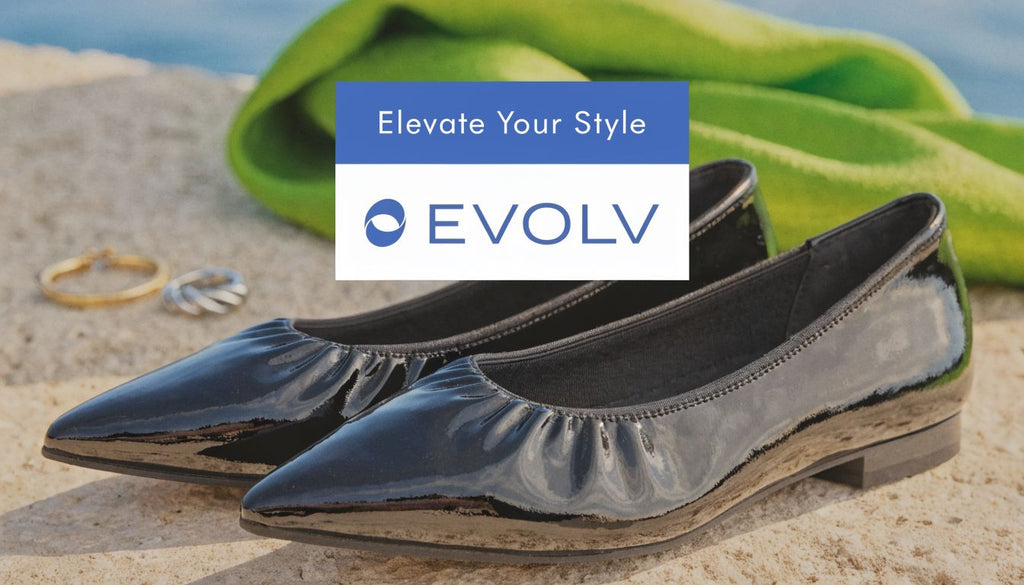
Elevate Your Style with Black Patent Leather Ballet Flats
You know the moment. Your calendar is full, your outfit is almost right, and the shoes are the problem again. The heel that looked polished at 8 a.m. feels punishing by lunch. The sneaker that saves your feet drains the sharpness from a smart appearance. The loafer works for meetings but feels heavy with a dress at dinner.
That’s why so many wardrobes keep circling back to black patent leather ballet flats.
They solve a very specific problem. They’re neat without being rigid, glossy without being loud, and practical without looking like a compromise. A good pair can move from office corridors to a late reservation, then show up again on Sunday with denim and still make sense.
The catch is that not every pair earns that loyalty. Some pinch. Some slip at the heel. Some lose their shine quickly and start to peel at the flex point. The difference usually comes down to three things: material quality, shape, and fit.
A seasoned shoe maker will tell you the same thing a stylist will. The ballet flat looks simple, but it isn’t. Small details decide whether it becomes your signature or ends up in the back of the closet.
The Search for the Perfect Do-It-All Shoe
A reader once described her routine to me in a way that felt familiar. She needed one shoe for a client presentation, a train commute, and dinner afterward. Her pumps looked right but felt wrong by midday. Her soft flats felt easy but looked too informal with suiting. She wasn’t shopping for novelty. She was shopping for relief.
This is the enduring appeal of black patent leather ballet flats. They meet the wardrobe where life happens. The black color anchors an outfit. The patent finish adds structure and light. The ballet-flat silhouette keeps the whole thing graceful rather than severe.
Why this style keeps winning
Several practical advantages come together in one shoe:
- Polish without height: You get shine and definition, but you don’t have to commit to a heel.
- Easy range: The same pair can sit comfortably with trousers, denim, skirts, and dresses.
- Quiet statement: Patent leather catches the eye in a refined way. It doesn’t need extra ornament to look intentional.
- Packable usefulness: For travel, a flat that works across multiple outfits earns its place fast.
Many people get confused by the word “flat” and assume all ballet flats behave the same way. They don’t. A flimsy flat and a properly made patent flat are worlds apart. One collapses. The other supports the foot, holds its line, and finishes an outfit.
A versatile shoe isn’t one you can wear with everything. It’s one you actually want to wear repeatedly.
That’s also why customization matters so much here. Ballet flats sit close to the foot. There’s nowhere for poor fit to hide. If the toe shape is off, you feel it immediately. If the vamp cuts too high or too low, you see it immediately. When a style is this minimal, precision becomes luxury.
From Stage Slipper to Style Icon
A woman leaves the office in smart trousers, steps onto a wet sidewalk, and heads straight to dinner without changing her shoes. That quiet range did not happen by accident. The ballet flat earned it over centuries of use, adaptation, and refinement.
The story starts in the theater. In eighteenth-century Europe, dancers favored light slippers that stayed close to the foot and allowed precise movement, a lineage summarized in this earlier history of the ballet flat. That origin still matters. Even now, the best ballet flats carry the same basic promise: freedom of movement with a clean, disciplined line.

The moment it left the studio
The modern version took shape in postwar Paris, when ballet-informed shoemaking began to influence everyday fashion. Designers and makers borrowed the dancer’s slipper, then adjusted it for city life with sturdier soles, more durable construction, and a silhouette that looked poised on the street rather than rehearsal-specific.
Film and fashion helped fix the image. Brigitte Bardot gave the style youthful ease. Audrey Hepburn gave it polish and restraint. Together, they turned the ballet flat into a symbol of composure. The appeal was never just prettiness. It was competence in a graceful form.
If you want more context on the performance side of that heritage, this essential pointe shoe guide for ballet students helps explain how dance footwear developed around movement, support, and close contact with the foot.
Where patent leather changed the mood
Patent leather shifted the ballet flat from soft to crisp. A matte flat tends to whisper. A patent flat catches light, outlines the foot more clearly, and reads with more intention under city clothes. The effect is small but powerful, much like switching from plain paper to lacquered card stock. The shape stays familiar, but the presence changes.
Black patent became the lasting version because it balances opposites well. It carries the delicacy of a dance slipper, yet the shine gives it authority. It works with a simple knit dress, but it also holds its own against sharp tailoring. That is why it survives trend cycles so well.
Readers often confuse “classic” with “fixed.” Ballet flats have changed constantly. Toe shapes have widened and narrowed. Vamps have risen and dipped. Construction has improved. Materials have expanded, as you can see in this guide to the many leathers and fabrics used in modern flats. The enduring part is not one exact pattern. It is the idea of a close-fitting, flexible, feminine shoe that moves easily through real life.
That history also explains why customization matters so much with black patent leather ballet flats. This style exposes everything. The toe shape affects the mood. The topline changes how the foot looks. A strap, bow, piping, or personalized last can turn the same basic flat into something distinctly yours. Off-the-rack pairs give you a category. A custom pair gives you a signature.
A lasting design usually begins with function, then gains beauty through use. Ballet flats followed that path, and black patent leather gave the form modern clarity.
Anatomy of an Exceptional Patent Flat
A black patent flat asks a lot from a very small shoe. It has to look polished in full light, bend with the foot, stay quiet against the skin, and hold its shape without the visual help of a heel or heavy upper. That is why the best pairs feel deceptively simple. The refinement is tucked into the pattern, the materials, and the way each layer supports the next.

Start with the surface, then study the structure
Patent leather is leather with a glossy finish applied to the surface. In a well-made flat, that shine should read like glass over wood. Smooth, reflective, and still grounded by the character of the hide underneath. If the base leather is weak, the finish often looks hard and plastic rather than rich and fluid.
That distinction matters because patent does not hide flaws. It magnifies them. Uneven lasting, poor clicking, and cheap coatings tend to show up fast on a glossy black shoe.
The layer beneath the shine matters just as much as the finish itself. Full-grain or high-quality top-grain leather usually ages better, molds more naturally to the foot, and gives the upper a cleaner, calmer look over time. Readers who want to compare how patent differs from suede, nappa, and other uppers can use this guide to the many leathers and fabrics used in modern flats.
What to inspect before you buy
A strong patent flat rewards a careful look. Start at the opening of the shoe and work downward.
-
Topline
The opening should be even from side to side, with no rippling or collapse. A clean topline usually signals better pattern cutting and better internal support. -
Toe shape
The toe should hold its form without feeling hard. Rounder toes read softer and often give more room. Almond and square toes look sharper, but they need precise shaping or they can pinch. -
Lining
Leather lining usually regulates heat and friction better than thin synthetic lining. If the inside feels sticky in the hand, it often feels worse on the foot after a few hours. -
Heel counter
Press the back of the shoe gently. It should feel shaped enough to steady the heel, not so stiff that it digs, and not so limp that it slips. -
Sole bend
A flat should flex near the ball of the foot. If it buckles through the middle, the shoe will often feel unstable and wear out unevenly. -
Edge finishing
Piping, binding, and seam edges should look neat and symmetrical. On a patent shoe, sloppy finishing catches light immediately.
Why sole design decides comfort
The sole is the part many shoppers overlook because it is less visible than the glossy upper. Yet it is the part that determines whether the shoe feels graceful or tiring after a full day.
A good ballet flat bends where your foot bends and resists collapse where your foot needs support. That balance is difficult to get right in a low-profile shoe. Too much rigidity and every step feels abrupt. Too little structure and the flat starts to feel like a sock with a shiny shell.
The insole matters too. Even a minimal flat needs thoughtful underfoot design. A slight cushion at the ball, a stable heel seat, and a last shaped to the arch can change the experience completely.
Small details separate a staple from a signature
Artisans notice certain clues immediately. The gloss should look even, not cloudy in one area and overly thick in another. The two shoes should mirror each other closely in pitch, vamp shape, and toe line. The bow, strap, or trim should feel placed with intention rather than added as an afterthought.
This is also where personal expression begins. Black patent leather gives you a disciplined base, almost like a black frame around a painting. The details decide the mood. A higher vamp can feel more refined. A softened square toe can look modern without turning severe. Contrast piping, a delicate strap, or a custom bow changes the character while keeping the same classic foundation.
Customization improves the part off-the-rack shoes usually treat as fixed. The last can be adjusted for width, the topline can be raised or lowered, the heel grip can be refined, and the toe shape can be tuned to both style and anatomy. The result is not decoration for its own sake. It is a patent flat that reflects a specific wearer, fits a real foot, and earns its place as a signature piece rather than a generic basic.
A Masterclass in Styling Your Flats
Styling black patent leather ballet flats gets easier when you stop thinking of them as a fallback shoe. They’re not there to replace a heel when you give up. They’re there to finish an outfit with control.
The patent surface helps because it catches light and gives shape to softer garments. That’s why these flats can handle both polished clothing and relaxed pieces. They bridge them.

The 9 to 5 polish
In professional settings, the goal isn’t to make the flats disappear. It’s to make them look deliberate.
Try these combinations:
- Cropped trousers and a crisp shirt: The exposed ankle keeps the line light, and the patent finish prevents the look from feeling too plain.
- A column skirt with a fine knit: This creates a smooth vertical line. The flats add restraint where a heel might feel too formal.
- Wide-leg tailoring and a fitted top: The shine at the foot gives enough definition to anchor volume through the leg.
A common mistake is pairing glossy flats with overly busy office wear. Patent already has presence. Let it do that job. If the shoe is sleek, you can keep the rest of the palette controlled.
For broader outfit coordination, this shoe color matching guide is helpful when you’re balancing black patent against navy suiting, cream separates, or tonal dressing.
In office wear, patent leather acts like punctuation. It sharpens the sentence without rewriting it.
The weekend edit
Weekends are where this shoe earns its keep. It can dress up casual clothes without making them stiff.
Three formulas work especially well:
| Outfit base | Why the flats work | Styling note |
|---|---|---|
| Straight-leg jeans and a knit | The gloss lifts denim instantly | Keep the hem clean, not pooled |
| Shirt dress or wrap dress | The soft dress and polished shoe create contrast | Add a structured bag |
| Relaxed trousers and a striped top | The look feels easy but still intentional | Skip heavy socks if you want the line to stay refined |
The best weekend styling has a bit of tension in it. Casual clothes. Refined shoes. That mix is what makes the outfit look lived-in rather than overplanned.
A short visual guide helps here too:
After-hours elegance
Evening dressing is where many people assume they must switch to heels. Often they don’t.
A patent ballet flat can look elegant with:
- A black slip skirt and fine-gauge sweater
- An ankle-length dress with clean jewelry
- Slim cigarette trousers and a sculptural top
The secret is fabric choice. If your clothes have drape, satin, crepe, or a neat wool finish, the patent surface feels naturally at home. If the outfit is already heavily embellished, the flats should be quieter in shape.
The role of customization in style
Here, personal expression gets interesting. Off-the-rack styling advice usually stops at “wear them with jeans” or “pair with dresses.” That’s only surface-level thinking.
A custom flat lets you decide what mood the shoe carries before it ever enters the outfit. Rounded toe or slightly tapered? Higher vamp for a more covered look, or lower cut for a lighter line? Minimal trim or a subtle accent? Each change shifts the styling possibilities.
That’s why bespoke design turns a staple into a signature. You aren’t just choosing a color. You’re deciding how the shoe speaks.
Achieving the Perfect Fit The Power of Personalization
You slip on a pair of black patent ballet flats in the morning, and for the first ten minutes they seem perfect. By lunch, your heel is lifting, your toes are rubbing, and the glossy finish that looked so polished in the box now highlights every point where the shoe and foot disagree. That is the true fit test.
Common frustrations with ballet flats often come from shape, not from style or even from size alone. A flat sits close to the foot, with very little height to hide poor proportions. If the curve at the heel, the width at the forefoot, or the cut of the vamp is slightly off, you feel it quickly and you can often see it too.
The fit problems that show up again and again
Ready-made flats tend to miss in familiar ways:
- Heel slippage: the length is acceptable, but the heel cup does not follow your heel shape.
- Toe pressure: the front narrows before your foot does, so one side gets squeezed.
- Side gaping: the topline stands away from the foot instead of resting against it.
- Foot fatigue: the shoe is so flat inside that your foot has to do all the stabilizing work.
This is why sizing mistakes are so common. Someone with heel slippage buys a smaller size and creates toe pain. Someone with a wider forefoot sizes up and then loses control at the back. The issue is often the last, which is the shoemaker’s form that gives the shoe its shape. In simple terms, the shoe is built for a different foot than yours.
Fit principle: Never expect a too-small flat to stretch into comfort or a too-large flat to hold you securely.
What to check before you commit
Patent leather is less forgiving than softer calf or suede, so first fit matters more here. Use a slow, deliberate check:
-
Walk a few steps and watch the heel.
A slight new-shoe stiffness is normal. Repeated lifting is not. -
Stand with weight fully down.
Your toes should rest flat, not overlap or press hard against the sides. -
Look at the topline from the side.
A clean line should follow the foot. Extra space usually stays extra space. -
Notice where the shoe flexes.
It should bend near the ball of your foot, not across the arch. -
Pay attention after ten minutes, not ten seconds.
Many poor fits feel acceptable at first and reveal themselves only once your foot warms up.
A good flat should feel like a well-cut glove for the foot. Close, controlled, and easy to forget.
Why personalization matters more in flats than in many other shoes
A ballet flat has nowhere to hide. A boot can borrow support from its shaft. A lace-up can be adjusted across the instep. A high heel changes posture enough to mask certain fit flaws for a short time. The ballet flat depends on precise contact.
Customization lets the maker adjust the parts that affect real comfort and appearance: toe shape, width, vamp depth, heel grip, lining choice, and in some cases the footbed construction. That is why a personalized pair often looks calmer on the foot. The patent sits smoother. The opening lies flatter. The shoe keeps its intended silhouette because your foot is not pushing against the pattern from inside.
For readers considering made-to-order options, this guide to custom shoes for women explains how measurements and design decisions can be developed together rather than treated as separate choices.
If you already compare body measurements before buying clothing online, the same habit helps here. A reference point for proportions can reduce expensive guesswork, and this guide to ensure your ideal apparel fit is a useful reminder that fit logic applies across your wardrobe.
Personal expression starts with the fit
Customization is not only about comfort. It is also how a classic black patent flat becomes recognizably yours.
A slightly higher vamp gives the shoe a more disciplined, almost uniform-like neatness. A softer almond toe can feel more understated than a round toe. A cleaner topline, a narrower bow, a contrasting edge, or a different binding changes the personality without sacrificing the usefulness of the shoe. These are small decisions, but in footwear, small decisions are the whole language.
Alexander Noel also offers a Design Lab model that allows buyers to choose materials, design details, and made-to-order specifications through an artisan production process. In a category where millimeters affect wear and appearance, that level of customization is practical.
The best-fitting patent flat does more than avoid pain. It becomes a signature. That is the difference between buying a staple and commissioning a pair that is uniquely yours.
Preserving the Shine Your Care and Maintenance Guide
Patent leather rewards regular care, but it punishes neglect. The good news is that the routine is straightforward once you know what matters.
Many people either over-clean patent leather with harsh products or ignore it until the surface looks tired. Neither approach works. A better method is small, consistent upkeep.
What the data says about wear
25% of reviews for mass-market patent flats note peeling within 3 to 6 months, while high-quality patent leather needs weekly pH-neutral conditioning to prevent oxidation and can last over 2 years, especially when artisans apply triple-coated finishes with UV protectants, according to this report on patent leather ballet flats and maintenance.
That tells us two things. First, patent doesn’t automatically mean durable. Second, care matters most when the material quality is worth preserving.
Your simple care routine
Use a calm, repeatable sequence:
- After wear: Wipe off dust and surface marks with a soft cloth.
- Weekly: Apply a pH-neutral conditioner meant for patent finishes.
- Before storage: Make sure the shoe is clean and fully dry.
- When scuffed: Address the mark early instead of letting dirt settle into it.
Patent leather care works best when it stays gentle. Scrubbing hard usually makes things worse.
The shine on patent leather doesn’t come from force. It comes from preserving the finish that’s already there.
Patent Leather Care Schedule
| Frequency | Task | Tools Needed |
|---|---|---|
| After each wear | Remove dust and light surface marks | Soft dry cloth |
| Weekly | Condition to help prevent oxidation | pH-neutral conditioner, soft cloth |
| Before storing for longer periods | Clean and dry thoroughly | Soft cloth, clean storage area |
| As needed | Address visible scuffs early | Soft cloth, appropriate patent-safe care product |
Storage habits that protect shape
Storage is where many nice flats age badly. Don’t toss them sole-to-sole in a pile. Patent surfaces can mark each other, and collapsed uppers crease more sharply.
Better habits include:
- Store them apart: Give each shoe its own space or soft covering.
- Support the shape: Light stuffing helps the toe keep its form.
- Keep them away from heat: Excess heat can stress coatings and adhesives.
- Avoid trapped dampness: Never put them away with moisture still on the surface.
If you want a broader maintenance reference for different shoe types and finishes, this ultimate shoe care guide from Alexander Noel is a useful companion.
When to stop at home and call a cobbler
Not every issue should be handled in the kitchen with a random cleaner and optimism. If the patent surface is peeling, the heel cap is unevenly worn, or the sole is separating, it’s time for a professional.
A good cobbler can often help preserve a pair that still has strong upper structure. That’s another reason quality matters at the start. Better-made flats are more worth repairing because the underlying shoe still deserves the effort.
The longer I work around shoes, the less I see care as maintenance and the more I see it as respect. A black patent flat can carry you through work, travel, dinner, weather, and repetition. Giving it a few minutes each week isn’t fuss. It’s what keeps an elegant object useful.
A thoughtful pair of black patent leather ballet flats can become one of the hardest-working pieces in your wardrobe, especially when the fit, finish, and design reflect your actual life rather than a generic standard size. If you want to explore made-to-order options, materials, and personalized details through a direct bespoke process, visit Alexander Noel.
Related post
19
Sep
19
Sep
19
Sep
19
Sep
19
Sep
