

RECENT POSTS
29.August.2026
Custom Women's Boots for Fall: Choosing Between Two Black Chelsea Silhouettes
0 Comments





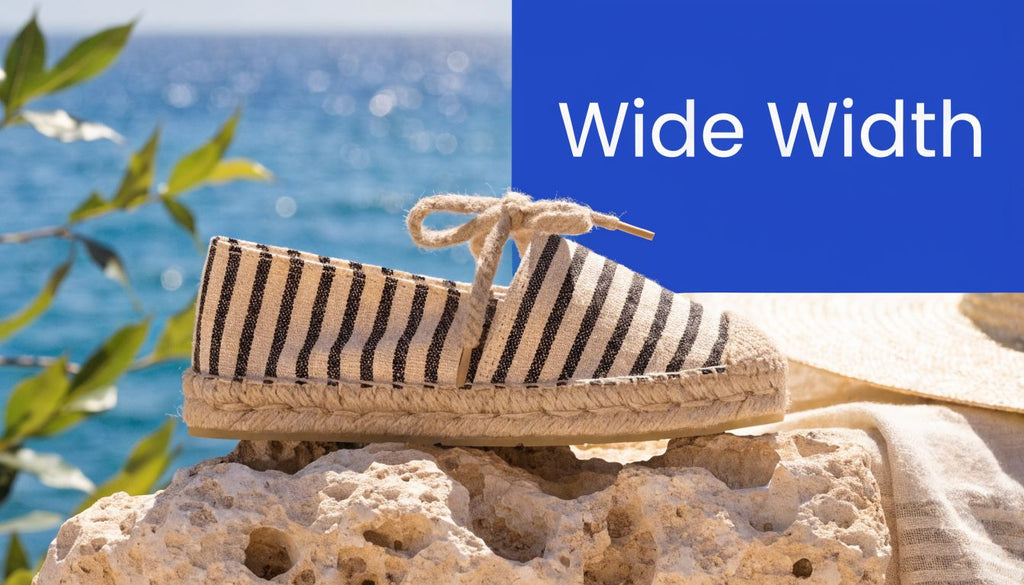
Wide Width Espadrilles: The Ultimate Fit & Style Guide
You know the ritual. Warm weather arrives, your wardrobe gets lighter, and suddenly every outfit seems to call for an easy summer shoe. You want something polished enough for lunch in the city, relaxed enough for a weekend away, and comfortable enough to wear for hours. If you have wide feet, that search often turns sour fast.
The options narrow. The stylish pairs pinch. The comfortable pairs look apologetic. And the pairs labeled “wide” often feel suspiciously similar to the standard version, just with a little more give in the fabric.
Espadrilles sit right in the middle of that tension. In theory, they’re perfect. They’re breathable, elegant, and easy to dress up or down. In practice, they can be one of the trickiest summer shoes to fit well if your feet need more room through the forefoot, instep, or toe box.

A good fit in wide width espadrilles isn’t about luck. It comes down to shape, materials, construction, and how honestly the shoe was designed for a broader foot.
The Summer Shoe Dilemma for Wide Feet
For many people with wide feet, summer shopping feels strangely backward. Shoes are supposed to become lighter and easier this time of year, yet the search often gets harder. Strappy sandals cut across the widest part of the foot. Slides look simple until your foot spills over the edge. Espadrilles promise softness, then rub at the toe or collapse at the sides after a few wears.
That frustration is valid. Retailers often present wide summer shoes as if width were a small adjustment instead of a full fit issue. In espadrilles especially, that shortcut causes problems because the market often treats “wide” and “extra-wide” as interchangeable, even though the materials and construction make fit far less predictable in this category. Canvas and suede don’t behave like structured leather, so off-the-rack sizing becomes less reliable for wider feet, as noted in this overview of women’s extra-wide width espadrille offerings.

Why espadrilles are so tempting
Espadrilles have everything a summer shoe should have. They feel seasonal without looking flimsy. They pair well with linen, cotton poplin, denim, and soft tailoring. They can be casual or refined depending on the shape.
That’s why so many people keep trying them, even after disappointing experiences.
Wide-foot shoppers usually aren’t asking for more shoe. They’re asking for the right shape.
Where the confusion starts
A label that says “wide” doesn’t tell you where the extra room is. Is there more width at the ball of the foot? More depth at the instep? A rounder toe? More volume throughout the upper? Many product listings don’t say.
If width terminology has always felt murky, a clearer foundation helps. This breakdown of wide width shoes and EE, EEE, and EEEE sizing explains why two shoes with the same size number can feel completely different once width enters the equation.
Common signs an espadrille isn’t working for your foot:
- Toe pressure: your toes push into the front or feel crowded from the sides.
- Midfoot strain: the upper presses across the instep and leaves marks.
- Edge spillover: your foot sits wider than the footbed.
- False break-in hope: you keep waiting for the shoe to “relax,” but it never becomes stable or comfortable.
The right wide width espadrille should feel supportive, not negotiable.
Decoding the Wide Width Espadrille
Espadrilles have an appealing simplicity, but that simplicity can hide a lot. To understand what makes wide width espadrilles work, it helps to begin with what an espadrille is.
The espadrille dates back to at least the 14th century in the Pyrenees region of Spain, where peasants, soldiers, and priests wore it as practical, breathable footwear made from local materials, according to this brief history of espadrilles. That origin matters because the espadrille was never meant to be stiff, formal footwear. It was made to move, breathe, and adapt.

A real wide fit is built from the bottom up
Many shoppers assume a wide width espadrille is just a standard espadrille with more fabric. It shouldn’t be. A proper wide fit starts with the last, the foot-shaped form the shoe is built around.
A standard last can sometimes be stretched slightly in the upper, but that doesn’t change the proportions underneath. If the sole is narrow, the waist is tight, or the toe shape tapers too aggressively, the shoe still won’t support a wider foot properly.
A true wide-width design usually needs more than one adjustment:
- A broader toe box so toes can sit naturally instead of being squeezed inward
- More volume through the instep for feet that need vertical space as well as horizontal room
- A footbed that matches the upper so the foot isn’t hanging over the edge
- Balanced proportions so the shoe still feels secure instead of loose and sloppy
Sized up is not the same as wide
Sizing up often creates a different problem. You may gain a little width, but you also increase length, which changes where the shoe bends and where your foot lands inside it. That can lead to heel slip, toe gripping, and instability.
Here’s a simple comparison:
| Approach | What changes | Common result |
|---|---|---|
| Sizing up | Mostly length, slight extra room | Slippage and awkward flex point |
| Stretching a standard pair | Upper softens somewhat | Pressure may ease, but shape stays limited |
| True wide-width construction | Width, volume, and platform support | Better comfort and cleaner fit |
For a broader overview of how width categories work beyond standard sizing, this guide to shoe widths explained, EEE and beyond is useful.
If your foot needs width, extra length is a workaround. It isn’t a solution.
When you start viewing wide width espadrilles as engineered footwear rather than just relaxed summer shoes, bad fits become much easier to spot.
The Perfect Fit Starts Here Measuring for Wide Espadrilles
Most fit mistakes happen before the shoe ever arrives. People guess. They rely on the size they wore in another brand. Or they assume a soft summer shoe will stretch enough to forgive imprecision.
Espadrilles don’t reward that kind of guesswork. Their uppers can feel flexible, but the base shape still determines whether your foot sits correctly. That’s why measuring at home matters.

What you need before you start
You don’t need special equipment. A few household items are enough:
- Two sheets of paper: one for each foot
- A pencil or fine pen: keep it as vertical as possible while tracing
- A ruler or measuring tape: for length and width
- The socks or hosiery you plan to wear: if you’ll wear the shoes barefoot, measure barefoot
Measure in the evening if you can. Feet usually feel fuller later on, and that gives you a more realistic fit reference for daily wear.
How to measure step by step
This short visual guide can help before you begin:
Then follow these steps:
-
Place the paper on a hard floor
Carpet distorts tracing and measurement. A wood, tile, or other firm surface works best. -
Stand naturally on the paper
Don’t sit while tracing. Your foot spreads under body weight, and that spread matters for wide width espadrilles. -
Trace each foot carefully
Keep the pencil upright. A tilted pencil can add false width. -
Measure the longest distance
Find the heel-to-toe length of each tracing. Use the longer foot as your reference. -
Measure the widest part
This is usually across the ball of the foot. Again, use the larger measurement if your feet differ. -
Write down both sets of numbers
Length and width together tell a more complete fit story than shoe size alone.
Why espadrilles need more precision
A structured dress shoe can sometimes disguise a slight fit error because the upper holds its shape. Espadrilles behave differently. Think of them less like a rigid shell and more like a fitted jacket with a fixed base. The upper may soften, but if the base proportions are wrong, the whole shoe feels off.
Practical rule: If your foot measures wide at the ball and full at the instep, don’t judge fit only by whether your toes can enter the shoe.
A few fit checks matter once you compare your measurements to a brand chart:
- Look for width-specific guidance, not just size conversion
- Check whether the toe shape is almond, square, or rounded
- Notice whether the upper is canvas, leather, or stretch fabric
- Pay attention to depth if you often feel pressure across the top of the foot
If you want a more detailed walkthrough, this guide on how to measure shoe size at home gives a useful starting point for interpreting your results.
What measurements can and can’t tell you
Measurements won’t reveal everything. They won’t tell you whether you have a high instep, whether one foot is more square at the toe, or whether you need more support under the arch. But they do eliminate the most common error, which is buying based on hope instead of shape.
Here’s the mindset I recommend:
| What to trust | Why it matters |
|---|---|
| Your larger foot | Shoes must accommodate the foot with greater demand |
| Width and volume clues | Espadrilles often fail at the sides or across the instep |
| Construction details | Materials change how the fit settles over time |
Good fit starts with honest numbers. Great fit starts when those numbers are matched to a shoe built to respect them.
Beyond the Braid How Materials and Construction Define Comfort
Two espadrilles can look nearly identical on a screen and feel completely different on the foot. That difference usually comes down to what’s hidden in the build. For wide feet, materials and construction aren’t technical trivia. They determine whether the shoe feels easy by noon or unbearable by dinner.

The upper decides how the shoe welcomes your foot
Canvas has a classic espadrille look. It’s breathable and crisp, but it can also feel blunt on a wide foot if the pattern is cut too narrowly. Suede and soft leather usually adapt more gracefully because they mold with wear and don’t create the same sharp pressure lines.
That doesn’t mean one upper is always better. It means the material has to match the foot shape.
A quick way to think about uppers:
- Canvas: cleaner shape, less forgiveness at first wear
- Suede: softer feel, often kinder over bunions or fuller joints
- Leather: can balance structure and give, depending on finish
- Stretch fabric: useful when the forefoot needs flexibility without visual bulk
The insole does more work than most shoppers realize
If an espadrille looks beautiful but feels tiring quickly, the insole is often the missing piece. Industry standard espadrilles typically feature 3mm insoles, while comfort-focused designs use 6mm thickness, a 100% increase, according to this product information on comfort plus wide fit espadrilles. For wider feet, that extra cushioning matters because pressure spreads differently across the foot.
A better insole doesn’t just feel softer. It can help distribute pressure more evenly and reduce fatigue under the forefoot and midfoot.
Cushion without stability can feel pleasant for ten minutes. Then your foot starts working too hard to stay balanced.
The sole and heel shape affect stability
This matters most in wedges and heeled espadrilles. For wide-width espadrilles, a 2.25-inch jute-wrapped wedge heel paired with a 0.5-inch platform is a key engineering parameter because it spreads force across a larger contact area and improves stability for broader foot profiles, as described in this wide-width espadrille wedge listing.
That specification sounds small, but in wear it changes how secure the shoe feels.
| Component | What to look for | Why it matters for wide feet |
|---|---|---|
| Upper | Soft but supportive material | Reduces pressure hotspots |
| Insole | Substantial cushioning | Helps manage broader pressure spread |
| Footbed | Enough width edge to edge | Prevents spillover |
| Wedge or sole base | Stable platform shape | Improves balance and confidence |
Stitching matters too
A hand-stitched or carefully stitched connection between upper and sole often flexes more naturally than a purely glued build. You can often feel the difference. The shoe bends where your foot bends instead of fighting it.
That’s especially important in espadrilles because they should feel supple, not stiff and clattery. A wide foot needs room, yes, but it also needs the shoe to move with it instead of resisting every step.
Styling Your Wide Width Espadrilles with Confidence
Once the fit is right, espadrilles become one of the most useful shoes in a warm-weather wardrobe. They soften structured clothing, sharpen casual outfits, and add texture without looking busy. Wide width espadrilles don’t need to be hidden or “worked around.” They can anchor a look beautifully.

Weekend dressing that feels effortless
For a relaxed Saturday, a flat or low wedge espadrille works especially well with garments that have movement. Think linen trousers, a cotton shirt with rolled sleeves, or an easy midi dress. The woven texture of the shoe adds warmth, so the outfit doesn’t need much else.
If you tend to prefer simple clothes, espadrilles can provide the visual interest. Natural fibers pair especially well with them because the textures feel related rather than forced.
A polished office look without stiffness
In a smart-casual office, a refined espadrille can replace a ballet flat or loafer during warmer months. Try a closed-toe pair with cropped smart trousers, a fluid blouse, and a soft blazer. Or pair a neat wedge with a midi skirt and a tucked knit top.
What makes the outfit feel more refined is proportion. If the shoe has a bit more volume to accommodate width, balance it with clean lines in the clothing. Wide-leg trousers, column skirts, and structured shirting all work well.
For readers who enjoy thinking about style as part of a broader wellness and presentation routine, this guide to Highbar's brand identity offers a thoughtful perspective on how visual consistency shapes confidence.
When your shoes fit correctly, styling gets easier because you stop dressing around discomfort.
Evening outfits that still feel like you
Espadrilles can hold their own in the evening, especially in suede, leather, or a sleek slingback shape. A jumpsuit, wide-leg silk trousers, or a draped dress all pair well with a more elegant espadrille.
Three combinations I often recommend:
- For dinner outdoors: a dark wedge espadrille with a sleeveless jumpsuit and simple jewelry
- For a summer event: a refined slingback style with a bias-cut skirt and crisp blouse
- For travel evenings: espadrille slides with fluid black trousers and a lightweight knit
The key is not to treat comfort as the opposite of style. In a well-chosen espadrille, comfort becomes part of the elegance.
The Bespoke Solution Designing Your Dream Espadrilles
Off-the-rack shopping asks you to adapt to the shoe. That’s the core problem. You measure carefully, study the materials, compare shape notes, and still end up negotiating with a design that wasn’t built for your foot.
That limitation is especially noticeable in wide width espadrilles because the category already has less structure and more fit variability. Add the retail habit of blurring width categories, and the process becomes a gamble.
Why premium wide options are still limited
The luxury market has largely ignored premium wide-width espadrilles while focusing more heavily on mass-market accommodation. That leaves a meaningful gap for discerning consumers aged 29 to 60 who want artisan-crafted, custom-fit footwear with superior materials and design, as reflected in this overview of the espadrilles category in plus-size and wide-fit retail.
That gap explains why many stylish shoppers with wide feet feel stuck between two unsatisfying choices:
- Functional pairs that solve part of the fit issue but don’t feel refined
- Fashion pairs that look right but ask the foot to compromise
What custom changes
A bespoke approach changes the order of operations. Instead of asking whether your foot can tolerate an existing silhouette, the design begins with your measurements, proportions, and preferences. That shift matters.
A custom espadrille can address details that mass production often ignores:
| Custom element | Why it improves the result |
|---|---|
| Toe shape selection | Better room for square, rounded, or prominent toes |
| Instep volume adjustment | Reduces pressure across the top of the foot |
| Material choice | Matches softness, structure, and climate needs |
| Sole and platform balance | Supports how you actually walk and stand |
| Personal styling details | Makes the shoe feel intentional, not merely accommodating |
Bespoke footwear doesn’t start with trend. It starts with anatomy.
For anyone who’s reached the point where standard options feel like constant compromise, custom work becomes less of a luxury add-on and more of a rational next step. A deeper look at custom made shoes for wide feet shows why personalized sizing changes the experience so dramatically.
The beauty of a made-to-order espadrille is that comfort and style no longer compete. You choose the line, the material, the color story, and the fit architecture together. That’s when the shoe stops being a seasonal experiment and becomes part of your real wardrobe.
Preserving Your Pair Essential Care for Your Espadrilles
A good pair of espadrilles deserves a little attention. The materials are often natural, breathable, and comfortable, but they’re not indestructible.
Start with the upper. Canvas should be cleaned gently with a soft cloth or brush. Suede needs a suede brush and a light hand. Leather benefits from a cleaner and conditioner suited to its finish. In every case, spot cleaning is safer than soaking.
The jute sole needs the most protection. Keep espadrilles as dry as possible. Jute doesn’t like prolonged moisture, and repeated exposure can weaken the look and structure of the braid.
For daily care, a simple routine works best:
- Brush off surface dust: especially around the woven edges
- Air them out after wear: don’t store them warm and damp
- Use shoe trees or tissue: this helps the upper hold its shape
- Store in a dust bag or box: away from direct sun and humidity
If your espadrilles fit beautifully, care is part of protecting that investment. A well-kept pair won’t just last longer. It will continue to feel and look the way it should.
If you’re tired of guessing your way through summer footwear, Alexander Noel offers a more thoughtful path. Explore custom footwear designed around your measurements, your style, and the kind of comfort that off-the-rack shoes rarely deliver for wide feet.
Related post
19
Sep
19
Sep
19
Sep
19
Sep
19
Sep
