


RECENT POSTS
29.August.2026
Custom Women's Boots for Fall: Choosing Between Two Black Chelsea Silhouettes
0 Comments




Embroidered Flower Boots: Your Custom Design Guide
You’re probably here because you’ve seen a pair of embroidered flower boots that stopped you in your tracks. Maybe they were sleek ankle boots with a scattering of wildflowers at the shaft. Maybe they were taller western-inspired boots with roses curling over the vamp. Either way, the reaction is the same. You don’t just notice them. You feel them.
That pull comes from two things at once. First, flowers soften a boot’s structure without making it precious. Second, embroidery adds surface, depth, and story. A plain leather boot says practical. An embroidered one says personal.
The problem is that once you start shopping, the fantasy can fade fast. Many pairs look beautiful in a photo but feel generic in person. Others fit poorly because the decoration was treated as an add-on rather than part of the boot’s design. And if you care about how something is made, most product pages tell you almost nothing about the hands, materials, or methods behind the stitching.
The Enduring Allure of Embroidered Flower Boots
You can spot the appeal in a second. A black dress, simple coat, and one pair of embroidered flower boots suddenly turn an ordinary outfit into a signature look. The boots do what jewelry often tries to do. They catch the eye, reveal taste, and give the wearer confidence without needing a full costume around them.

Why they never feel flat
Flowers bring movement to footwear. A stem can lengthen the line of the ankle. A clustered bloom can soften a sharp toe shape. Metallic thread can catch evening light. Matte thread can read quieter and more refined for daywear. That range is why these boots can feel romantic, graphic, elegant, or even architectural depending on the design.
The best pairs don’t look busy. They look intentional. You notice the balance between the leather’s body and the embroidery’s detail.
Embroidery works when it follows the shape of the boot, not when it fights it.
A luxury tradition with real roots
Embroidered flower boots aren’t a novelty trend. They emerged as a significant luxury fashion category in the late Victorian period, gaining prominence in the 1880s, and the influential Pinet boot became such a defining example that modern luxury brands still reproduce similar embroidery patterns, showing lasting appeal for over 140 years according to the historical record on Victorian women’s embroidered boots.
That history matters because it changes how you see the object. These boots belong to a long line of dressmaking, needlework, and formal footwear traditions. They were made for women who dressed with care and expected every visible detail to contribute to the whole silhouette.
A modern pair still carries that feeling. Even when the shape leans western or contemporary, floral embroidery keeps one foot in the world of atelier craft.
Why bespoke matters here
Many shoppers often get stuck. They know what they love. They just can’t find a pair that feels original, fits correctly, and reflects the quality they imagined. With embroidered flower boots, that gap is especially frustrating because the decoration is the point. If the flowers feel copied, poorly placed, or disconnected from the boot’s structure, the design loses its magic.
A bespoke process solves that by treating the embroidery as part of the architecture from the start. The flowers aren’t pasted onto a finished idea. They’re designed into it.
Decoding the Craftsmanship Behind Your Boots
A good embroidered boot should reward close inspection. The farther in you look, the more sense it makes. The thread sits cleanly. The leather supports the stitching instead of buckling under it. The sole construction matches how you plan to wear the pair. None of that is accidental.

What the embroidery is actually doing
At the workshop level, floral embroidery is more than decoration. It builds line, shadow, and relief.
A simple outline stitch can define petals and stems. Satin stitching fills a petal with smooth color and gives it body. Layered fill stitching creates depth, especially when an artisan changes direction slightly so the thread reflects light differently across the flower. Metallic or silk threads can sharpen highlights, while denser matte stitching can anchor leaves and darker centers.
The process itself is labor-intensive. A single pair of luxury embroidered boots can require 12 to 18 hours of labor and 6,500 to 8,000 stitches per boot, with techniques such as pre-stretching the leather and controlling thread tension used to achieve 98% durability in high-wear zones, as described in this overview of luxury boot embroidery process details.
That’s why hand embroidery has a different presence from a flat, purely decorative surface. You’re seeing time made visible.
How to read quality without overcomplicating it
If you’re comparing pairs, look for a few signs first.
- Surface control: The leather around the embroidery should lie smoothly. If it puckers badly, the stitching tension or support was likely mishandled.
- Thread clarity: Petal edges should look deliberate, not fuzzy or frayed.
- Pattern logic: Flowers should sit where the boot can carry them. A beautiful motif placed at a high-flex point without planning can age poorly.
- Interior finish: Even when you can’t inspect every inside seam, a refined maker usually thinks through how embellishment affects wear.
A quick vocabulary shift helps too. Instead of asking only, “Is this pretty?” ask, “Was this designed for movement?”
Practical rule: In a strong boot, beauty and structure support each other.
The materials under the flowers
The base material changes the personality of the embroidery. Full-grain leather usually gives the richest long-term character because it can develop a distinct patina with wear. Calfskin often reads finer and dressier. Suede can make florals feel softer and more atmospheric, though it asks for more thoughtful care. Corrected-grain and synthetic alternatives can look neat at first, but they usually don’t age with the same complexity.
Thread choice matters just as much. Silk often looks luminous and refined. Metallic thread adds sparkle and formality. Heavier decorative threads can make blooms feel folk-inspired or boldly western. None is automatically right or wrong. The right choice depends on the boot’s role in your wardrobe.
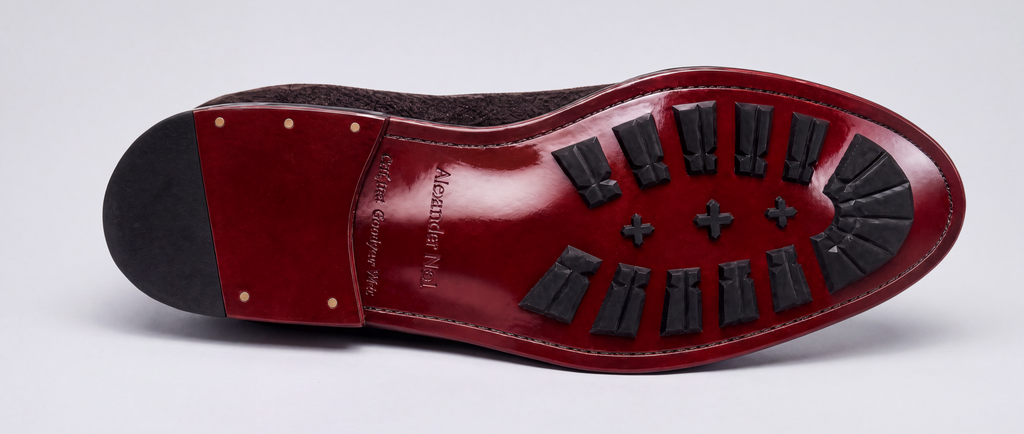
The sole and lining tell another part of the story. Goodyear welted construction tends to appeal to buyers who value longevity and repairability, while cemented construction can feel lighter and more flexible but is often less resilient over the long term. Leather lining usually feels more breathable and comfortable against the foot than synthetic lining. If you want a deeper foundation on those choices, this guide to premium boot construction and what makes luxury worth it is useful background.
A simple comparison
| Element | What to look for in a refined pair | What often shows up in a lower-consideration pair |
|---|---|---|
| Embroidery | Depth, texture, intentional placement | Flat visual effect, generic motif placement |
| Leather | Character, breathability, graceful aging | Uniform appearance, less nuance over time |
| Sole | Construction aligned with long-term wear | Built mainly for short-term appearance |
| Lining | Comfort and airflow | Lower breathability |
The more you understand these parts, the easier it becomes to design with confidence rather than shop by guesswork.
Bring Your Vision to Life with the Design Lab
Designing your own pair becomes much easier once you stop thinking in terms of “boot first, flowers second.” The smarter order is shape, fit, material, then embroidery. That sequence prevents the most common mistake people make, which is choosing a motif they love and then forcing it onto a silhouette that doesn’t support it.

Start with the silhouette you’ll actually wear
An ankle boot gives embroidery a compact, edited feel. It’s often ideal if you want the pair to slip easily into weekday outfits. A taller shaft creates more vertical space for climbing vines, oversized florals, or mirrored motifs across both boots. A sharper heel and toe can make the design read dressier. A rounder or western-influenced profile can make the same flowers feel more grounded and expressive.
Before you choose colors, decide where the boots will live in your wardrobe.
- For workwear: Keep the silhouette sleek and let the embroidery sit mostly on the shaft or outer quarter.
- For evening use: A slimmer line and a more concentrated floral composition can look elegant under dresses or dress trousers.
- For weekend styling: You can go bolder with contrast thread, larger blooms, or more visible side-panel work.
Then solve fit before you solve decoration
Many off-the-shelf pairs often disappoint. Mass-produced embroidered boots often don’t account for how embroidery placement affects comfort and fit. For people with more specific sizing needs, a bespoke approach matters because custom placement can be adapted for individual foot anatomy so the boots support both style and ergonomic comfort, a concern noted in this overview of embroidered boot fit challenges.
That idea confuses people at first, so here’s the plain version. Embroidery adds structure. Structure changes how a section of the boot flexes. If a design sits over an area that needs easy movement, the boot can feel stiffer than expected. If the artwork is placed with your actual foot shape in mind, the result is cleaner and more comfortable.
Think of the floral layout like composition, not decoration
A good floral design needs a focal point. That could be one large bloom near the outer shaft, a spray of smaller flowers that climbs upward, or a mirrored pair of motifs that frames the front and side. The flowers should have direction. Vines can elongate the leg. Scattered petals can soften a strong boot profile. Dense clusters create drama, but too many competing elements can make the pair hard to style.
A simple way to decide is to choose one of these design moods:
-
Botanical and restrained
Fine stems, small blossoms, low-contrast thread. This suits a professional wardrobe. -
Painterly and romantic
Layered petals, tonal shifts, softer edges. This feels rich with dresses, silk, and fluid fabrics. -
Bold western floral
Larger blooms, visible contrast, stronger placement across shaft panels. This carries casual confidence.
If you’re creating original embroidery artwork, it helps to understand how artwork is translated into stitch paths. Even though it’s focused on hats rather than boots, this explainer on digitizing logos for custom headwear gives a useful look at how embroidery design has to be interpreted technically before it can be stitched cleanly.
Match leather and thread with intention
The easiest combinations are often the most refined. Deep brown leather with cream, rust, and olive thread feels warm and heritage-driven. Black leather with tonal charcoal florals feels polished and urban. Ivory or sand leather with soft greens and blush tones can feel dressy without becoming sugary.
Use contrast carefully. High contrast makes embroidery more graphic. Tonal embroidery makes it more intimate. If you want the pair to work across more outfits, start tonal and add one accent thread for lift.
This walkthrough can help you visualize how a digital customization process works in practice.
A practical decision map
| Design choice | Best when you want | Watch for |
|---|---|---|
| Outer-shaft floral placement | Maximum visibility and leg-lengthening effect | Keep spacing clean so the design doesn’t crowd seams |
| Vamp embroidery | High impact from above | Make sure flex points are considered |
| Tonal thread | Versatility and subtle luxury | Detail can disappear if contrast is too low |
| Metallic accents | Evening shine and definition | Use selectively so the pair stays balanced |
One digital option for working through these choices is the Alexander Noel Design Lab video guide for shoes and boots, which shows how silhouette, materials, and visual details can be adjusted in a customization workflow.
The design test that saves regret
Before you finalize anything, ask three questions.
- Would I still love this if the embroidery were slightly less visible than in a close-up photo?
- Can I name at least three outfits I’d wear with these boots right away?
- Does the floral placement support how my foot and ankle move?
If the answer is yes to all three, you’re not chasing a fantasy pair. You’re designing one you’ll reach for.
How to Style Embroidered Flower Boots with Confidence
The biggest styling mistake people make is treating embroidered flower boots like fragile statement pieces. They aren’t fragile. They just need the rest of the outfit to know its role.

Let the boots lead, then simplify
If your boots feature visible floral work, they already carry pattern, texture, and color. That means the surrounding clothes should usually contribute shape and tone rather than compete for attention. Structured trousers, dark denim, knit dresses, bias-cut skirts, and clean outerwear all work because they leave room for the embroidery to read clearly.
The easiest formula is contrast in texture, not chaos in print. Smooth wool with embroidered leather. Crisp denim with silk-thread florals. A plain cashmere sweater over a detailed boot. That kind of contrast feels considered.
If the boots are the conversation piece, the outfit around them should speak in a lower voice.
Three outfit directions that work
Here’s where many readers feel unsure, so it helps to see the boots in context.
- Office-ready polish Pair a sleek embroidered ankle boot with full-length smart trousers that break just enough to reveal the shaft when you walk. Add a fine knit or structured blazer. If your embroidery is tonal, the look reads polished rather than theatrical.
-
Weekend ease
Wear them with straight-leg or cropped denim and a relaxed sweater, chore jacket, or crisp white shirt. This is often the most natural way to introduce floral boots into daily life because denim gives them a grounded setting. -
Evening restraint
Choose a simple dress with clean lines and let the boots provide the ornament. A slip dress, knit column, or minimalist black dress can make embroidered boots look intentional and elevated.
Color coordination without looking too matched
You don’t need to match every thread color in your outfit. In fact, that can make the styling feel forced. Instead, choose one shade from the embroidery and echo it lightly elsewhere. A bag, knit, lipstick, scarf, or earring tone is enough.
If your boots combine several colors, treat the darkest leather tone as the wardrobe anchor and the embroidery colors as accents. That keeps the look coherent. For more nuanced combinations, this shoe color matching guide is a practical reference.
Proportion matters more than trend
A taller shaft boot needs room around it. A slim embroidered ankle boot can sit neatly under trousers or peek out from midi hems. If the embroidery is dense and vivid, cleaner silhouettes around the leg often look stronger than fussy layers.
Try this quick check in the mirror:
| If your boots are... | Balance them with... |
|---|---|
| Tall and visually rich | Longer, simpler lines up top |
| Delicate and tonal | Sharper tailoring or crisp basics |
| Bold western floral | Denim, solid dresses, or clean suiting separates |
Confidence usually comes from repetition, not daring. Once you’ve worn embroidered flower boots a few times with reliable pieces, they stop feeling like an event and start feeling like your signature.
Protecting Your Investment a Guide to Boot Care
Care matters more with embroidered boots because you’re maintaining two surfaces at once. The leather needs nourishment and structure. The embroidery needs gentleness and precision. If you treat the pair like ordinary boots, you can dull the very details that made you choose them.
Embroidered boots also carry cultural weight beyond fashion. They often serve as vessels of regional identity and family heritage, tied to a needlework tradition documented across over 600 years, which makes proper care a form of preserving craftsmanship, as discussed in this piece on the origin of embroidered cowboy boots.
Clean with patience, not pressure
Start with the least aggressive method. Use a soft brush or dry cloth to remove dust from the leather and the stitched areas. For the embroidered sections, avoid hard scrubbing. Pressing too much can rough up threads, flatten raised texture, or push grime deeper into the stitching.
For the leather portions, use products suited to the specific finish. Smooth leather can usually handle a quality cleaner and conditioner. Suede needs its own brush and dedicated care approach. If you want a good baseline routine for the leather itself, this guide on how to clean leather boots covers the fundamentals.
Care note: Always test any product on a discreet area before using it near embroidery.
Store them so the shape stays honest
Storage is where many good boots lose their edge. Don’t crush the shaft into a crowded closet corner. Keep the pair upright if possible, and use boot shapers or tissue to support the form. Dust bags help prevent abrasion, especially if the embroidery includes raised stitches or metallic thread.
Keep them away from prolonged direct sunlight and damp spaces. Moisture can affect both leather and thread. Heat can dry the leather out and make certain finishes brittle over time.
Know when to bring in a professional
Some issues call for restraint. If a thread snags, don’t pull it. If the sole starts wearing unevenly, don’t wait until the upper is affected. If the leather looks dry around dense stitching, ask a trusted cobbler for product guidance rather than saturating the area yourself.
A professional can also help with protective sole work, heel maintenance, and conditioning plans that respect the embroidery. That’s especially worthwhile for bespoke or artisan-made pairs. Good care keeps the boots wearable. Great care keeps their character intact.
Your Bespoke Journey with Alexander Noel
The strongest argument for going bespoke isn’t novelty. It’s alignment. You get a pair shaped around your fit, your visual taste, and your tolerance for detail. That matters with embroidered boots because every choice interacts with another one. Shaft height affects how a floral composition reads. Leather choice changes the mood of the thread. Placement changes comfort.
For many buyers, another concern sits underneath all of that. They want to know who made the pair and what kind of production they’re supporting. That’s a reasonable concern because the luxury boot market often leaves those details vague.
Why transparency changes the experience
The modern luxury market has a transparency gap around artisan labor and sustainable sourcing for embroidered boots. One direct-to-consumer response to that gap is described in this overview of artisan transparency in embroidered boot production, which notes an approach centered on showing customers who creates the embroidery and how materials are ethically sourced.
That kind of visibility changes the emotional quality of the purchase. You’re not buying a decorative surface with a mystery supply chain behind it. You’re commissioning an object with traceable craft.
What a bespoke process should give you
A worthwhile bespoke experience should make a few things clear before your order is finalized.
- Your measurements and fit notes are being translated into the build, not merely attached to it.
- Your embroidery choices are being evaluated for both aesthetics and wearability.
- You understand the materials well enough to predict how the boots will feel, age, and style.
- You know where the craftsmanship enters the process and who is responsible for it.
Those points matter just as much as the final sketch or rendering. They’re what separate custom decoration from custom footwear.
The confidence piece people often need
Ordering a custom pair online can feel like a leap, especially if you’ve struggled with fit before. The answer isn’t blind trust. It’s a process that reduces ambiguity through clear sizing guidance, visible material choices, and open communication about how the boot will be made.
That’s why the bespoke route appeals so strongly to people who are tired of compromising. They don’t want another pair that almost works. They want one pair that was conceived around them from the beginning.
Common Questions About Custom Embroidered Boots
Can I submit my own floral idea
Yes, in principle. The key question isn’t whether your idea is original. It’s whether it can be translated into embroidery and placed well on a boot. A hand sketch, vintage reference, wallpaper fragment, garden photo, or textile swatch can all be useful starting points. The design usually needs editing so scale, stitch direction, and boot shape work together.
Will custom embroidery make the boots less comfortable
Not if the design is planned intelligently. The issue isn’t embroidery itself. The issue is placement, density, and how the motif interacts with areas that flex. Bespoke planning helps because it accounts for anatomy rather than applying the same pattern to every size and shape.
Are embroidered boots durable enough for real wear
Yes, if the pair is made well and cared for properly. Durability comes from the combination of the upper material, the stitching method, and the construction beneath the decoration. Embroidered boots are wearable objects, not museum props. They just benefit from more deliberate maintenance than a plain work boot.
What if I’m not sure how bold to go
Start one step quieter than your fantasy and one step richer than your usual safe choice. That tends to produce the most wearable result. Many people regret over-designing more than they regret subtlety. You can always create a second pair later with more contrast or a larger floral composition.
Are there parallels in other bespoke categories
Yes. The same logic appears in interiors, tailoring, and furniture. If you enjoy seeing how custom design solves both aesthetic and practical problems, this article on the benefits of bespoke furniture is a helpful comparison. The principle is similar. A piece becomes more satisfying when it is shaped around the person using it rather than squeezed into a standard template.
How should I think about the long-term value
Think in terms of use, identity, and care. A good custom pair doesn’t have to work with everything in your closet. It has to work with enough of it to become part of your visual language. If the fit is right, the design feels like you, and you’re willing to maintain the pair properly, embroidered flower boots can move from wish-list object to everyday signature.
If you’re ready to turn an idea into a pair you’ll wear, explore Alexander Noel and start shaping your own embroidered flower boots around fit, material, and design choices that feel personal from the first sketch onward.
Related post
19
Sep
19
Sep
19
Sep
19
Sep
19
Sep

