


RECENT POSTS

29.August.2026
Custom Women's Boots for Fall: Choosing Between Two Black Chelsea Silhouettes
0 Comments






Pitch Heels or Not in a Jodhpur Boot: A 2026 Style Guide
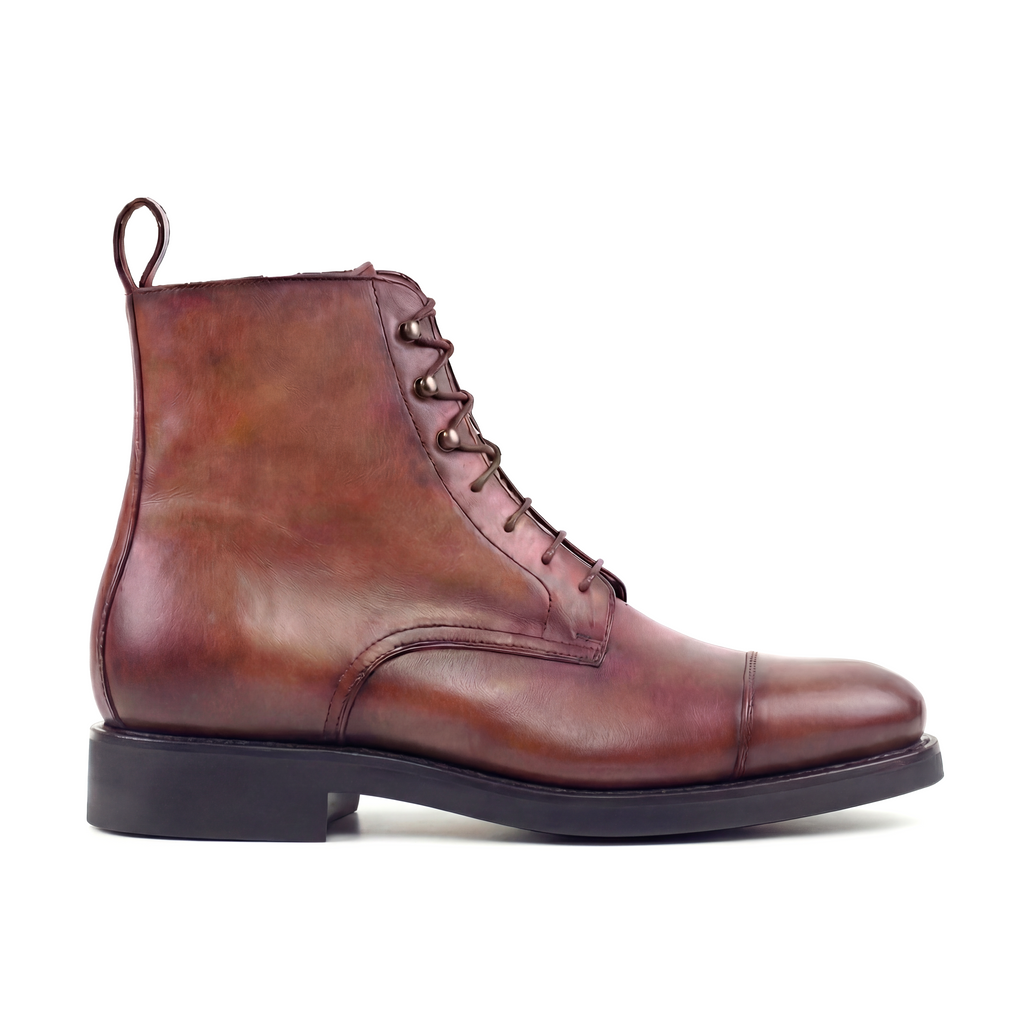
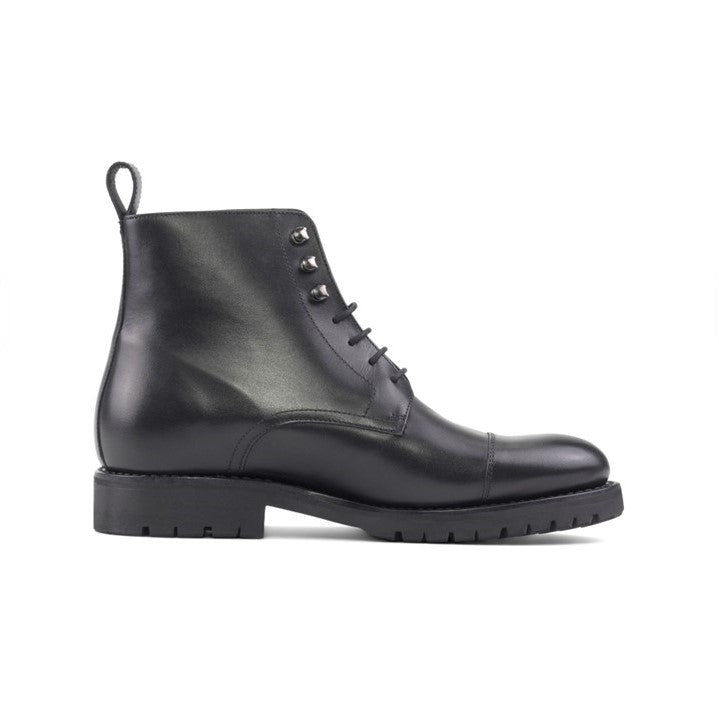
So, you're in the final stages of crafting your perfect Jodhpur boot. You’ve settled on the ideal leather, the perfect color, and a flawless finish, but now you face a decision that seems minor yet holds the power to define the entire boot: the heel. Should you opt for a classic straight heel or embrace the sleeker, more dynamic pitched heel?
This isn’t just a superficial style choice. It's a decision that shapes the boot’s fundamental character, blending your personal style with its intended function. For a refined, contemporary silhouette ready for city life, the pitched heel is your answer. If you're drawn to a traditional, equestrian-inspired look that feels solid and authentic, the straight heel is the timeless choice.
The Great Debate: Pitch or Straight Heels

When creating a custom Jodhpur, the heel is one of the most defining details you’ll select. It’s a small element with an outsized impact, influencing everything from the boot's profile to the way it feels under your foot. Deciding whether to pitch the heel is less about a "right" or "wrong" answer and more about what feels right for you and your unique style.
This is precisely where modern craftsmanship shines—honoring tradition while empowering you to express your individuality. It’s a core philosophy here at Alexander Noel. We believe an educated choice is the first step toward a pair of boots you'll treasure for years. Our role is to provide the knowledge; yours is to create something truly personal.
Style Meets Personalization
The heel you choose sets the tone for the entire boot. Ask yourself: are you aiming for a classic look that honors the Jodhpur’s heritage on horseback, or do you desire a more fashion-forward feel for urban life?
- Pitched Heel: This heel angles forward, creating a dynamic, elegant line. Often found on dressier boots, it imparts a touch of modern refinement and architectural flair.
- Straight Heel: A more traditional choice, the straight heel forms a near 90-degree angle with the sole. This gives the boot a solid, grounded appearance that speaks directly to its functional, equestrian origins.
At Alexander Noel, we believe you should be the one to make that call. Our Design Lab is your personal workshop. It's a space where you become the creator, seeing for yourself how a subtle change like the heel pitch can completely transform a boot's personality.
In this guide, we'll explore the history, feel, and style of each option. Once you understand the nuances, you can confidently craft a Jodhpur boot that feels genuinely yours—a perfect blend of our global artisan craftsmanship and your unique vision. We're here to walk you through it, showing you how our process lets you tailor every single detail to your liking.
From Polo Fields to City Pavements

To truly understand the heel debate, you must go back to the beginning. The Jodhpur wasn't conceived on a mood board or in a designer's studio; it was forged from pure necessity on the sun-drenched polo fields of 1920s India.
Before the Jodhpur's arrival, equestrians were saddled with cumbersome, knee-high riding boots. Developed alongside the iconic trousers of the same name, the Jodhpur boot was a game-changer. This new ankle-high style offered players more flexibility and comfort without sacrificing durability—a perfect combination for the fast-paced sport. You can explore its fascinating origins in our deep dive into the history of the Jodhpur boot.
Function Defines Form
In those early days, the Jodhpur's heel was not a style choice but a non-negotiable piece of safety equipment. Its sole purpose was to prevent a rider's foot from slipping through the stirrup during a match, a potentially catastrophic event.
This singular focus on equestrian performance shaped the entire design. The boot featured a sturdy, low, and perfectly straight heel that provided a reliable anchor in the stirrup. The question of "pitched heel or not" was nonexistent because function always superseded style. The Jodhpur was a piece of high-performance sporting gear first, and a fashion item second.
This origin is key. The Jodhpur boot's initial design wasn't about aesthetics; it was about performance and safety. Every element, including its classic straight heel, served a practical purpose rooted in the world of polo.
The innovative ankle-length design was a smart response to the new style of riding trousers popularized by polo players. It was also more affordable and easier to replace than traditional tall boots, which only increased its appeal among the British officers stationed in India who had embraced the sport.
The Evolution to Modern Style
Like many icons of classic menswear, the Jodhpur's influence couldn't be contained to its original purpose. Its clean, elegant lines and sophisticated profile quickly caught the eye of style arbiters far from the polo grounds. Before long, the boot made the leap from the dusty fields of India to the polished pavements of London, Paris, and New York.
As the Jodhpur transitioned from riding equipment to a fashion staple, artisans and designers began to experiment. A boot designed for city walking has different requirements than one made for the stirrup. This evolution paved the way for adaptations like the pitched heel, introducing a new dimension of modern elegance. It is this journey that gives you the choice you have today.
Understanding Heel Pitch and Why It Matters
You've likely considered heel height, but what about heel pitch? It’s one of those subtle yet crucial details that distinguishes a truly well-made boot.
Think of it this way: a straight heel is like a vertical curb—set almost perfectly perpendicular to the sole for a solid, grounded stance. A pitched heel, conversely, is more like a ramp, angling forward and tucking slightly under the boot. This isn't just a cosmetic difference; it completely changes how the boot feels and performs on your foot.
How Pitch Affects Fit and Feel
That simple change in angle directly impacts how your body weight is distributed. A classic straight heel provides a wide, stable base. It feels secure and traditional, much like the original equestrian boots that inspired the Jodhpur. Your weight is spread more evenly from your heel to the ball of your foot.
A pitched heel, by tucking under the boot, shifts the point of contact slightly forward. This creates a different sensation, almost as if it's propelling you into your next step. It can subtly alter your posture and the way the boot’s arch supports you. For some, this dynamic feel is the key to all-day comfort, which is why getting the fit just right is so critical.
This is the very heart of our bespoke process. It's not just about choosing a style you like; it’s about engineering the boot to work perfectly with your body. We believe in educating you on these details so you can create a boot that is an extension of you.
Connecting Mechanics to Master Craftsmanship
Deciding between a pitched or straight heel influences the entire bootmaking process. The last—the three-dimensional form we build the boot around—must be shaped differently for each style to ensure proper balance and arch support.
This is where the skill of our global artisan partners truly shines. Drawing on generations of shoemaking experience, they execute these fine-tuned adjustments with absolute precision. To see how all these details come together, our guide to premium boot construction is an excellent resource. Whether you choose a pitch heel or not, this level of craftsmanship is what makes a boot feel less like an accessory and more like a second skin.
Pitched vs. Straight: A Head-to-Head Comparison
We arrive at the central question: should you choose a pitched heel or a straight one for your Jodhpur boots? To simplify your decision, let's place them side-by-side. The right answer depends entirely on what you want from your boots and the statement you wish to make.
A pitched heel immediately lends a Jodhpur a sleeker, more contemporary silhouette. It’s a subtle but significant detail that signals modern refinement.
On the other hand, the straight heel is a tribute to tradition and the boot’s authentic, rugged origins.
This table breaks down the key distinctions to help guide your choice.
| Feature | Pitched Heel | Straight Heel |
|---|---|---|
| Primary Aesthetic | Modern, refined, architectural | Classic, traditional, robust |
| Best For | Dressier occasions, office wear, pairing with suits and slim-fit trousers | Casual wear, rugged looks, and authentic equestrian use |
| Overall Vibe | Fashion-forward, elegant | Timeless, functional, authentic |
| Stability | Good stability, with a focus on a dynamic, forward-moving stance | Maximum stability with a solid, grounded feel |
| Heritage Connection | A modern interpretation that prioritizes style over pure function | The original, purpose-built design true to the Jodhpur's polo-playing history |
Ultimately, neither style is inherently "better"—it's about which one is better for you. The beauty of a bespoke boot is that you are in control of these details.
The Case for the Pitched Heel
The pitched heel is for the individual who sees their Jodhpur as a versatile piece of fashion. If you navigate city streets more often than country fields, this is likely your ideal choice.
By angling forward, the heel creates a clean, dynamic line that visually lightens the boot. It gives it a more architectural and less utilitarian feel that pairs exceptionally well with tailored clothing.
- A Sleeker Profile: It gives the boot an elegant feel, making it a perfect match for slim-fit trousers or a full suit.
- A Modern Edge: That subtle forward angle adds a touch of contemporary style that can elevate an entire outfit.
- Versatile Style: It’s a boot that can easily carry you from a day at the office to an evening out.
The trade-off, of course, is that it moves the Jodhpur away from its original purpose. For any actual time in the saddle, the traditional straight heel remains the only truly safe and functional choice.

As you can see, the mechanics of a heel have a tangible impact on your posture and weight distribution. It's a small detail that makes a big difference in both fit and feel.
The Enduring Appeal of the Straight Heel
The straight heel, on the other hand, is all about honoring tradition. This is the original, purpose-built design, grounded in the Jodhpur’s equestrian heritage. That solid, 90-degree heel is a direct link to the boot’s history on the polo field.
Choosing a straight heel is a nod to that legacy. It's for the purist who values classic, functional design that has stood the test of time.
- Maximum Stability: The broad, flat base gives you a secure, grounded feeling with every step, making it incredibly comfortable for all-day wear.
- Equestrian Authenticity: This is the proper and safe design for riding, ensuring a secure lock in the stirrup.
- Timeless Character: A straight heel gives the boot a robust, classic look that will never feel dated.
The construction holding that heel in place is just as important. To learn more about what goes into a solid foundation for your boots, our guide on The Goodyear Welted Sole Units is a great place to start. It will give you a deeper appreciation for the craftsmanship, no matter which heel style you choose.
Designing Your Perfect Jodhpur Boot
This is where theory and history meet craftsmanship. The entire Alexander Noel bespoke experience is about putting you in the designer's seat, allowing you to turn your vision for a pitched or straight heel into a real, perfectly fitting boot.
Our Design Lab is your digital workshop. Here, you can experiment in real-time, toggling between a classic straight heel and a modern pitched heel. You’ll see instantly how that single choice alters the boot's entire silhouette, helping you visualize the final product before our artisans even touch the leather.
From Screen to Reality With the Design Lab
The modern Jodhpur boot is the result of decades of evolution, blending tradition with innovation. We understand that today's customer—whether a professional or a style enthusiast—wants a boot that functions flawlessly in any setting.
Our Design Lab empowers you to make an informed choice with confidence.
- Visualize Your Choice: See exactly how a pitched heel creates a slimmer profile versus how a straight heel gives the boot a more grounded look.
- Mix and Match: Pair your chosen heel with different leathers, textures, and colors to find the combination that truly speaks to your personal style.
- Total Control: You aren't just selecting a heel. You're building a complete boot from the ground up, designed for your specific needs and tastes.
The decision between a pitched or straight heel on a Jodhpur boot is a personal one. The Design Lab is our way of making sure that decision is informed, creative, and enjoyable.
Ensuring a Perfect Fit Every Time
Of course, a beautiful design is only half the story. The ultimate luxury is a perfect fit, and that’s where our at-home fitting system comes in.
Regardless of whether you choose a pitched or straight heel, our precision sizing process ensures the boot is constructed for your unique foot measurements. This guarantees not just style, but genuine comfort and proper support right where you need it most.
For more style inspiration, check out our guide on designing Jodhpur boots with different textures. This hands-on process brings our global artisan craftsmanship directly to you.
As you put the finishing touches on your design, a few questions often arise. We’ve heard them all, and we're here to provide the clear answers you need to finalize your perfect pair of Jodhpurs.
What Is the Best Heel Height for a Jodhpur Boot?
For a true Jodhpur boot, the sweet spot for heel height is between 1 and 1.5 inches. This isn't an arbitrary number; it's a direct link to the boot's equestrian heritage. That height was just enough to keep a rider's foot from slipping through the stirrup while remaining low enough for all-day comfort on the ground.
You can certainly go slightly higher for a more fashion-forward look. But if you wish to honor the timeless proportions of the classic Jodhpur, staying within that traditional range is the way to go. In our Design Lab, you have the final say, allowing you to strike the perfect balance between tradition and your personal style.
The Jodhpur's leap from stable to runway was solidified in 1927 when Vogue featured the boot, calling it the proper choice for "informal cross-saddle dressing." That endorsement cemented its transition from purely functional gear to a true fashion statement.
Does a Pitched Heel Make a Jodhpur Boot Less Comfortable?
Not at all, provided the boot is made correctly. On a bespoke boot, a pitched heel can be just as comfortable as a straight one—sometimes even more so, depending on your foot's unique structure. The secret lies entirely in the last, the three-dimensional form your boot is built around.
When your boot is made on a last that perfectly matches your arch, a pitched heel feels natural and supportive. While it does shift your weight forward slightly, a proper fit from our at-home sizing system ensures your foot is completely supported, preventing any strain. Ultimately, the choice between a pitched or straight heel often comes down to personal preference and what feels most natural to you.
Can I Still Ride Horses in Jodhpurs With a Pitched Heel?
Technically, yes. However, for any serious riding, we strongly recommend a traditional straight heel. The flat, solid surface of a straight heel provides the most stable and secure contact with the stirrup—it’s the time-tested standard for safety and performance in the saddle.
Think of the pitched heel as being engineered for walking and style. It adds a certain sleekness to the boot's profile that is ideal for modern life. So, if your Jodhpurs are primarily for everyday wear and making a style statement, a pitched heel is a fantastic choice. If you plan on spending significant time on horseback, stick with the classic straight heel.
At Alexander Noel, we believe the final design should be entirely up to you. Jump into our Design Lab and start building your one-of-a-kind Jodhpur boot today. Create something that is truly, uniquely yours.
Related post
04
Oct
04
Oct
26
Sep
26
Sep
26
Sep
