

RECENT POSTS

29.August.2026
Custom Women's Boots for Fall: Choosing Between Two Black Chelsea Silhouettes
0 Comments





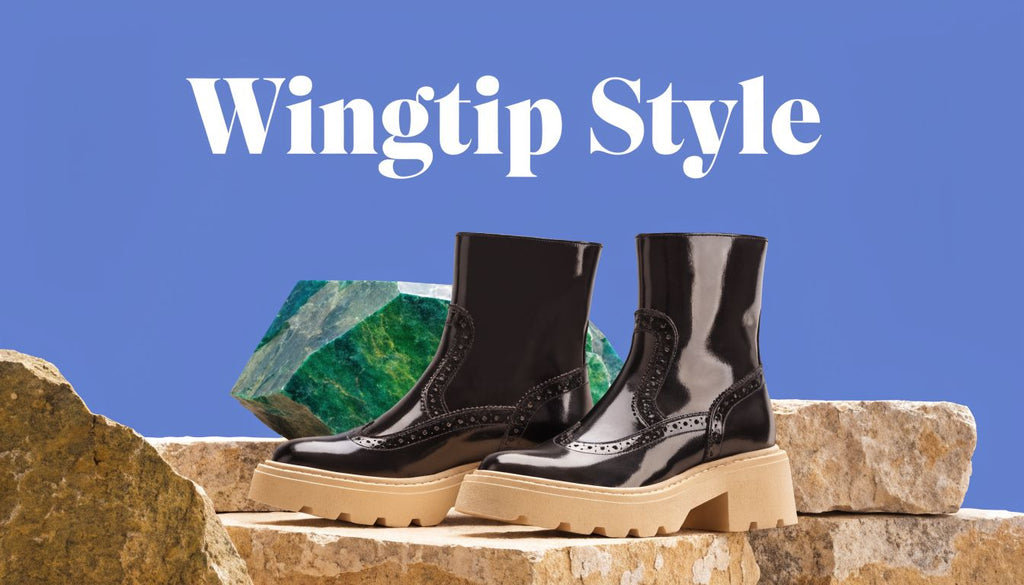











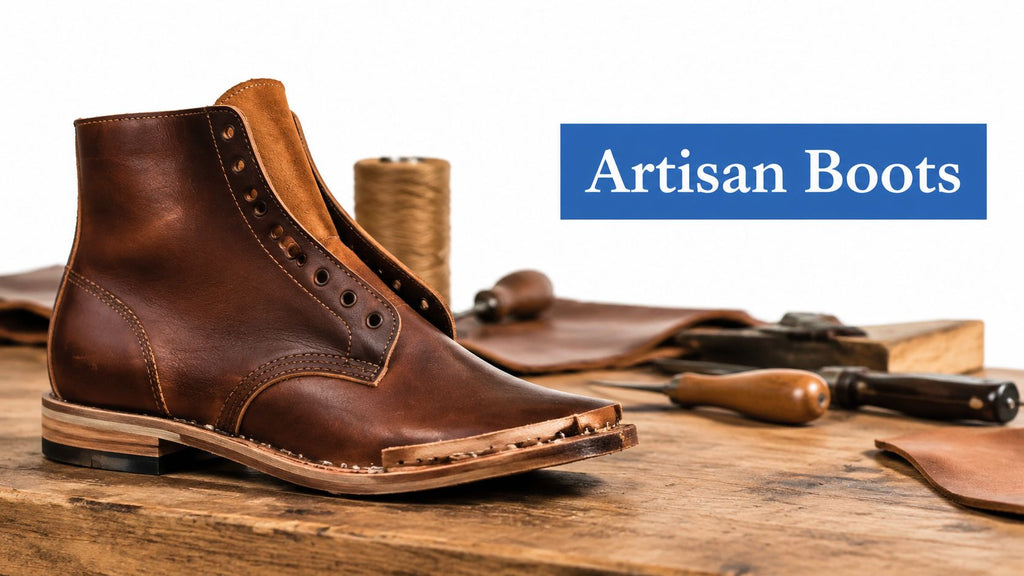
Artisan Boots: A Guide to Bespoke Craft
You've found a pair of boots that looks excellent in the photograph, yet the fit feels wrong as soon as you walk. The heel lifts, the instep presses, or the shaft sits awkwardly against your leg. After enough disappointing purchases, the appeal of artisan boots becomes clear. You're not looking for decoration alone. You're looking for footwear shaped around your feet, made from materials suited to your life, and assembled so it can be maintained rather than quickly replaced.
Artisan bootmaking brings together measured fit, traditional construction, considered materials, and personal design. Modern direct-to-consumer brands add another layer, connecting customers with craft workshops across several countries while using digital tools to make customization easier to understand. The result is a more informed way to buy premium footwear, one that lets you choose deliberately instead of accepting whatever a standard size and seasonal trend happen to offer.

The Case for Custom Artisan Footwear
A mass-produced boot has to serve a broad range of feet. That approach can work when your proportions happen to match the factory's last, but it leaves little room for a narrow heel, a high instep, different foot lengths, or a preferred toe shape. You may compensate with thicker socks, extra insoles, or a short-lived hope that the leather will soften in exactly the right places.
A made-to-order boot begins with a different question: what should this boot do for you? A client who walks between an office and public transport may need a flexible sole, restrained leather, and a clean profile. Someone who spends weekends outdoors may choose a firmer upper, stronger sole edge, and more substantial construction. The design follows the wearer, not the other way around.
Practical rule: Customization should solve a fit or use problem before it adds a decorative detail.

The distinction between bespoke and made-to-order footwear matters. Bespoke work generally involves detailed measurements, a personal last, a fitting stage, and adjustments before final construction. Made-to-order footwear may offer selected options within an existing pattern and last. Both can provide more personal choice than a standard shelf model, but they don't promise the same degree of structural alteration.
Craftsmanship without the traditional shopping maze
A direct-to-consumer model can make premium craft easier to access by connecting buyers with global artisan partnerships and reducing dependence on conventional retail channels. That doesn't remove the need for careful questions. You should still ask who makes the boots, which materials are available, how the fit is checked, and whether the finished pair can be repaired.
This model also resembles other forms of commissioned craft. If you're curious about how material, proportion, and hand finishing affect a luxury object, this guide to handcrafted sofas from Lewis and Sheron Textiles offers a useful comparison. A well-made sofa and a well-made boot both depend on choices that remain visible in use, not just in a product photograph.
What you're really buying
The value of artisan boots isn't limited to the number of hand operations involved. You're buying a relationship between last shape, leather, construction, and purpose. A beautiful upper won't rescue a poor fit, and thick leather won't automatically make a boot suitable for daily commuting.
The strongest commission starts with priorities. Decide whether comfort, weather resistance, formal appearance, walking flexibility, or repairability matters most. Then let the maker balance those requirements through the pattern and materials. That conversation is where custom footwear becomes practical rather than merely luxurious.
Heritage Techniques in Modern Shoemaking
A bespoke boot begins with a history of adaptation. London was already an international center for custom shoes and boots by the 1830s. By 1841, more than 24,000 men and women worked in the city's shoemaking trade, according to Grips Intelligence on handcrafted leather footwear.
Industrial production changed that trade rather than replacing it. Military demand during the Napoleonic and Crimean Wars encouraged mechanization, including Brunel's sole riveting machine in 1810. Faster mechanization followed from the 1850s, and finishing machines appeared by the 1890s. Machines increased speed and consistency, while skilled makers continued to control the decisions that affected shape, fit, and finish.
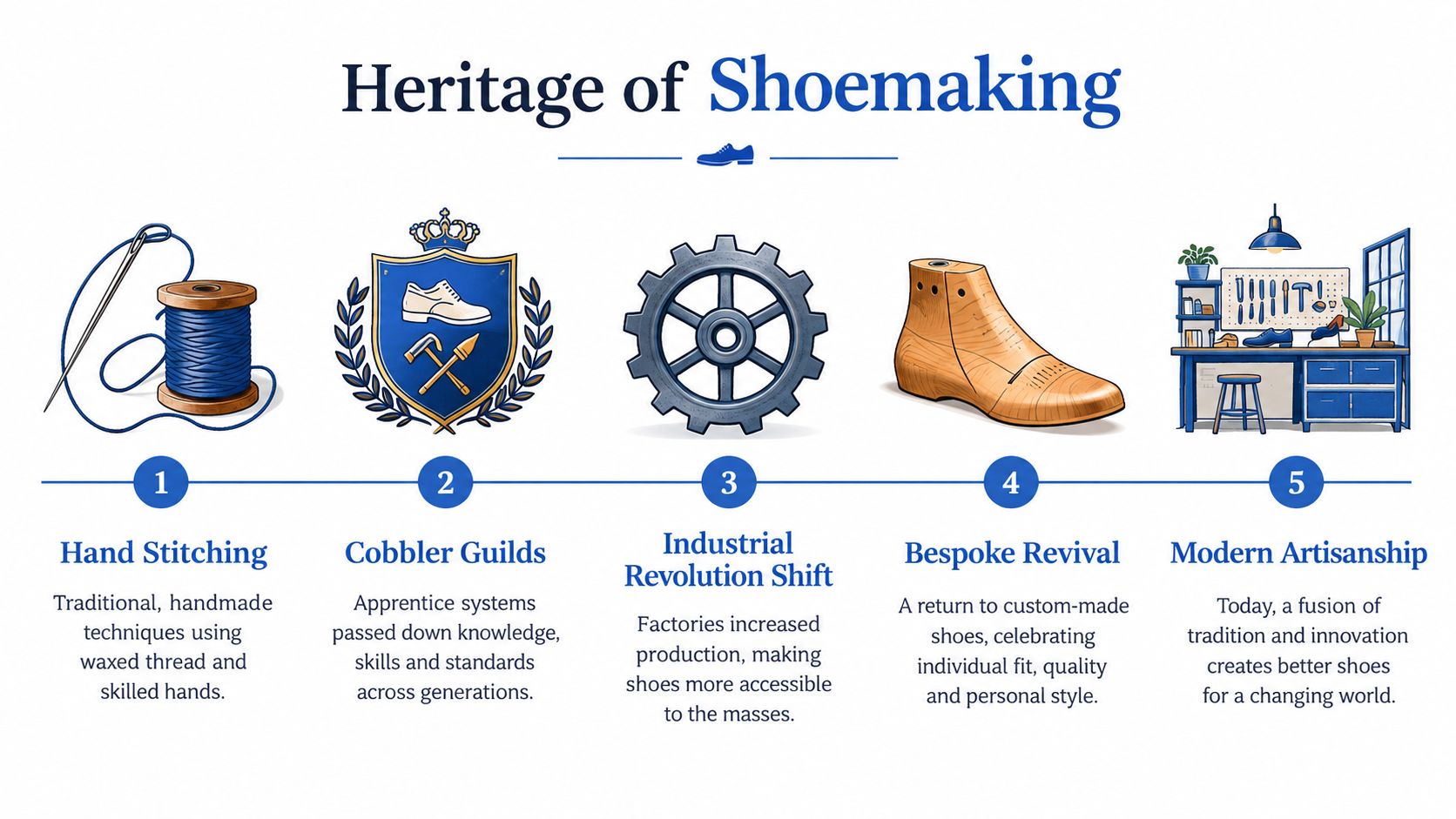
From concentrated trade to resilient craft
Northamptonshire makes the scale of this change clear. Large-scale factory production later reached around 200 factories mid-century, then fell to about 20 today, according to Northamptonshire factory production data. The figures describe industrial contraction, not the disappearance of shoemaking. Artisan work developed alongside factories and survived by offering a different response to standardization.
Hand stitching, careful lasting, edge finishing, and hand welting remain useful for practical reasons. They give the maker greater control over tension, foot shape, structural support, and future repair. Age alone does not justify a technique. Its value depends on what it contributes to the finished boot.
A client comparing workshops can use this distinction. This guide to handmade shoes for men explains how traditional operations appear in a finished pair and helps clarify terms used for artisan and factory-made footwear.
Heritage with a modern route to market
Global artisan partnerships now connect customers with makers in places such as Italy, Portugal, Spain, and India. A commission may start through a digital consultation or design interface, yet the physical work still includes pattern cutting, stitching, lasting, finishing, and inspection.
Digital tools are useful when they make those choices easier to understand. A screen can display color, proportions, and decorative details. It cannot settle every question about leather behavior, construction, fit adjustments, or aftercare. Those decisions still benefit from a maker's judgment and a client's clear priorities.
The historical lesson supports a practical buying rule. Industrial methods made footwear more widely available, while artisan methods preserved room for individual requirements. A modern bespoke commission works well when digital convenience connects the buyer to traditional skill instead of hiding how the boots are made.
Selecting Premium Leathers and Materials
Leather selection should begin with your routine, not with a color chart. A boot worn indoors with trousers has different requirements from one used in wet streets or demanding outdoor conditions. The upper must bend in the right places, hold its shape, and complement the construction beneath it.
For boot uppers, independent footwear guidance recommends roughly 1.6 to 2.0 millimeters of leather thickness, as explained in this technical guide to leather for shoes. Leather at 2.0 millimeters or more is generally associated with work or heritage boots. The extra substance can improve stiffness and water resistance, but it also adds weight and extends the break-in period.
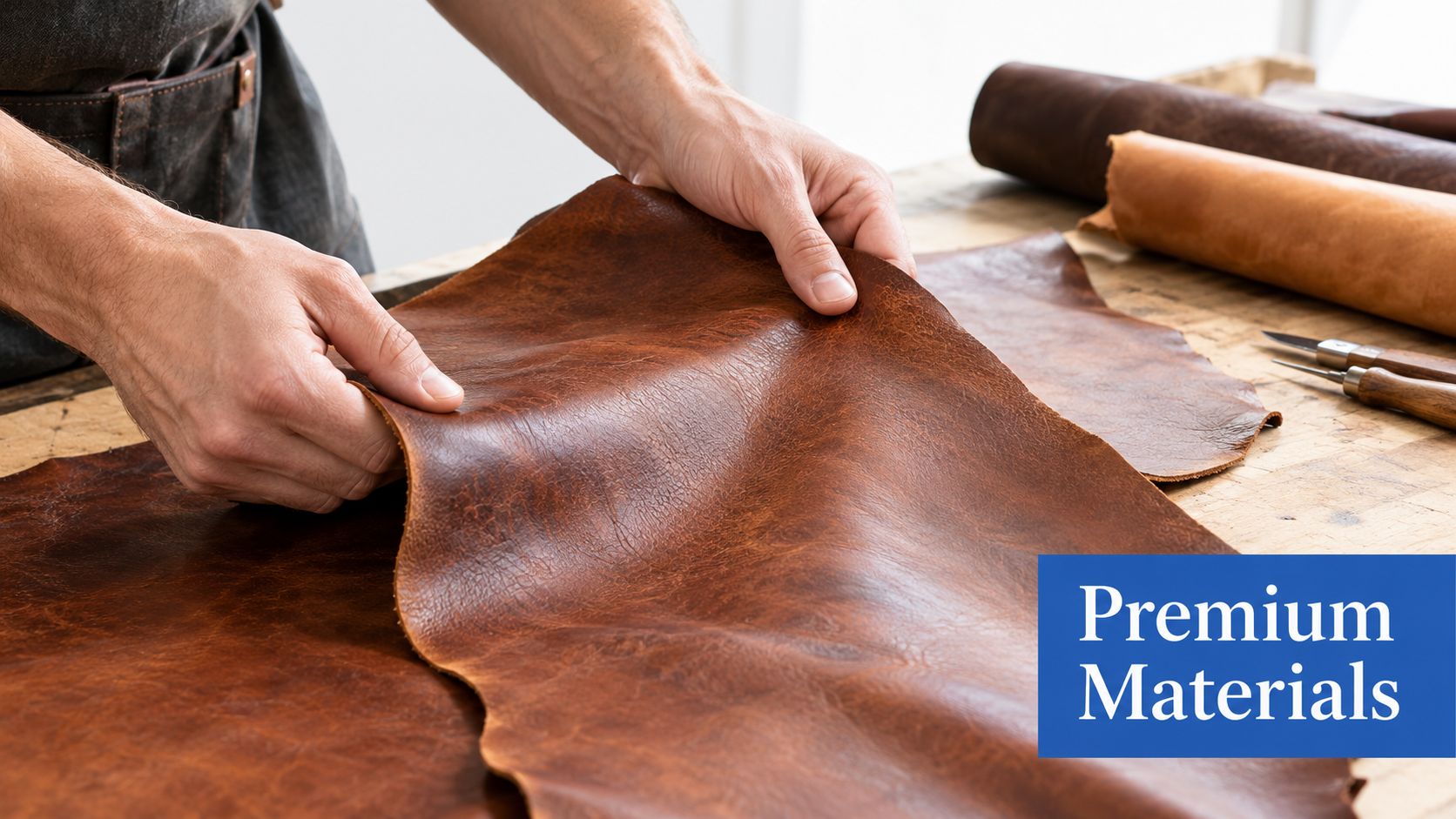
Match thickness to the way you walk
A thicker upper isn't automatically superior. If you want a flexible everyday boot, excessive stiffness can make the first wears uncomfortable and may fight the movement of the foot. A substantial full-grain or greased leather can be a sensible choice for weather exposure, but the maker should balance it with the last shape, pattern, lining, and sole.
Ask these questions before choosing:
- How will the boots be used? Daily commuting, formal work, travel, and outdoor use place different demands on the leather.
- How much break-in can you accept? Firm leather often takes longer to conform to the foot.
- What shape should remain over time? More structure can help resist deformation, especially around the ankle and vamp.
- Which finish suits your wardrobe? A smooth finish reads more formally, while a rugged grain or waxed surface feels more casual.
Leather finishing adds character, but it doesn't replace material quality. A handmade patina can create depth across the toe, quarters, or shaft, yet the finish should support the boot's intended role. A delicate high-contrast treatment may be ideal for dress boots, while a darker, more forgiving finish may better suit frequent wear.
Look beyond the upper
Linings, insoles, thread, hardware, and sole materials all affect the final experience. A maker who explains the relationship between these components is giving you more useful information than one who labels a boot “premium.” If you want to understand the equipment and practical considerations behind leatherwork, this resource on features for sewing leather provides helpful material context.
Comfort can also come from thoughtful textile choices. Alexander Noel's WIRA luxury sneakers, for example, feature certified baby alpaca fiber as part of their comfort-focused design. That doesn't make alpaca appropriate for every boot, but it illustrates how traditional leather footwear can be paired with modern fibers when softness and daily wear matter.
For a broader buying framework, consult this guide to the best leather for boots. The right choice is the one that balances weather, movement, appearance, and maintenance, not the one with the greatest thickness or most dramatic finish.
Understanding Boot Construction Methods
Construction determines how the upper and sole behave as a working unit. An adhesive-only boot may look polished when new, but its long-term options depend heavily on the strength and condition of the bonding materials. Once the bond fails, repair can be limited or uneconomical.
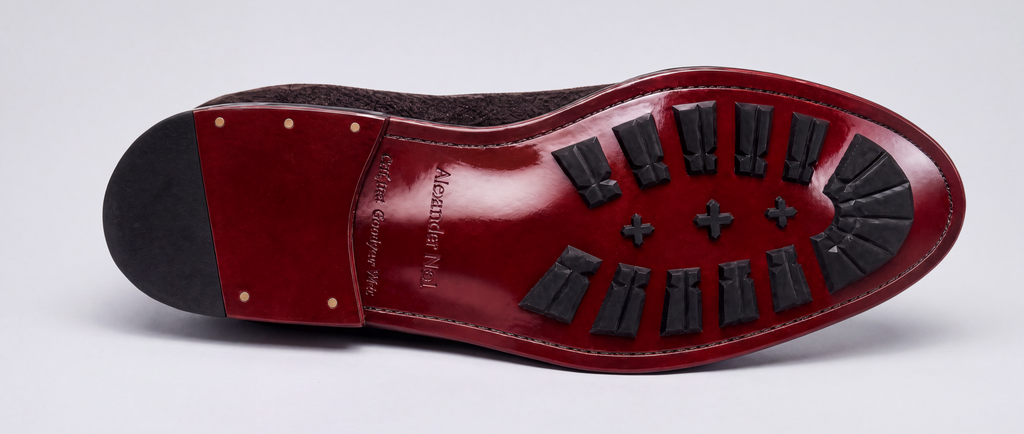
Hand-welted and stitchdown constructions create mechanical connections that support repair. In hand welting, the upper, insole, and welt are stitched together by hand. In stitchdown construction, the upper is anchored to the midsole before the outsole is attached. Both methods can support resoling, helping the owner preserve the upper and extend the useful life of the boot, as outlined in this technical comparison of hand-welted and stitchdown footwear.
Boot Construction Methods Compared
| Construction Type | Repairability | Water Resistance | Best Use Case |
|---|---|---|---|
| Adhesive-only | Limited when the bond fails | Depends heavily on adhesive, materials, and finishing | Short-term fashion use or light occasional wear |
| Stitchdown | Designed to support resoling and ongoing maintenance | Associated with stronger protection when properly executed | Casual, outdoor, and heritage-inspired boots |
| Hand-welted | Designed for skilled repair and resoling | Associated with robust construction and careful finishing | Bespoke, formal, and long-term premium footwear |
The table gives you a starting vocabulary, not a guarantee. Workmanship still matters. Poor stitching, weak edge finishing, unsuitable leather, or an ill-fitting last can undermine a technically respectable construction.
Cost per wear and the repair question
A high initial price can be easier to assess when you consider how often you expect to wear the boots and whether the pair can be maintained. Cost per wear isn't a promise of savings. It's a way to compare a durable, repairable pair with footwear that may need replacement when the sole or bonding deteriorates.
Before commissioning, ask who performs resoling, what components can be replaced, and how the boot should be conditioned. The guide to Goodyear welt construction can help you understand related welted terminology, even when you're comparing it with stitchdown or hand-welted work.
A repairable boot gives you options. That flexibility is part of its value from the first day you wear it.
The Bespoke Design and Fitting Process
A proper bespoke commission doesn't begin with a leather swatch. It begins with your feet, your habits, and the conditions in which you'll wear the boots. The maker needs to understand pressure points, asymmetry, gait, preferred toe room, and the visual proportions you want.
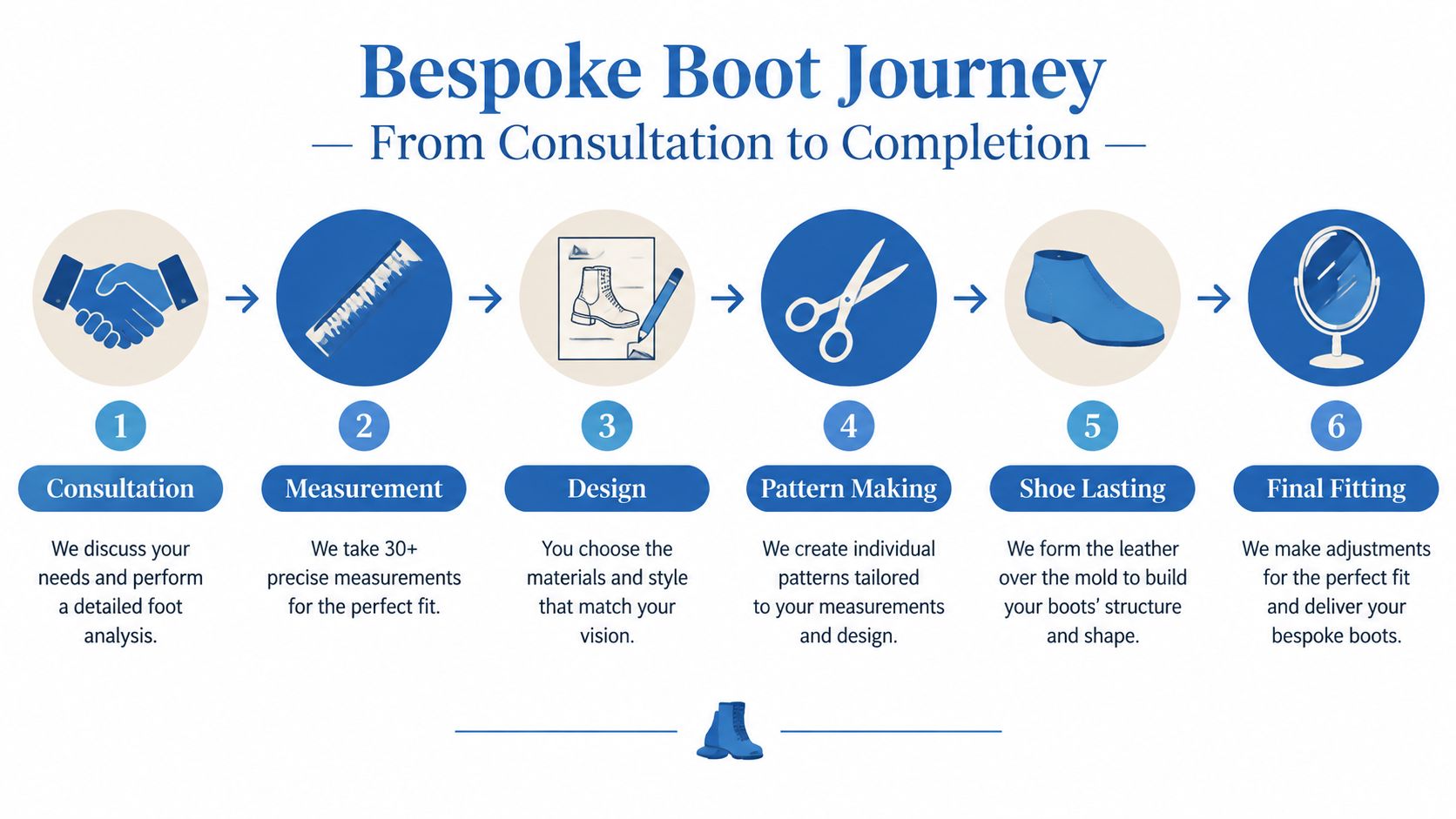
The traditional workflow is deliberate:
- Consultation establishes use, style, and fit priorities.
- Measurement records the dimensions and shape of each foot.
- Last creation translates those measurements into a three-dimensional form.
- Fitting shoe tests the shape before final materials and construction are committed.
- Adjustments correct pressure, volume, balance, or proportion.
- Final construction produces the finished pair after the fit has been approved.
Bespoke shoemaking commonly follows this measured, made-to-order sequence, including a custom last and trial shoe, as described by Francis Waplinger's bespoke shoemaking resource.
Where the Design Lab helps
Digital customization can make the visual part of the process easier. One luxury footwear atelier advertises a 3D configurator that lets customers select leathers, finishes, and details, creating a concrete example of interactive personalization through a Custom Shoes | Design Lab | Alexander Noel.
A Design Lab should help you compare options without losing sight of function. Choose the boot silhouette first, then consider leather, color, toe shape, sole profile, welt treatment, laces, and hardware. A polished image can be persuasive, but the final decision should still reflect how the boot will move and age.
At-home fitting systems can also help a direct-to-consumer brand gather useful sizing information before production. They don't remove the need for careful measurement, and they can't replace a fitting shoe in every bespoke workflow. Their value lies in making the first exchange more precise and reducing avoidable uncertainty.
For readers considering the wider made-to-measure category, this overview of bespoke shoes for men offers additional language for discussing shape, materials, and personal design.

Styling Artisan Boots for Every Occasion
The most useful custom boot is one that earns regular time in your wardrobe. Styling begins before construction, because leather finish, shaft height, toe shape, and sole profile all influence where the finished pair belongs.
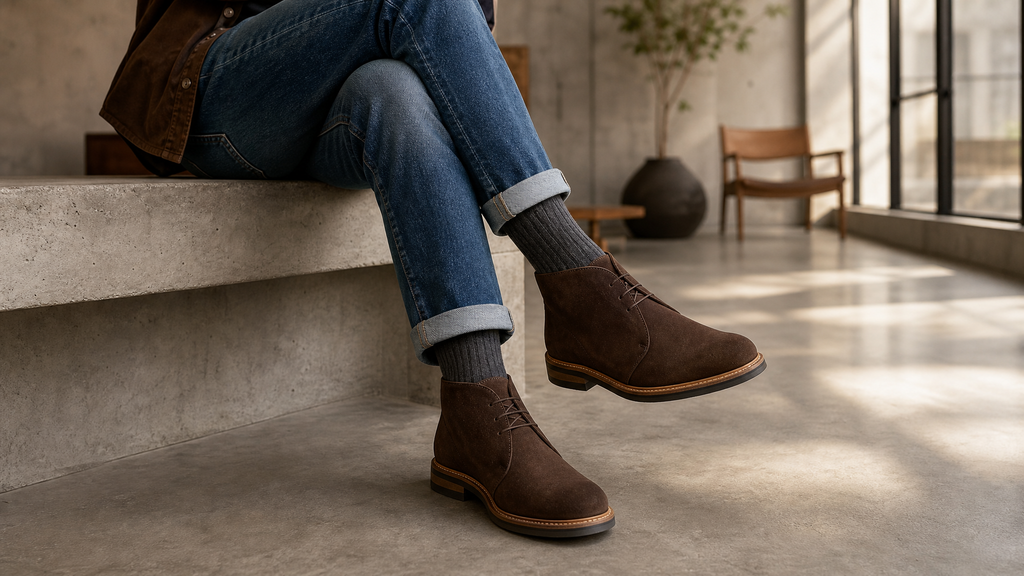
For relaxed dressing, a sturdy brown boot works naturally with denim, overshirts, field jackets, and textured knitwear. A more substantial sole can support the visual weight of heavy denim or casual outerwear. Keep the rest of the outfit simple so the shape and leather character remain visible.

Build the boot around the wardrobe
A sleek dress boot asks for different decisions. Choose a refined toe, controlled leather finish, and a sole profile that doesn't overwhelm trousers. A restrained patina can bring depth to a navy suit, charcoal trousers, or a jacket and chino combination without competing with the rest of the outfit.
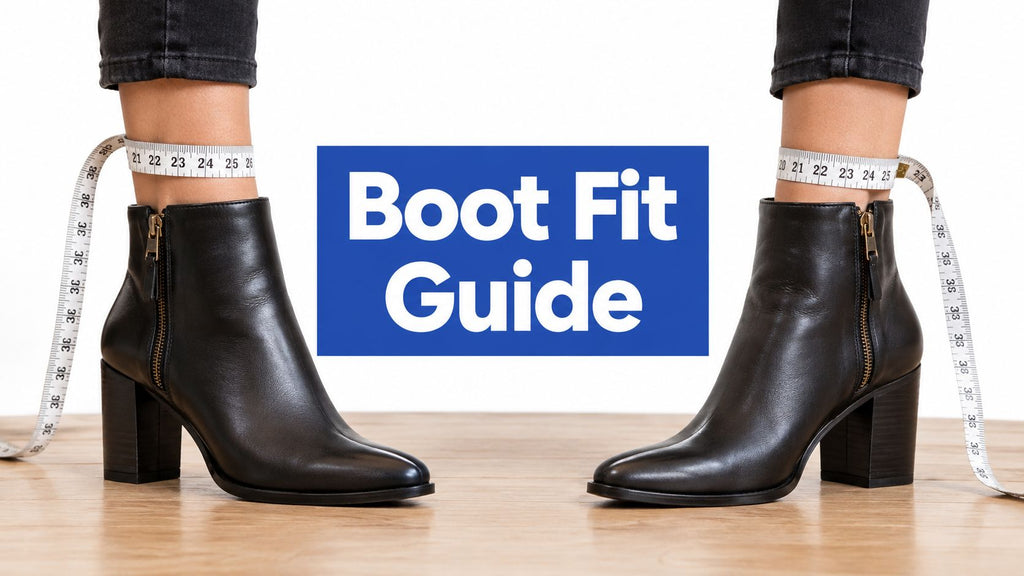
Women's bespoke boots can move between professional and evening settings when the proportions remain intentional. An ankle boot with a graceful shaft can sit beneath wide-leg trousers, a pencil skirt, or a dress. For evening use, a richer finish or carefully selected hardware can provide distinction without turning the boot into a costume piece.
Let technical choices guide the styling
Your lifestyle should determine the level of visual formality:
- For office days: Select a clean upper, moderate sole thickness, and color that works with your principal trouser or skirt tones.
- For travel: Favor a forgiving finish, supportive construction, and a shape that works with both casual and polished clothing.
- For outdoor weekends: Consider more substantial leather and a sole with an appropriate grip, then pair the boots with denim, corduroy, or durable cotton.
- For evening events: Use a slimmer profile, refined finishing, and details that echo your accessories rather than dominate them.
One pair can serve several roles if you avoid extremes. An aggressively rugged boot may look out of place with formal tailoring, while a delicate dress boot may feel underbuilt with heavy casual clothing. The best design sits at the intersection of your actual wardrobe and the occasions you regularly attend.
The finest styling decision is often made before the boots leave the workshop. Choose a shape that belongs to your life, not an imaginary one.
Investing in Quality and Personalization
Artisan boots make sense when you evaluate the whole object rather than the label on the box. Fit determines whether you want to wear them. Materials determine how they respond to weather, movement, and time. Construction determines whether a worn sole marks the end of the relationship or the beginning of a repair.
Personalization adds practical value when it addresses your measurements, wardrobe, and daily routine. It also creates a stronger connection to the finished pair. You know why the leather was chosen, why the toe has its particular shape, and which details were included because they serve you.
A direct-to-consumer approach can connect customers with artisan workshops across Italy, Portugal, Spain, and India while using digital design tools to make the process more accessible. The important standard remains transparency. You should understand what is customized, how the fit is checked, which materials are used, and what care the boots require.

For a broader market perspective, tracked retailers recorded an estimated $292 million in aggregate online sales for handcrafted footwear in 2025, with the category described as down 20 to 50 percent from the prior year and forecast to decline another 0 to 5 percent in 2026, according to Grips Intelligence's handcrafted footwear market tracking. The same tracking reported indexed revenue rising 15 percent from February to July, a reminder that demand can recover seasonally even in a softer market.
The right commission isn't defined by excess. It's defined by informed choices that produce comfort, character, and repairable value.
Alexander Noel offers custom-made shoes, luxury sneakers, designer boots, and artisan boots through a direct-to-consumer experience that combines traditional craft with modern design tools. Visit Alexander Noel, explore the Design Lab, and begin with the leather, fit, and silhouette choices that make your next pair yours.
Related post
19
Sep
19
Sep
19
Sep
19
Sep
19
Sep
