

RECENT POSTS
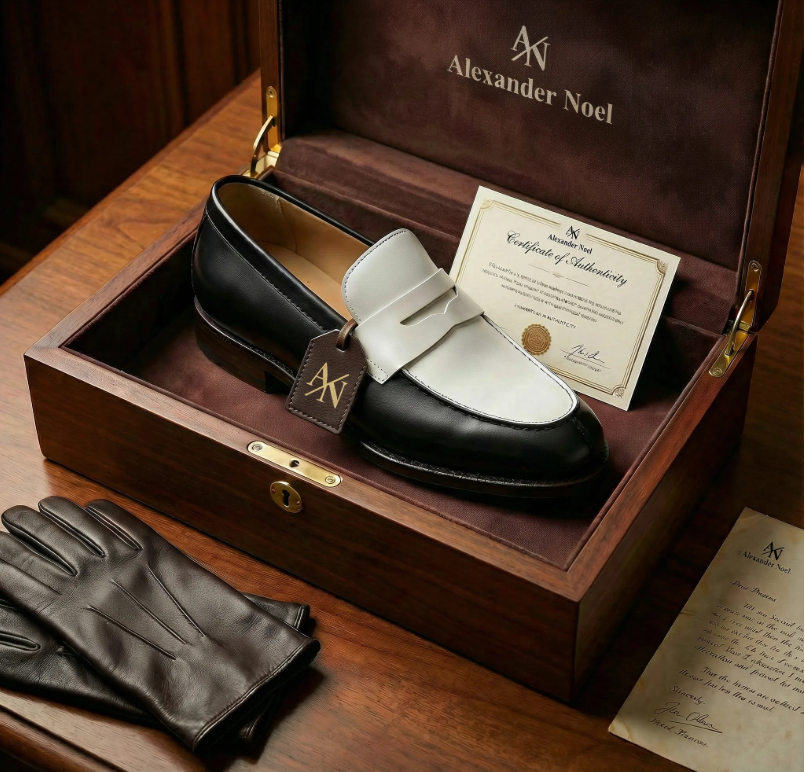
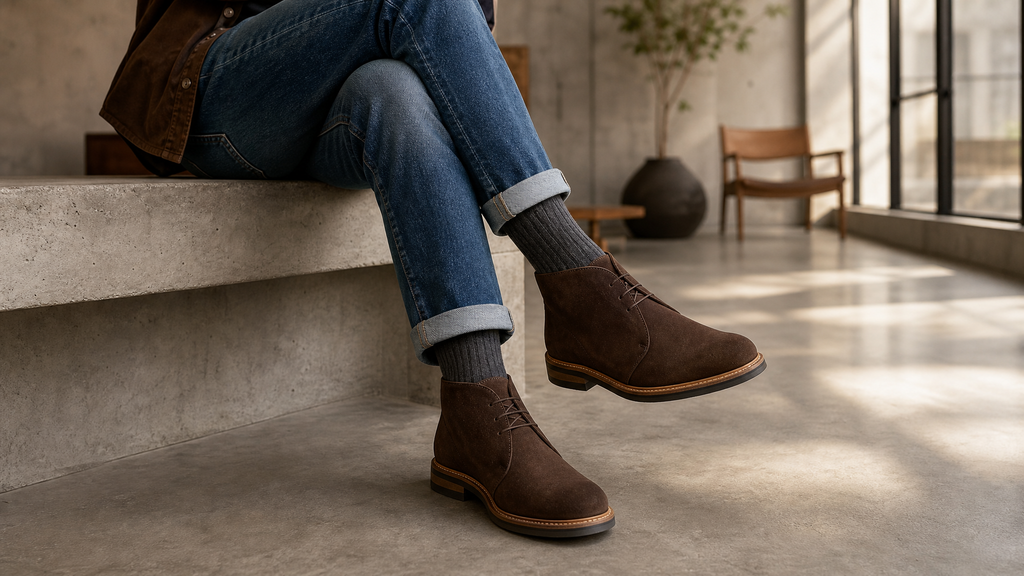
29.August.2026
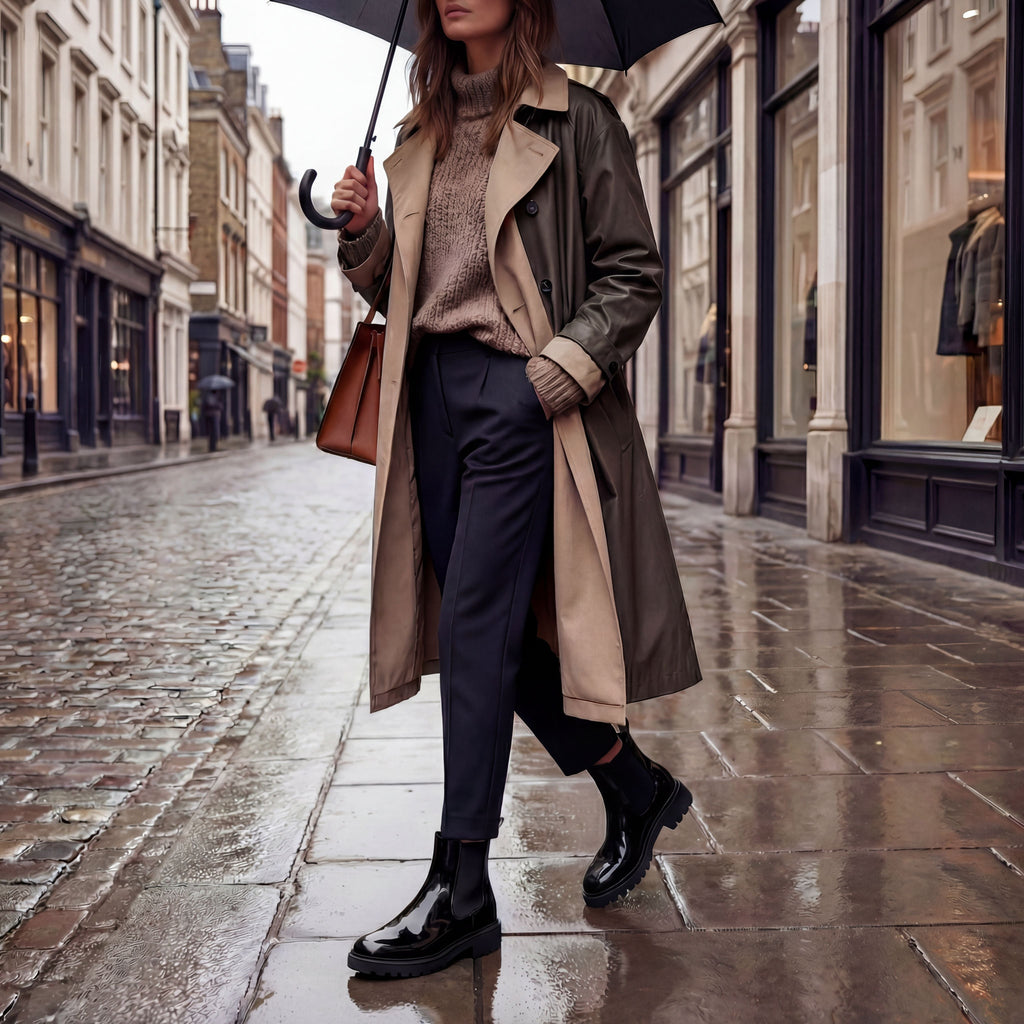
Custom Women's Boots for Fall: Choosing Between Two Black Chelsea Silhouettes
0 Comments
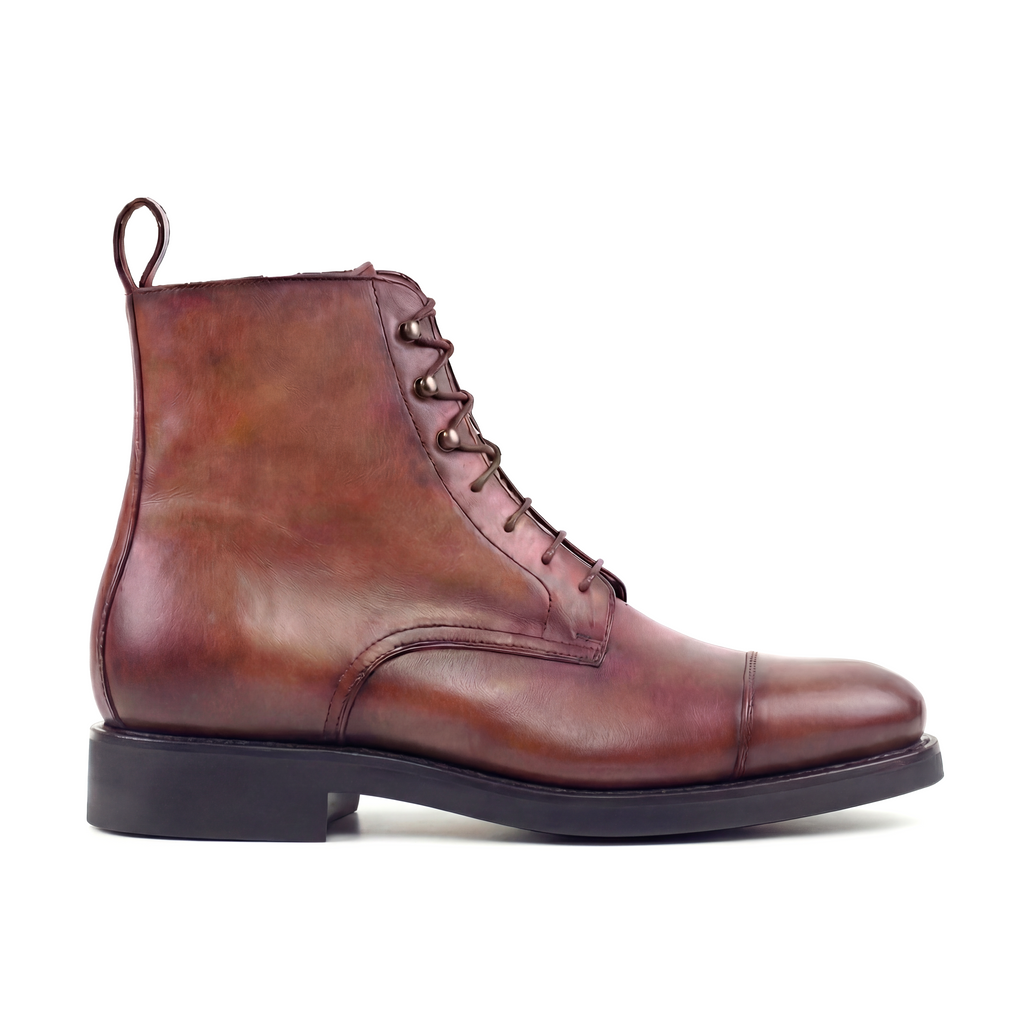







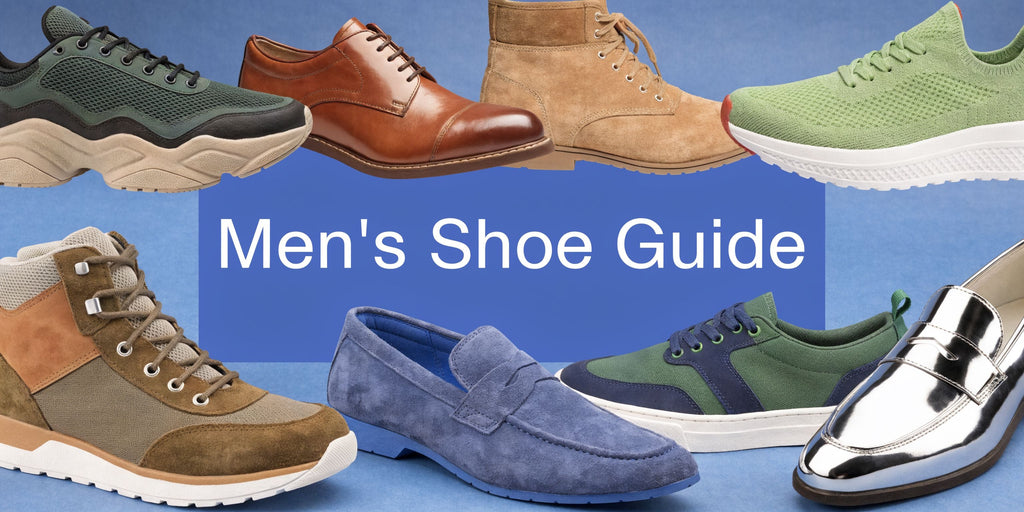
The Ultimate Guide to Handmade Shoes for Men
In a world of mass-produced goods, handmade shoes for men represent a return to a more personal, permanent form of luxury. They are more than just something you wear; they are an investment in unmatched comfort, enduring quality, and your individual style. Choosing handmade is about appreciating true craftsmanship over a fleeting trend.
Why Handmade Shoes Are More Than Just Footwear
It’s easy to feel disconnected from the impersonal, throwaway nature of fast fashion. That’s why so many of us are rediscovering the incredible value of artisan-made goods. Handmade men's shoes are at the heart of this shift, connecting you to a legacy of quality that a factory assembly line can never replicate. It's about choosing an item with a story, made by skilled hands.
Think of it this way: you can have a factory-made guitar, or you can have one tuned and crafted by a master luthier. Both will play music, but only one has a soul—a character that gets richer over time. A handmade shoe is built with that same intention, designed to slowly mold to your foot and become more comfortable with every step.

An Investment in Enduring Quality
What truly sets these shoes apart is the commitment to exceptional materials and painstaking construction. This focus on quality pays off in longevity. A typical pair of shoes from a big-box store might last a season or two. A well-cared-for pair of handmade shoes can last for decades—often becoming a treasured piece you could even pass down. This makes them a smarter, more sustainable, and ultimately, more economical choice in the long run.
Handmade footwear is a statement. It says you prefer substance over superficiality, enduring style over passing fads, and a genuine connection to the things you own.
The Foundation of Personal Style
Beyond being built to last, handmade shoes offer a unique opportunity to express who you are. They are the anchor of a well-thought-out wardrobe, the foundation that builds elegance and confidence from the ground up.
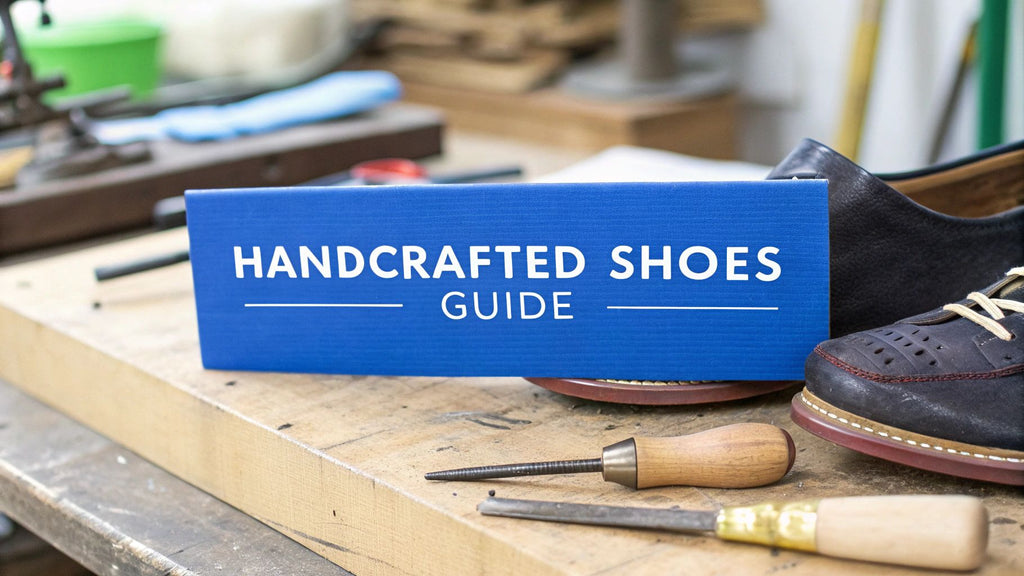
This guide is your educational resource for the world of handmade footwear. From understanding the artisan's process to choosing a pair that perfectly fits your style, we'll explore:
- The Craft: What construction methods define true quality?
- The Materials: Why does the specific choice of leather matter so much?
- The Fit: How do you find a pair that feels like it was made just for you?
- The Customization: How can you design a shoe that is 100% yours?
Decoding the Craft Behind Handmade Shoes
To truly appreciate what makes handmade shoes a cut above, you have to look beyond the beautiful leather and perfect stitching. The real secret lies in the construction—the traditional methods artisans use to join the upper and the sole. These techniques are what separate a legacy piece from just another item off a production line.
Think of it like the foundation of a house. A rushed foundation will lead to problems, but one built with care and solid materials ensures the structure stands strong for generations. The same principle applies to your footwear.
The Anatomy of a Handcrafted Shoe
At the heart of quality shoemaking, you'll generally find two core methods: Goodyear welting and Blake stitching. They each have their own character and benefits when it comes to durability, flexibility, and repairability.
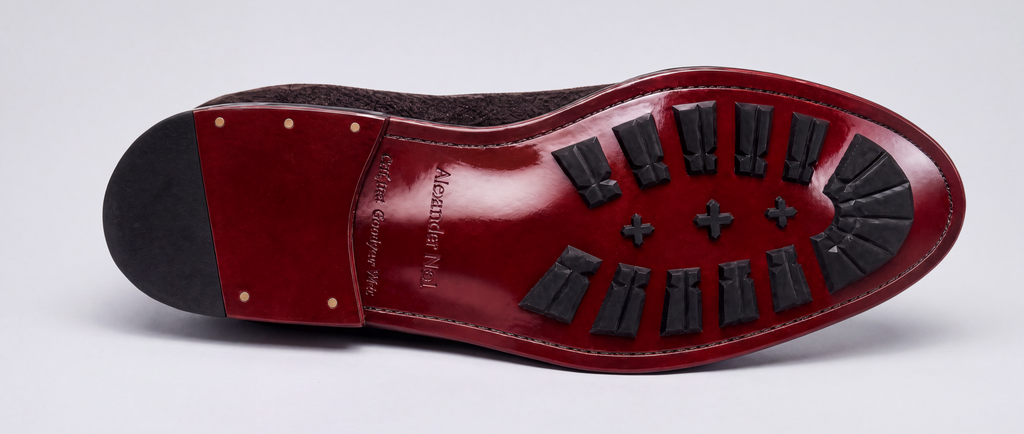
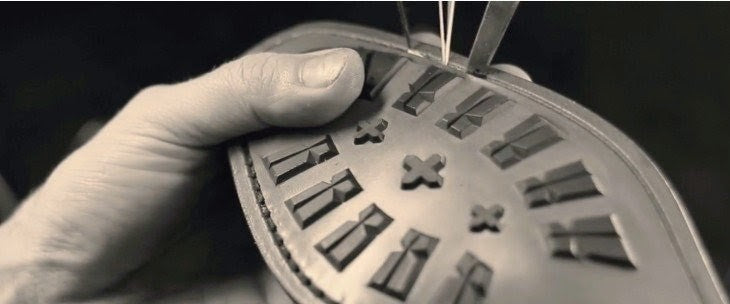
A Goodyear welt, for instance, uses an extra strip of leather—the "welt"—stitched around the shoe's bottom edge. This creates an incredibly tough, water-resistant bond and allows a cobbler to easily resole the shoe, giving it a lifespan measured in decades, not seasons.
The Blake stitch, on the other hand, connects the outsole directly to the insole. This results in a shoe that’s more flexible and has a sleeker, close-cut profile right out of the box. Both are exceptional construction methods, but understanding the difference helps you pick a pair that’s right for your needs—whether you prioritize rugged longevity or a refined silhouette with immediate comfort. If you want to dive deeper, you can learn more about shoe construction methods in our detailed article.

This entire process is built on three pillars: a commitment to quality, a focus on lasting comfort, and the legacy of skill passed down through generations of craftspeople.
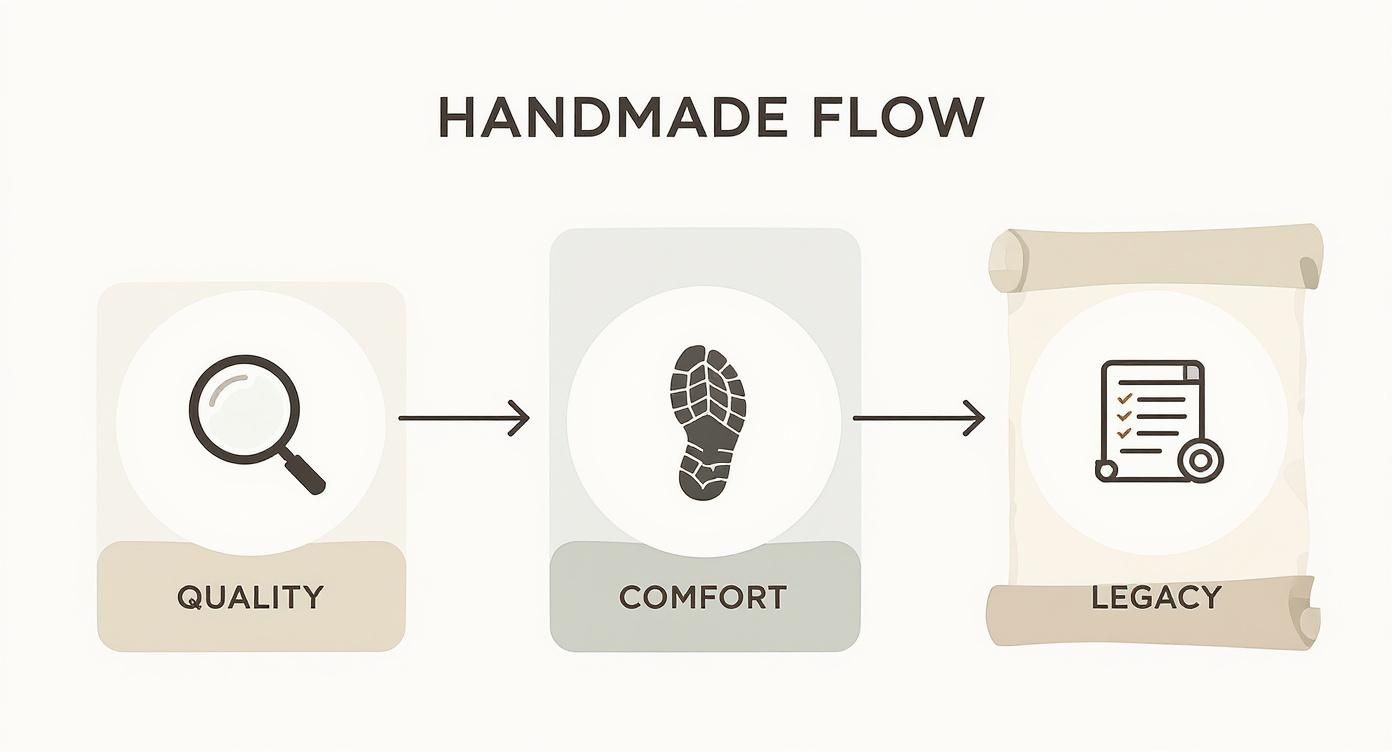
As you can see, these elements are all interconnected. Each step in the process builds on the one before it to create something truly exceptional.
To give you a clearer picture, let's break down the key differences between a pair of handmade shoes and their mass-produced counterparts.
Handmade vs Mass-Produced Shoes at a Glance
| Feature | Handmade Shoes | Mass-Produced Shoes |
|---|---|---|
| Construction | Stitched (e.g., Goodyear welt, Blake stitch) for durability and repair. | Typically glued or cemented, limiting lifespan and repair options. |
| Materials | Premium, full-grain leathers selected for quality and character. | Often corrected-grain leathers, synthetic materials, and plastics. |
| Fit & Comfort | Conforms to the foot over time, often built on anatomical lasts. | Standardized sizing, often requires a "break-in" period with discomfort. |
| Longevity | Built to last for decades with proper care; can be resoled multiple times. | Designed for a few seasons of wear; often irreparable. |
| Value | Higher initial investment but lower cost-per-wear over its lifetime. | Low upfront cost but needs frequent replacement. |
| Customization | Extensive options for personalization, from materials to bespoke fits. | Little to no customization available. |
This table makes it easy to see why investing in a handmade pair is about more than just style; it’s a practical choice for long-term value and comfort.
Bespoke vs Made-to-Order
Within the world of handmade shoes, you’ll also hear a few terms that describe different levels of customization. Getting these straight is key to finding your perfect pair.
- Made-to-Order (MTO): This is your chance to put a personal spin on a proven design. You get to select the leather, the color, the type of sole, and other details from a curated list of options, all based on the shoemaker's existing patterns and lasts (the foot-shaped forms the shoe is built around). It's a great way to get a shoe that feels uniquely yours without starting from the ground up.
- Bespoke: This is the absolute peak of footwear personalization. A craftsman takes detailed measurements of your feet to create a last that is yours and yours alone. From there, every single component of the shoe is designed, cut, and built entirely from scratch, for you. The result is a flawless fit and total creative freedom.
When you choose handmade footwear, you’re doing more than just buying a pair of shoes—you're becoming part of a tradition. You're investing in a process where human skill and meticulous attention to detail are what matter most.
This dedication to the craft, whether it's the strength of a Goodyear welt or the precision of a bespoke design, is what gives handmade shoes their soul. It’s a conscious move away from the fast, impersonal world of automated manufacturing and a return to creating things that are truly built to last.

The Soul of the Shoe: Materials and Artisans
If the construction methods we just covered are the skeleton of a handmade shoe, then the materials are its soul. A truly great shoe doesn't just happen; it begins with exceptional, thoughtfully sourced components. Artisans don’t just grab any piece of leather off the rack. They painstakingly select specific hides, chosen for their unique character, their durability, and—most importantly—how they'll age over time.
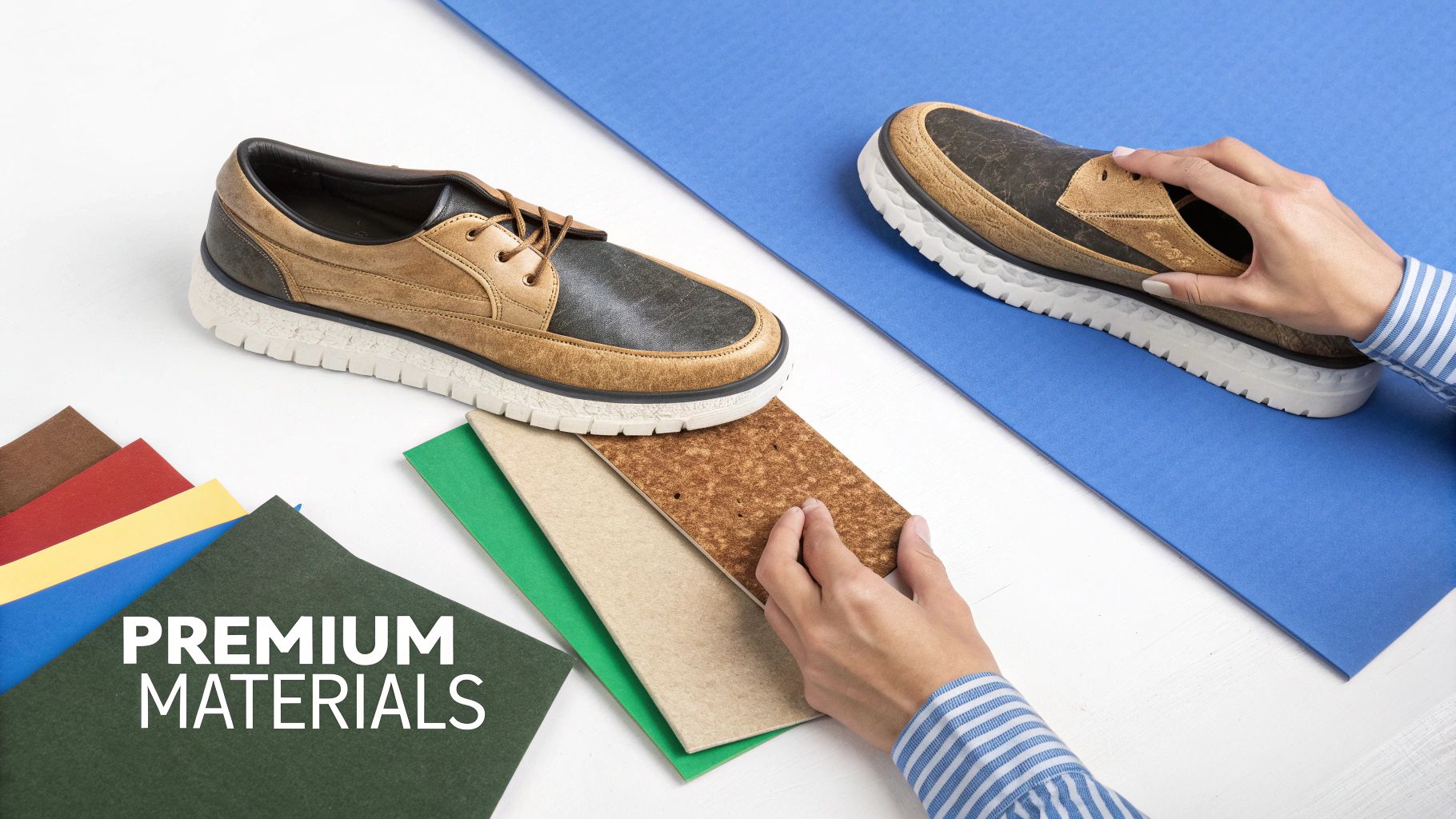
The choice of leather is everything. Full-grain leather is the gold standard here, favored because it retains the complete, natural grain of the hide. This isn't just about strength; it means the leather will develop a beautiful, rich patina over the years, telling the story of every step you've taken.
Of course, there are other incredible options, each with its own personality:
- Calfskin: Incredibly soft with a fine grain, it’s the go-to for elegant, formal dress shoes.
- Suede: Made from the underside of the hide, it has that unmistakable velvety texture for a more relaxed, casual look.
- Exotic Leathers: For a truly bold statement, materials like alligator or ostrich offer a distinctive texture and pattern that’s impossible to ignore.
Getting familiar with the differences is a game-changer. That's why we put together a straightforward guide on demystifying leather grades and sourcing to help you make smarter choices. And it’s not just about leather; the world of luxury textiles also plays a huge role in crafting unique, high-quality footwear.
The People Behind the Process
High-quality materials are just one half of the equation. The real magic happens in the hands of the global artisans who turn these raw components into functional art. At Alexander Noel, we've built direct partnerships with master shoemakers in legendary crafting hubs like Spain, Portugal, and Italy. These are often small, family-run workshops where the craft has been passed down from one generation to the next.
These artisans have an intuitive grasp of their work—a "feel" for the leather and an eye for proportion that no machine could ever replicate. They are the guardians of a tradition built on patience and precision above all else.
This direct-to-consumer model isn't just about cutting out retail markups. It’s about building a bridge between you and the person who made your shoes. It ensures these timeless skills don't just survive but thrive, connecting a global legacy of craftsmanship to your modern desire for something authentic and built to last.
The Growing Global Demand for Artisan Footwear
The appreciation for truly handmade men's shoes isn't just a niche interest anymore; it's a global movement. More and more men are turning away from the disposable, fast-fashion mindset and actively seeking items with substance, longevity, and a real story. This shift is fueling a booming international market for artisan footwear, proving that quality craftsmanship is back in a big way.
And it’s not just a feeling—the numbers tell the same story. The global custom shoes market, where handmade footwear is a huge player, is pegged at around USD 886.1 million for 2025. Experts see it jumping to USD 1,460.5 million by 2032, all because people want that personal touch and uncompromising quality. You can discover more insights about the custom shoe market to see just how strong this trend is.
Key Markets and Regional Styles
This passion for handcrafted shoes looks a little different depending on where you are in the world, with certain hotspots known for their own unique shoemaking traditions. Europe, for example, makes up about 25% of this market, with the old guards of Italy, France, and the U.K. leading the charge.
Each region brings its own signature style to the table:
- Italian Elegance: Think sleek, Blake-stitched shoes that are incredibly light and flexible. Italian makers are all about that refined silhouette and a feel of pure luxury, often using softer leathers for a more fashion-forward vibe.
- English Sturdiness: England is the home of the legendary Goodyear welt. The focus here is on building tough, weather-resistant shoes with a classic, structured look designed to be worn for a lifetime—and then some.
- Spanish Artistry: Spanish artisans beautifully blend Italian style with English construction. They're known for being masters of bold colors and stunningly intricate details, especially their hand-applied patina finishes. The result is a shoe that's as well-built as it is a work of art.
If you want to get a better handle on why people are gravitating toward high-quality, specialized products, take a look at the general trends among luxury e-commerce brands. It offers some great insights into what customers now expect and helps explain the move toward direct-to-consumer brands that connect you right to the artisans, no matter where they are.
This growing demand is a clear sign that people are looking for value that goes way beyond the price tag. They’re investing in a product’s story, its sustainability, and the promise of a perfect fit that mass-production just can’t touch.
This global return to craftsmanship is more than just a fleeting interest in old-school techniques. It's a conscious, collective decision to choose better. When you opt for handmade shoes, you aren't just getting a superior product. You're becoming part of a bigger movement that champions quality, supports skilled artisans, and embraces a much more sustainable way to be stylish.
How to Choose Your Perfect Pair
Picking out the right pair of handmade shoes is a personal journey. It’s a mix of getting the fit just right, matching the shoe to your lifestyle, and finding something that expresses who you are. This isn't about jumping on the latest trend; it's about making a smart investment in craftsmanship that truly fits you.
If you focus on a few key elements, you can find a pair that feels like it was made for you from the very first step. The process begins with knowing your real shoe size and understanding the "last"—the wooden form a shoe is built on. A great last is the secret behind a shoe that supports your foot’s natural shape, avoiding the pain often associated with mass-produced footwear.
Mastering Fit and Form
Getting the fit right is everything. A handmade shoe is built to gradually mold to your foot, creating a bespoke feel that’s unique to you. It's always a good idea to have your feet measured by a professional before buying, since sizing can be surprisingly different from one brand to another.
A few things to nail down:
- Know Your Width: Are your feet narrow, standard, or wide? A shoe that’s too tight or too loose will never feel good, no matter how well it’s made.
- Arch Support: Notice how the shoe feels under your arch. The right support helps spread your weight evenly and keeps your feet from getting tired.
- The Last's Shape: Different lasts result in different shoe shapes. A sleek Italian last feels completely different from a sturdier English one. Think about which style best suits your foot’s anatomy.
Matching Style to Occasion
Once you've got the fit sorted, it's time to choose a style that works for your life. A solid wardrobe is built on versatile pieces, and your shoes are no exception. The idea is to own footwear that not only looks great but also fits right into your daily routine and special moments.
The right shoe doesn’t just complete an outfit; it defines it. Choosing a style appropriate for the occasion shows a respect for detail and an understanding of personal presentation.
Here are a few classic styles and where they fit best:
- Oxfords: The go-to dress shoe. With their "closed lacing" system, they’re the top choice for business suits, formal events, or any time you need to look your sharpest.
- Derbies: Their "open lacing" makes them a bit more relaxed than an Oxford but still plenty smart. They work with just about anything, from a suit to a pair of chinos.
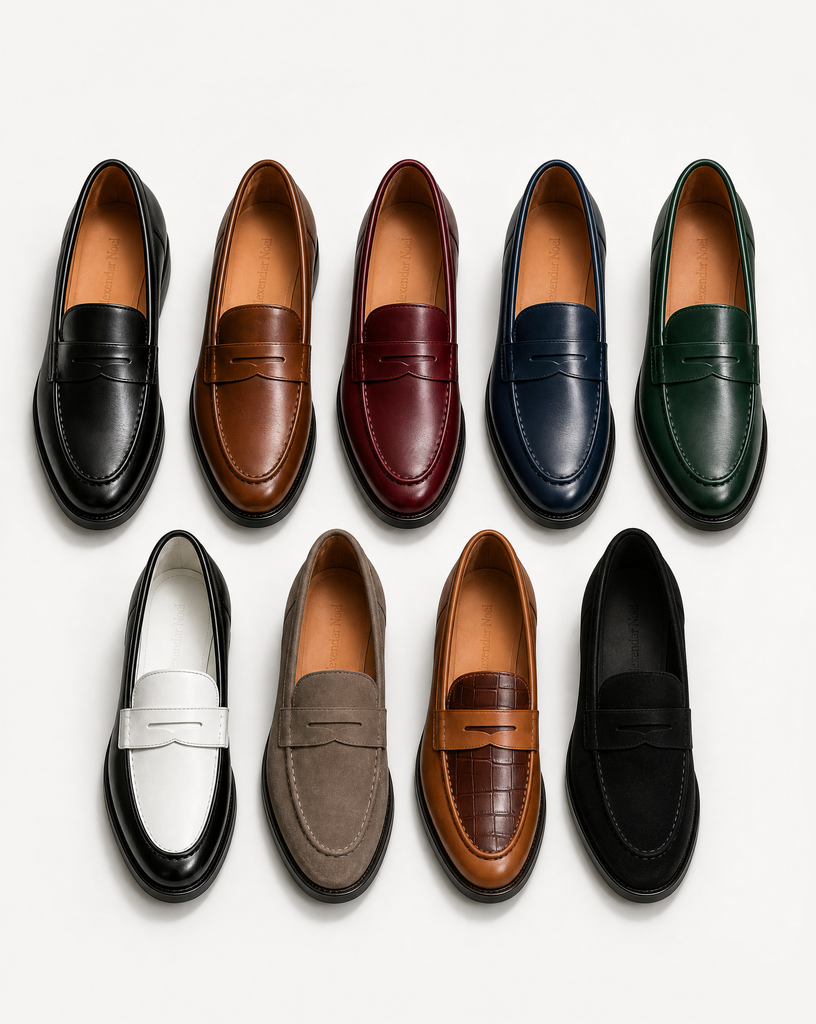
- Loafers: These are the champions of versatile style. A classic penny loafer or a tasseled one can effortlessly bridge the gap between casual and dressed-up.
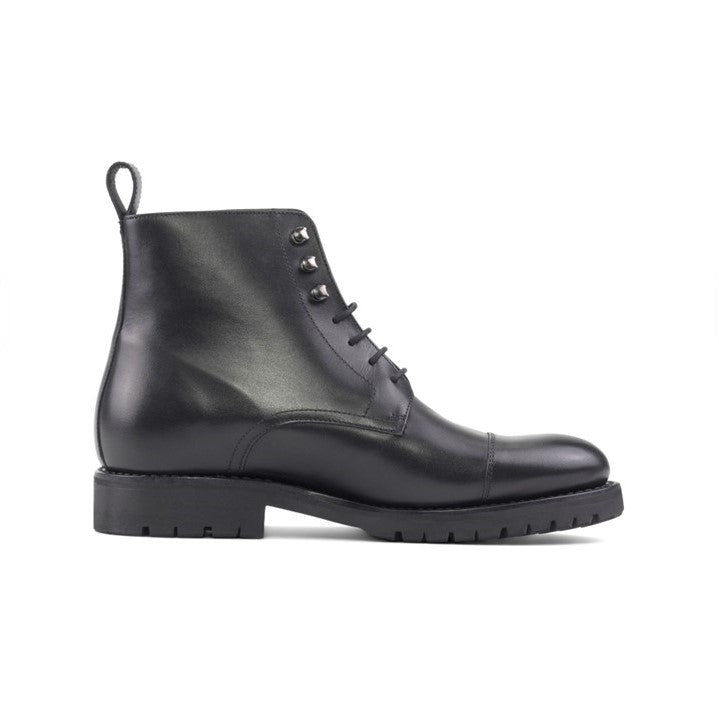
- Boots: From tough work boots to sleek Chelsea boots, a good pair offers both style and durability for colder weather or more rugged settings.
It’s clear that men are looking for something more than what’s on the shelf. In 2023, men made up 57.2% of the global custom shoes market, which hit around USD 744 million. It shows a real demand for footwear that delivers on personalized comfort and quality. You can read the full research about custom shoe market trends to see how this shift is shaping men's style.
When you take the time to really consider what you need, your investment in handmade shoes pays you back with every comfortable and confident step you take.
The Art of Customization: Designing Your Own Shoe
Picking a style off the shelf is one thing, but the real luxury is in creating something yourself. This is where you step out of the consumer's shoes and into the designer's, turning a simple purchase into a personal statement. It’s how you craft a pair of handmade shoes for men that are genuinely, one-hundred-percent you.
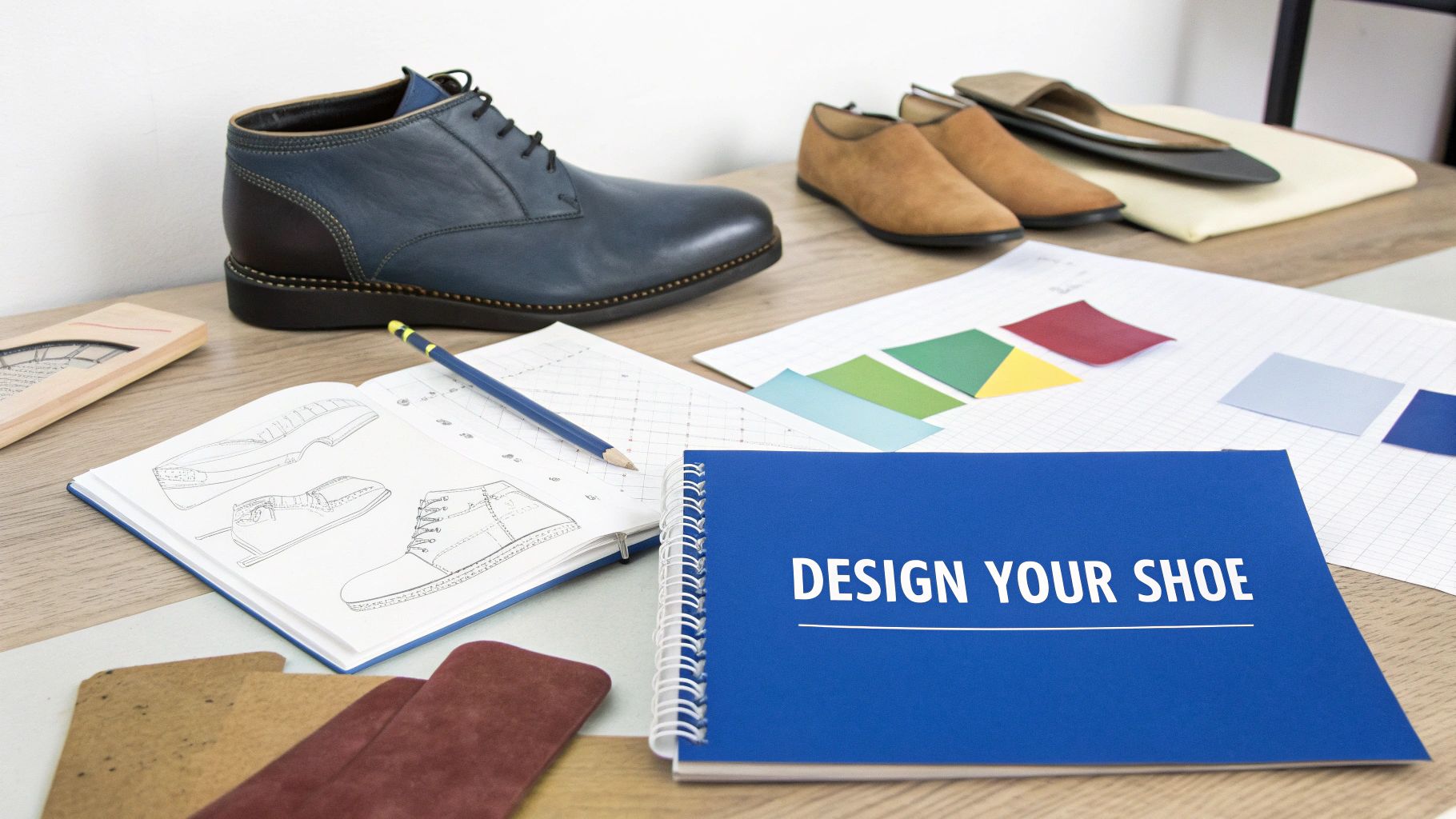
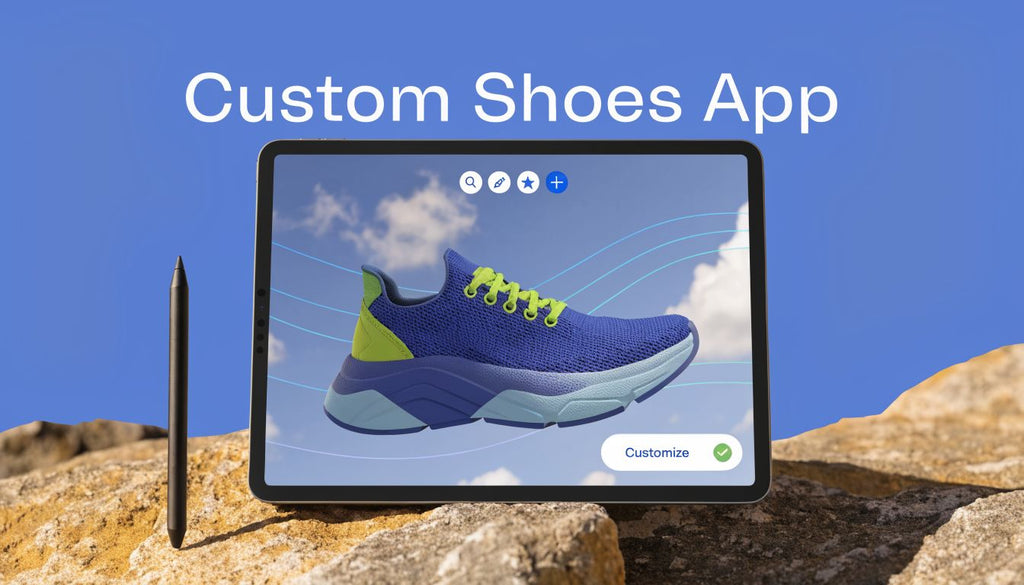
This is all about leaving your personal signature on a piece of timeless craftsmanship. Platforms like our innovative Design Lab put all the tools of the trade right at your fingertips. You call the shots on everything—the exact type and color of leather, the sole details, even the contrast of the stitching. Every choice helps tell your story.
This desire for deep personalization is making waves. North America is now the leading region for custom men's shoes, claiming over 35% of the entire market share. The whole sector was valued at a cool USD 6.65 billion in 2022, and it's expected to more than double by 2032. It just goes to show how much guys want fashion that reflects who they are. You can read the full report on the custom footwear market to see just how fast this trend is growing.
Bringing Your Vision to Life
The journey of customization is about building a shoe that lines up perfectly with your personal style and hits every one of your needs. It's that sweet spot where old-school artisan skill meets modern, easy-to-use technology, letting you see your creation come to life before the first piece of leather is even cut.
The whole process hinges on a few key steps where your input is everything:
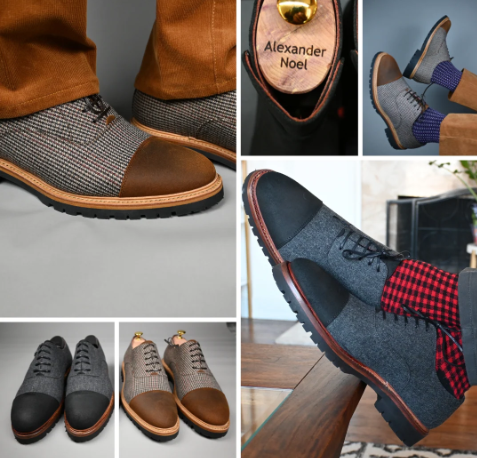
- Material Selection: You'll choose from a hand-picked library of premium leathers, soft suedes, and rich textiles.
- Color Palette: This is where you define the hue for every single part of the shoe, from the main body down to the heel tab.
- Sole Construction: Pick the sole that best fits your life, whether you need something sleek and elegant or tough and durable.
- Finishing Touches: Now for the details. Decide on lace colors, stitching patterns, and you can even add a personal monogram.
Customization is the ultimate form of self-expression in footwear. It transforms the shoe from a product you buy into a story you create, ensuring no one else in the world has a pair quite like yours.
This direct-to-you approach makes you a true collaborator in the crafting process, connecting you straight to the artisan. If you're ready to get started, our guide on how to design shoes is the perfect place to begin your creative journey.
Common Questions About Handmade Men's Shoes
When you're first dipping your toes into the world of handmade footwear, a few questions always seem to pop up. It's totally normal. Understanding the investment, the upkeep, and the process is key to feeling great about your decision.
Let's start with the big one: the price. Why do handmade shoes for men have a higher price tag? It really comes down to what you’re paying for. The cost reflects the incredible quality of the materials, the countless hours a skilled artisan puts into each pair, and a construction method designed to last for decades, not just a season. Think of it as investing in a lower cost-per-wear over the shoe's impressively long life.
Another thing people often ask about is maintenance. You've made the investment, so how do you protect it?
Proper care isn't just about a quick polish. It's a ritual that feeds the leather, protects the stitching, and holds the shoe's shape, making sure it becomes a trusted part of your wardrobe for years to come.
A little regular conditioning, a good pair of cedar shoe trees to absorb moisture and maintain the shape, and getting them resoled when the time comes are the pillars of good shoe care. For a full breakdown, check out our ultimate shoe care guide, which has all the step-by-step advice you'll need.
Finally, many guys are curious about how the ordering and fitting actually works, especially online. Because we connect you directly with the makers, we've made the process incredibly straightforward. We use advanced fitting systems to get a super precise match to your unique measurements, which cuts down on returns and maximizes comfort right out of the box. It takes all the mystery out of it and puts you right in touch with the craft.
Ready to feel the difference for yourself? Head over to the Alexander Noel Design Lab and start creating a pair of shoes that's 100% you.
https://www.shopalexandernoel.com
Related post
04
Oct
04
Oct
26
Sep
26
Sep
26
Sep
