

RECENT POSTS
29.August.2026
Custom Women's Boots for Fall: Choosing Between Two Black Chelsea Silhouettes
0 Comments










Patent Leather Chelsea Boots: A Complete 2026 Guide
You're standing at a rack, holding one boot that looks almost severe in its shine and another that feels familiar in matte leather. Both are Chelsea boots, but the glossy pair changes the whole conversation. It reads dressier at first glance, yet it also asks more from you in care, weather judgment, and how often you plan to wear it.
That's why patent leather Chelsea boots can be confusing at first. The silhouette is old, practical, and easy to slip on, while the finish is deliberately smooth, reflective, and more sensitive than many shoppers expect. If you understand the boot and the finish as two separate decisions, the buying choice gets much clearer.
What Makes Patent Leather Chelsea Boots Different

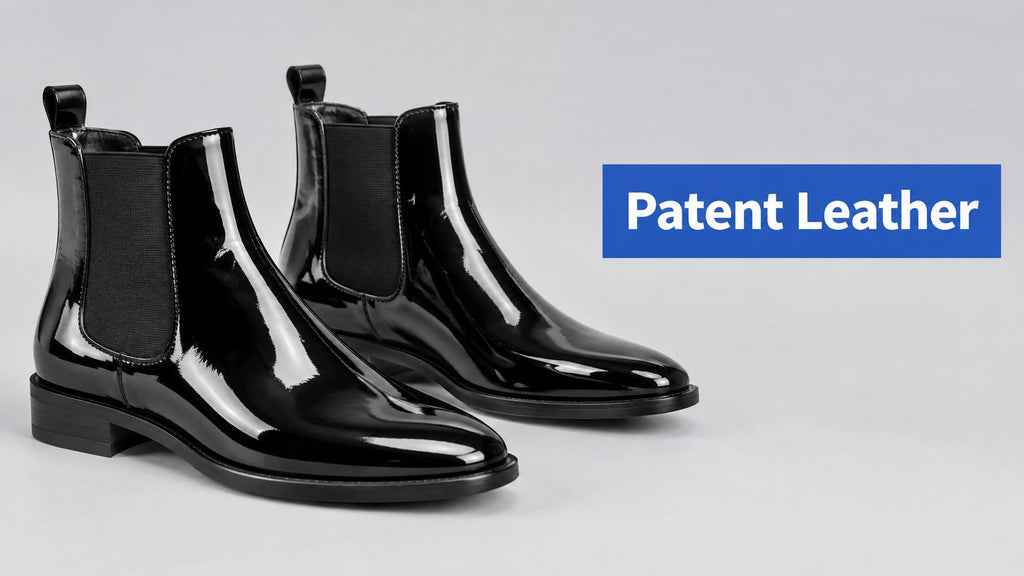
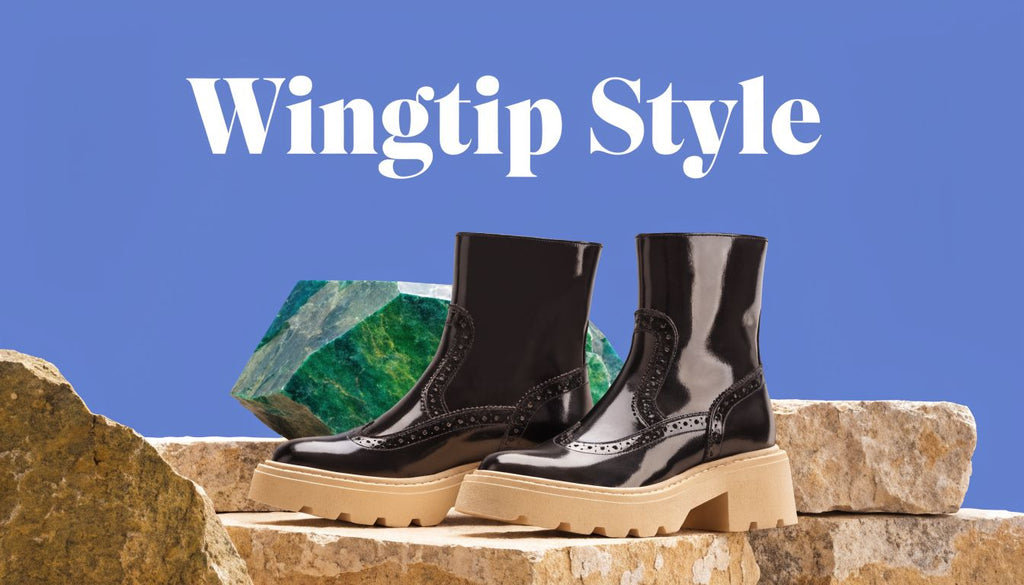
Patent leather Chelsea boots sit at a clear crossroads of form and finish. The Chelsea shape keeps the ankle line close, clean, and easy to wear, while the glossy coating pushes the boot into a more deliberate, dress-leaning register.
At the counter, that difference shows up fast. A matte boot can feel relaxed and familiar, while a patent pair reflects light sharply and asks for more care in how you wear it, store it, and clean it. The same silhouette can therefore behave like a different product once the surface changes.
That surface changes the rules. Rain, dust, and scuffs show more readily on patent finishes, and the shine can make nearby fabrics and textures read more formally, even when the rest of the outfit is simple.
Practical rule: if the shine is doing the visual work, the rest of the outfit and the care routine should be equally intentional.
For a wider look at silhouette types and terminology, the catalogue of shoe concepts helps show how one construction can read casual in one material and dressy in another.
The big takeaway is straightforward. Patent leather Chelsea boots are not just Chelsea boots with a glossy topcoat. They are a dress-leaning version of a classic ankle boot, and that finish changes both their maintenance needs and the role they play in a wardrobe.
Defining the Chelsea Boot and the Patent Finish

The Chelsea boot is defined by structure, not decoration. Its core features are the close ankle fit and the elastic side gussets, with a rear pull tab or loop helping the foot slide in and out. Its Victorian roots are commonly credited to J. Sparkes-Hall, Queen Victoria's cobbler, and a key milestone came in 1851, when he patented his elastic-sided ankle boot and described it in advertising as “J. Sparkes-Hall's Patent Elastic Ankle Boots”, with earlier development reported as early as 1837 on behalf of Queen Victoria (history of Chelsea boots).
Why the elastic panel matters
The elastic gusset is the detail that separates a Chelsea boot from any other ankle boot. It's the part that makes the boot slip on cleanly without laces or buckles, and it's the reason the style still feels practical after all these years. The silhouette is neat, but the function is the invention.
Patent finish is the other half of the term, and it's a finishing system rather than a natural leather type. A buyer guide describes patent leather as a top-grain base coated with a glossy plasticized layer, with typical thickness around 0.9 to 1.4 mm (patent leather buyer guide). That coating is what creates the mirror effect people notice from across a room.
The combination matters because the boot's shape and the finish pull in different directions. The Chelsea construction gives you a sleek, ankle-hugging profile, while the patent coating makes the surface more reflective, more formal, and less forgiving of ordinary scuffs. Alexander Noel's own legacy article on the fascinating legacy of the Chelsea boot is a useful companion if you want the style's history in one place.
Put the two together and you get a boot that is still recognizably Chelsea, but visually sharper and materially fussier. That's the heart of the product.
How Patent Leather Is Made and Why It Behaves Differently
A patent finish changes the boot before it ever reaches your eye. The base is still leather, usually top-grain base, but the surface is sealed with a glossy plasticized layer, so the material behaves more like a coated skin than an open leather grain. That is why care guidance treats it differently from ordinary smooth leather, and why the finish reads bright instead of soft and porous.
The surface changes what your hands and eyes notice
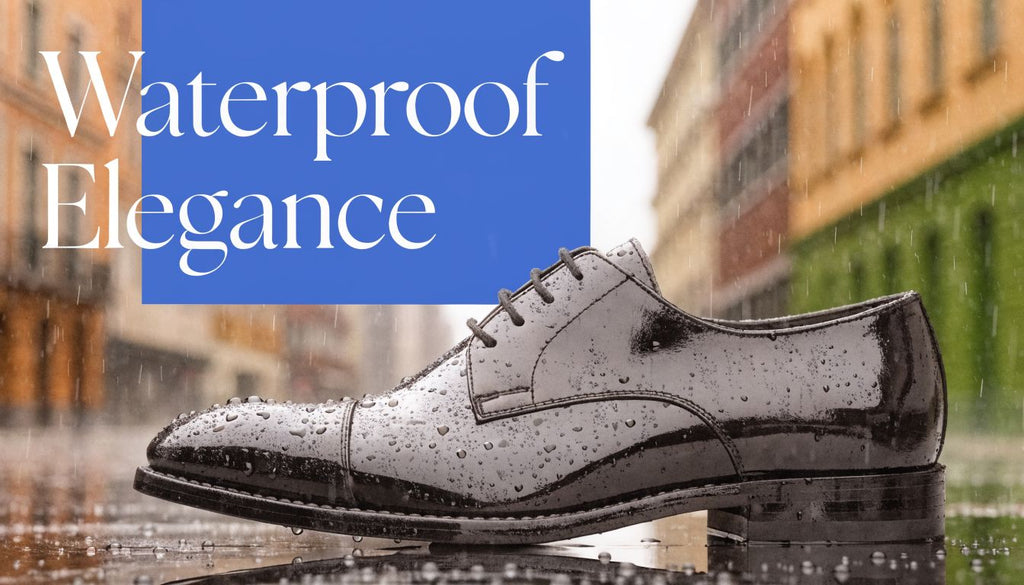
Daily wear shows the difference quickly. Scuffs sit on top of the glossy layer, so they stand out instead of fading into the grain. Water may bead on the surface, yet the finish can still cloud if it is cleaned badly or exposed to the wrong products.
That coating also explains why regular leather advice misses the mark. Creams made for absorbent leather are designed to sink into fibers, but patent leather does not work that way. First-time buyers often reach for the same products they would use on calfskin, then wonder why the surface looks dull or sticky.
A better way to read patent leather is as a finished surface over leather, not leather left exposed. The visual upside is clear, crisp shine. The practical cost is a surface that tolerates less guesswork and less wear from everyday scuffing.
For a broader look at how a maker chooses materials, Alexander Noel's overview of the many leathers and fabrics used in its footwear helps show why a coated finish behaves so differently from more conventional uppers.
Buyer insight: if a shoe's finish looks almost sealed, treat it like a finished surface first and a leather product second.
That is also why patent leather asks for a different buying mindset. A custom-made pair can feel more deliberate here, because the shine leaves little room to hide uneven stitching, poor lasting, or a sloppy shape. Mass-produced pairs may look bold at first, but the finish also makes shortcuts easier to spot.
Construction Details Behind a Premium Pair
A premium pair starts with the shape, not the shine. The upper is blocked over a last so the boot keeps its outline before the elastic gussets are set, and the topline binding finishes the opening cleanly. On a well-made pair, those choices keep the boot from looking loose or collapsing around the ankle after a few wears.
Why welted construction matters here
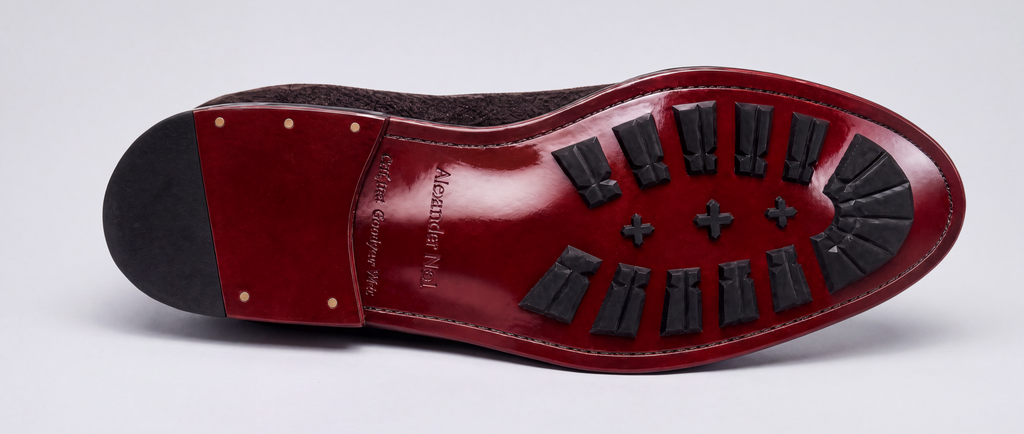
Goodyear welt construction suits a Chelsea boot because it lets the sole be separated from the upper more cleanly during resoling, without forcing the patent coating into a heat-fused bond. That matters when you want a boot that can be recrafted rather than replaced. For a closer look at the parts that make that possible, see a guide to premium boot construction. In premium footwear coverage, high-end Chelsea boots are also described as using a heavy channeled insole and a blocked upper shape to preserve the boot's line, with one technical example noting a 5.2 to 5.5 mm leather insole that's about 2.5x heavier than standard gemmed construction (premium Chelsea construction details).
The feel underfoot changes too. A heavier insole and sturdier build improve durability and shape retention, but they also bring more stiffness and a longer break-in. That trade-off is easy to notice when a shopper moves from a factory pair to a better-built boot.
The sole choice matters as well. A leather sole can look elegant and feel refined indoors, while a thin rubber sheet sole usually gives better grip on wet pavement. Neither option cancels the other, but each shifts where the boot feels most natural in daily life.
A custom-made pair typically offers last-shape adjustments, reinforced gusset tension, and a finish inspection that mass production skips. Alexander Noel describes a direct-to-consumer model that sends final design specifications to artisan partner workshops, which is one way made-to-order footwear stays closer to the wearer's needs (direct-to-consumer artisan model).
The difference shows up over time. Welted pairs can be recrafted, while cemented fast-fashion versions tend to lose shape and finish sooner.
Caring for Patent Leather the Right Way
Patent leather needs a light routine, not an aggressive one. After wear, wipe the surface with a soft microfiber cloth so dust and road film don't settle into the finish and dull the shine. Pay extra attention to the welt line, where grime tends to collect.
What to use and what to avoid
For scuffs, start with a damp cloth and a drop of mild soap, then dry the boot fully before storing it. If the surface still looks tired, use a patent-specific cleaner, not saddle soap, not standard leather cream, and not anything abrasive. A care guide from Diemme specifically warns against normal conditioners, impregnation sprays, harsh heat, and other treatments that can damage the glossy surface (patent leather care guide).
The wrong products don't just fail to help, they can cloud the lacquer. Petroleum-based products, alcohol, paper towels, abrasive brushes, and direct heat can all leave the finish looking dull, hazy, or cracked. That's why the routine has to stay gentle from the start.
Keep patent leather away from radiators and hot air, and let room temperature do the drying.
Storage matters almost as much as cleaning. Boot trees help hold the blocked shape, dust bags protect the surface from rub marks, and a cool, dry spot keeps the coating from sticking or warping. Sunlight is especially unhelpful, because it can make the surface look tired faster than the rest of the boot.
Alexander Noel's how to clean leather boots guide is useful if you want a broader contrast between ordinary leather care and what patent leather specifically refuses.
A simple seasonal check
Before each new season, inspect the flex points, the topline, and the heel edge. If the surface has gone matte in patches, cracked, or started to haze despite careful cleaning, that's the point to consider professional refinishing rather than hoping the issue will disappear. Patent leather rewards prevention far more than rescue.
Trend Outlook and Cost-Per-Wear Reality
Patent leather comes and goes as a visible fashion signal, but it doesn't behave like a universal staple. Recent style coverage still shows Chelsea boots staying relevant in 2025, with tactile materials, chunky soles, and sleek silhouettes getting attention, while a 2026 trend roundup described patent leather as one of the textures out of fashion for fall/winter 2026 (Chelsea boot trends for 2025). That tension is exactly why buyers should think carefully before they commit.
How to judge value honestly
Chelsea boots themselves are steady because the silhouette has stayed in wardrobe rotation for decades. Patent leather is less stable, since it tends to feel more like a statement finish than an every-season default. If you buy for weddings, gallery openings, or dressy evenings, the pair can make sense as a specialized shoe. If you want one boot to handle wet sidewalks, slushy commutes, and repeated rough wear, the glossy finish is a weaker fit.
A simple way to think about cost-per-wear is to divide the purchase price by your realistic annual wear count and then compare that against how long the finish will stay presentable. If the answer only makes sense in a narrow dress-up context, that's your signal that the boot is an occasion piece, not a daily one.
| Factor | Patent Leather | Smooth Leather |
|---|---|---|
| Visual role | Glossy, statement-making, more formal | Quiet, versatile, easier to dress up or down |
| Maintenance | Needs gentle cleaning and careful storage | More forgiving with routine leather care |
| Weather use | Better for dry conditions and short exposure | More adaptable in mixed conditions |
| Wardrobe range | Strongest with dressier outfits | Broader across casual and smart-casual looks |
| Buyer logic | Best as a special-purpose pair | Better when you want one pair to do more |
If your wardrobe already has a polished black boot, patent can be redundant. A classic smooth leather Chelsea boot usually gives more room to wear, more patience with weather, and a better long-term return for many.
Styling and Choosing the Right Pair for You
Patent leather Chelsea boots work best when the rest of the outfit gives the shine room to speak. For men, they look sharp with a dark wool suit and crisp shirt for evening events, dark indigo denim and a merino crewneck for smart-casual dinners, or cropped trousers and a turtleneck for gallery openings. For women, they pair cleanly with a midi slip dress and structured blazer, fitted trousers and a silk blouse, or a leather jacket and straight-leg jeans for polished everyday wear.
Where they fit in real life
The strongest use case is indoor-to-outdoor dressing, not long wet commutes. The glossy finish looks right at the restaurant, the opening, or the event entrance, then feels less at home once the weather turns rough. That is why the pair usually works better as the final note in an outfit than as the shoe you rely on for a demanding day.
Style rule: the more reflective the boot, the simpler the rest of the outfit should be.
When you decide whether to buy, start with your actual rotation. If your calendar is full of dressier dinners, business evenings, or formal gatherings, the style can earn its place. If your week is mostly transit, errands, and unpredictable weather, the visual payoff may not match the care it asks for.
A custom-fit artisan version can make more sense than a mass-produced pair if the boot is going to play a deliberate role in your wardrobe. Alexander Noel's women's Design Lab notes that customers can customize boots and receive artisan-made footwear within 10 to 20 days, which gives shoppers a made-to-order route when fit and finish matter more than shelf convenience. That is a different value proposition from buying a glossy boot on impulse.
| Occasion | Men's Pairing | Women's Pairing |
|---|---|---|
| Evening dinner | Dark wool suit, crisp shirt | Midi slip dress, structured blazer |
| Smart-casual dinner | Dark indigo denim, merino crewneck | Fitted trousers, silk blouse |
| Gallery opening | Cropped trousers, turtleneck | Leather jacket, straight-leg jeans |
| Office event | Fitted trousers, fine-gauge knit | Blazer, straight-leg trousers |
If you want the shine, buy it with intention. If you want flexibility first, choose smooth leather instead.
Related post
12
Sep
12
Sep
12
Sep
29
Aug
