


RECENT POSTS
29.August.2026
Custom Women's Boots for Fall: Choosing Between Two Black Chelsea Silhouettes
0 Comments
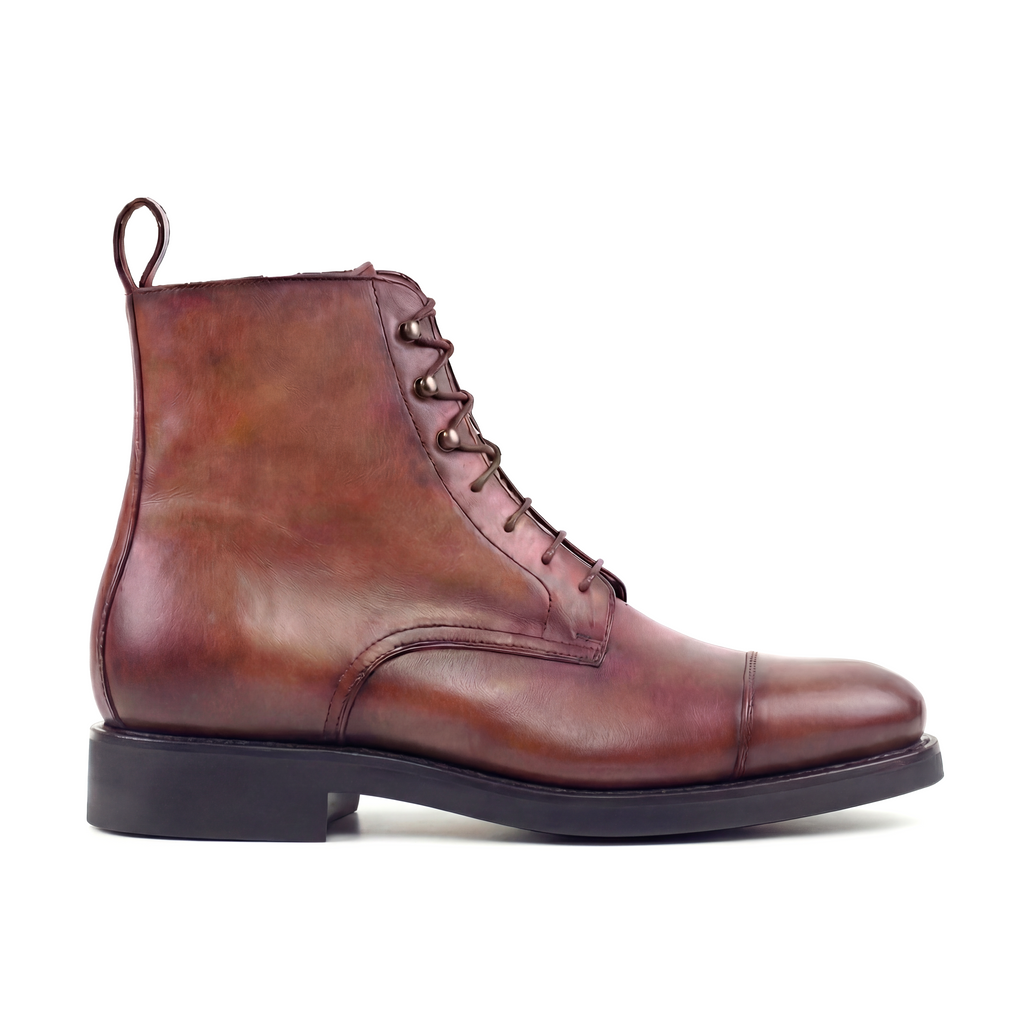








Olive Green Boots: Style Guide & Custom Designs
You open the closet, reach past the black boots, glance at the brown pair, and feel the same hesitation you felt last week. They work. They’re sensible. They also make every outfit feel slightly predictable.
That’s where olive green boots come in. Done well, they behave like a neutral but never feel dull. They add depth without shouting, and they sit in that rare sweet spot between rugged and refined.
Most guides stop at product roundups. They show you what’s available off the shelf and leave you to sort out the harder questions yourself. Which shape suits your wardrobe? Why does one olive tone look polished while another looks flat? Why do so many boots seem promising online but fail once fit, material, and daily wear enter the picture?
Those are the questions worth answering. Because olive green boots aren’t just an alternative color. In the right leather, on the right last, with the right construction, they can become one of the most flexible pairs you own.
Beyond Black and Brown The Case for Olive Green Boots
A lot of people arrive at olive green boots the same way. Not by chasing a trend, but by getting tired of safe choices.
A business casual wardrobe, for example, often ends up built around navy trousers, grey wool, dark denim, cream knitwear, and the same two boot colors repeated on rotation. Black can feel severe in softer outfits. Brown can start to blur into everything else. Olive green changes the rhythm. It gives the eye something richer to land on while still pairing easily with the clothes most professionals already own.
That’s why olive works so well in real life. It has enough earthiness to sit comfortably beside camel, denim, charcoal, off-white, and burgundy. But it also has more personality than a standard neutral. A Chelsea in olive suede feels sharper than tan. A waxed olive cap-toe boot can look more interesting than dark brown without becoming difficult to wear.
Style principle: If your wardrobe already relies on restrained colors, olive green boots add variation without forcing you to rebuild everything around them.
They also carry a certain quiet confidence. Black often reads formal. Brown often reads traditional. Olive can do both, depending on the shape and finish.
If you’ve been noticing more depth and experimentation in modern men’s palettes, Alexander Noel’s take on men’s shoe color trends for 2024 helps explain why more dress-conscious buyers are moving beyond default footwear shades.
The Enduring Appeal of Olive Green in Footwear
Olive green works because it has history behind it. Not fashion history alone, but functional history.

From military utility to everyday style
During World War I, Hunter Boot Ltd. produced exactly 1,185,036 pairs of rubber Wellington boots to combat trench foot, and those olive-green tinted boots helped shift military footwear from leather to mass-produced vulcanized rubber, later pushing olive into civilian life as a symbol of durable design, as documented in this history of Wellington boots from battlefield to farm field.
That matters because color often carries meaning before it carries style. Olive green entered footwear through use, not decoration. It was associated with protection, weather resistance, reliability, and movement through harsh conditions. Even now, that background gives olive green boots a grounded presence that brighter fashion colors rarely achieve.
When people say olive feels “serious” or “substantial,” they’re usually responding to that legacy, even if they don’t know the story.
Why olive behaves like a neutral
Olive sits in a rare zone of the color spectrum. It contains green, but it’s muted by brown and grey undertones. That’s why it doesn’t clash the way a bright forest or emerald shade might.
In practical terms, olive green boots pair well with:
- Navy tailoring because the contrast is clean without being stark
- Grey flannel or wool because both colors share a quiet, refined cast
- Denim because indigo and olive have long worked together in utilitarian dress
- Camel and cream because warm neutrals bring out olive’s earthy side
- Black pieces when the boot shape is sleek and the leather finish is refined
Why they still feel distinctive
A black boot disappears into an outfit. Sometimes that’s useful. Sometimes it’s forgettable.
Olive green boots do something better. They anchor the outfit and contribute character. A matte olive Chelsea can feel urban and understated. An olive combat boot can lean rugged. An olive dress boot in polished leather can read almost bespoke in the old European sense, especially when the tone is deep and slightly smoky rather than bright.
Olive succeeds when it looks intentional, not novelty-driven. The best versions feel calm, not loud.
That’s the reason the color has lasted. It began in utility, moved into country life, and now sits comfortably in modern wardrobes because it still signals purpose.
Decoding the Most Popular Olive Green Boot Styles
Once you’ve decided the color works, the next question is shape. Many buyers get stuck on this aspect. They know they like olive green boots, but they choose the wrong silhouette for their wardrobe and then wonder why the pair never leaves the shelf.

A quick style comparison
| Style | What defines it | Best for | Style message |
|---|---|---|---|
| Chelsea | Elastic side panels, pull-on shape | Offices, travel, city wear | Clean, modern, efficient |
| Ankle boot | Broad category, usually low shaft and versatile profile | Daily wear across seasons | Adaptable and easy |
| Lace-up boot | Front lacing, adjustable fit, stronger visual structure | Casual to rugged smart casual | Confident, practical |
| Hiking-inspired boot | More tread, outdoors influence, sturdier sole presence | Weather, weekends, utility dressing | Purposeful and active |
Chelsea boots for polished simplicity
If your wardrobe leans refined, the olive Chelsea is usually the easiest entry point. It has no visible lacing to interrupt the line, so the color takes center stage in a restrained way.
This style suits slim trousers, cropped hems, dark denim, and soft suiting. In smooth leather, it can move into business casual settings. In suede or nubuck, it becomes more relaxed.
The main confusion with Chelsea boots is formality. People often assume the color makes them casual. It doesn’t. The last shape, leather finish, and sole profile do most of that work.
For a broader look at why this silhouette remains such a staple, this piece on why Chelsea boots remain a popular boot style is a useful companion.
Ankle boots for maximum flexibility
“Ankle boot” covers a lot of ground, which is exactly why the category works. Some versions are close to a refined city boot. Others borrow from service boots or dress boots. The shared advantage is versatility.
Choose this route if you want one olive green boot that can bridge:
- Weekday denim and knitwear
- Office chinos and overshirts
- Dinner outfits with wool trousers
- Travel wardrobes where one pair must do a lot
An olive ankle boot is often the safest choice for someone exploring the color for the first time.
Lace-up and combat-inspired boots for character
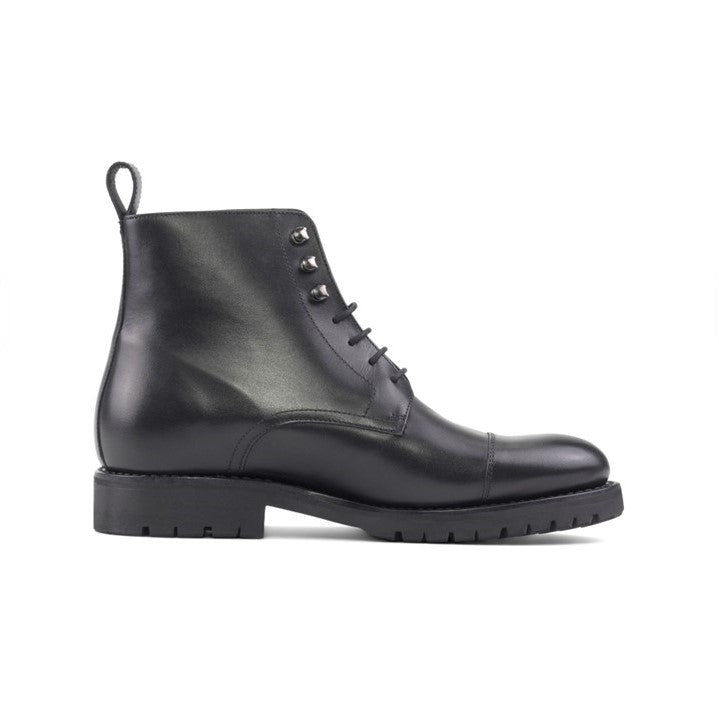
Lace-up boots bring more visual weight. They’re excellent when you want the boot to play an active role in the outfit rather than playing a passive role.
A few things change once laces enter the picture. The boot feels more substantial. The fit becomes more adjustable. The overall mood becomes more assertive.
This style works especially well with:
- Raw or dark denim
- Twill trousers
- Heavier outerwear
- Military-inspired or workwear-informed wardrobes
The mistake here is overcommitting to ruggedness. If you want versatility, avoid oversized soles and exaggerated hardware.
Hiking-inspired styles for modern utility
These work best for people whose daily life includes weather, walking, or travel. A refined hiking-influenced olive boot can look sharp with technical outerwear and relaxed wool trousers.
It’s less useful for formal wardrobes, but very useful for practical ones.
Practical filter: Start with your trouser shapes. If you mostly wear tailored pants, choose Chelsea or sleek ankle boots. If you wear denim, chore coats, and textured layers, lace-up styles usually integrate more naturally.
How to Style Olive Green Boots for Any Occasion
Color becomes easy once you stop treating olive as unusual. Think of it as a dark, earthy neutral with more dimension than brown.

For men
The cleanest casual formula is dark denim, a grey crewneck, and an olive lace-up or Chelsea boot. The denim keeps the base familiar. The boot introduces depth without making the outfit feel styled to death.
For business casual, try olive green boots with navy trousers and a soft brown or camel top layer. A suede or matte leather finish usually works better than a high-shine finish in office settings. The reason is balance. Olive already brings character, so the rest of the look should stay composed.
For evening, charcoal wool trousers and a black merino knit create a strong frame for a sleek olive boot. This combination works because charcoal and olive both have depth. Neither color competes.
For women
An olive ankle boot can replace black more often than generally assumed. With straight-leg jeans, a cream blouse, and a camel coat, it reads polished and relaxed.
For work, olive boots pair well with soft tailoring. Think grey trousers, an ivory knit, and a structured blazer in navy or taupe. If the boot has a cleaner toe shape and a refined heel, it can easily support a professional wardrobe.
For dinners or social events, olive works beautifully with tonal dressing. A monochrome look in stone, mushroom, or warm grey lets the boots stand out with subtlety rather than contrast.
Color pairings that rarely fail
If you’re still unsure, these combinations are dependable:
- Olive and navy for business casual sharpness
- Olive and cream for softness and light contrast
- Olive and burgundy for richer autumn depth
- Olive and charcoal for city polish
- Olive and faded blue denim for easy weekend wear
A quick visual guide can help if you want to see how movement and proportion affect the final look:
Texture matters as much as color
Readers often focus on matching color and overlook surface texture. That’s a mistake. Olive suede feels different from olive waxed leather. Olive nubuck feels different from smooth polished calf.
Here’s the easy rule:
- Suede or nubuck softens the outfit and makes olive feel more relaxed
- Waxed or matte leather gives olive a workwear or heritage edge
- Smoother leather with a cleaner last makes olive suitable for office wear and dressier settings
If the outfit feels off, the issue often isn’t the color. It’s that the texture of the boot doesn’t match the texture story of the rest of the clothes.
A few combinations to avoid
Olive green boots are flexible, but not invisible. A few pairings can feel heavy or muddy.
- Too many similar greens: Olive boots with olive trousers and olive outerwear can flatten the whole look unless the shades are clearly separated.
- Very bright tops: Neon or highly saturated tones can make olive seem accidental rather than intentional.
- Bulky boots with slim formal trousers: The silhouette tension usually looks awkward instead of elegant.
The simplest path is contrast with restraint. Let the boots add interest, then keep the rest of the outfit grounded.
Why Material and Craftsmanship Matter Most
A beautiful color can’t rescue poor construction. That’s the quiet truth behind many disappointing boots.

Construction changes how a boot lives with you
Mass-market boots often look convincing at first glance. Then the sole separates, the upper creases badly, the shape collapses, or the comfort disappears long before the boot should be finished.
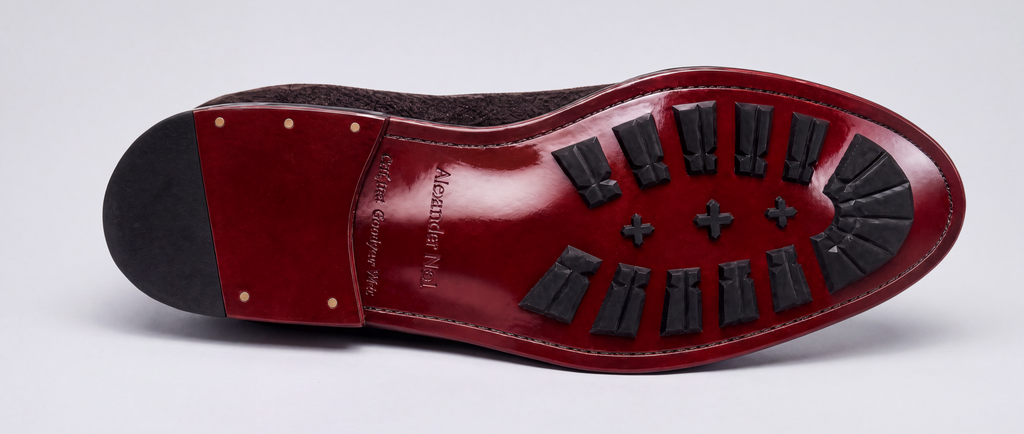
That’s why Goodyear welt construction matters. According to this explanation of premium boot construction and what makes luxury worth it, the method involves stitching the upper to a welt and then to the outsole, creating a bond that withstands 20 to 30 percent higher shear forces than common cemented constructions. The same verified data notes that Goodyear-welted boots retain 85 to 90 percent of original sole integrity after 1,000 km of walking, and that resoling can extend lifespan to 10+ years.
Those numbers matter because they translate into daily use. A better-built boot keeps its structure longer, handles movement better, and can be repaired rather than discarded.
What the wearer actually notices
Technical terms can sound abstract, so reduce them to experience:
- Shape retention: The boot keeps looking like a boot, not a tired shell.
- Serviceability: A worn sole doesn’t automatically end the life of the pair.
- Comfort over time: Better internal structure tends to age more gracefully than glued shortcuts.
Craftsmanship becomes visible. Not only in hand-finishing, but in the decisions you feel underfoot month after month.
Material quality affects olive more than many colors
Olive is sensitive to leather quality. In cheap materials, the shade can look flat, plastic, or oddly yellow. In better hides, olive has depth. It shifts in light. It develops personality as the surface wears in.
That’s one reason artisanal shoemaking traditions still matter. If you enjoy learning how makers preserve refinement through material choice and finishing, WatchClick’s piece on timeless Italian craftsmanship offers a useful parallel from another category built on detail and longevity.
Better boots don’t just last longer. They age better, repair better, and look more convincing every time you wear them.
Finding Your Perfect Fit Beyond Standard Sizing
Many people blame themselves for boot problems that begin with standardized manufacturing. They assume their feet are difficult, their calves are unusual, or their instep is somehow wrong.
Usually, the issue is simpler. Off-the-rack sizing asks a wide range of bodies to conform to a narrow set of assumptions.
Why standard sizing leaves so many people behind
Verified market analysis points to a real gap: retailers offer limited olive green options and often fail to serve wide calves, non-standard arches, or executive style requirements, leaving 30 to 40 percent of consumers who report boot fit issues underserved by standard sizing, as described in this review of the olive boot retail gap in mainstream assortments.
That finding explains a lot of common frustrations:
- Heel slip in one size, toe pressure in the size below
- Boot shafts that fit the foot but not the calf
- Arch placement that never lines up with your actual foot shape
- Dress requirements that call for a refined boot, while available wide-fit options look clunky
The common fit problems people misread
A boot can feel “almost right” in the store and still be wrong. That happens when the length works but the volume doesn’t, or when the forefoot is fine but the instep is too low.
People also confuse break-in with bad fit. Leather can soften. It won’t magically fix structural mismatch.
Here’s a better way to judge the problem:
- If your toes feel crowded immediately, the shape may be wrong.
- If the heel lifts excessively, the last may not suit your foot.
- If one foot always feels different, standard paired sizing may be limiting you.
- If the boot works seated but not after hours of walking, internal proportions may be off.
Your foot isn’t failing the boot. The boot is often failing your foot.
Why olive green makes the fit problem worse
In black and brown, there are at least more options to trial. In olive green, the selection narrows fast. Once you add preferences around shaft height, toe shape, leather finish, or workplace appropriateness, the field becomes even smaller.
That’s why personalization matters more in this category than many buyers realize. The challenge isn’t only finding a color you like. It’s finding that color in a silhouette that fits your life and your body.
The Alexander Noel Difference Create Your Own Olive Green Boots
The strongest argument for personalization isn’t vanity. It’s problem solving.
By the time someone looks seriously at custom olive green boots, they usually already know what standard retail gets wrong. The color is available, but not in the right shape. The style is close, but not in the right leather. The fit is acceptable standing still, but not after a full day. Custom design closes those gaps by letting one pair answer all three questions at once.
Personalization starts with use, not decoration
A good custom process begins with your actual life. Are you building a city boot for weekday tailoring? A travel-friendly Chelsea? A dressier lace-up with more depth than black? A women’s executive boot that looks elegant but needs practical protection?
That’s where a design platform becomes useful. Alexander Noel’s boot design process allows buyers to choose style, materials, colors, and sizing inputs through a made-to-order workflow rather than settling for preset inventory.
The important point isn’t that customization offers more options. It’s that the options can be selected in relation to one another.
What should be customized in an olive green boot
Not every decision carries equal weight. These usually matter most:
- Silhouette: A Chelsea, cap-toe, or lace-up changes the formality of olive more than the shade itself.
- Leather type: Olive in suede feels relaxed. Olive in waxed leather feels more rugged. Olive in smooth calf reads cleaner.
- Last shape: A narrow, elegant last changes the entire personality of the color.
- Sole choice: Thin leather soles, rubber city soles, or more substantial tread each shift the boot’s purpose.
- Fit details: Width, instep volume, shaft proportions, and overall balance often matter more than numerical size alone.
A bespoke olive boot succeeds when these choices reinforce each other instead of fighting.
Tradition and innovation can live in the same pair
One of the most interesting developments in modern custom footwear is that practical performance no longer has to look industrial. Verified data shows that bespoke designs can integrate composite toe caps meeting ASTM F2413-18 standards, and those non-metallic caps are 30 percent lighter than steel while avoiding metal detector issues, as outlined in this explanation of composite toe technology in olive work-inspired boots.
That matters for professionals who travel, work across environments, or want more protection without the bulk and visual heaviness associated with traditional safety footwear.
This is a good example of modern luxury at its smartest. Not ornament. Function hidden inside refinement.
The shade itself deserves more attention
Many people say “olive green” as if it were one color. It isn’t. Some olives lean brown and smoky. Some lean mossy. Some have a military cast. Others feel more urban and polished.
That’s where custom work becomes especially valuable. You can align the olive tone with your wardrobe and your intention.
A few easy distinctions help:
| Olive tone | Best match | Overall effect |
|---|---|---|
| Deep muted olive | Navy, charcoal, black | Tailored and sophisticated |
| Earthy brown-olive | Denim, camel, cream | Heritage and relaxed |
| Cooler grey-olive | Monochrome neutrals | Modern and understated |
Fit changes confidence more than people expect
A well-fitted boot doesn’t only feel better. It changes how you wear the entire outfit.
When the heel stays planted, the vamp sits correctly, and the shaft height suits your leg line, the boot reads cleaner. Trousers break better. Movement looks easier. You stop adjusting and start wearing.
That’s often the hidden reason custom boots appear more elegant. Not because they’re louder, but because nothing looks compromised.
The most luxurious part of a custom boot is often not the leather or color. It’s the absence of apology in the fit.
For olive green boots, that difference is especially valuable. Since the color already brings individuality, the fit and build have to support it. Otherwise the boot risks looking like an interesting idea that never became a coherent object.
Personalization is what turns olive from a nice alternative into a serious wardrobe piece.
Caring for Your Handcrafted Investment
Good boots reward simple, consistent care. They don’t need fuss. They need attention at the right moments.
For smooth leather olive green boots, brush off dust after wear and let them rest before wearing them again. Use a conditioner sparingly so the leather stays supple without becoming overloaded. Test any cream first, because olive tones can shift in appearance depending on the product.
For suede or nubuck, use a dedicated brush and avoid heavy creams. Raise the nap gently, clean marks early, and use a protector suited to that surface. These materials look best when cared for lightly and regularly rather than aggressively once they’re already stained.
For storage, keep boots away from direct heat and give them support with shoe trees or careful stuffing so the shape remains stable.
A few habits make the biggest difference:
- Rotate pairs: Don’t wear the same boots hard every day if you can avoid it.
- Dry them patiently: If they get wet, let them air dry naturally.
- Address soles early: If a quality pair is built for resoling, act before wear reaches the upper structure.
That last point matters. A repairable boot is designed for a longer life, but only if you maintain it before damage spreads.
If olive green boots have been on your mind, the smartest next step is to define what you need from the pair: the silhouette, the leather, the shade, and the fit. Alexander Noel offers a custom footwear approach built around those choices, which is useful when standard retail options feel close but never quite right.
Related post
12
Sep
12
Sep
12
Sep
29
Aug
