


RECENT POSTS
29.August.2026
Custom Women's Boots for Fall: Choosing Between Two Black Chelsea Silhouettes
0 Comments
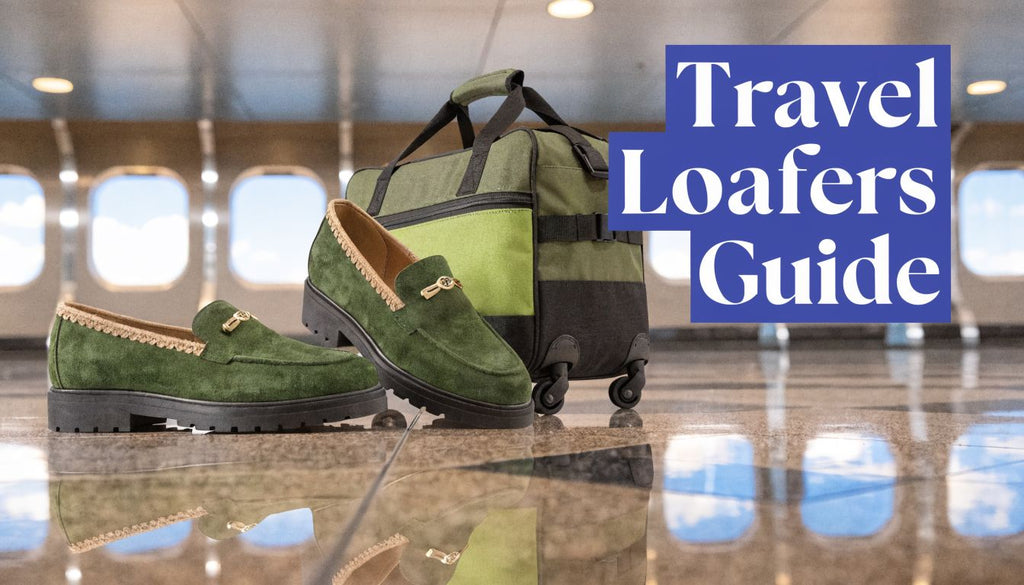







Suede Black Loafers: A Complete Styling & Care Guide
You want one shoe that can handle a client lunch, a flight, dinner later that night, and a casual Saturday without looking out of place. That’s usually where the search gets messy. Oxfords feel too rigid. Sneakers feel too casual. Many off-the-rack loafers look good online, then slip at the heel or lose shape after a season.
That’s why suede black loafers have held their place for so long. They solve a real wardrobe problem. They soften formal clothing, sharpen denim, and carry a kind of quiet confidence that glossy shoes sometimes miss.
As an artisan, I like them for another reason. They reveal quality quickly. A good pair feels stable without stiffness, refined without fuss, and easy without looking cheap. A poor pair does the opposite. It folds badly, slides around your foot, and asks you to compromise on comfort or durability.
The Enduring Allure of Suede Black Loafers
Some shoes try too hard to announce themselves. Suede black loafers don’t need to.
They work because they sit in the middle of the wardrobe. Not formal in the severe sense. Not casual in the careless sense. They’re the pair you reach for when you want to look considered without looking overdressed.

Why this style feels timeless
Black gives the loafer structure. Suede gives it warmth.
That combination is what makes the shoe so adaptable. Smooth black leather can look sharp and formal. Suede black loafers keep the same polish, but with a softer surface that pairs more naturally with flannel trousers, dark denim, knitwear, and unstructured tailoring.
A well-made suede loafer rarely looks loud. It looks settled, which is often the mark of real style.
Their history helps explain that staying power. The roots of the modern loafer trace back to Norway, where shoemaker Nils Gregoriusson Tveranger created the Aurland moccasin around 1908. His later laceless design from 1930 became a foundation for the modern loafer, and American interest grew after Esquire featured Norwegian farmers wearing the style, as outlined in this history of loafers and the Aurland moccasin.
What people usually get wrong
Many shoppers think the style alone is the decision. It isn’t.
Two pairs can look nearly identical in a product photo and wear completely differently. One will support the foot, age well, and become easier to wear over time. The other will feel fine for a short try-on, then frustrate you once real walking starts.
That’s why suede black loafers deserve a closer look than most slip-ons get. The shape is simple. The details aren’t.
Beyond the Surface What Defines a Quality Loafer
A quality loafer isn’t defined by color alone, or by a clean silhouette. The important parts are often the least visible ones.
When clients ask me why one pair feels solid and another feels flimsy, I usually break it into four checks: material, construction, fit, and finish.

Material matters more than most people think
Suede isn’t one thing. Some suede feels dense, even, and rich to the touch. Other versions feel fuzzy, flat, or papery.
A stronger suede upper tends to hold shape better at the vamp and sides. That matters in loafers because the shoe has no laces to compensate for weak structure. If the upper is too soft without enough support underneath, the shoe can collapse visually and fit poorly.
Look for:
- An even nap: The surface should look consistent, not patchy.
- A refined hand feel: Soft is good. Flimsy isn’t.
- Clean edge work: Cheap finishing often shows first around the collar and apron.
Construction separates investment from impulse
The simplest way to explain construction is this. Some loafers are made to be worn through. Others are made to be maintained.
A common ready-to-wear option uses a cemented sole. That means the sole is glued on. It can be lightweight and affordable, but once it fails, repair options are limited.
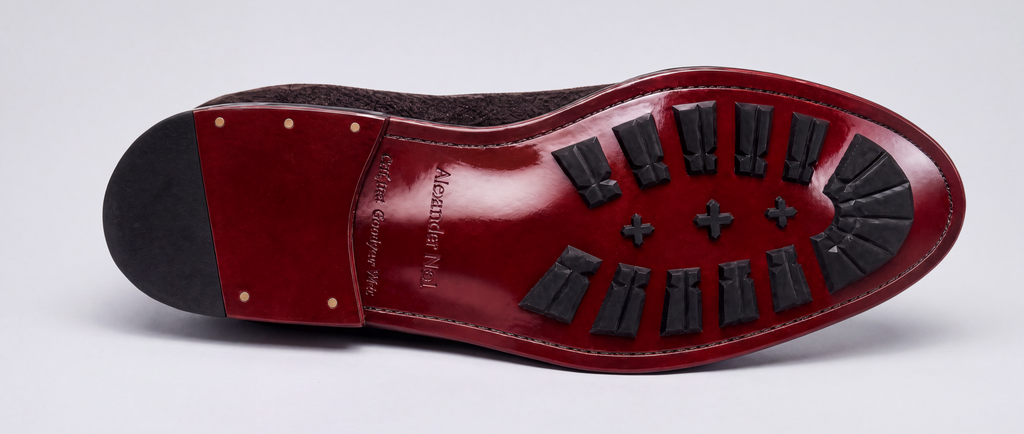
Goodyear welted construction is different. A leather welt is stitched to the upper and insole, creating a cavity filled with cork for support. The sole is then attached to that structure. In premium black suede loafers, this method offers up to 30% better water resistance than cemented soles and allows multiple resoling cycles, typically 3 to 5 times over 10+ years, according to the construction notes on the Loake Imperial Black Suede product page.
Practical rule: If you want a loafer for occasional use, a simpler construction may be enough. If you want a pair to live in for years, construction should be one of your first questions.
Finish shows the hand behind the shoe
Here, craftsmanship becomes visible.
Check the stitching around the apron. Look at how neatly the upper meets the sole. Notice whether the opening sits cleanly around the foot or gapes. The finest loafers don’t rely on decoration. They rely on balance.
A good finish usually includes:
| Element | What to look for |
|---|---|
| Apron stitching | Even spacing and clean tension |
| Edge finishing | Smooth, precise, not rough or bulky |
| Sole join | No sloppy glue marks or misalignment |
| Shape | A last that looks intentional, not generic |
A quality suede black loafer should feel composed. Not flashy. Not fragile. Just well made.
How to Style Suede Black Loafers for Men and Women
The appeal of suede black loafers is simple. They can dress down formal attire and dress up casual ones.
That makes them more useful than many shoes people buy for one narrow purpose. If you keep the rest of the outfit balanced, they’ll move across dress codes with very little effort.
Suede Black Loafer Styling Guide
| Occasion | Men's Style | Women's Style |
|---|---|---|
| Office or business casual | Navy or charcoal trousers, fine knit polo or button-down, black belt, suede black loafers | Cropped tailored trousers or a midi skirt, soft blouse or knit, structured bag, suede black loafers |
| Smart casual dinner | Dark denim, unstructured blazer, open-collar shirt, loafers without heavy contrast | Straight-leg black jeans, silk top or fitted knit, long coat, suede black loafers |
| Weekend city wear | Chinos, crewneck sweater, lightweight jacket | Wide-leg jeans, simple sweater, relaxed blazer |
| Evening look | Dark suit with minimal break at the trouser hem, suede loafers to soften the formality | Black dress, tailored jumpsuit, or fluid trousers with a sharp jacket |
For men, texture does the heavy lifting
Suede responds well to matte fabrics. Wool trousers, brushed cotton, cashmere, and dark denim all work because they share a similar visual softness.
A black suede loafer with a structured worsted suit can work, but it looks best when the tailoring is a bit less severe. Think softer shoulders, textured cloth, and a trouser hem that doesn’t puddle over the vamp.
If you’re unsure about trousers and shoe color combinations, this shoe color matching guide is a useful reference point.
For women, the loafer can anchor or relax a look
Here, the shoe becomes especially versatile.
With sharp trousers and a tucked blouse, suede black loafers read polished and professional. With jeans and a relaxed knit, they keep the outfit from drifting into “just casual.” With a dress or skirt, they add a refined touch that feels modern rather than precious.
Three combinations work especially well:
- Structured and clean: Black cropped trousers, ivory blouse, loafer, minimal jewelry.
- Soft and architectural: Wide-leg denim, black sweater, long wool coat, loafer.
- Evening but grounded: Satin skirt or fluid black dress with suede loafers instead of heels.
Suede loafers are often most effective when they lower the temperature of an outfit just slightly. They make formal clothing easier to wear.
Common styling mistakes
A few pairings make the loafer harder to pull off.
- Overly shiny clothing: Patent-like finishes can clash with suede’s matte surface.
- Too much volume at the hem: If trousers swallow the shoe, the shape disappears.
- Very sporty pieces: Performance joggers or technical outerwear usually fight the loafer’s refined line.
Keep the outfit coherent. The shoe doesn’t need much help.
Protecting Your Investment Suede Care Made Simple
People often avoid suede because they assume it’s delicate. In practice, suede responds well to steady, simple care.
The trick is not to wait until the shoe looks tired. A light routine keeps the nap clean, the color even, and the shape more polished over time.

Prevention first
Start before the first full day of wear.
Use a suede protector appropriate for dark suede and apply it evenly. Let the loafers dry fully before wearing them outside. This first step won’t make suede invincible, but it does give you more time to react if moisture or dirt lands on the surface.
Store them with shoe trees if you have them. If not, keep them upright and away from dust and direct heat.
A simple routine that works
You don’t need a long list of products. You need consistency.
- After wear: Let the shoes air out before putting them away.
- Every few wears: Brush the nap gently with a suede brush to lift the surface and remove dust.
- After exposure to light moisture: Allow the pair to dry naturally, then brush again once dry.
If you need a deeper walkthrough, this guide on how to remove stain from suede covers the process in more detail.
When stains or weather get involved
Don’t panic and don’t scrub aggressively. That’s where most damage happens.
For stubborn marks or for a pair that needs more than home maintenance, a professional cleaner familiar with delicate materials can help. If you’re looking for a general garment and fabric-care resource, these dry cleaning services offer a useful example of the kind of professional care many people turn to for specialty items.
This short video gives a practical visual reference for maintenance:
Let the shoe dry on its own. Heat dries suede too fast and can leave the surface looking hard or uneven.
Suede care isn’t complicated. It’s just a habit. A few minutes of attention keeps the loafers looking intentional instead of neglected.
Why Fit is Everything in a Suede Loafer
A loafer doesn’t give you much room for error.
With a lace-up shoe, you can tighten the fit across the instep or ease pressure in one area. With suede black loafers, the fit has to be right from the start because the shoe depends on shape, pattern, and last design to stay secure.
Why suede changes the fitting equation
Suede has more give than smooth leather. That sounds helpful, and sometimes it is, but it also means sloppy sizing gets exposed quickly.
According to the sizing guidance in Prada’s suede loafer notes, suede stretches 5 to 10% more than smooth leather, and for in-between fits, sizing down 0.5 US sizes is often recommended to reduce heel movement. The same guidance notes that heel slippage can reach up to 1 cm in the first 10 wears, while precision at-home tracing systems can reduce fit-related returns by up to 40%. You can see those details on the Prada suede loafers page.
What a proper fit should feel like
A good suede loafer should feel close, but not punishing.
Use this checklist:
- At the heel: A slight initial grip is good. Repeated lifting isn’t.
- At the instep: Secure contact matters. If the top line floats, the shoe is too loose.
- At the forefoot: Your toes should sit naturally, not splay from pressure.
- During walking: The shoe should move with the foot, not lag behind it.
Many people make the mistake of buying loafers the way they buy sneakers. That usually leads to too much space, then more slipping once the suede relaxes.
Why standard sizing often fails
Feet aren’t standard. Retail sizing assumes they are.
Some people need more room at the ball of the foot but not at the heel. Others have high arches, low-volume feet, or one foot slightly larger than the other. Slip-on footwear makes those differences more noticeable because there’s no lacing system to compensate.
If you’re unsure where your own fit problem starts, this guide on how to fit shoes properly is a practical place to start.
The biggest fitting lesson is simple. Don’t judge a loafer only by how it feels standing still for thirty seconds. Walk in it. Pay attention to heel motion, instep pressure, and forefoot shape. Those three areas decide whether the pair becomes a favorite or stays in the closet.
Designing Your Own Suede Black Loafers
Ready-to-wear loafers give you a finished answer. Custom design lets you ask better questions first.
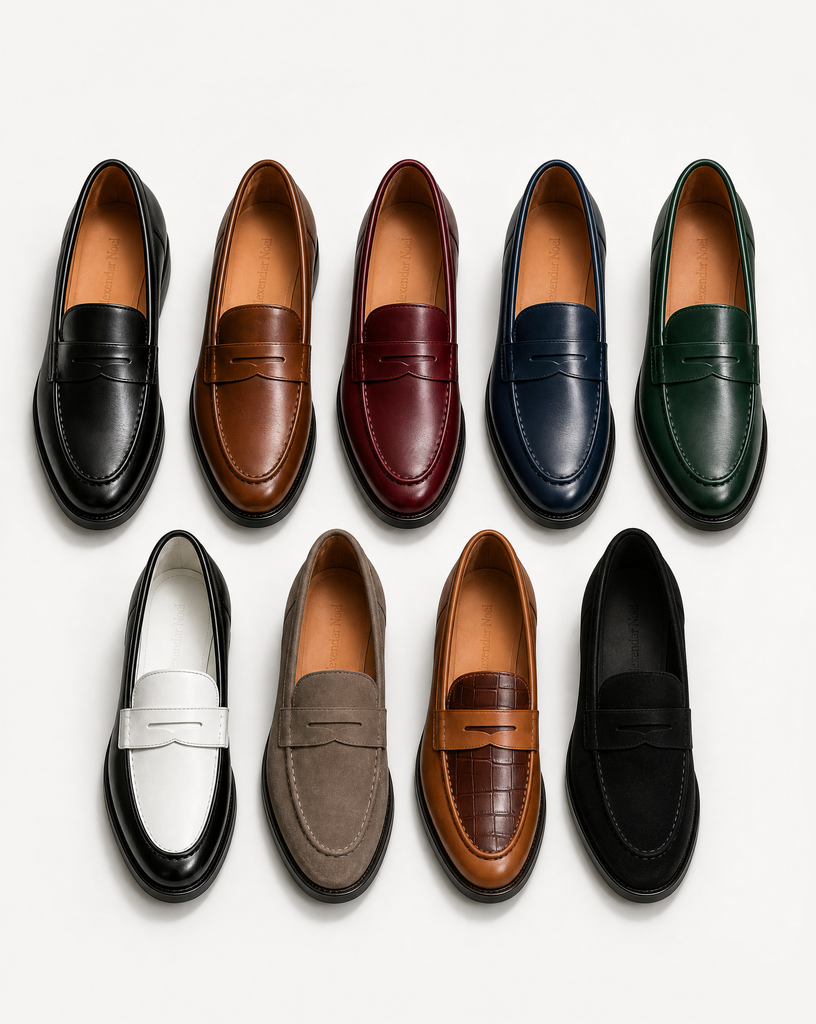
Do you need a cleaner Venetian line or a more traditional penny shape. Do you prefer a sharper profile or a roomier forefoot. Do you want a leather sole for elegance, or a rubber sole for more grip in daily use. Those decisions change how the shoe looks and how it lives with you.

Why custom becomes relevant so quickly
Most online content about suede loafers focuses on ready-to-wear shopping. That leaves a major gap for people with fit challenges. According to the market summary tied to suede loafer retail coverage, 30% of luxury buyers report fit issues, and custom-made options can increase shoe longevity by 2 to 3x compared with ill-fitting mass-market pairs. Those findings are summarized alongside retail coverage on Nordstrom’s suede loafer category page.
That gap matters because a loafer is unforgiving. If the last doesn’t suit your foot, even a beautiful pair won’t earn regular wear.
What to customize
When someone designs suede black loafers for themselves, the useful choices usually fall into a few categories:
- Last shape: This affects toe room, instep hold, and the overall silhouette.
- Upper details: Penny strap, plain vamp, apron shape, and edge treatment all change the character.
- Sole choice: Leather feels more refined. Rubber often adds practicality.
- Personal accents: Lining color, stitching tone, and subtle texture changes can make the shoe feel distinctly yours.
One tool that supports this process is the Alexander Noel guide on how to design shoes, which shows how a digital design process can help shoppers think through material, fit, and finishing choices before production.
Tradition and technology can work together
Custom footwear doesn’t have to feel mysterious.
A modern design interface can help you visualize choices clearly, while artisan production handles the difficult part: translating those choices into a balanced shoe. That combination is especially useful for people who know exactly what they dislike about off-the-rack loafers but haven’t had a way to fix it.
For suede black loafers, customization isn’t about excess. It’s about removing compromise.
Your Final Checklist and Common Questions
A good purchase gets easier when you know what to check. Suede black loafers reward patience more than impulse.
Buying checklist
- Check the construction: If the pair is meant for long-term wear, ask how the sole is attached and whether the shoe can be resoled.
- Inspect the suede closely: Look for a consistent nap, clean finishing, and shape retention through the vamp.
- Treat fit as the first priority: A loafer that slips or pinches won’t improve just because the style is attractive.
- Think about use: Office wear, travel, evening use, and weekend wear may point you toward different sole and shape choices.
- Consider customization if standard sizing keeps failing: This matters most for wide feet, high arches, or in-between sizes.
Common questions
Can I wear suede black loafers with a suit
Yes, if the suit isn’t overly rigid. They look especially good with textured tailoring and cleaner trouser hems.
Socks or no socks
Both work. For a cleaner warm-weather look, many people prefer no-show socks. For office wear, fine dark socks usually look more composed.
Are they only for mild weather
No, but they do prefer care and common sense. Dry days are easiest. Light moisture is manageable if you maintain them properly.
Why do loafers still feel current
Because they’ve already survived several style eras. In the American market, loafers gained commercial traction in 1934 with G.H. Bass & Co.’s Weejuns, and a 1936 ad in the New York Herald Times, combined with Esquire promotion, helped place the style firmly in American culture before it later became popular with Ivy League students in the 1950s and 60s, as noted in this brief history of loafers from Cheaney.
The point isn’t nostalgia. It’s usefulness. Few shoes have stayed relevant that long without solving a real problem for the wearer.
If you’re ready to move beyond standard sizing and build a pair around your own fit, style, and daily use, explore Alexander Noel. Their custom footwear approach lets you choose materials, details, and design direction with a made-to-order process focused on personalized fit.
Related post
12
Sep
12
Sep
12
Sep
29
Aug
