

RECENT POSTS

29.August.2026
Custom Women's Boots for Fall: Choosing Between Two Black Chelsea Silhouettes
0 Comments















How to Remove a Stain from Suede: An Artisan's Guide
When you discover a stain on your favorite suede, the key is to act with precision and a gentle touch. Think of a suede brush and a dedicated suede eraser as your first line of defense, much like an artisan selects the perfect tool for a delicate task. Speed is your best defense, as the porous nature of suede means liquids soak in and set quickly. For any fresh spill, always blot, never rub. Certain household items can also be lifesavers—think cornstarch for an oily mishap or a bit of white vinegar for those dreaded water marks. This guide is crafted to empower you, blending the time-honored techniques of our global artisan partners with the practical knowledge you need to care for your cherished footwear.
Why Suede Requires Special Care
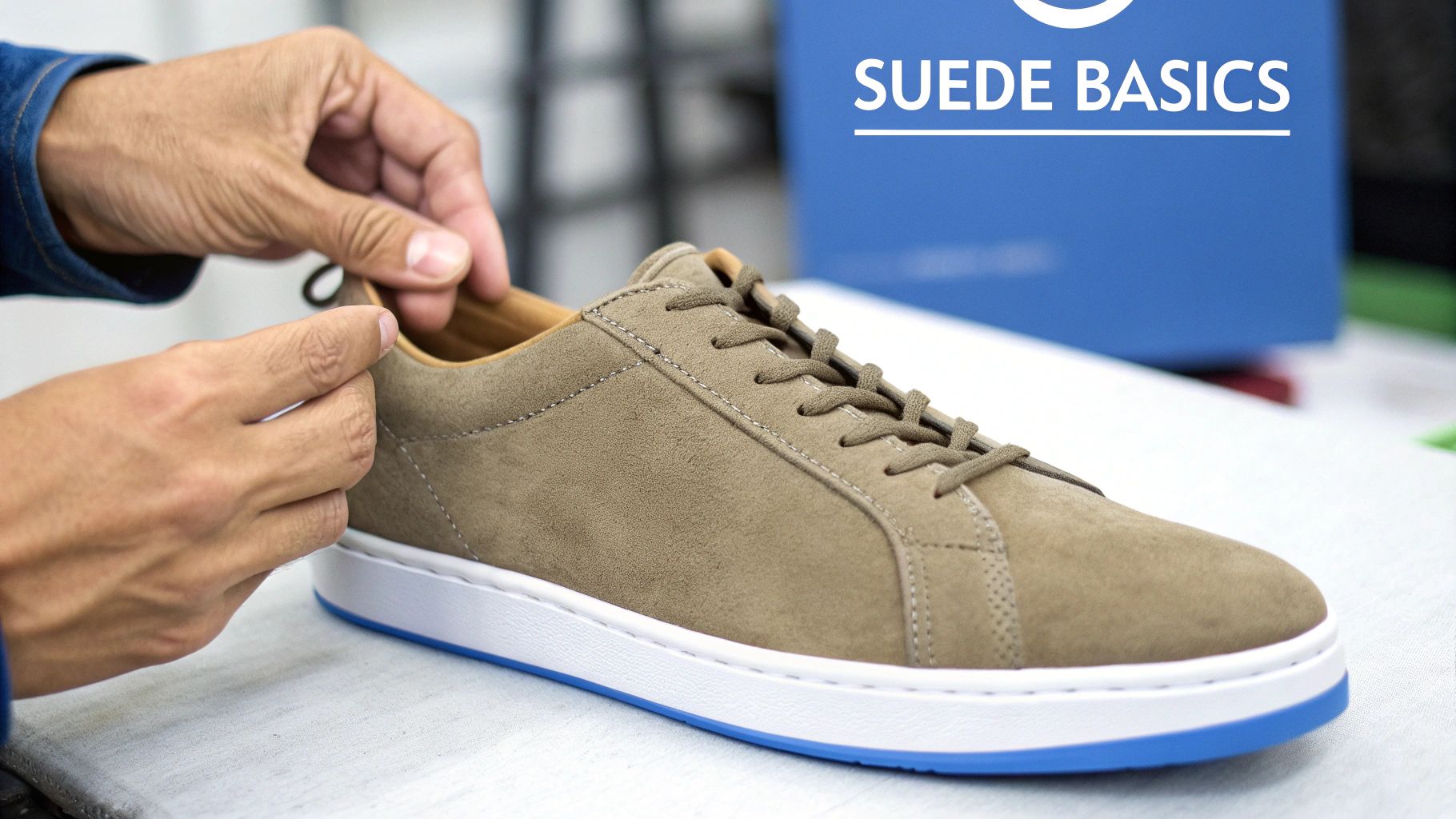
Before you begin cleaning, it’s essential to understand what makes suede so unique. Unlike the smooth, tough outer layer of traditional leather, suede is crafted from the softer, inner split of the hide. This is what gives it that signature velvety nap, but it’s also what makes it so absorbent and delicate.
Imagine the surface as a landscape of tiny, upright fibers. When a liquid hits—whether it's water, wine, or oil—it doesn't just sit on the surface. It gets trapped between those fibers, quickly leading to discoloration and a matted, flattened look.
This is exactly why the cleaning methods you’d use on standard leather can be disastrous for suede. A simple soap and water scrub will flatten that beautiful nap, create permanent water spots, and strip the material of its essential natural oils, compromising the quality craftsmanship.
The Artisan Approach to Stain Removal
Our artisans, who handle this beautiful material every day, approach stain removal with a watchmaker's precision and a very gentle hand. The foundational principle is to always lift the stain out from the fibers, not push it deeper.
This means we always start with dry methods first, bringing in minimal moisture only when absolutely necessary. As you learn the basics of suede care, it’s helpful to look at the different cleaning processes for delicate materials that are specifically designed to avoid the damage that harsh soaps and excessive water can cause.
The real secret to saving your suede is patience and matching the right technique to the specific stain. Rushing or grabbing the wrong tool is the fastest way to turn a small spot into a permanent problem.
To get you started, here are a few non-negotiable rules our experts swear by:
- Act Immediately: The longer a stain sits, the deeper it works its way into the suede's fibers. Time is not your friend here.
- Always Blot, Never Rub: Rubbing a fresh spill only spreads the mess and grinds it into the material. Gently blot with a clean, dry cloth to absorb as much as you can.
- Work in a Well-Ventilated Area: Whether you're just brushing or using a cleaning solution, good airflow helps the suede dry properly and clears out any fumes.
- Test on an Inconspicuous Spot: Before you go all-in on a visible stain, always test your cleaner or technique on a hidden part of the shoe, like inside the heel area.
Suede is just one of many premium materials we work with. To see how each element contributes to a bespoke shoe, you can learn more about the many leathers and fabrics of Alexander Noel and see how each one plays a part in a truly custom design.
Assembling Your Suede Care Toolkit
The secret to keeping your suede pristine isn't a complicated ritual; it's simply being prepared. Just as our artisans use specific tools to craft your bespoke shoes, you need a small, curated toolkit to preserve them. This isn’t about buying dozens of products. It’s about having the right ones on hand—a smart mix of professional-grade gear and a few surprisingly effective items you may already own.
The Must-Have Professional Tools
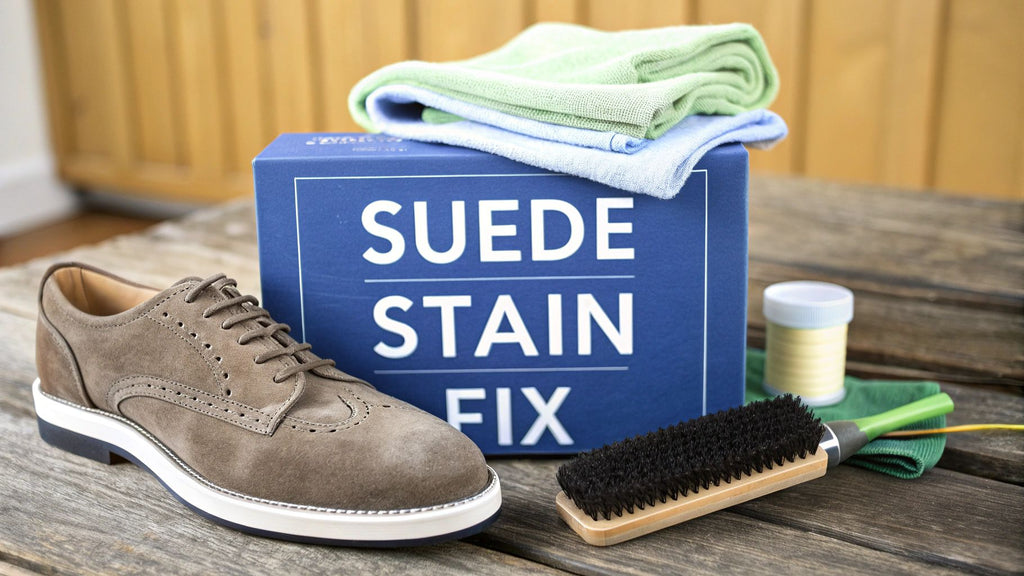
Your first line of defense is a proper suede brush. This is a non-negotiable. Look for a combination brush with soft bristles (often brass or nylon) on one side to gently lift away light dirt and revive the nap. The other side will usually have a firmer crepe or rubber block, perfect for working out more stubborn dry marks. It’s the essential daily grooming tool for your footwear.
Next up is a suede eraser. Think of this as a magic wand for scuffs, shiny spots, and small, dry stains. As you rub it over a blemish, it crumbles slightly, lifting the mark away from the delicate fibers without causing damage. It’s the perfect tool for catching localized spots before they set.
Household Heroes for Quick Action
Sometimes, the best solution is sitting right in your kitchen pantry. These items are perfect for those heart-stopping "just happened" moments when you need to act fast.
- Cornstarch or Talcum Powder: Absolute lifesavers for fresh liquid or oil spills. If you get a greasy drop on your shoe, blot the excess immediately—don't rub!—and cover the spot generously with the powder. Let it sit for a few hours; the powder will literally pull the oil right out of the suede.
- White Vinegar: An old-school remedy that works wonders on mineral-based stains, like salt lines from winter slush or faint water marks. Just a small amount on a clean cloth can dissolve the residue without any harsh chemicals.
- Micellar Water: Yes, the same product used for skincare. Its gentle cleansing agents can be surprisingly effective on light dirt. Apply a small amount to a cotton pad and gently dab the stain.
Suede's delicate nature is exactly why this specialized care matters. In fact, over 70% of suede buyers worry about cleaning effectiveness, which is why many now opt for specialized foam or liquid cleaners. You can find more data on suede cleaning equipment and consumer preferences that shows a clear trend away from risky DIY detergents.
Preparedness is the entire goal of your toolkit. Whether it's a professional eraser for a minor scuff or cornstarch for a kitchen mishap, having these items ready means you can act with confidence the moment a stain appears.
While you can easily build this collection yourself, a pre-assembled kit is often the most straightforward approach. For a perfectly coordinated set, check out our guide on the best shoe care kits. It will help you find an all-in-one solution with everything you need to protect your investment.
Tackling Common Suede Stains Head On
We've all had that heart-stopping moment—a sudden spill on a prized pair of suede shoes. Whether it's a splash of rainwater or a rogue drop of olive oil, knowing the right technique can make all the difference. This is where we put theory into practice, addressing each common stain with the precise, gentle approach of a seasoned artisan.
The basic process involves a few key tools, starting with the least invasive method and only escalating as needed.
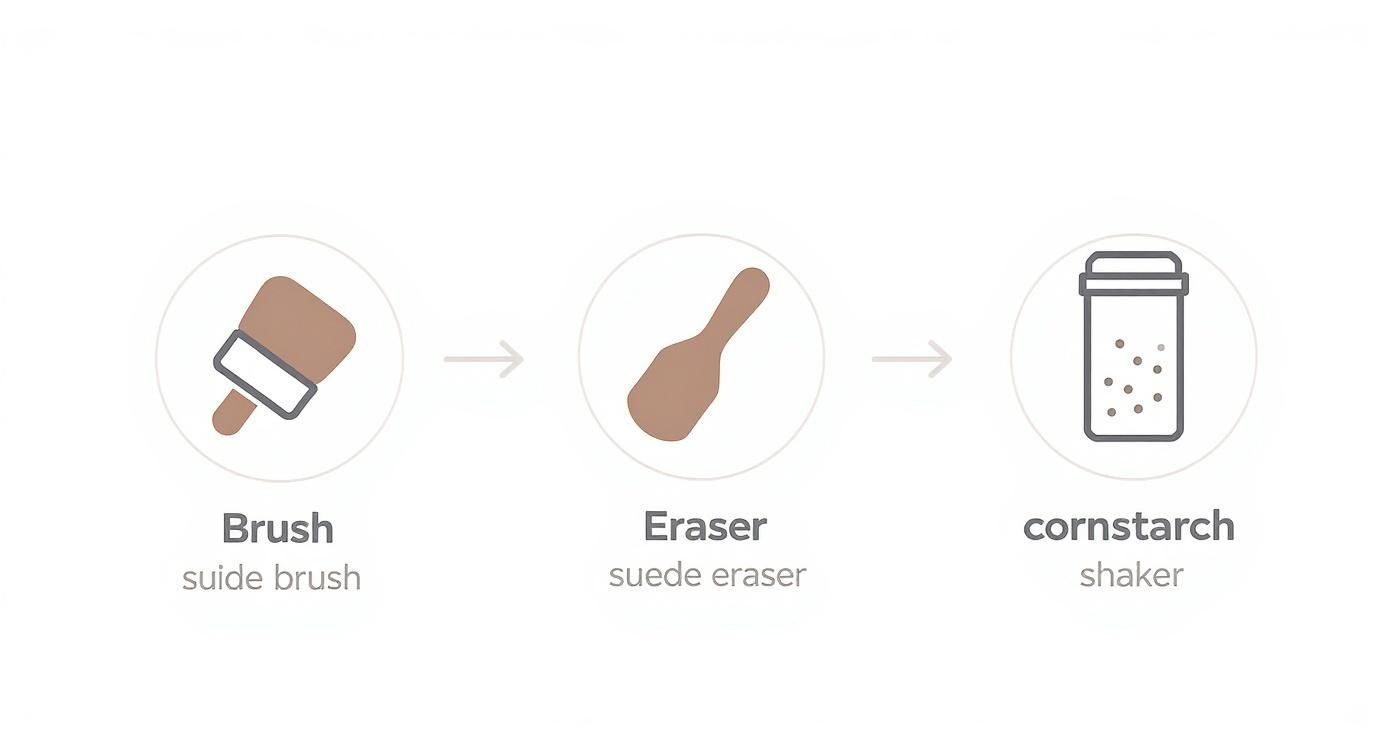
As you can see, you always start with a gentle brush, move to an eraser for scuffs, and use an absorbent powder for any liquid mishaps.
Managing Water Marks and Rain Spots
Ironically, the best way to handle a water stain is with a bit more water—applied correctly. If you're caught in a downpour, you’ll likely see dark spots or a distinct "tideline" once the suede dries. Resist the urge to panic and rub the spot; that will only make it worse.
Instead, take a clean, damp cloth (not soaking wet) and gently blot the entire shoe or panel of suede. Your goal is to create an even, light layer of moisture. This helps blend the original water stain into the surrounding area, preventing a hard edge from forming as it dries. Stuff the shoes with paper to hold their shape and let them air dry completely, far from any direct heat.
Erasing Oil and Grease Spills
Oil is suede's arch-nemesis, but a quick response can save the day. Picture a drop of salad dressing landing on your loafer. Your first move is to blot any excess oil immediately with a clean, dry cloth.
Next, generously cover the entire stain with cornstarch or talcum powder. Don't be shy. The powder’s job is to absorb the oil, pulling it up and out of the suede fibers. Let it sit for at least four hours, or even overnight for a more serious spill. Finally, use your suede brush to gently sweep away the powder. You might need to repeat this for a particularly stubborn spot.
Defeating Dirt and Mud Stains
The single most important rule for mud is to let it dry completely. Trying to wipe away wet mud will only smear it deeper into the suede's nap, creating a much bigger problem. Once the mud is hard and flaky, you can gently break off the larger pieces.
After that, take your suede brush and vigorously—but carefully—brush away the remaining dried dirt. If any discoloration lingers, a suede eraser can help lift the last traces of the stain from the fibers. Always finish by brushing the nap back into its original, uniform direction.
Patience is the most underrated tool in suede care. Rushing the process, especially with mud or water, is what leads to permanent damage. Give the material the time it needs to dry and respond to treatment.
Handling Tougher Stains Like Ink or Wine
For more aggressive stains, like a pen mark or a drop of red wine, you’ll need to step up your approach slightly. White vinegar or rubbing alcohol are effective here because they can help dissolve the stain without leaving a residue the way water can.
Here’s the method:
- Lightly dampen a clean, white cloth with either white vinegar or rubbing alcohol.
- Gently dab the stain, being very careful not to soak the suede. The goal is to lift the pigment, not spread it around.
- Let the area dry completely.
- Once it's dry, use your suede brush to fluff the nap and restore its original texture.
For broader tips and tricks, you can always explore additional stain removal guides. While we focus on what works best for our handcrafted footwear, these resources offer other valuable perspectives. After you’ve successfully removed a stain, it's a great time to refresh your knowledge on https://www.shopalexandernoel.com/blogs/shoe-talk/alexander-noel-making-your-suede-shoes-look-brand-new to keep them in pristine condition.
Drying and Restoring Suede's Signature Texture
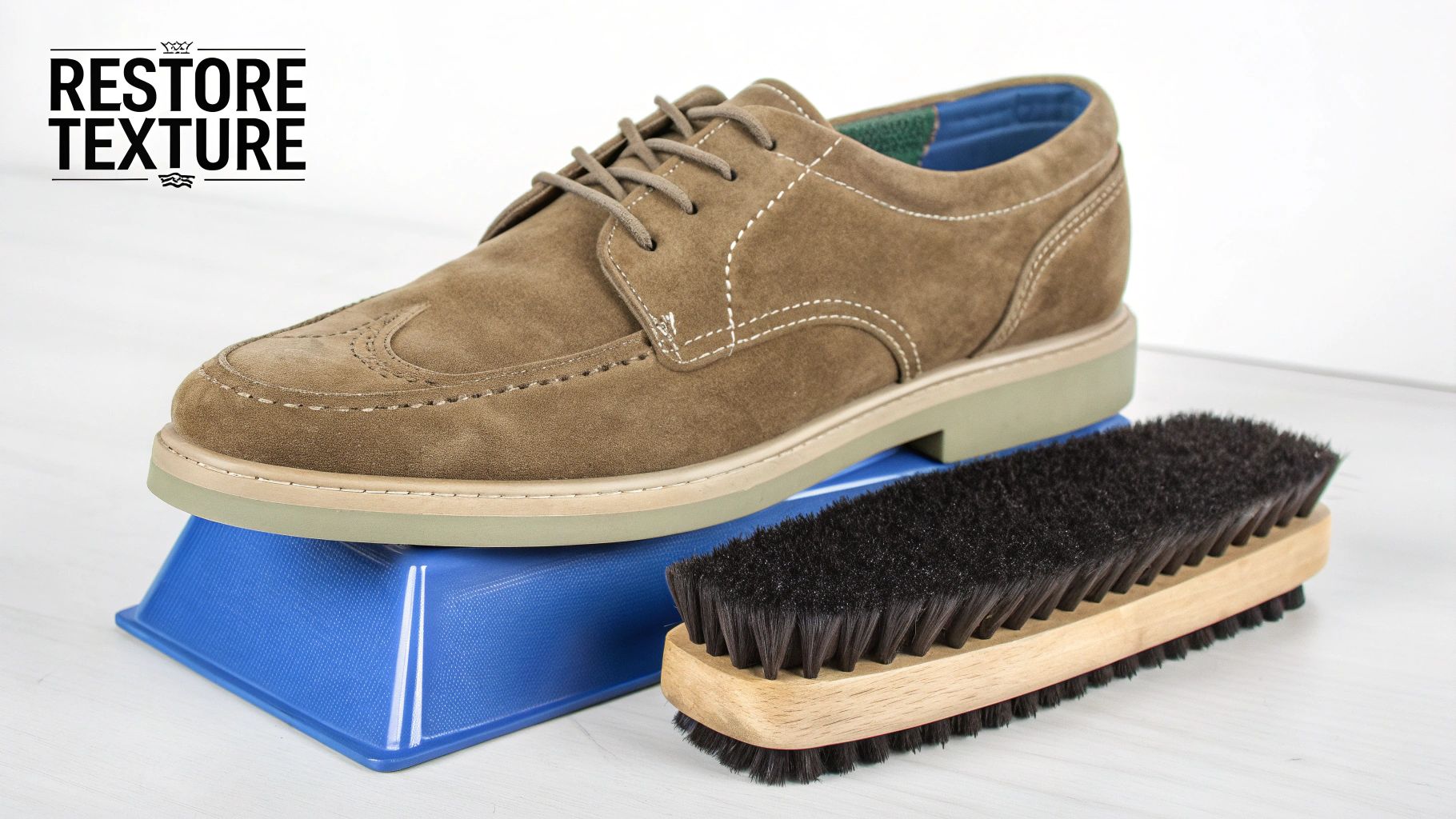
Successfully lifting a stain is only half the battle. The next part of the process—drying—is what truly brings your bespoke footwear back to its original, luxurious state. This is where so many well-intentioned cleaning efforts go wrong, but a little patience makes all the difference.
The number one rule? Avoid direct heat at all costs. It's tempting to grab a hairdryer or set your shoes near a radiator for a quick fix, but this is a surefire way to cause permanent damage. Intense heat dries the leather out too quickly, leaving it stiff, brittle, and prone to cracking.
The Art of Air-Drying Suede
The only safe way to dry suede is the old-fashioned way: slow, natural air-drying. Find a spot in a room with good air circulation, well away from direct sunlight and heat vents. This gentle approach allows moisture to evaporate evenly, preserving the suede's delicate structure and supple feel.
To help your shoes keep their custom shape while they dry, using shoe trees is a must.
- Cedar Shoe Trees: These are the gold standard. They don't just hold the shoe's form perfectly; the cedar also naturally absorbs any leftover moisture and neutralizes odors.
- Acid-Free Paper: If you don't have shoe trees on hand, loosely stuffing your shoes with acid-free paper or plain white tissue paper is a solid alternative. Just be sure to avoid newspaper, as the ink can easily bleed onto the suede.
This careful drying process is a hallmark of professional care. The market for specialized suede cleaning equipment is projected to hit USD 0.99 billion by 2033, which shows just how vital the right tools are for proper maintenance. Data reveals that using the correct materials and techniques can restore up to 80% of a suede item's appearance after a stain. You can find more details on cleaning suede with the right methods on vonbaer.com.
Rushing the drying phase is like sprinting the last mile of a marathon only to trip at the finish line. Give your footwear at least 24 hours to dry completely before you even think about the next step.
Reviving the Velvety Nap
Once your shoes are completely dry to the touch, you'll probably notice the area you cleaned looks a bit flat or matted. Don't worry, this is perfectly normal. The final, restorative step is to bring that signature velvety texture—what we call the "nap"—back to life.
Grab your clean suede brush and start brushing the entire shoe, not just the treated area. Use light, circular motions at first to gently lift the tiny, flattened fibers. After a few passes, switch to brushing in a single, consistent direction. This creates that uniform, flawless finish that separates a good repair from a great one and echoes the finishing process our own artisans use.
Proactive Care to Protect Your Suede
The best way to deal with a stain on suede is to prevent it from ever happening. This shift from reactive cleaning to proactive care is the cornerstone of maintaining luxury footwear. It puts you in charge of your handcrafted items, ensuring the investment you made in a personalized design truly lasts.
Your first, most critical move is to apply a high-quality suede protector spray. Think of it as an invisible shield for your shoes. It creates a barrier that repels water and stops oils from soaking into those delicate fibers. A good protector won’t change the color or the signature velvety feel of the suede.
Applying Suede Protector Correctly
To get the most out of your protector spray, technique matters. Rushing this step can lead to patchy coverage and vulnerable spots.
- Start with a Clean Slate: Always apply protector to brand new or freshly cleaned and completely dry shoes.
- Keep Your Distance: Hold the can about six to eight inches away from the suede. This ensures a fine, even mist instead of a drenching spray.
- Light Coats are Key: Use a smooth, sweeping motion to cover the entire surface with a light, even layer. Let it dry for at least an hour before applying a second coat. Two thin coats are always better than one thick one.
Think of suede protector like a high-quality wax on a car. It doesn't make it invincible, but it provides a crucial layer of defense that makes cleaning up any future mishaps significantly easier and more effective.
Building a Simple Maintenance Routine
Beyond initial protection, a consistent maintenance routine will keep your suede looking fresh. It’s a simple rhythm that pays off big time.
A light, regular brushing with a suede brush—perhaps once a week—lifts surface dust and revives the nap before it gets matted down.
Proper storage is also a huge part of preservation. Keep your suede shoes in a cool, dry place, away from direct sunlight that can cause fading. Using breathable dust bags is ideal, as they prevent dust buildup while allowing the material to breathe. This is far better than plastic containers, which can trap moisture and cause damage.
This kind of preventative approach is catching on. The global Stain Remover Products Market is projected to grow to USD 38.4 billion by 2033. A big part of that growth is a shift toward eco-friendly agents for delicate materials like suede, driven by stricter environmental regulations. You can read more about the growth in demand for specialized cleaning agents on market.us. By adopting these simple habits, you're ensuring your bespoke creations stay pristine for years to come.
When to Call in a Professional Cobbler
While this guide should give you the confidence to tackle most everyday spills and scuffs, a huge part of responsible shoe care is knowing when to step back. We want to empower you, but we also believe in giving honest advice. Sometimes, the best move you can make to save your handcrafted shoes is to let an expert take the lead.
Figuring out those moments is the key to preserving the soul of your bespoke footwear. Certain stains carry a much higher risk of permanent damage if you try to fix them at home, especially when you're dealing with a one-of-a-kind, custom design. If you're facing one of these tough spots, it’s probably time to find a professional.
When a Stain Needs an Expert Eye
Not all stains are created equal. Some are just too stubborn or tricky for at-home methods.
- Old, Set-In Stains: If a stain has been sitting for weeks or even months, it has likely bonded deep into the suede fibers. Getting it out requires specialized solvents and techniques that just aren't in the typical home toolkit.
- Delicate or Light-Colored Suede: Dyes in materials like a pastel pink or a clean cream suede are incredibly sensitive. They can easily become discolored from cleaning agents, even gentle ones like vinegar. A professional has the skill to color-match and treat the spot with absolute precision.
- Extensive Damage: Did an entire glass of red wine go over your shoe? A simple spot treatment isn’t going to cut it. A good cobbler has methods for deep cleaning the entire shoe to guarantee a consistent, even finish.
- Unknown or Chemical Stains: If you've got a spill from paint, permanent marker, or some other harsh chemical, you need a professional diagnosis. The wrong move here could make the problem ten times worse.
Trusting a professional with a difficult stain isn't admitting defeat; it's a smart decision to protect your investment. A skilled artisan has access to tools and knowledge that go far beyond a home care kit, ensuring the best possible outcome for your cherished footwear.
Finding a reputable leather care specialist is everything. Look for a local cobbler who has real, hands-on experience with suede and other luxury materials. Don't be shy about asking about their process for your specific type of stain before you hand over your shoes. For a little help on finding the right craftsperson, our article on locating specialists for custom made shoes near me offers some great insights on what to look for.
At Alexander Noel, we believe in the longevity that comes with true craftsmanship. Our Design Lab gives you the power to create the perfect shoe, and our guidance is here to help you care for it for years to come. Explore our collections and begin your own bespoke journey today.
Related post
12
Sep
12
Sep
12
Sep
29
Aug
