

RECENT POSTS
29.August.2026
Custom Women's Boots for Fall: Choosing Between Two Black Chelsea Silhouettes
0 Comments



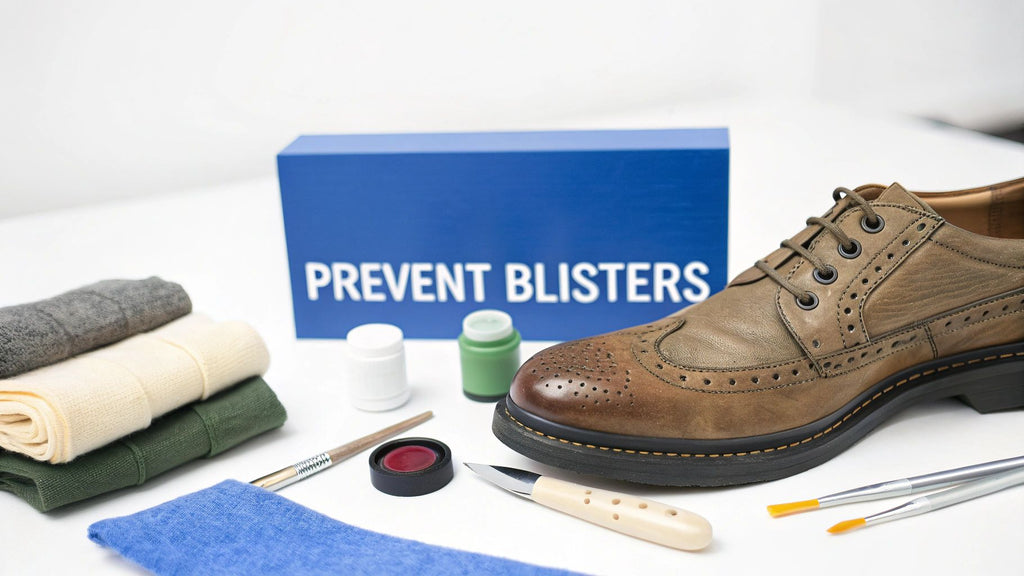
How to Prevent Shoe Blisters for Good
There's nothing quite like the sharp, stinging pain of a new blister to ruin your day, whether you're closing a deal or celebrating a milestone. If you want to know how to prevent shoe blisters for good, you must address the root causes: intense friction, constant pressure, and excess moisture. Master these three elements, and you're on your way to pain-free feet.
Why Shoe Blisters Happen and How to Stop Them
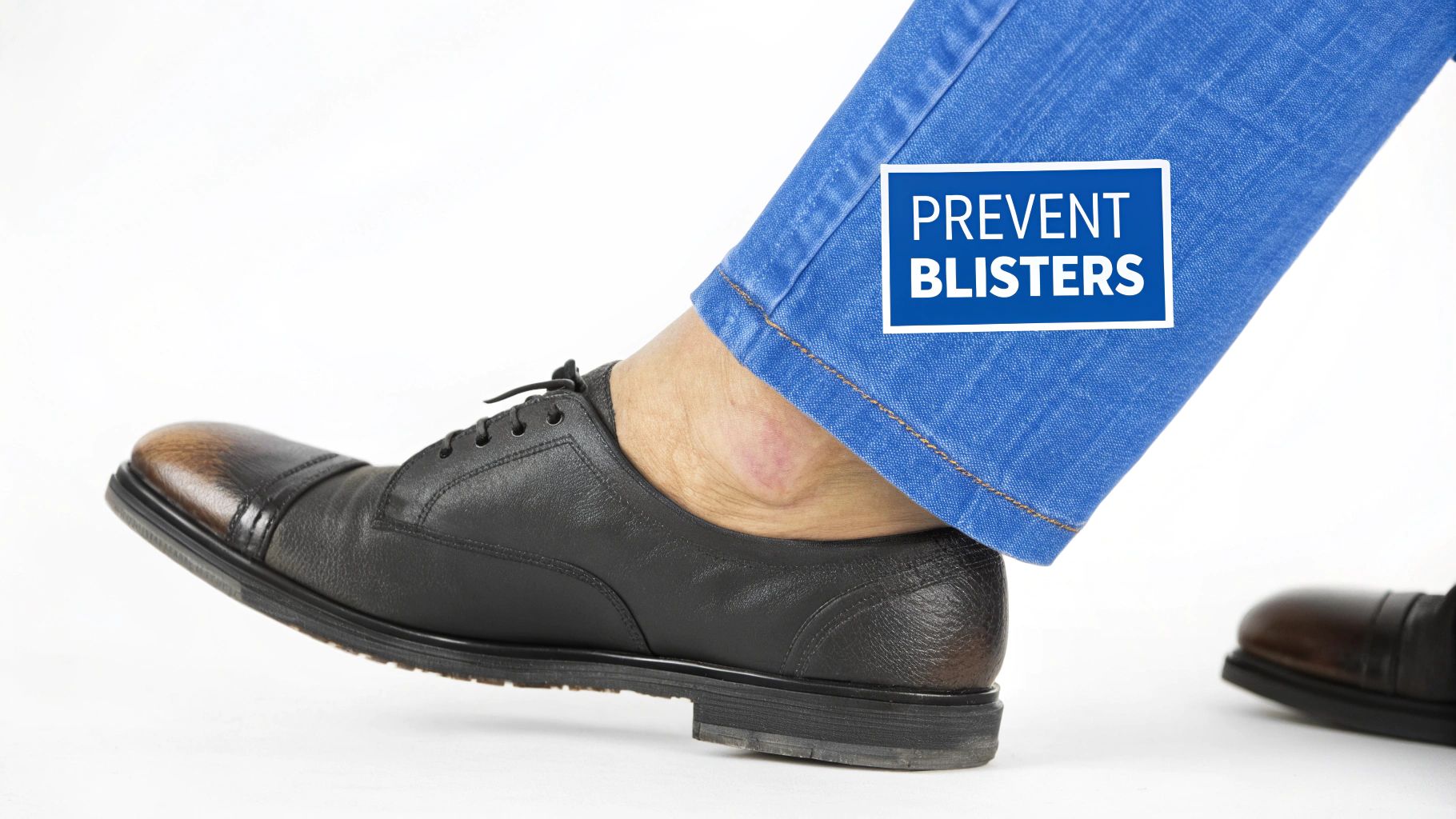
Blisters aren't just a minor annoyance—they're your body's emergency defense system. When a spot on your skin is rubbed the wrong way repeatedly, the outer layer separates from the inner layers. Your body rushes fluid into that gap, creating a cushion to protect the raw tissue from further damage while it heals.
So, what’s causing all this trouble? Almost always, it comes down to ill-fitting shoes. Standard sizing simply can't account for the unique shape and movement of your feet, which inevitably creates "hot spots" where friction is concentrated.
The Science of a Hot Spot
Picture yourself pacing the conference room floor. Those standard-issue dress shoes might have felt fine at first, but they weren't built for your specific arch height or foot width. With every step, your heel slips just a little, or your pinky toe chafes against a stiff seam. That tiny movement, repeated thousands of times, generates heat and friction.
This is what brings the three core causes of blisters together:
- Friction: The repetitive rubbing that slowly wears away at your skin.
- Pressure: A constant force focused on a single point, like the back of your heel or the ball of your foot.
- Moisture: Sweat softens the skin, making it far more vulnerable to tearing from friction.
When these three factors meet, a blister is practically guaranteed. The constant rubbing irritates the skin, the pressure targets the damage, and the moisture weakens your skin's natural defenses.
Preventing blisters is about more than just comfort—it's about maintaining your focus and confidence. It's tough to command a room or enjoy a special occasion when you're distracted by a nagging, painful blister.
This is exactly why a perfect, personalized fit is the only real solution. When you choose footwear made for the exact contours of your feet, you eliminate the very conditions that let blisters form. By blending time-honored craftsmanship with a modern understanding of biomechanics, we get to the root of the problem by creating total harmony between your foot and your shoe. No more gaps for slipping, no tight spots for rubbing—just a supportive structure that moves with you, not against you.
Achieving the Perfect Shoe Fit to Prevent Blisters

Your best defense against blisters starts long before you take a step in new shoes. It begins with the fit. Achieving a truly perfect fit isn't just a good idea—it's the single most effective way to stop the friction that causes blisters in the first place.
It's time to bust a common myth: your shoe size is not a fixed number you’ve had since high school.
Our feet change over time. They swell and shrink based on age, activity level, and even the time of day. A shoe that felt great in the morning can become painfully tight by evening. That's why knowing your current and precise measurements is absolutely critical.
Beyond Standard Shoe Sizing
Standard shoe sizes are just a starting point. They completely fail to account for the unique, three-dimensional shape of your foot.
Imagine an executive pacing a convention center for three days, or a bride hoping to dance all night at her wedding. For them, a good fit isn't a luxury—it's a non-negotiable part of their day.
A truly personalized fit must consider several factors that off-the-rack shoes simply can't:
- Foot Width: Many of us have wider or narrower feet than a standard “D” width, leading to either painful pinching or sloppy, excessive movement.
- Arch Length: This is the distance from your heel to the ball of your foot. It’s arguably more important than overall length because it dictates where the shoe needs to flex.
- Instep Volume: The height of your midfoot can create serious pressure on the top of your foot if the shoe's shape doesn't match yours.
This is where the art of handcrafted, custom footwear truly excels. An at-home fitting system empowers you to capture these nuanced details, ensuring our global artisans build the final shoe for your anatomy, not a generic last.
A shoe tailored to your exact measurements eliminates the tiny micro-movements—the slight slipping of the heel, the constant rubbing of a toe—that create friction hot spots and, eventually, painful blisters.
The Impact of a Precise Fit
The data backs up what many of us have learned the hard way. Ill-fitting shoes are a primary cause of foot problems, with some estimates suggesting they contribute to 40% of foot injuries among professionals.
Studies have shown that while 83% of people using standard-sized shoes got blisters during activity, that number dropped dramatically when they switched to footwear with a precise fit. This growing awareness is causing a major shift in the market, with more people than ever ditching mass-produced discomfort for tailored solutions.
When you take the time to understand your true size and shape, you're investing in more than just a pair of shoes. For a complete walkthrough, check out our guide on how to measure your shoe size at home.
This simple step is the foundation for a blister-free life, letting you move with confidence and comfort, no matter where your day takes you.
How to Break in New Shoes Without Hurting Your Feet
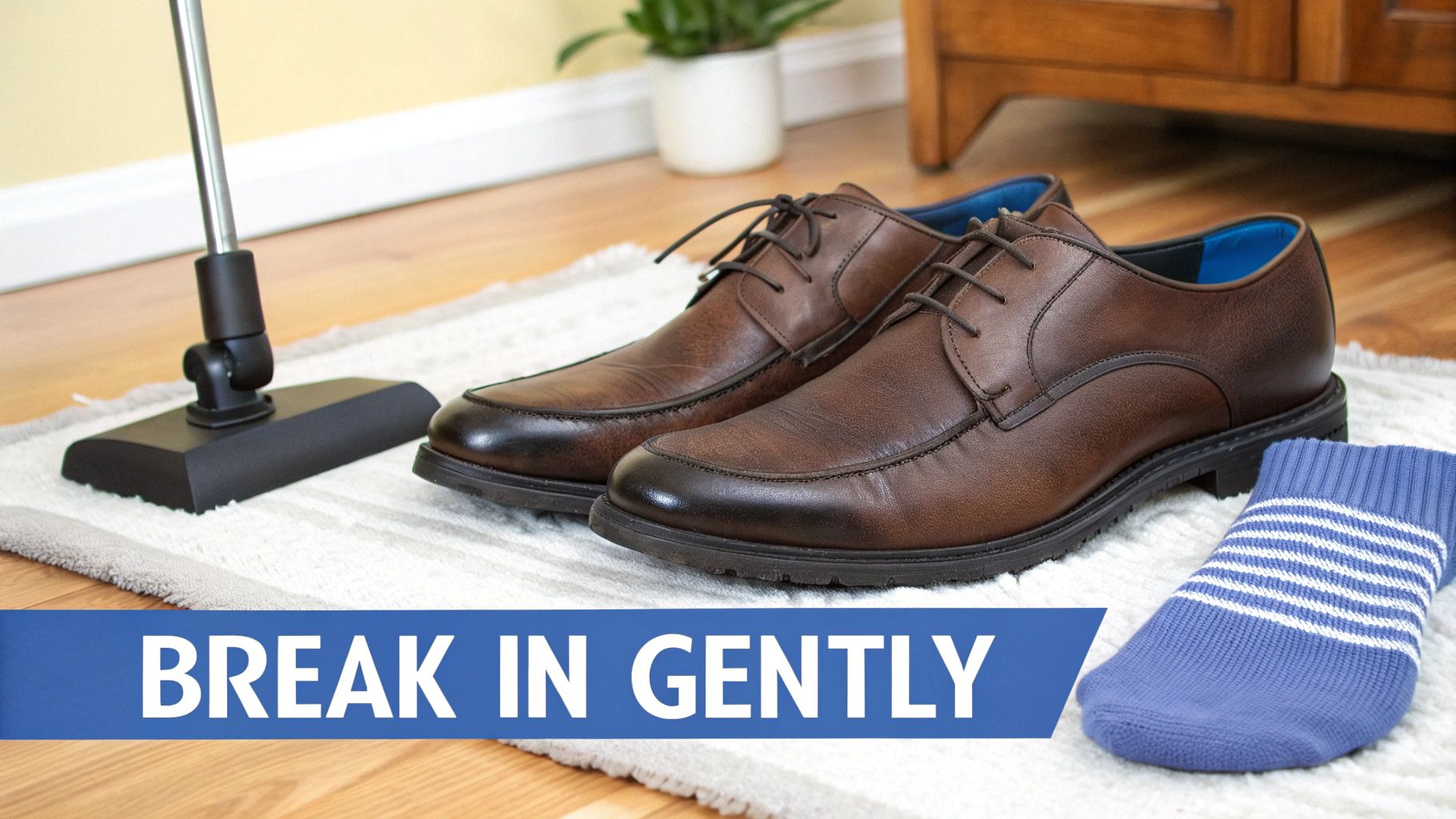
Even the most perfectly crafted shoes need a little time to get acquainted with your feet. The break-in period isn't a trial by fire; it's about gently conditioning premium materials like full-grain leather, allowing them to mold to the unique shape of your foot.
Think of it as the final step in personalization. A bespoke shoe is already built for your anatomy, which makes this process much smoother than with off-the-rack footwear. The goal is simply to let the materials settle into their final, perfect form.
Start the Process at Home
The number one rule for breaking in a new pair of shoes? Start slow, and start indoors.
Wear your new shoes around the house, preferably on a soft surface like a carpet, for short bursts of time. Try 30 to 60 minutes at first. This low-stakes environment lets you check for any potential hot spots or pressure points without committing to a full day of wear and potential pain.
This initial period is critical. It gently warms the leather, making it more pliable and helping it conform to your foot's shape without the stress of walking on hard pavement. After you take them off, give the shoes a full day to rest and let the leather settle.
A few easy ways to approach this:
- Wear them while you're sitting: Just having them on at your desk lets your feet and the shoes begin to adjust.
- Take short walks inside: Once they feel comfortable sitting, start walking around your home for brief periods.
- Pay attention to your feet: The moment you feel any sharp rubbing or pinching, it's time to take them off. Don't push through pain.
The break-in period for a high-quality, handcrafted shoe is a testament to its construction. It’s the final stage of personalization, where the shoe doesn't just fit your measurements—it learns the way you move.
Target Potential Problem Areas
If you notice a specific spot that’s a little too snug, you can be proactive. For a bit of tightness across the width, for example, simply wearing a thicker pair of socks during your indoor sessions can provide just enough stretch to make a difference.
For more stubborn spots, a quality shoe stretcher can work wonders, especially if you're feeling pressure on your toes or instep. And when you're not wearing your new shoes, always slide in a pair of well-made cedar wood shoe trees. They're essential for helping the shoes maintain their ideal shape while also absorbing any moisture.
While we're talking about dress shoes, the core principles apply to all kinds of footwear. This guide on how to break in new running shoes offers some great insights that are valuable for avoiding blisters no matter what you're wearing.
Your Essential Blister Prevention Toolkit
Even the most perfectly fitted pair of shoes can run into trouble. A long day, unexpected humidity, or new terrain can introduce friction where there was none before. Think of your blister prevention toolkit as an insurance policy—a few key items that provide an essential layer of security, making sure you stay comfortable no matter what.
These tools aren't a crutch for poorly made shoes. Instead, they proactively manage the delicate relationship between your skin, your socks, and your fine leather footwear. With the right items on hand, you can address potential hot spots long before they become a real problem.
The First Line of Defense: Moisture-Wicking Socks
Your sock choice is just as critical as your shoe choice. While cotton socks might feel nice when you're relaxing, they act like a sponge for moisture. Once your feet sweat, the cotton traps it, softening the skin and making it far more vulnerable to the damage caused by friction.
The smarter move is to choose socks made from modern, moisture-wicking materials. These fabrics are designed to pull perspiration away from your skin, allowing it to evaporate. This keeps your feet dry and your skin resilient.
Look for materials like:
- Merino Wool: A natural wonder that’s breathable, regulates temperature, and fights odors.
- Synthetic Blends: Fabrics like polyester, nylon, and acrylic are engineered specifically to manage moisture effectively.
- Specialized Liners: For maximum protection, you can add a thin pair of sock liners under your regular socks. They add an extra, low-friction layer that moves with the shoe, keeping your foot perfectly still and protected.
Creating a Frictionless Barrier
For known trouble spots—like the back of your heel or the side of your big toe—topical solutions can work wonders. These products create a smooth, invisible barrier that helps the shoe glide over your skin instead of rubbing it raw.
An anti-friction balm or stick is a fantastic tool to have. You apply it before you even put on your socks, reducing the friction on the skin's surface to stop a blister before it even has a chance to form. It’s like lubricating the high-contact points to ensure everything moves smoothly.
The biggest mistake people make is waiting until they feel a hot spot to do something. The best strategy is always proactive. If you know a certain style of shoe tends to irritate your heels, apply balm or tape to that area before you even leave the house.
Another incredibly powerful tool is simple paper surgical tape. You might be surprised to learn that a major clinical trial found that applying this inexpensive tape to blister-prone areas slashed the incidence of blisters by an incredible 40%. This is a huge reason why the global market for shoe bite tapes is expected to jump from $522 million in 2024 to over $904 million by 2034. You can read more about the clinical findings here.
For those times you need more substantial cushioning, moleskin is a timeless classic. It’s a soft cotton flannel with a strong adhesive back. The trick is to cut a piece slightly larger than the sensitive area and apply it directly to your skin. It creates a durable shield that absorbs both pressure and friction.
Choosing the right product depends entirely on your specific needs, the shoe you're wearing, and the activity you have planned. Here’s a quick breakdown to help you decide which tool is right for the job.
Blister Prevention Product Comparison
| Product Type | How It Works | Best For | Considerations |
|---|---|---|---|
| Moisture-Wicking Socks | Pulls sweat away from the skin, keeping feet dry and resilient. | Everyday wear, long days on your feet, warm weather. | Avoid 100% cotton. Look for Merino wool or synthetic blends. |
| Anti-Friction Balm/Stick | Creates an invisible, slick barrier on the skin to reduce rubbing. | Preventing blisters on known hot spots (heels, toes). | Must be applied before activity. May need reapplication on very long days. |
| Paper Surgical Tape | Provides a thin, smooth surface to prevent friction and shear forces. | Mildly sensitive areas; great for runners or long walks. | Inexpensive and highly effective, but offers no cushioning. |
| Moleskin | A thick, adhesive pad that cushions and protects skin from pressure/friction. | Areas needing significant padding, like under straps or on bony spots. | Can be bulky in tight-fitting dress shoes. Cut to size before applying. |
Ultimately, the goal is to find the combination that works for you. A little bit of prep work can make the difference between a great day and a painful one.
Daily Foot Care For Healthier, More Resilient Feet
You can have the most perfectly fitted, handcrafted shoes on the planet, but they’ll meet their match if your skin isn't prepared. Your feet are your foundation, and skin that's healthy and resilient is naturally more resistant to the friction that causes blisters in the first place.
Instead of just focusing on the shoe, let’s turn the attention to you. A simple daily foot care routine can dramatically strengthen your skin’s natural defenses. Lasting comfort isn't about complex treatments; it's about consistent, mindful habits that keep your skin strong and supple.
Build Your Daily Foot Health Routine
First things first: moisture management. Wash your feet daily with a mild soap, but the real key is drying them completely, especially between the toes. Any trapped moisture softens the skin, making it incredibly vulnerable to tearing and friction.
Next, focus on keeping your skin strong yet supple by moisturizing. Dry, brittle skin is prone to cracking, which creates the perfect entry point for irritation. A quality foot cream or lotion applied daily, preferably after washing, locks in hydration and keeps the skin pliable enough to handle the stresses of daily movement.
A proactive foot care routine is the unsung hero of blister prevention. It transforms your skin from a passive surface into an active, resilient barrier, making it far less likely to break down under pressure.
Proper nail care also plays a surprisingly big role. Always trim your toenails straight across and keep them relatively short. Nails that are too long or that curve downwards can press against the inside of your shoe, creating intense pressure points that quickly lead to blisters.
This decision tree can help you visualize how to tackle different blister trouble spots.

As you can see, targeted solutions are often the most effective, whether it's a specific product for your heels or simply better socks to protect your toes.
Address Underlying Foot Issues
Finally, don't ignore persistent problems like calluses or bunions. A callus is just your body’s way of protecting an area from friction, but if it becomes too thick and hard, it can create uneven pressure inside your shoe and lead to deeper, more painful blisters.
- Smooth Calluses Gently: Use a pumice stone after a bath or shower to gently file down thickened skin. Never scrape aggressively, as that can do more harm than good.
- Accommodate Structural Issues: If you have bunions, a custom shoe design that provides more room in the toe box is essential. This eliminates the root cause of the rubbing.
By integrating these habits, you’re not just treating your feet—you're conditioning them. This holistic approach is the foundation of lasting comfort. To take your care routine a step further, explore our ultimate shoe care guide to perfectly complement your personal foot care.
Step Into a Blister-Free Future
Getting rid of shoe blisters for good isn't about stocking up on bandages and quick fixes. It’s about adopting a smarter, more intentional approach to how you choose and care for your footwear.
Lasting comfort really boils down to three core strategies: getting a truly perfect fit, breaking in new shoes with patience, and keeping up with proactive daily foot care. When you get these three things working in harmony, painful blisters just stop being an issue.
This philosophy is the very soul of bespoke footwear. Our direct-to-consumer model, which puts your unique anatomy ahead of generic sizing, is the ultimate solution. By partnering directly with skilled global artisans, we can craft shoes built not just for a size, but for your specific foot shape, arch, and volume. This gets right to the root of the problem, eliminating the friction that causes blisters before it can even start.
True luxury isn't just about premium materials; it is the seamless blend of exquisite craftsmanship and personalized comfort. Your footwear should empower you, not hold you back.
This commitment to foot health is a cornerstone of an active, enjoyable life. To truly step into a blister-free future and enjoy movement without setbacks, it's also helpful to understand broader general sports injury prevention strategies.
Ultimately, our goal is for you to feel confident and informed, ready to experience the difference that shoes designed just for you can make. When your footwear is in perfect harmony with your body, luxury and comfort become one and the same.
A Few Lingering Questions About Blister Prevention
We've walked through the core strategies for keeping your feet blister-free, but a few specific questions always seem to pop up. Let's tackle some of the most common ones we hear from our clients.
How Long Does It Take for a Blister to Go Away?
Most of the time, a standard friction blister will heal up on its own in about 3 to 7 days. The best thing you can do is keep it clean, protect it from any more rubbing, and let the skin underneath do its job. Try your best to avoid popping it—that fluid-filled bubble is nature's own sterile bandage, protecting the delicate new skin.
Of course, if you see any signs of an infection like pus, spreading redness, or pain that's getting worse instead of better, it's time to see a doctor. A healing blister should feel better each day, not worse.
Should I Wear Two Pairs of Socks to Prevent Blisters?
This is an old hiker's trick that can absolutely work, but you have to do it the right way. It’s not about adding bulk; it’s about creating an anti-friction system.
The secret is to use a thin, slick, moisture-wicking liner sock right against your skin. Then, put your normal cushioned sock on over it. The magic here is that any friction now happens between the two sock layers, not between your sock and your skin. Just don't ever double up on thick cotton socks—that's a surefire recipe for trapped sweat and more pressure.
Can You Get Blisters From Shoes That Are Too Big?
Without a doubt. We all know tight shoes are a problem, but shoes that are too loose can be just as punishing on your feet. When your footwear is oversized, your foot is constantly sliding and shifting inside.
That back-and-forth movement creates a ton of friction, especially at the heel and along the sides of your toes. A great fit isn't just about having enough room for your toes. It’s about making sure your foot is held securely, preventing that sloppy, blister-causing movement. This is precisely where a custom-fit process proves its worth time and time again.
Ready to leave blister anxiety behind and experience what true comfort feels like? At Alexander Noel, we blend the artistry of global craftsmanship with a completely personalized design process. The goal is simple: create footwear that is uniquely, perfectly yours. See for yourself what a difference a handcrafted, made-for-you fit can make. Design your custom shoes today at shopalexandernoel.com.
Related post
04
Oct
04
Oct
26
Sep
26
Sep
26
Sep
