

RECENT POSTS
29.August.2026
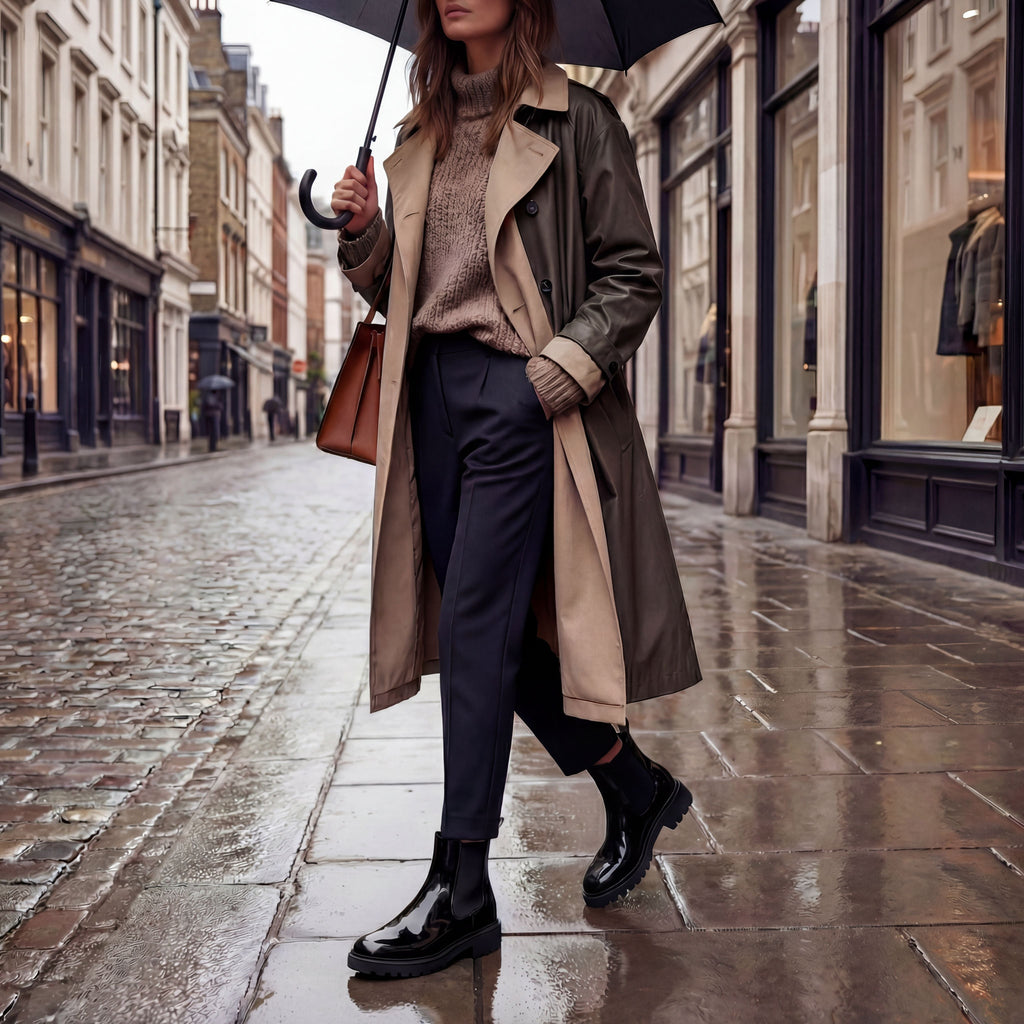
Custom Women's Boots for Fall: Choosing Between Two Black Chelsea Silhouettes
0 Comments
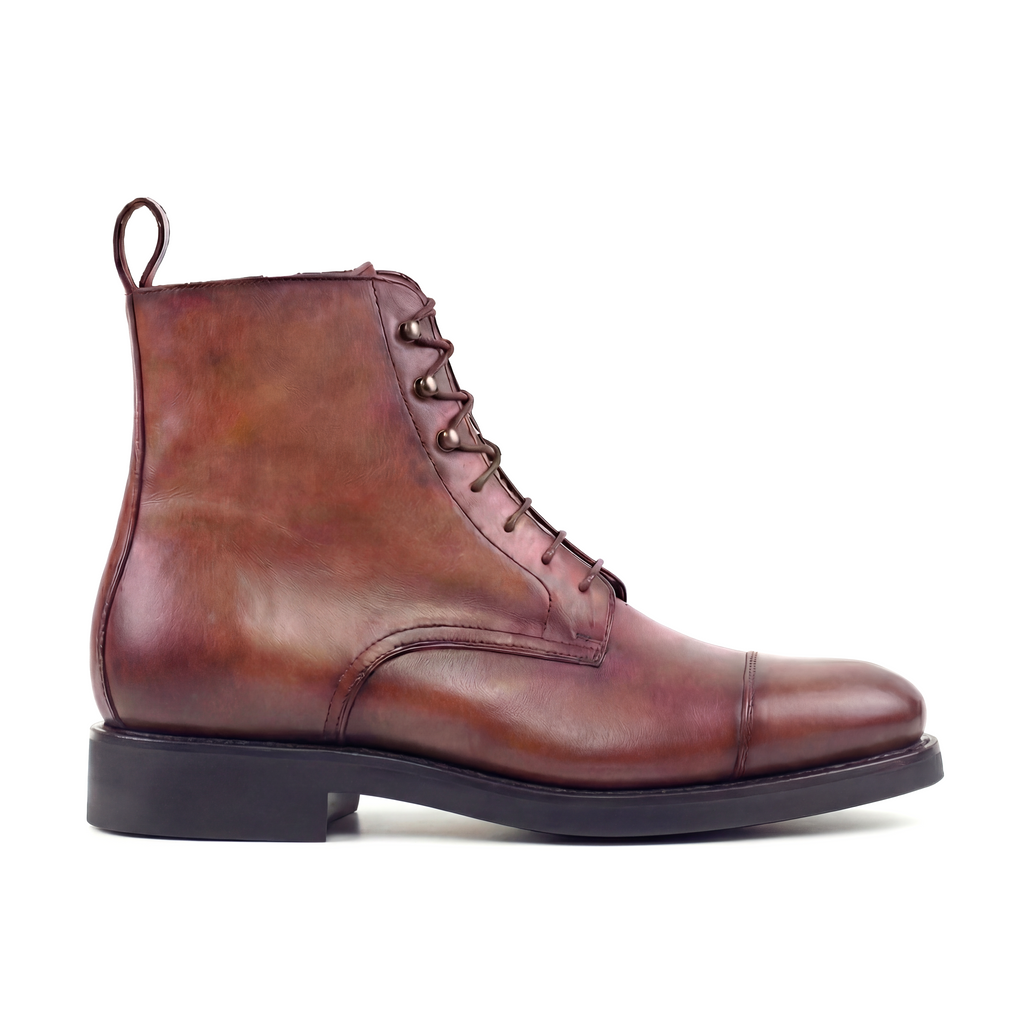
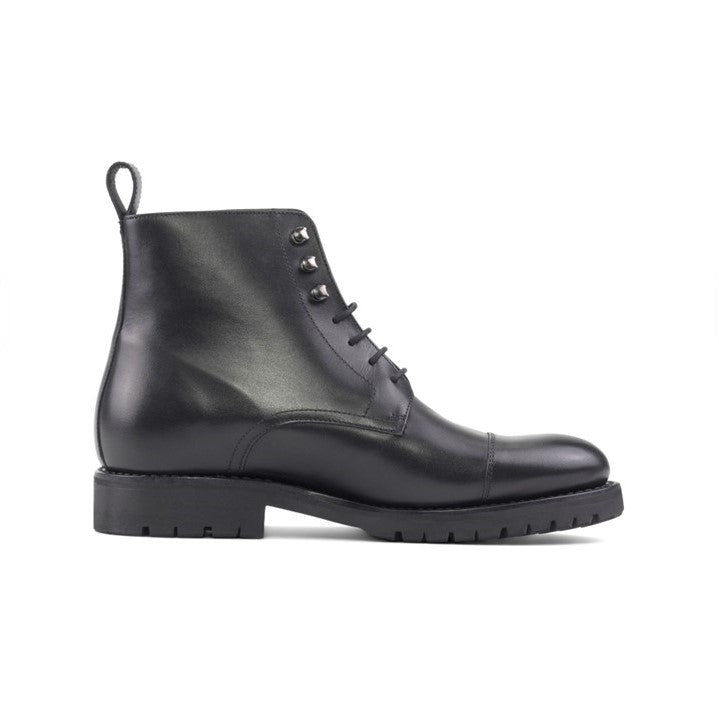
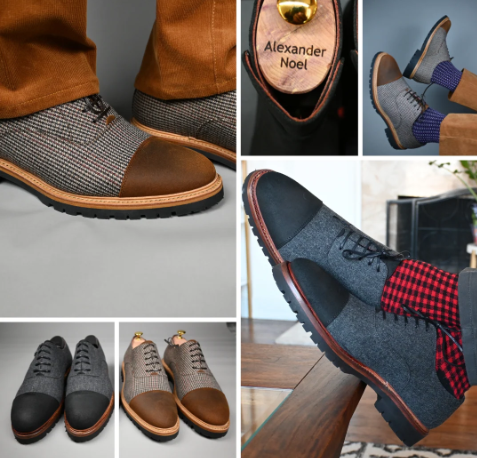







Find Your Stride: The Definitive Guide to Comfortable Dress Shoes for Men
The best dress shoes for men aren't just the ones that look sharp—they're the ones that blend high-quality materials, supportive construction, and a perfect fit for your own two feet. It's a total myth that you have to sacrifice all-day wearability for style. Modern craftsmanship, blending traditional artistry with innovative techniques, has proven you can absolutely have both.

The End of Uncomfortable Dress Shoes
Let’s be real for a second. Most of us have just accepted that looking good in dress shoes means paying a physical price. We’ve all been there: squeezing into rigid leather, feeling that familiar pinch at the toes, and ending a long day with throbbing arches. All in the name of looking put-together.
But what if that whole idea is just… outdated?
This guide is here to challenge that old-school belief that style and pain are a package deal. The truth is, shoemaking has come a long way. With a much better understanding of how our feet actually work, combined with far superior materials and smarter construction, all-day comfort isn't some luxury anymore—it's what you should expect from quality footwear.

A New Standard in Formal Footwear
This shift toward comfortable, stylish dress shoes is more than a fleeting trend. It reflects a fundamental change in priorities. Men are no longer willing to make that compromise, and innovative, direct-to-consumer brands are finally listening. This demand has sparked serious innovation in the footwear world.
The global market for men's formal shoes isn't just growing; it's evolving. It was valued at around $9.88 billion in 2023 and is on track to hit about $15.3 billion by 2031. This surge is being led by professionals who want premium styles that look incredible without wrecking their feet.
This isn’t about finding one single "magic shoe" that fits everyone. It's about giving you the knowledge to make smarter choices for yourself. When you understand what truly makes a dress shoe comfortable—from its internal shape to the quality of the leather—you can finally leave blisters and sore feet in the past. Here's what we're going to cover:
- The Anatomy of Comfort: We’ll break down the key ingredients like the shoe's last, its construction method, and the cushioning that separates a truly great shoe from a painful one.
- Personalized Fit: You'll learn how to figure out your own foot type and choose styles, whether it's an Oxford or a Derby, that actually work for you.
- Craftsmanship and Quality: We’ll dive into how traditional artisan techniques, when mixed with modern innovation, create shoes that feel as good as they look.
As you start demanding more comfort from your dress shoes, it only makes sense to extend that same thinking to the rest of your look. You can explore the best dress watches to complete your formal look to see how quality and style can go hand-in-hand. Think of this as your roadmap to building a wardrobe where elegance and ease finally coexist.
Deconstructing a Truly Comfortable Dress Shoe
What’s the real difference between a dress shoe you can stand in for ten hours straight and one you’re dying to kick off the second you walk in the door? It’s not just about that shiny leather exterior. True, all-day comfort is an inside job—engineered from the ground up with smart design, premium materials, and construction methods that have stood the test of time.
To find a genuinely comfortable pair of dress shoes, you have to look beyond the surface. It’s all about understanding the hidden architecture that supports your every step.
The Foundation of Fit: The Last
Every single great shoe starts its life on a last. You can think of a last as the 3D foot-shaped mold that a shoemaker stretches and forms the leather around. This single object is the blueprint for everything that follows, dictating the shoe's volume, shape, and—most critically—its overall fit.
A poorly shaped last creates a shoe that works against the natural contours of your foot, leading to painful pressure points, no matter how nice the leather is. On the other hand, a masterfully sculpted last creates a perfect harmony of support and space. The result is a silhouette that's not just elegant but anatomically sound, a true sign of artisan craftsmanship.

Construction: The Skeleton of the Shoe
How a shoe is put together is just as important as what it's made of. The construction method is like the shoe's skeleton; it determines its flexibility, longevity, and how it supports your foot over years of wear. In the world of quality shoemaking, two methods are held in the highest regard, each with its own benefits.
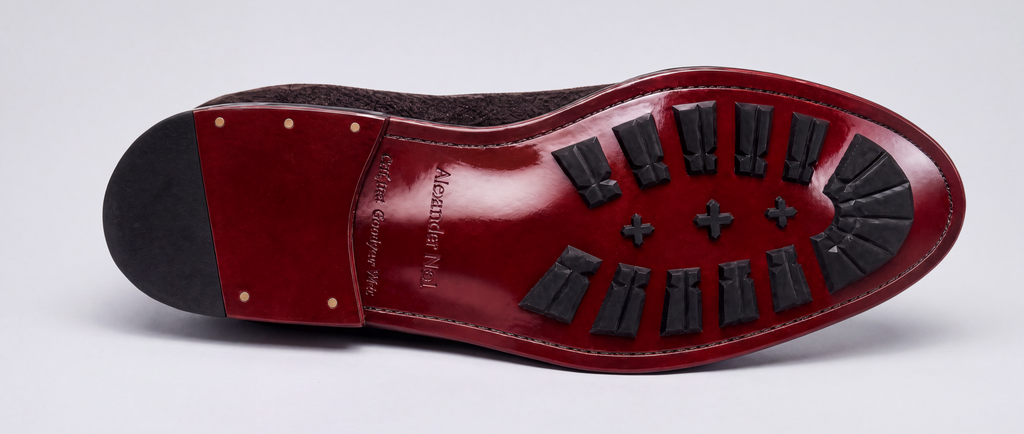
- Goodyear Welt: This is the gold standard for pure durability and support. A strip of leather (the "welt") is stitched around the perimeter, connecting the upper to the insole. This creates a rock-solid, water-resistant foundation that makes the shoe incredibly tough and easy to resole again and again.
- Blake Stitch: If you’re after flexibility and a sleeker look, the Blake stitch is your friend. This method stitches the outsole directly to the insole and upper, resulting in a shoe that feels more pliable right out of the box and often requires a much shorter break-in period.
Knowing the difference helps you pick the right footwear for your needs. If you want to go deeper, you can learn more about the art of shoe construction and compare welting methods in our detailed guide.
This map shows how all these pieces—craftsmanship, materials, and foot mechanics—fit together to build a truly comfortable shoe.
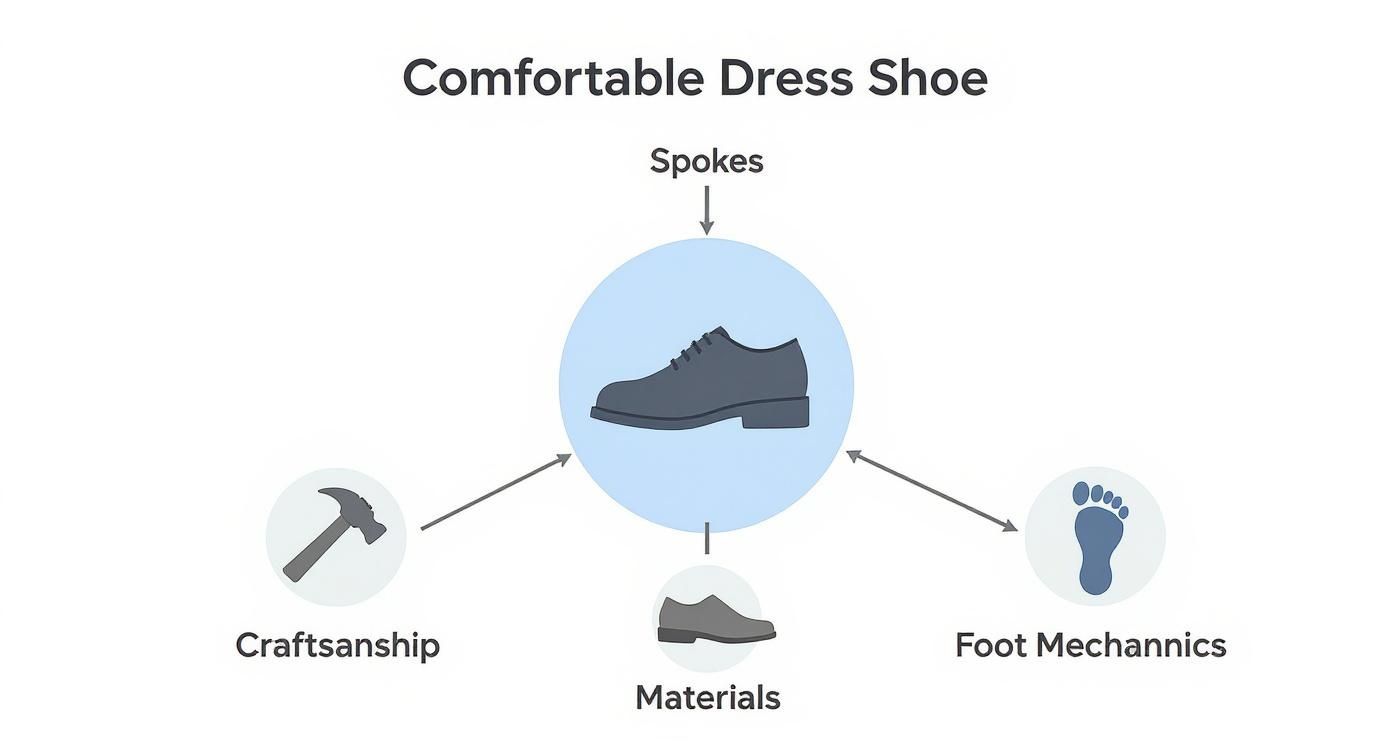
As you can see, none of these elements exist in a vacuum. They all have to work together in perfect harmony to deliver that superior comfort you’re looking for.
Premium Materials and Cushioning
Finally, let's talk about the materials that actually touch your foot. There's a reason full-grain leather is the top choice for high-end dress shoes. Unlike cheaper, "corrected" leathers, it's breathable, incredibly durable, and has a remarkable ability to mold to the unique shape of your foot over time, creating a fit that feels custom-made.
The interior matters just as much as the exterior. A soft, breathable leather lining prevents friction and wicks away moisture, while a cushioned insole provides essential shock absorption for long days on your feet.
Modern shoemaking has also found ways to integrate advanced cushioning without ruining a shoe's classic profile. By blending traditional materials like cork and leather with new comfort technology, today's best dress shoes offer a level of support that was once unthinkable in formal footwear. When you find a shoe that combines all these elements, you've found something built not just for an occasion, but for a lifetime.
Finding the Perfect Fit for Your Foot Type
You can have the most beautifully crafted dress shoe in the world, but if it doesn't fit your foot, it's going to feel terrible. This is probably the biggest mistake guys make—they invest in quality leather and expert construction but completely overlook their own anatomy. Real, lasting comfort starts and ends with the right fit, and that goes way beyond your standard shoe size.
You have to get to know your own feet. We're not just talking about length; think about foot volume (the total amount of space your foot takes up), your arch height (are you flat-footed, or do you have a high arch?), and, of course, width. These factors all work together to determine how a shoe is going to feel after a few hours on your feet.
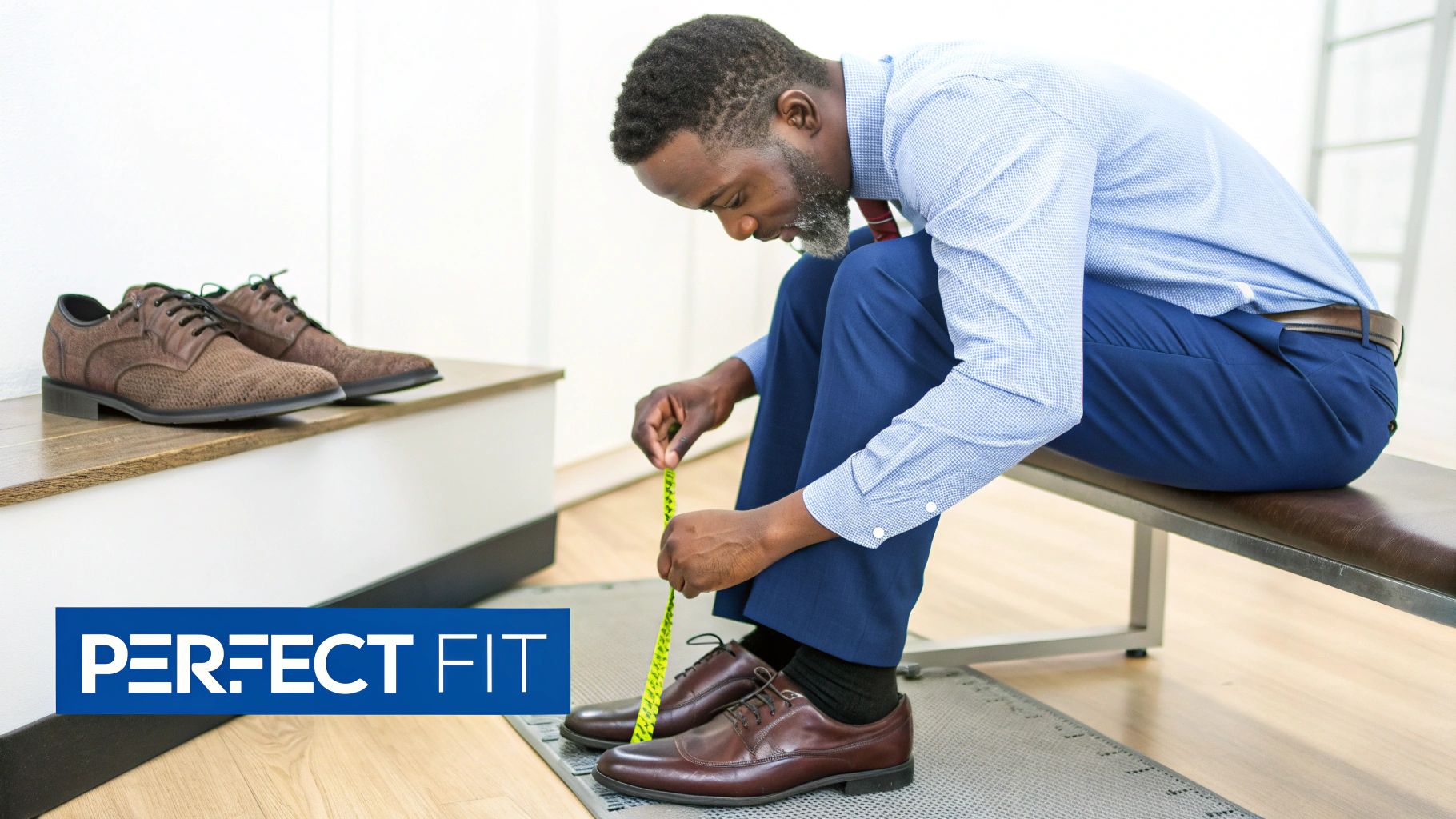
Here's a simple trick that makes a huge difference: always measure your feet at the end of the day. Why? Because our feet naturally swell from walking and standing. An evening measurement ensures you're buying a size that can handle that daily expansion, preventing that awful pinching feeling that sneaks up on you at a wedding or during a long day in the office. For a full rundown, take a look at our guide on how to measure your shoe size accurately at home.
Matching Shoe Styles to Your Foot Profile
Once you’ve got a handle on your foot’s unique characteristics, you can start picking styles that are built to accommodate them. Different dress shoe designs aren't just for looks; they offer real advantages for certain foot types. Knowing this is the secret to finding a pair that feels like it was made just for you.
A great fit isn't just about avoiding blisters; it's about how the shoe supports your foot's natural movement. For those interested in the science behind it, learning about understanding the analysis of movement can give you a new appreciation for how a well-matched shoe works in harmony with your body.
Let’s look at three classic styles and see who they work best for:
- Oxfords: Famous for their "closed lacing" system, where the eyelet tabs are tucked under the vamp. This gives them a clean, formal look but offers very little wiggle room over the instep. Oxfords are a fantastic choice for men with neutral or lower arches and standard-width feet.
- Derbies: These use an "open lacing" system, where the eyelet tabs are stitched on top of the vamp. That small change makes a big difference, offering much more room and adjustability. Derbies are the go-to for men with high insteps, wider feet, or anyone needing to use custom orthotics.
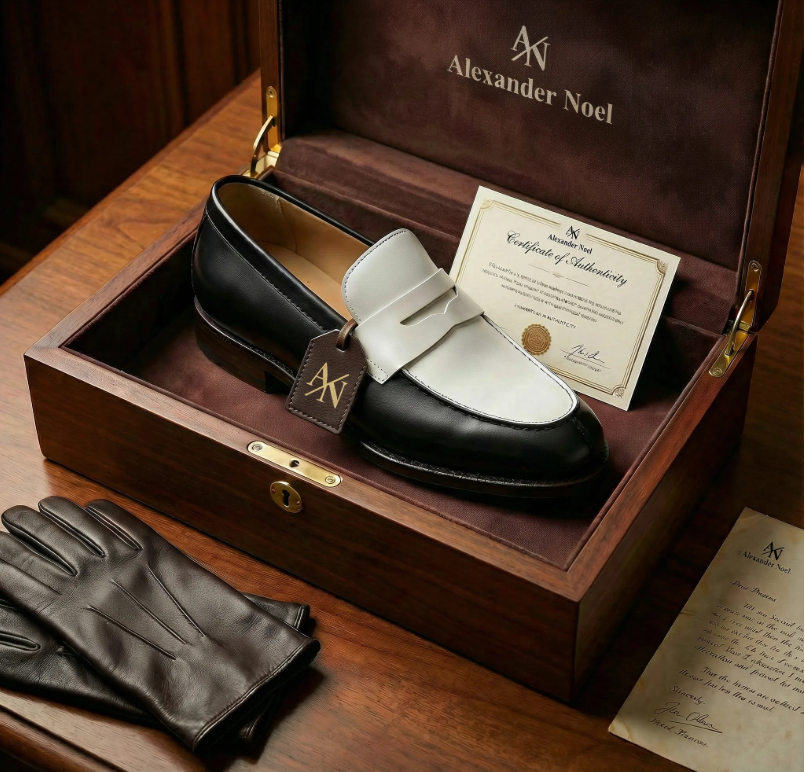
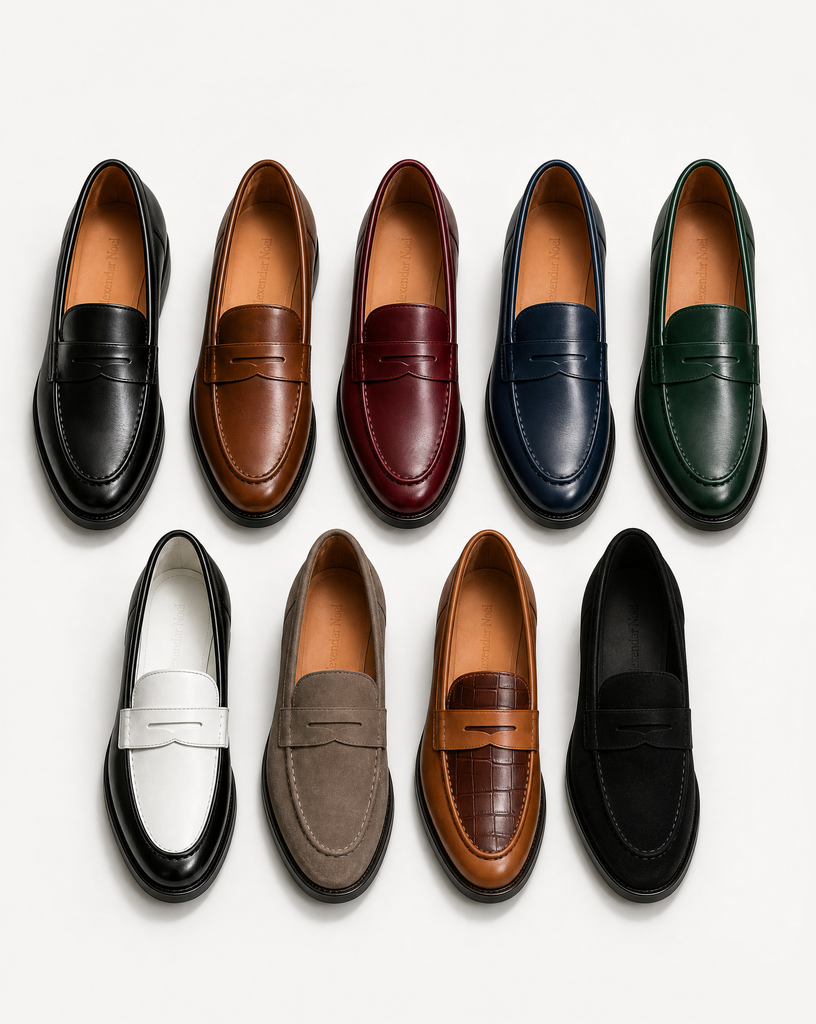
- Loafers: Since they’re slip-ons, a loafer’s fit is all about the last it was built on. They can work for a lot of different foot types, but the key is finding a pair that grips your heel and midfoot snugly so you don't slide around. They’re often a very comfortable pick for standard to slightly wider feet that don't need the locked-down feel of laces.

A Quick Comparison for Optimal Comfort
Think of choosing a shoe style as creating a partnership between the shoe's design and your foot's shape. When they don't get along, you feel it. Forcing a foot with a high instep into a rigid Oxford is a recipe for a painful pressure point right on the top of your foot.
To help you get it right, we've put together a simple table. Use it as a quick reference guide to see which style is most likely to give you that perfect, comfortable fit you've been looking for.
Choosing the Right Dress Shoe Style for Your Foot
| Shoe Style | Best For Foot Type | Key Comfort Feature |
|---|---|---|
| Oxford | Standard Width, Lower Arches | Sleek, secure fit that hugs the foot closely for a very supportive feel. |
| Derby | High Insteps, Wider Feet | Adjustable open-lacing allows for more room and flexibility across the instep. |
| Loafer | Standard to Wide Feet, All Arches | Easy slip-on design with no pressure points from laces, offering relaxed comfort. |
With this knowledge, you're ready to shop smarter. You can now move past just picking a shoe that looks good and start choosing footwear that's actually built for your body. Your feet will thank you for it.
The Role of Proper Break-In and Shoe Care
Buying a pair of high-quality dress shoes isn't the end of your journey to comfort; it’s really just the beginning of a relationship. True, lasting comfort comes as you and your footwear get to know each other. This all starts with a proper break-in period, a vital step that allows premium leather to mold perfectly to the unique shape of your feet.
Forget any horror stories about forcing shoes to fit. A genuinely comfortable pair of dress shoes should feel snug right out of the box, but never painful. The break-in period is all about gently encouraging those durable, natural materials to relax and conform to your foot.
A Gentle Approach to Breaking In New Shoes
The whole point is to make the shoes feel like an extension of your feet, not something you have to wrestle into submission. Rushing this process can damage both your feet and the shoe’s beautiful leather. Instead, a little patience goes a long way, ensuring the leather softens and flexes in all the right spots.
A few easy techniques can make all the difference:
- Start with Short Wears: First, just wear your new shoes around the house for an hour or two. This lets the leather warm up and stretch naturally without the pressure of a full day's activity.
- Use Thick Socks: For those first few at-home sessions, pull on a pair of thick socks. The extra bulk gives a gentle, even stretch to the leather, helping it expand just enough to create that custom-fit feeling.
- Focus on Flexing: As you're wearing them, make a point to bend your feet. Walking up and down a few stairs or even just flexing your toes helps encourage movement at the shoe's key flex points, like across the ball of your foot.
For a more detailed walkthrough, our complete guide explains how to break in new shoes without any of the usual discomfort. Just remember, this should only take a few short wears—not weeks of pain.
Extending Comfort Through Long-Term Care
Once your shoes are perfectly molded to your feet, the focus shifts to preservation. Proper shoe care is about so much more than just looking good; it's about maintaining the comfort and structural integrity you paid for. Think of it as protecting the craftsmanship.
Simple, consistent habits will keep the leather supple and supportive for years of service. This is how you protect your investment and make sure your favorite pair stays your most comfortable one.
A well-cared-for pair of leather dress shoes can last for decades, not just years. Regular maintenance prevents the leather from drying out and cracking, which is often what leads to discomfort and premature replacement.
Effective shoe care really just boils down to a few essential practices:
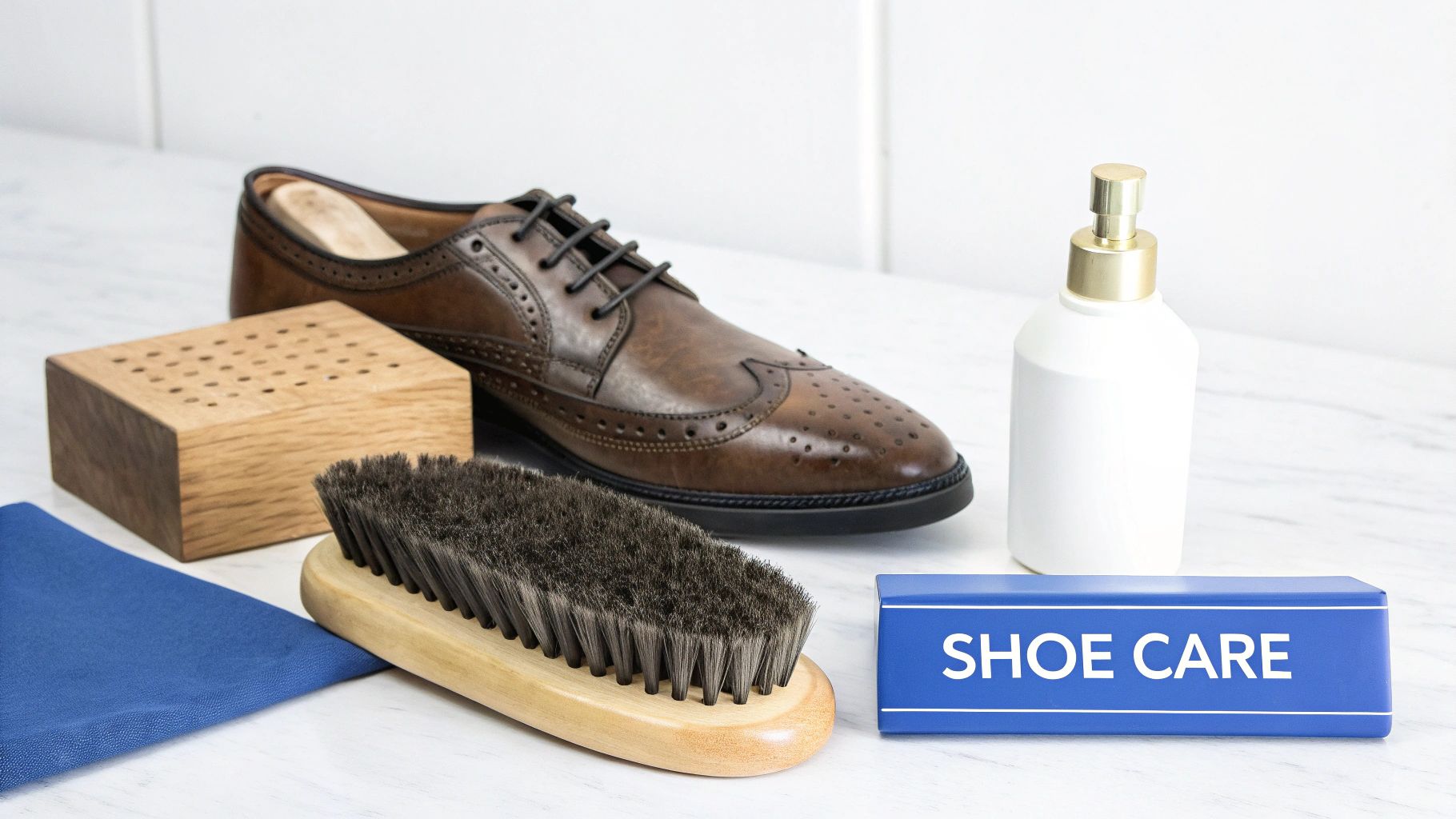
- Use Cedar Shoe Trees: This is the one thing you can't skip. Cedar shoe trees absorb moisture, get rid of odors, and—most importantly—help the shoe hold its original shape. This prevents the leather from curling or getting deep creases as it dries.
- Condition the Leather: Just like your own skin, leather needs moisture to stay flexible and strong. Use a quality leather conditioner every few months to replenish its natural oils, which stops it from becoming stiff and brittle.
- Allow for Rest Days: Try to avoid wearing the same pair of leather shoes two days in a row. Giving them at least 24 hours to rest lets them dry out completely, preserving the integrity of the leather and the entire internal structure.
By embracing these simple routines, you’re doing more than just cleaning your shoes—you're actively preserving the comfort and quality that were so expertly crafted into them from day one.
When to Consider Custom Made Footwear
So, you've learned to spot quality construction, you know how to find a good fit, and you're committed to caring for your investment. But what happens when you’ve done everything right and still can’t find a dress shoe that feels truly comfortable?
For some of us, even the best off-the-rack options just don't cut it. This is a common frustration for men with unique foot shapes, different-sized feet, specific medical needs, or those who simply refuse to settle for anything less than a perfect fit. When mass-produced shoes fail, the answer is personalization.
The Limits of Mass Production
The traditional shoe industry is built on averages. Big brands create their shoes using standardized lasts—the forms that give shoes their shape—designed to fit the most common foot dimensions. This one-size-fits-most approach works for a lot of people, but it also leaves many behind, stuck with shoes that are almost right, but never perfect.
The formal footwear market is a massive business. It’s a key part of the global shoe industry, valued at around $56.91 billion in 2024 and expected to climb to $90.12 billion by 2032. Even within this enormous market, standard manufacturing can only go so far to meet individual comfort needs.
When you have a unique need—like more arch support on one foot, or an exceptionally narrow heel—off-the-rack shoes simply can’t adapt. This is where made-to-order and bespoke footwear become absolute game-changers.
How Customization Solves the Comfort Puzzle
Custom made footwear sidesteps the limitations of standard sizing by building a shoe around your specific anatomy. It's a process that puts you in the driver's seat, ensuring the final product nails your exact comfort and style requirements from the ground up.
This level of personalization is possible through innovative direct-to-consumer models that connect you directly with global artisans. By cutting out the middleman, you get access to a degree of customization that traditional retail just can't offer.
Here are a few common scenarios where custom is the clear winner:
- Asymmetrical Feet: It's incredibly common for one foot to be a different size or shape than the other. Customization creates a unique fit for each foot, so you no longer have to buy for your larger foot and let the other one slip and slide.
- Specific Fit Issues: Do you constantly struggle with heel slippage, a cramped toe box, or painful pressure on your instep? A made-to-order shoe can be crafted with extra room or targeted support right where you need it.
- Unique Style Preferences: Comfort isn't just about how a shoe feels; it's about feeling confident. A "Design Lab" experience lets you become the creator, hand-picking every single detail to match your personal style.
The Bespoke Experience
The journey to your perfect shoe is a fantastic blend of old-world craftsmanship and modern technology. You get to choose the exact last shape, select from a library of premium leathers, decide on the construction method, and even pick the color of the stitching.
The result isn't just a shoe that fits like a glove; it's a shoe that is genuinely, one-hundred-percent yours.
This process turns a frustrating shoe hunt into an enjoyable, creative experience. It’s the ultimate solution for finding that perfect, comfortable dress shoe that no off-the-rack option can ever hope to match. To get a closer look at this world of personalization, check out our guide on what makes bespoke shoes for men a superior choice.
Common Questions About Dress Shoe Comfort
Even after getting familiar with the nuts and bolts of what makes a great dress shoe, a few questions always seem to surface. Let’s tackle some of the most common uncertainties men run into. Think of this as the final piece of the puzzle to help you buy your next pair with total confidence.
Are Expensive Dress Shoes Always More Comfortable?
Not always. While a higher price tag can certainly point to better materials and craftsmanship—which definitely help with comfort—the single most important factor is fit. An affordable shoe that fits your foot like a glove will always be more comfortable than a high-end designer pair that’s fighting your foot’s natural shape.
Think of price as a hint about quality, not a guarantee of comfort. Use what you now know about lasts, construction, and materials to be the real judge, not just the number on the tag.
How Long Should a Good Pair Take to Break In?
A well-made leather dress shoe should feel snug and secure from the moment you put it on, but it should never be painful. The break-in period usually takes about four to five short wears, and it’s not about suffering through a bad fit. It’s simply the time it takes for that quality leather to soften and mold perfectly to the unique shape of your foot.
If you feel any sharp pinching, rubbing, or serious pressure on your first step, that's a major red flag. The shoe is almost certainly the wrong size or shape for you. No amount of "breaking it in" can fix a shoe that's fundamentally wrong for your foot.
Can I Use Custom Orthotics in Any Dress Shoe?
This really comes down to the shoe's construction. Many modern dress shoes now come with removable insoles, which is perfect. You can just pop out the factory insole and slide your custom orthotic right in without messing up the fit.
However, a lot of traditional dress shoes have insoles that are glued or stitched right into the shoe. If you try to add an orthotic on top, you’ll be stealing valuable space inside the shoe, making it uncomfortably tight across your instep and in the toe box. If you depend on orthotics, make sure you're looking for styles with removable footbeds, or consider a custom-made shoe where your orthotic can be part of the design from day one.
What Is the Best Dress Shoe Style for Standing All Day?
When you’re on your feet for hours, a Derby-style shoe is usually your best bet. The reason is its open-lacing system, which gives you more wiggle room and flexibility across the top of your foot. This is a game-changer because our feet naturally swell a bit during the day, and a Derby can accommodate that change far better than a more restrictive Oxford.
Besides the lacing, you should also look for a couple of other key features:
- A sturdy internal shank that supports your arch and prevents the shoe from collapsing.
- A quality sole—either a tough rubber or a well-layered leather sole—to absorb the shock of every step.
Ready to stop compromising and finally get the perfect blend of style and comfort? At Alexander Noel, we connect with master artisans around the world to build footwear that’s made just for you. Jump into our Design Lab and start creating your ideal pair of comfortable dress shoes today.
Related post
12
Sep
12
Sep
12
Sep
29
Aug
