

RECENT POSTS
29.August.2026
Custom Women's Boots for Fall: Choosing Between Two Black Chelsea Silhouettes
0 Comments







Your Guide to Wearing Leather Shoes in Rain
Yes, you absolutely can wear your leather shoes in rain, but a little foresight makes all the difference. It's about understanding how a natural, artisan-quality material like leather handles water and taking a few key steps to protect your investment. With the right knowledge—the kind we're passionate about sharing—you won't have to choose between your favorite custom shoes and a drizzly forecast.
What Really Happens When Leather Meets Rain
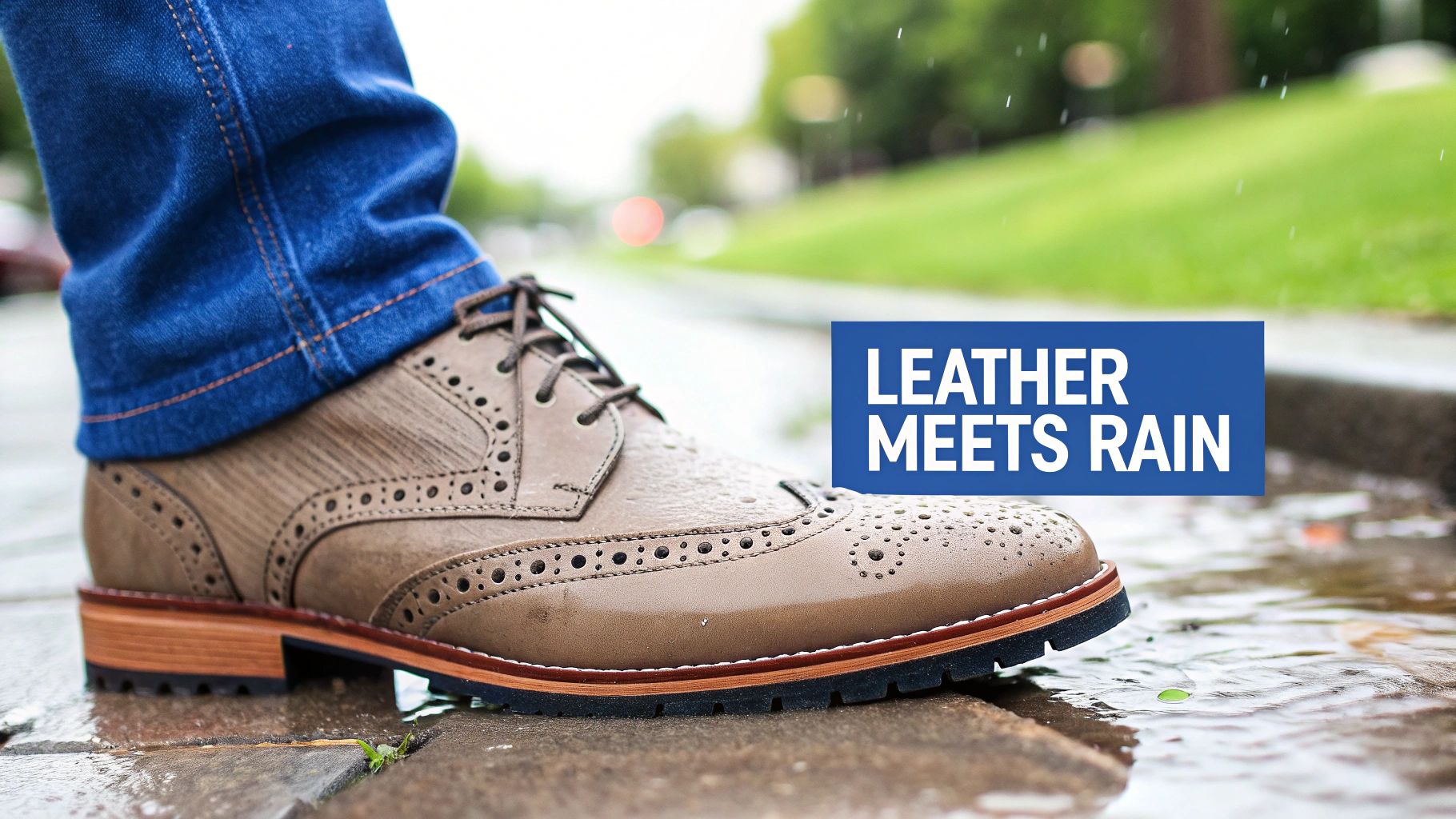
There’s a common myth that leather and rain are mortal enemies, but the truth is far more nuanced. Leather is naturally porous. When it gets wet, it absorbs moisture, which can cause its delicate fibers to swell and strip away some of the leather's essential, natural oils. This is why a shoe that got caught in a downpour might feel stiff and unforgiving once it's dry.
In fact, leather can expand by 10-15% in volume when it gets soaked. Of course, the quality and type of leather—the foundation of all great footwear—make a huge difference. Full-grain leather, the high-quality standard we build upon, has a much denser grain that acts as a superior natural barrier against moisture. It can often repel water for twice as long as corrected-grain leathers before it even starts to soak in.
Here's the secret: the biggest risk isn't the rain itself, but what you do after your shoes get wet. Improper drying, especially with direct heat, is what causes the leather’s fibers to become brittle and crack, leading to permanent damage.
The Foundation of Rain-Ready Footwear
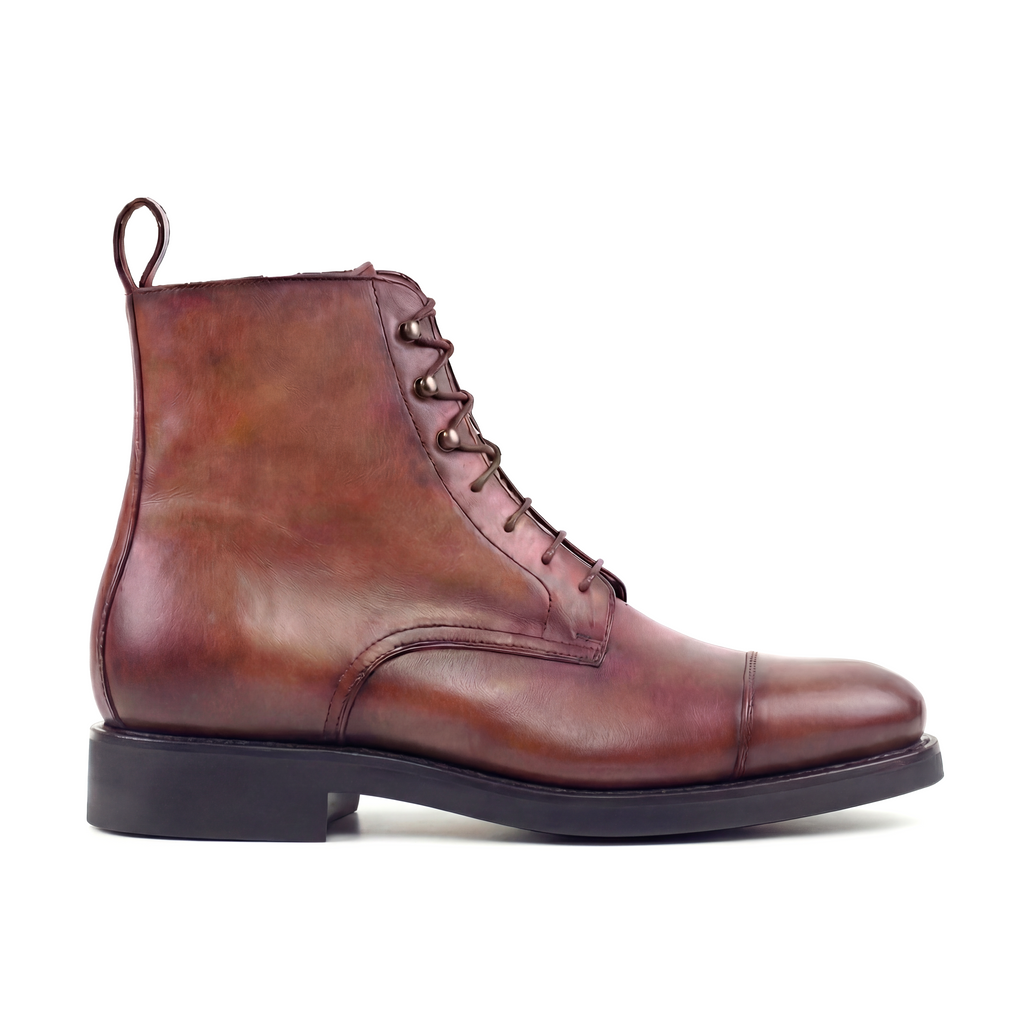
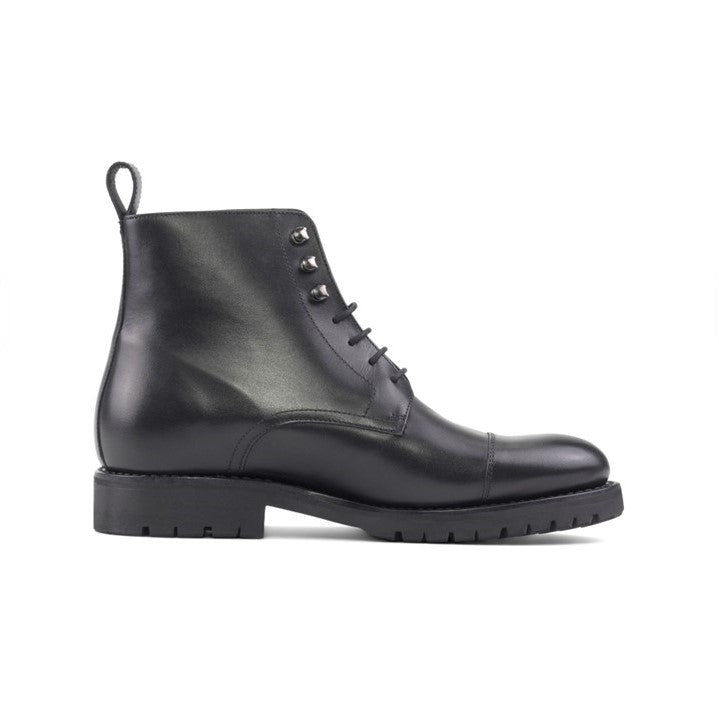
The best defense always starts with the quality of the shoe itself. When you begin with premium, full-grain leathers selected by our global artisan partners, you're already ahead of the game. This focus on superior material is at the heart of all our handcrafted footwear, whether it's a custom dress shoe or a rugged boot.
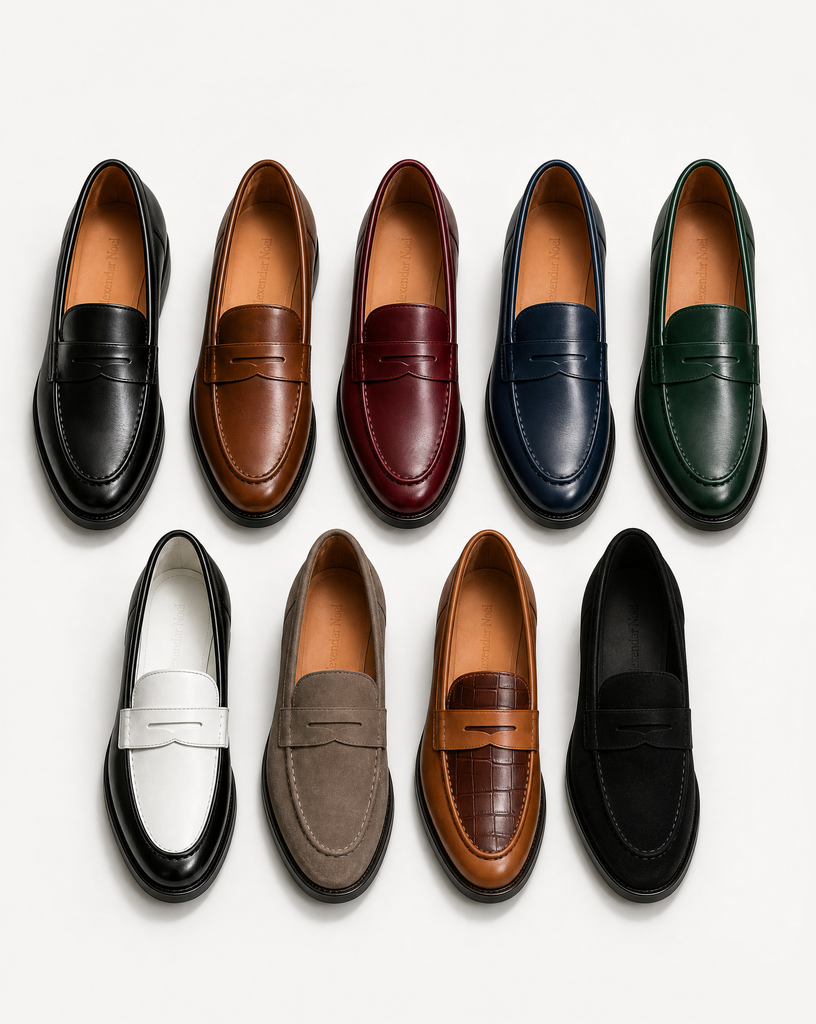
When you build a shoe in our Design Lab, you’re doing more than just picking a style. You're choosing materials that our master craftspeople have selected specifically for their ability to handle the demands of real life—and that includes the occasional downpour. For a deeper look into material choices, take a look at our guide on what defines high-quality leather dress shoes. This dedication to craftsmanship means your shoes are better prepared for a sudden shower right from the start.
Selecting the Right Footwear for Wet Weather
Navigating a downpour in style starts long before you ever step outside. The secret to keeping your feet dry and your shoes looking immaculate isn't just about avoiding puddles—it's about choosing the right materials, construction, and soles from the very beginning.
It all starts with the leather. Think of it as your first line of defense. Full-grain and oiled leathers are the champions here, thanks to their dense, resilient fiber structure. They naturally shrug off water far more effectively than something delicate like suede.
Built from the Ground Up for Durability
Beyond the leather itself, how the shoe is put together is critical. A Goodyear welt is a hallmark of high-quality shoemaking for a reason; it creates a serious barrier between your foot and the wet pavement. This method, a blend of traditional craftsmanship and modern innovation, involves stitching a strip of leather around the bottom edge of the shoe, attaching the upper to the sole and dramatically reducing the chances of water getting in.
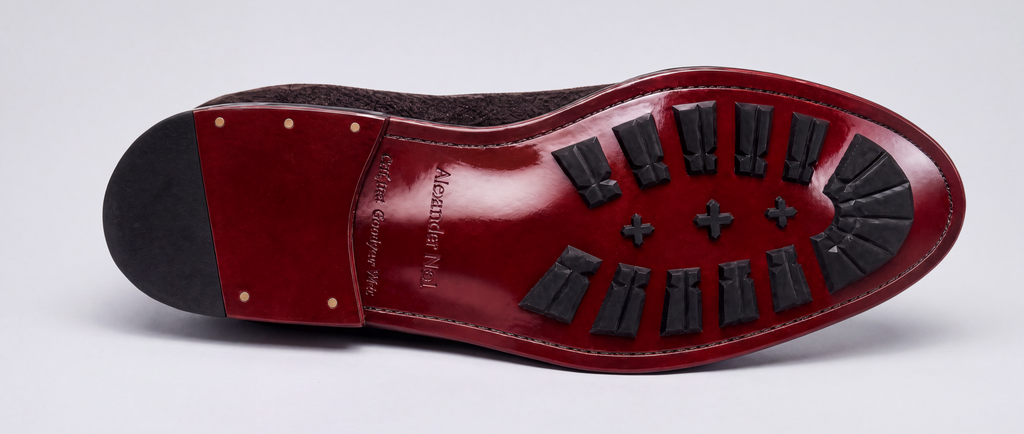
The final piece of the puzzle is pairing this robust construction with the right sole. While classic leather soles have their place, a durable rubber sole gives you far better grip and an extra layer of protection against moisture. Exploring options like a Dainite sole can make a world of difference. To see how this one detail can transform your footwear, you can learn more about the benefits of Dainite studded rubber soles in our guide.
This is where personalization truly shines. In our Design Lab, you can pair a resilient full-grain leather with a sturdy rubber sole, creating a bespoke shoe that's perfectly tailored to your climate and lifestyle.
There's even a science to this. Historical testing methods like the Maeser flexometer simulate walking in the rain, and a score of 50,000 flexes is an excellent benchmark for water resistance. For professionals in cities with over 120 rainy days a year, this isn't a luxury—it's a necessity. Studies have shown that repeated wetting and drying cycles can slash a shoe’s lifespan by 50% in just one year for untreated pairs. You can discover more insights on the technology behind waterproof leather.
Your Proactive Weatherproofing Strategy
The best defense against a sudden downpour is a good offense. Taking a few moments to weatherproof your footwear can transform your beautiful leather shoes into reliable, all-weather companions. This isn't just about damage control; it's about giving you the confidence to wear your custom shoes, no matter what the forecast says.
Properly treating your bespoke footwear is one of the most important things you can do to protect your investment. The goal is to create a breathable barrier that repels water but still lets the leather release moisture. This simple routine nourishes the leather, preserving its supple texture and rich color for years.
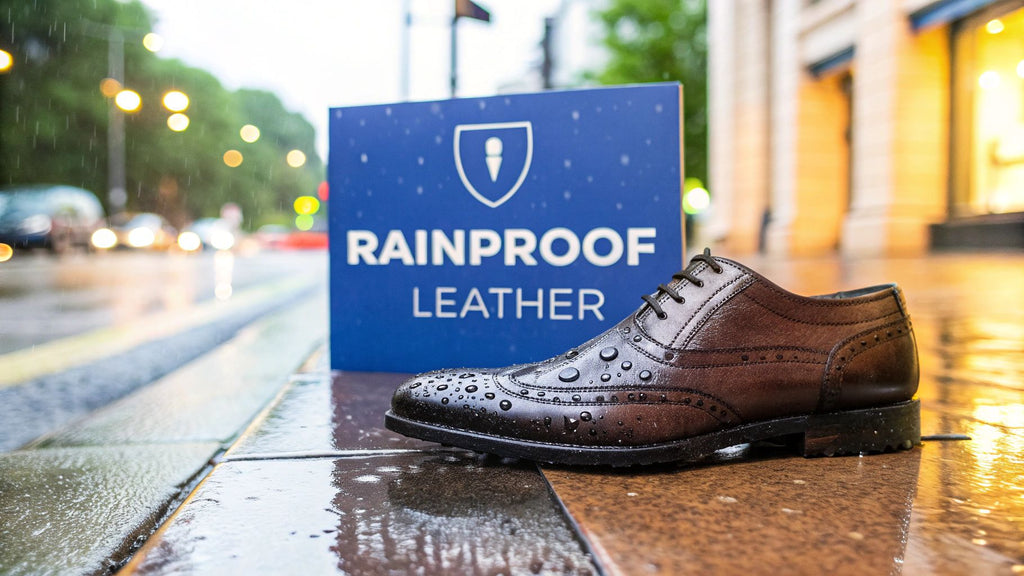
Even before your shoes meet their first puddle, a few key choices during the selection process can set you up for success. This graphic breaks down the foundational elements of a truly rain-ready shoe.
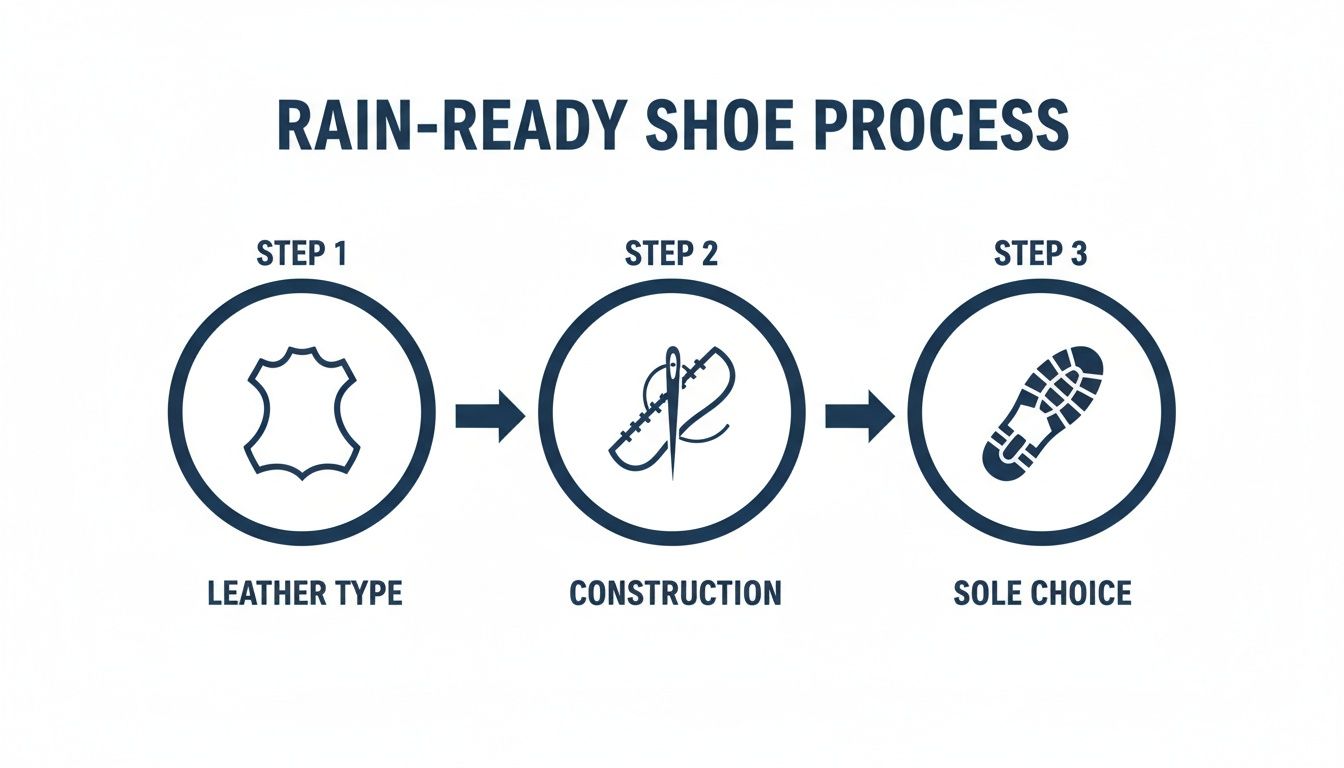
As you can see, combining the right leather, construction, and sole creates a formidable defense against wet conditions right from the start.
Choosing Your Weatherproofing Arsenal
The products you use are just as important as your technique. Not all treatments are created equal, and the right choice depends entirely on your shoe's material—think of it like skincare for your shoes.
Here’s a quick rundown of your main options:
- Wax-Based Polish: This is the classic choice for smooth, full-grain leather. It creates a robust physical barrier that not only repels water but also fills in minor scuffs and nourishes the material.
- Creams and Conditioners: These are primarily for nourishment but often contain oils and waxes that offer a moderate level of water resistance. They are essential for keeping leather from drying out and cracking.
- Waterproofing Sprays: The go-to solution for delicate materials like suede or nubuck. A quality spray coats the fibers with a protective layer without altering their unique nap or texture.
A well-rounded approach ensures your leather shoes can handle the rain. In the bespoke market, specialized waterproof leathers can limit water uptake to under 25% and are designed to pass rigorous tests simulating a full rainy season. Integrating repellents can boost this resistance by up to 50%, a huge advantage when you consider that 33% of days in the US see some precipitation.
Matching the Product to Your Leather
Choosing the right product can feel daunting, but it's simple once you know what to look for. This table breaks down which treatment works best for different types of leather.
| Product Type | Best For | Level of Protection | Application Tip |
|---|---|---|---|
| Wax Polish | Smooth, full-grain leather (e.g., dress shoes, boots) | High | Apply in thin, even layers with a soft cloth, then buff to a shine. |
| Conditioning Cream | Most smooth leathers needing moisture | Medium | Work into the leather with your fingers or a cloth to nourish and protect. |
| Waterproofing Spray | Suede, nubuck, and other delicate leathers | High | Hold the can 6-8 inches away and apply a light, even coat. Let it dry completely. |
Using the right tool for the job ensures maximum protection without compromising the look or feel of your custom shoes.
Equipping yourself with these tools is the first step toward a complete care routine. Building a dedicated kit ensures you always have what you need on hand. For a complete overview of the essentials, check out our guide on assembling the perfect leather shoe care kit.
What To Do When Your Shoes Get Soaked
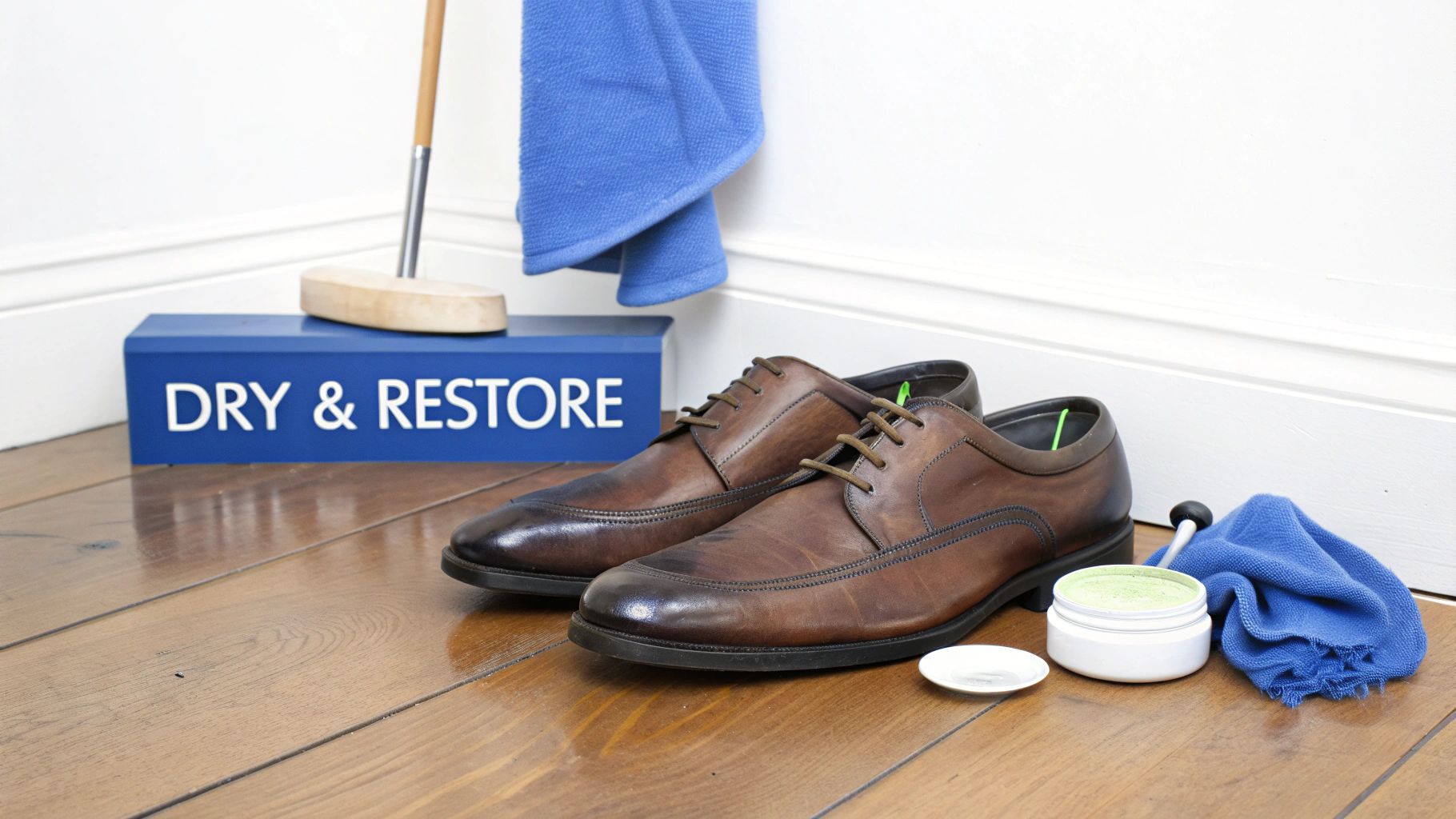
Even with the best planning, a surprise storm can catch you off guard. If your leather shoes in rain get soaked, don't panic. What you do in the next few hours is what really counts, and it can mean the difference between a minor hiccup and permanent damage.
The very first thing you need to do is give them a gentle but thorough cleaning. As soon as you get inside, take a soft, damp cloth and wipe away any dirt, salt, or grime from the surface. This simple step is crucial for preventing stains from setting in as the leather starts to dry.
The biggest mistake you can make? Using direct heat. Never put wet leather shoes near a radiator, a heating vent, or use a hairdryer on them. This effectively bakes the moisture out too quickly, vaporizing the leather's natural oils and leaving it brittle and prone to cracking.
The Art of Proper Drying
Patience is your best friend here. After a quick wipe-down, the goal is to let your shoes dry slowly and naturally. This is where cedar shoe trees prove their worth—they're not just for storage; they are a critical recovery tool.
- Absorb Excess Moisture: The unfinished cedar is fantastic at wicking moisture from inside the shoe, which is key to preventing mildew and that dreaded damp smell.
- Maintain Their Shape: As leather dries, it has a tendency to shrink and curl. A good shoe tree holds the shoe's original shape, preserving the fit you know and love.
- Deodorize Naturally: Cedar has aromatic properties that will keep your footwear smelling fresh while it recovers.
With the shoe trees inserted, place the shoes on their side in a room with good ventilation, far from direct sunlight or heat sources. This position allows air to circulate all around the shoe. Don't forget the inside, either. You may need to dry out or even replace any specialized insoles to maintain the shoe's internal hygiene and structure.
Once your shoes are completely dry—a process that can take a full 24 to 48 hours—they'll probably feel a bit stiff. That's totally normal. The final, non-negotiable step is to replenish those lost oils with a high-quality leather conditioner. This crucial step restores flexibility, brings back the rich color, and breathes life back into your handcrafted shoes.
For a more detailed walkthrough on post-recovery care, our guide on how to clean leather boots offers some great additional tips.
Making Your Bespoke Investment Last
A pair of beautiful, handcrafted shoes shouldn't make you afraid of the forecast. We build our footwear to merge timeless, artisan quality with the kind of durability you need for everyday life. True approachable luxury means you can wear it with confidence.
Whether you've designed a pair of custom dress shoes or rugged bespoke boots, having the right knowledge is what lets you face the weather with assurance. Protecting that investment isn't a one-and-done deal; it's a practice that starts with choosing the right materials and continues with consistent care.
The core principle for keeping your leather shoes looking incredible for years is simple: clean them gently, let them dry naturally, and condition them regularly. This cycle is crucial because it stops the leather’s natural oils from being stripped away, which is what leads to cracking and stiffness after a good soaking.
Proper cleaning is a must if you want those quality leather shoes to stand the test of time. There are some great resources out there on effective leather cleaning methods that can give you even more detailed guidance. This is the kind of know-how that maintains your footwear's integrity.
Sharing this knowledge is a central part of our mission. We believe that an empowered, educated owner gets the most joy and longevity from their custom creations.
Design Your Perfect Weather-Ready Pair
Now you can put everything you've learned into practice. We invite you to take this knowledge into our interactive Design Lab. Go ahead and create a pair of shoes that are perfectly suited to your style, your fit, and yes, even the occasional downpour.
Answering Your Toughest Questions About Leather and Rain
We get a lot of questions about how to handle leather shoes in less-than-ideal weather. It's a common concern, so we've put together some quick answers to the most frequent ones. Our goal is to give you the confidence to step out in style, no matter what the forecast says.
Are Leather Soles a Bad Idea in the Rain?
In a word, yes. Leather soles are the Achilles' heel of an otherwise perfect dress shoe when it comes to wet weather. They're far more vulnerable to water damage than rubber because they act like a sponge, absorbing moisture and becoming soft.
Once they're wet, walking on abrasive, wet pavement grinds them down at an alarming rate. If you live somewhere with frequent rain, we can't recommend a durable rubber sole highly enough. You can easily select one in our Design Lab, a practical choice that gives you far better traction and water resistance without sacrificing the shoe's elegant, bespoke profile.
What Is the Difference Between Water-Resistant and Waterproof?
Understanding this distinction is crucial. Water-resistant shoes, which include most high-quality, properly treated leather, can fend off water for a limited time. They’ll get you through a light shower on your commute without any trouble.
Waterproof shoes are a different beast entirely. They are built with special membranes designed to completely block any water from getting in. While that’s effective, it often comes at the cost of breathability. For most professionals, a well-maintained, water-resistant pair of custom shoes strikes the perfect balance between protection and all-day comfort.
A common myth is that suede is too delicate for wet weather. In reality, high-quality, dark-colored suede is exceptionally resilient. Its textured surface manages water well and dries evenly with a simple brushing, making it a surprisingly practical choice.
Can I Save Suede Shoes If They Get Soaked?
You absolutely can, but the key is to act fast. First thing's first: gently blot the shoes with a clean towel. Whatever you do, don't rub them—that can easily damage the delicate nap.
Next, you'll want to stuff them with paper to draw moisture out from the inside. Let them air dry completely, but keep them away from any direct heat sources like a radiator. Once they are bone dry, grab a dedicated suede brush and gently work it in small circles to lift the nap back to its original fuzzy texture. For the future, a quality suede protector spray is your best defense.
Your perfect, weather-ready shoes are waiting to be created. At Alexander Noel, our interactive Design Lab empowers you to pair resilient materials with durable soles, crafting a bespoke pair that fits your life and style. Start designing your custom footwear today.
Related post
12
Sep
12
Sep
12
Sep
29
Aug
