

RECENT POSTS

29.August.2026
Custom Women's Boots for Fall: Choosing Between Two Black Chelsea Silhouettes
0 Comments







A Masterclass in Fit: The Definitive Shoe Width Sizing Guide
Have you ever endured the pinching, blisters, or the persistent feeling that your shoes are working against you? For generations, we've been taught to focus solely on shoe length, but the true secret to an impeccable, comfortable fit lies in the width. This shoe width sizing guide is your educational journey into why this dimension matters so much. When a shoe is crafted to embrace your foot's unique contours, it transcends being a mere product—it becomes a personal extension of your style and comfort.
Why Shoe Width Is the Secret to All-Day Comfort
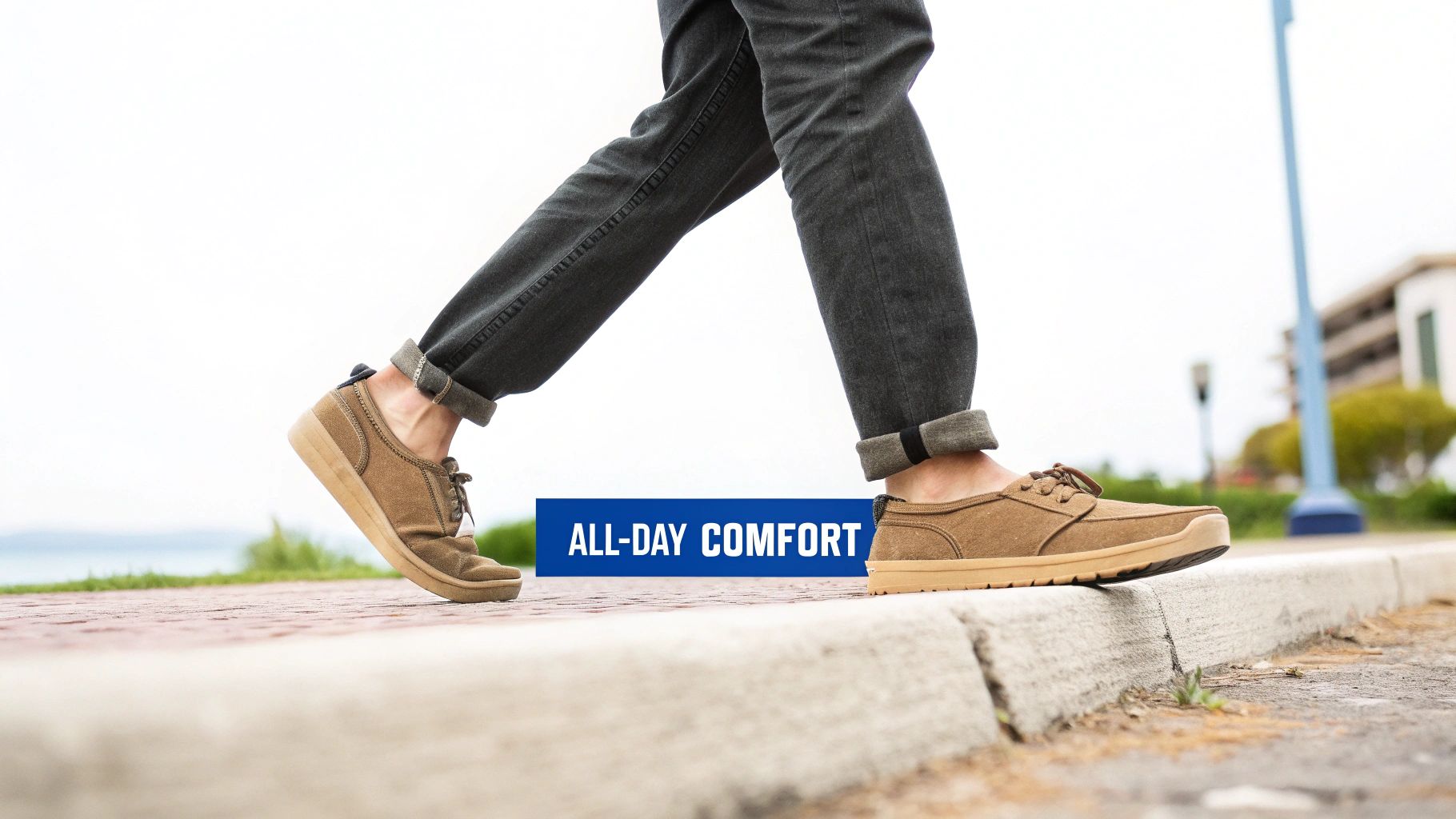
For too long, the footwear industry has encouraged a one-dimensional view of fit: length. We know our size 8, 9, or 10, but that number is only half the story. Overlooking width is akin to commissioning a bespoke suit based only on your height—it’s guaranteed to feel restrictive and ill-fitting. The reality is, every foot possesses a unique shape and volume, a truth that mass production often ignores.
This guide is designed to move you beyond frustrating guesswork. We believe true luxury isn't just about premium materials sourced from our global artisan partners; it’s about a personalized fit that supports you from morning to night. Getting the width right is foundational to preventing common foot ailments and can dramatically improve your stability and balance.
Beyond the Standard Size Tag
A beautifully crafted shoe can only perform its function if it fits every part of your foot. When the width is correct, your toes have the freedom to splay naturally, your arch receives the support it needs, and pressure is distributed evenly across your foot. This precise alignment is the key to avoiding the aches that come from forcing your feet into a shoe that was never designed for your individual shape.
Understanding your ideal width empowers you to look beyond generic, off-the-shelf options. It unlocks a new level of comfort and personalization.
The Foundation of Personalized Footwear
A precise fit is the cornerstone of comfort, especially when you're investing in high-quality, handcrafted shoes. It ensures the final product feels as though it was made just for you, transforming the experience from merely wearing shoes to enjoying a perfect synthesis of style and function.
Finding the right shoe width is more than a measurement—it’s the fundamental step toward achieving lasting comfort and protecting your foot health for years to come.
Ultimately, this complete approach to fit is what separates a good shoe from a great one. To see how this philosophy extends to formalwear, explore our insights on finding comfortable dress shoes for men. Now, let’s move beyond the limits of length-only sizing and find a truly personalized fit.
The Hidden Costs of an Improper Fit
A shoe that doesn’t fit correctly is far more than a minor inconvenience you can "break in." It represents a fundamental conflict between your foot and a mass-produced mold, a recipe for both immediate discomfort and long-term health issues. In fact, ignoring your proper shoe width is one of the most significant mistakes one can make when acquiring new footwear.
Imagine trying to experience a cinematic widescreen movie on a tiny, vertical phone screen. To make it "fit," you have to zoom in, causing the edges of the picture to be cropped and distorted. Squeezing your foot into a shoe that's too narrow does the same thing—it compresses your toes, compromises your foot's natural architecture, and creates constant, damaging pressure.
This isn't merely uncomfortable. Over time, it can lead to painful and chronic conditions.
The Anatomy of a Poor Fit
When a shoe is too narrow, it disrupts the natural mechanics of your foot with every step. This persistent, low-level strain can cause a host of physical issues that extend far beyond soreness at the end of the day. Once you understand the risks, you’ll see why a personalized fit is not a luxury, but a necessity.
Here are some of the most common problems caused by a poor shoe width:
- Bunions: That painful bony prominence at the base of your big toe? It’s often caused by the toe being constantly pushed inward by a cramped shoe.
- Hammertoes: This condition involves an unnatural bend in the middle joint of a toe, forcing it into a claw-like shape because it lacks adequate space.
- Corns and Calluses: These are your body's defense mechanisms. When a shoe constantly rubs and creates friction, your skin thickens to protect itself.
- Nerve Pain: Conditions like Morton's neuroma, where tissue thickens around a nerve leading to your toes, are seriously aggravated by tight footwear.
It’s a universal principle: true comfort comes from designs that respect the body's natural form. This holds true in clothing, where you can see the importance of 'ease' in achieving perfectly fitted garments.
Why Natural Toe Splay Matters
Achieving the right width isn't just about preventing pain; it's fundamental to your foot's intended function. Your feet are the foundation of your entire body, and their performance depends on natural toe splay—the ability for your toes to spread out as you stand and walk.
This spreading motion is critical. It helps maintain your balance, provides a wider and more stable base, and allows your foot to absorb the shock of every step. When shoes are too narrow, they choke this movement, jamming your toes together and sabotaging your foot’s inherent support system.
A shoe built for your specific width doesn't just feel better—it works with your body's natural mechanics, enhancing your stability and reducing joint stress with every step.
This is a massive issue in the world of e-commerce. For example, while women's shoe size 8 dominates sales in the world's biggest footwear markets at 29%, the vast variation in foot widths makes online shopping a gamble. In fact, poor width matching is a primary reason for the staggering 25-35% return rate for online shoe sales. It’s proof of how often standard sizing fails real people. When you understand your width, you are no longer just a consumer—you are an educated advocate for your own comfort and health.
How to Measure Your Foot Width at Home in 5 Minutes
Forget specialty stores or complex gadgets. You can obtain a perfectly accurate foot width measurement in about five minutes using items you already have at home.
Think of this simple process as creating a personal blueprint for your perfect fit. It’s the first tangible step toward a level of comfort that feels custom-made, bridging the gap between your foot’s unique shape and our handcrafted footwear.
Gather Your Essential Tools
First, find a comfortable, well-lit space and gather a few basic items. The goal here is precision, not complexity.
Here’s what you’ll need:
- Two pieces of paper: Ensure they are larger than your feet.
- A pen or pencil: A fine tip is best for a crisp, clean outline.
- A ruler or measuring tape: Ideally, one that shows both inches and centimeters.
- A pair of socks: Select the type you would normally wear with the shoes you intend to purchase.
Having these items ready will streamline the process, yielding a measurement you can trust.
Your Step-by-Step Measurement Process
Now for the main event. Follow these steps meticulously to get the most precise measurement of your foot's width. This is the same fundamental method our artisan partners use to ensure a perfect, bespoke fit.
- Set Up Your Station: Place a piece of paper on a hard, flat surface. A hardwood floor is ideal. Avoid carpet, as the soft surface can compromise the accuracy of your tracing.
- Trace Your Foot: Put on your socks and step firmly onto the paper. With your full weight on that foot, carefully trace the entire outline. Keep the pen perpendicular to the paper to avoid angling it under your foot.
- Find the Widest Points: Step off the paper and examine the tracing. The widest part of your foot is almost always the ball of your foot—the area between the joint of your big toe and the joint of your pinky toe. Use your ruler to mark these two spots.
- Measure the Width: Now, simply use your ruler to measure the straight-line distance between the two marks. Record the measurement in both inches and centimeters to make conversions effortless.
- Repeat for the Other Foot: It’s a little-known fact that most people have one foot that is slightly wider than the other. Repeat the entire process for your other foot. Always use the measurement from the wider foot as your definitive number. This simple technique ensures you’ll never be stuck with one shoe that feels just a bit too snug.
And if you wish to refine your length measurement as well, you can consult our complete guide on how to measure your shoe size at home.
Pro Tips for an Accurate Measurement
To achieve the most reliable results, there are a couple of insider secrets that make a significant difference. These small adjustments account for how your feet naturally change throughout the day and help you avoid common measuring errors.
The optimal time to measure your feet is at the end of the day. Feet naturally swell and expand after hours of walking and standing, so measuring in the evening provides the most accurate reading of your foot at its largest size.
By taking a few minutes to measure correctly, you're making an investment in your own comfort. You now possess the precise data needed to confidently select a shoe that not only looks incredible but feels as though it was made just for you. With this measurement in hand, you’re ready to decode sizing charts and find your perfect fit.
Decoding Shoe Width Charts and Letters
You've got your foot measurements. Now it's time to translate those numbers into the language of shoe sizing. Shoe width charts may initially seem like a confusing jumble of letters, but they are the key to unlocking a truly perfect fit. This is how you transition from guessing to knowing, choosing your size with the confidence of a seasoned expert.
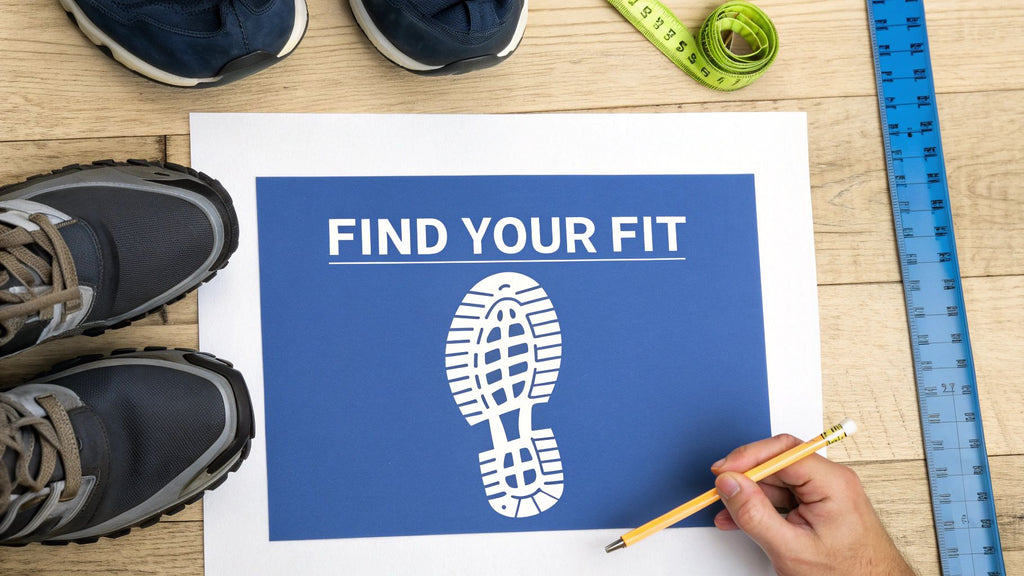
This simple visual guide breaks down the process into three easy steps: trace, measure, and compare.
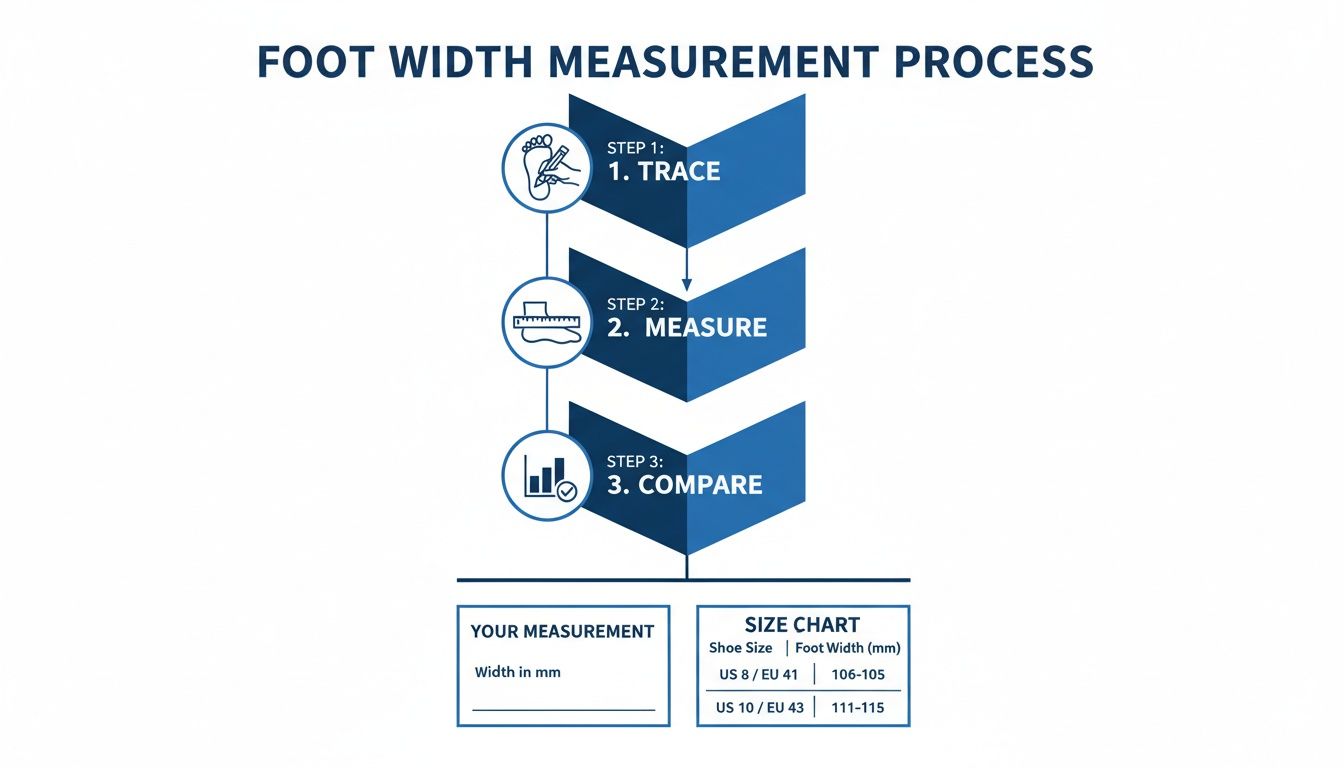
Following this method is the foundation for finding a shoe that feels like it was crafted just for you.
The Alphabet Soup of Shoe Widths
In the US system, letters denote the shoe's width, but it's not a universal code. The most critical detail to understand is this: the standard for "medium" is entirely different for men's and women's shoes. This single point of confusion is where countless sizing mistakes occur.
Let's break it down:
- For Men: The standard, medium width is a 'D'. As you go up the alphabet, the shoe gets wider (E is wide, EE or 2E is extra-wide). Going down, a 'B' is considered narrow.
- For Women: The standard, medium width is a 'B'. For women, a 'D' is actually a wide fit, while an 'AA' is narrow.
This gender-specific standard is why simply picking a letter won't work. A 'D' width shoe offers a completely different fit depending on whether it was made on a men's or women's last, which is why consulting a proper, gender-specific chart is non-negotiable.
Here's a table that translates your foot measurement in inches into the correct US width designation for both men and women. This is your cheat sheet for finding that perfect fit.
US Shoe Width Sizing Chart for Men and Women
| Width Designation | Description | Men's Width (Inches) | Women's Width (Inches) |
|---|---|---|---|
| AA | Narrow | - | 3.2" |
| B | Narrow | 3.6" | 3.4" |
| D | Standard (Medium) | 3.8" | - |
| B | Standard (Medium) | - | 3.4" |
| D | Wide | - | 3.6" |
| E | Wide | 4.0" | - |
| EE (2E) | Extra Wide | 4.2" | 3.8" |
| EEE (3E) | Triple Wide | 4.4" | 4.0" |
| EEEE (4E) | Extra, Extra Wide | 4.6" | 4.2" |
Use this chart as your guide, but always remember that brands can have slight variations. It’s the best starting point for narrowing down your ideal width.
Understanding the Men's Width Chart
For men, a 'D' width is the industry benchmark for a medium fit. If your measurements consistently land you here, you're in luck—most off-the-shelf shoes will likely feel quite good.
But if your measurement points you toward an 'E' or 'EE', you require more volume in the shoe to avoid that painful pinching at the ball of your foot. Acknowledging this isn't merely a matter of preference; it's a necessity for comfort and long-term foot health. For a deeper dive into these wider sizes, explore our article that details shoe widths explained, including EEE and beyond.
Navigating the Women's Width Chart
For women, 'B' is the starting point for a standard fit. This is so important because many athletic or unisex shoes are built on a men's 'D' last, which can feel sloppy and unsupportive for a woman with average feet.
On the other hand, if your foot measures wider than a 'B', selecting a 'D' width shoe is precisely what you should be doing for a more comfortable fit. Understanding this system empowers you to make smarter, more informed choices, ensuring the shoe's internal space matches your foot's unique shape.
Global Differences in Foot Shape
Shoe width isn't just a personal attribute; it reflects real anatomical trends across the globe. A landmark 2019 study analyzed over 1.2 million 3D foot scans and found significant width differences between people in North America, Europe, and Asia.
For instance, the study found that Asian men had mean foot widths up to 1 mm wider than their North American and European counterparts. This data confirms why width letters are so vital—a standard US width might feel too tight for 20-30% of Asian consumers. This reinforces our belief that a personalized, customizable approach, like the one we offer in our Design Lab, is essential for a truly global clientele.
Insider Tips for Finding the Perfect Fit
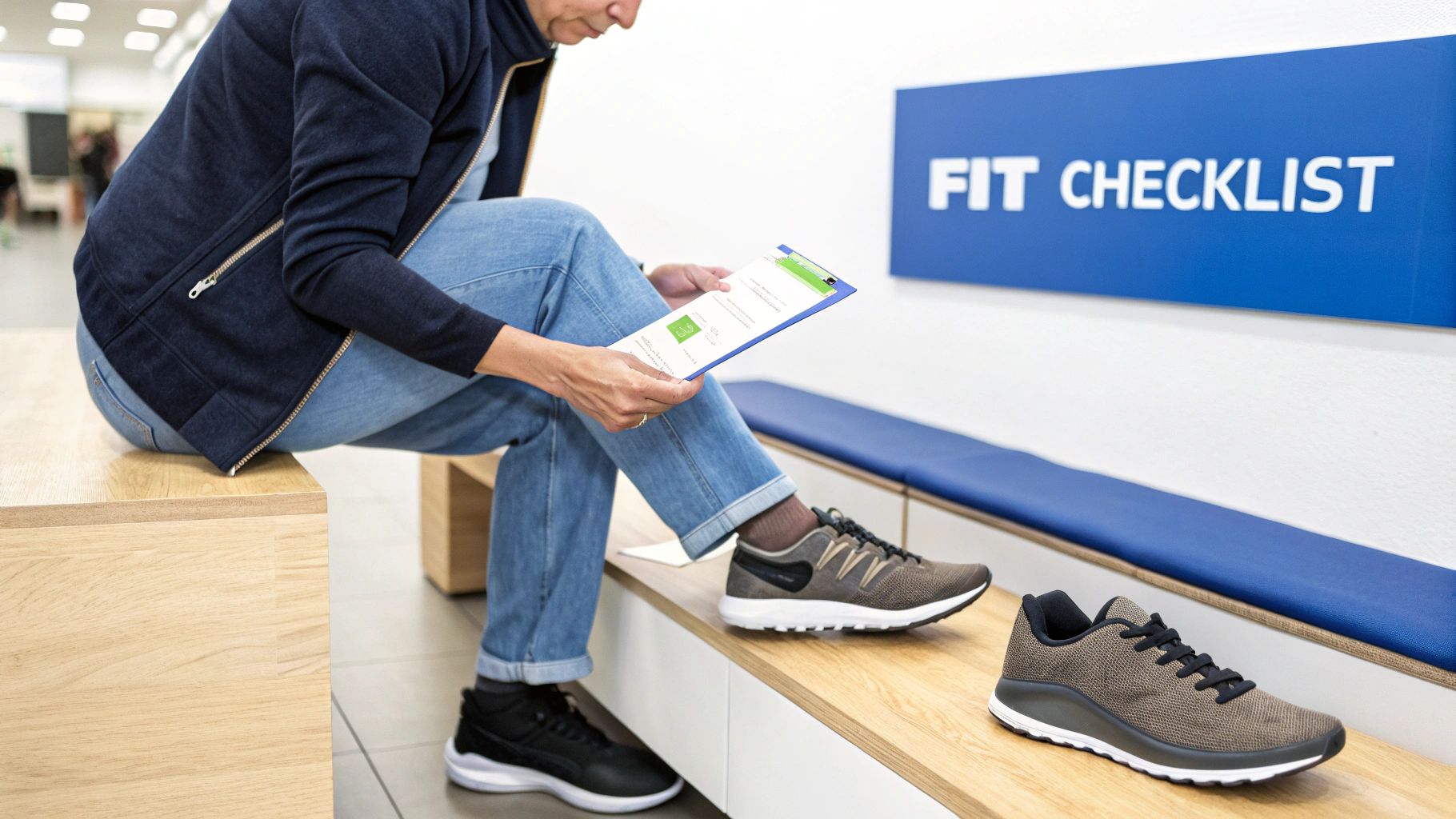
You’ve measured your feet and identified your size on a chart. That’s an excellent start, but achieving a truly perfect fit goes beyond the numbers. It’s about the nuanced details that make a shoe feel as though it was crafted specifically for you.
This is where experience and insider knowledge come into play. Consider this the final step in your shoe width sizing guide—the part where we troubleshoot common challenges and help you select a shoe that not only fits today, but forms perfectly to your foot for years to come.
Navigating the In-Between Sizes
One of the most common fitting challenges is falling between two widths. Perhaps your foot isn't quite a standard 'D' but not a full 'EE' either. What should you do?
The secret often lies in the shoe's material. Different leathers and fabrics behave in distinct ways, and understanding how they will break in is key to making the right decision.
- Full-Grain Leather: This is the pinnacle of footwear material. It possesses a natural "memory" and will gradually mold to your foot. If you're between sizes, opt for the snugger choice; the leather will stretch and conform beautifully over time.
- Suede or Nubuck: These materials are much softer and more forgiving right out of the box. They offer more initial give, so again, choosing the snugger fit is usually the best strategy to prevent them from becoming too loose.
- Patent Leather or Synthetic Materials: Exercise caution here—these materials have almost zero stretch. If you're on the fence, always size up to the wider option to avoid painful pinching down the road.
This is precisely how our artisan partners approach footwear, ensuring the material and the fit work together in perfect harmony.
Beyond Width: The Importance of the Toe Box
While getting the width right at the ball of your foot is crucial, the shape of the shoe's front—the toe box—is equally important for all-day comfort. A shoe can have the correct width measurement but still feel terrible if the toe box is wrong for your foot.
A shoe's toe box shape determines whether your toes can splay naturally. A narrow, pointed toe box will compress your toes, regardless of the shoe's official width, undermining the very foundation of a comfortable fit.
Here are the main shapes to consider:
- Rounded or Anatomic: Gives your toes the most room to spread out naturally.
- Squared: Offers a wide front but can sometimes pinch the big or little toe if the proportions aren't just right.
- Pointed: This is the most restrictive shape. You will often need to size up in width to achieve comfortable space.
When you're customizing shoes in our Design Lab, pay close attention to the last, as it sets the stage for the toe box and overall volume. For more advice on getting this right, check out our guide on mastering online shoe shopping.
The Ultimate At-Home Fit Checklist
Anytime you try on a new pair of shoes, run through this quick checklist. It helps you evaluate every aspect of the fit, not just the width on the label.
- Heel Check: Your heel should have minimal slip when you walk. A tiny bit of movement is fine, but it should not be popping out of the shoe.
- Width at the Ball: It should feel snug—but not tight—across the widest part of your foot. You should feel no pinching.
- Arch Support: The shoe's arch should align with your foot's natural arch, providing gentle support without digging in.
- Toe Room: You need about a thumb's width of space between your longest toe and the tip of the shoe. Ensure you can wiggle your toes freely.
Your Shoe Width Questions Answered
Now that we've walked through the importance of width, how to measure your feet, and how to read sizing charts, you're nearly ready to find that perfect fit. To complete your education, let's address some of the most common questions that arise. Consider this the final piece of the puzzle, providing the expert answers you need to choose your footwear with total confidence.
Each answer builds upon what we've learned, offering practical, real-world advice you can apply immediately.
Does Shoe Width Change Over Time?
Yes, it absolutely does. It is a common myth that our feet stop changing after adolescence. The truth is, your foot width can—and often does—change throughout your life. It is one of the primary reasons why a shoe that fit perfectly five years ago might feel painfully tight today.
A few factors are typically responsible for these changes:
- Age: As we get older, the ligaments and tendons in our feet naturally lose some of their elasticity. This can cause the arch to drop slightly, allowing the foot to spread.
- Weight Fluctuations: Significant changes in body weight place different levels of pressure on your feet, which can directly affect their size and width.
- Pregnancy: The hormone relaxin, released during pregnancy, is designed to loosen pelvic ligaments. However, its effects are systemic and can also affect the ligaments in your feet, often leading to a permanent increase in both length and width.
Because your feet can change, we strongly recommend remeasuring them at least once a year. This simple habit ensures you always have the most accurate data, which is the foundational principle behind our custom-crafted footwear philosophy.
Trusting an old measurement is one of the easiest ways to end up with an uncomfortable shoe. A quick annual check is all it takes to guarantee a great fit every time.
What Is the Difference Between a D and EE Width?
This is easily one of the most confusing aspects of shoe sizing, and getting it right is key to avoiding a poor fit. In the US system, letters like 'D' and 'EE' signal specific width increments, but their meaning depends entirely on whether you're looking at men's or women's shoes. The "standard" starting point is different for each.
Let's clarify this crucial distinction:
- For Men: A 'D' is the standard or medium width. As you move up the alphabet, the shoe gets wider. An 'E' is wide, and an 'EE' (also written as 2E) is extra-wide.
- For Women: This is where many go wrong. A 'B' is the standard or medium width. For women, a 'D' width is actually considered wide, while an 'EE' (or 2E) is extra-wide.
This is precisely why you cannot simply select a 'D' width and assume it will work. Shoes are built on a gender-specific last (the foot-shaped mold), which determines the shoe's internal volume. Always consult a gender-specific chart—like the one we shared earlier—to ensure you're translating your measurements correctly.
Can I Make a Shoe Wider If It Is Too Tight?
While you can make minor adjustments to a shoe that's slightly snug, stretching is not a magic solution for a shoe that's fundamentally wrong. It is a fine-tuning tool, not a fix for a shoe that was painfully tight from the start. Its effectiveness depends heavily on the shoe's material.
Natural materials, like full-grain leather, have some inherent give and will mold to your foot over time. A professional cobbler can use specialized tools to gently stretch the leather, perhaps adding a few millimeters of width. But even that has its limits.
Attempting to significantly alter a shoe's width can compromise the structural integrity of the stitching and sole, risking permanent damage to the craftsmanship. Our philosophy is to invest in the right fit from the beginning to protect both your comfort and the longevity of your artisan-made shoes.
Conversely, synthetic materials and patent leather have virtually no stretch. If you are purchasing shoes made from these materials, getting the width right from the outset is non-negotiable.
How Does Sock Thickness Affect Shoe Fit?
This is a significant factor that people often overlook. The thickness of your socks can completely alter how a shoe fits. The space occupied by a thick wool sock versus a thin dress sock can easily be enough to push you into a different width category.
The principle is simple: the sock takes up volume inside the shoe, leaving less room for your foot. A thick winter sock can make a shoe that felt perfect suddenly feel tight and cramped.
Here are a few tips to get it right:
- Measure with Intention: When you measure your feet, wear the type of socks you plan to wear most often with that particular style of shoe.
- Try On with Purpose: The same logic applies here. When you try on new shoes, bring the correct socks with you to get a true sense of the fit.
- Consider Versatility: If you know you'll be wearing a pair of shoes with different sock thicknesses, you might want to choose a slightly wider fit to give you that year-round flexibility.
It's a small detail, but it makes a world of difference. This is the kind of nuance our Design Lab experts can help you with, ensuring your final pair is perfectly suited to your lifestyle.
At Alexander Noel, we believe true luxury is found in a perfect, personalized fit. Armed with the knowledge from this guide, you are now ready to step beyond generic sizes and into a world of bespoke comfort. Explore our Design Lab and begin creating a pair of handcrafted shoes that are uniquely, unequivocally yours.
Related post
04
Oct
04
Oct
26
Sep
26
Sep
26
Sep
