

RECENT POSTS


29.August.2026
Custom Women's Boots for Fall: Choosing Between Two Black Chelsea Silhouettes
0 Comments









Custom Shoes App: A Guide to Digital Bespoke Footwear
You know the feeling. A shoe looks sharp in the store or on a product page, but the toe box pinches, the heel slips, or the only available color isn't one you'd ever wear. Countless shoppers have had to compromise one way or another. You accept the fit and give up the style, or you choose the style and hope the discomfort breaks in.
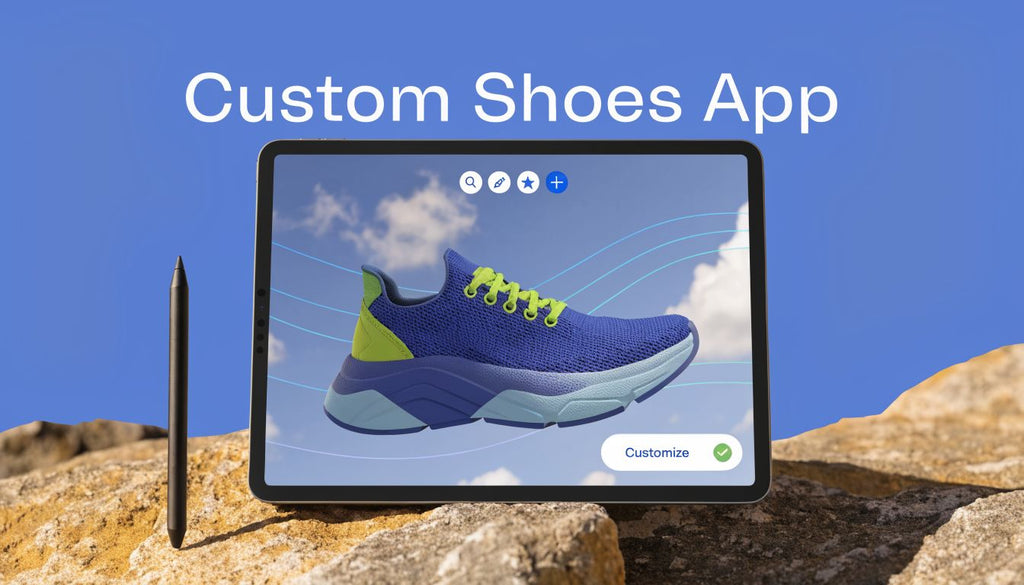
A custom shoes app changes that bargain. Instead of choosing from a fixed shelf, you start shaping the pair yourself on a screen, then send that design into a production process that can match your preferences far more closely than standard retail. That's why these apps matter. They don't just decorate a sneaker. They move the buyer from spectator to participant.
The Future of Footwear Is Personal
A man needs dress shoes for client meetings. He finds the right silhouette, but the leather only comes in black when he wants a darker brown. A woman wants heels with a cleaner line and a more wearable fit, but the pair she likes wasn't built for her foot shape. Both are facing the same old problem. Ready-made footwear was designed for averages, not individuals.
A custom shoes app answers that problem in a very modern way. On your phone or laptop, you can adjust colors, materials, trims, and sometimes even structural details. Instead of asking, “What do they have in my size?” you start asking, “What do I want this shoe to become?”
That shift isn't small. It reflects a bigger change in how people shop for premium goods. The global market for custom shoes reached US$744 million in 2023 and is projected to hit US$1,213 million by 2032, driven by digital platforms that let consumers take part in the design process, according to RunRepeat's custom shoes market overview.
Why this feels different from ordinary online shopping
Traditional ecommerce gives you selection. Personalization gives you authorship.
When people first hear “custom shoes app,” they often assume it means a playful color tool for casual sneakers. Sometimes that's true. But at its best, the experience goes deeper than that. A well-built platform can become the first step in a more careful kind of shoemaking, one that joins digital convenience with the older discipline of fit, pattern, material choice, and finishing.
The best custom footwear experience doesn't start in a factory. It starts with a person noticing that standard options keep missing the mark.
That's also why bespoke footwear has become easier to understand for people who never saw themselves as “shoe people.” If you've ever wondered what separates made-to-order from off-the-rack, a practical primer on bespoke shoes for men helps translate the craft into everyday terms.
What personal really means
Personal can mean several things at once:
- Style control so the shoe reflects your taste
- Fit attention so comfort isn't an afterthought
- Material choice that matches how and where you wear the shoe
- A stronger connection to the final object because you helped shape it
Mass production still has its place. But personal footwear speaks to a simple truth. Consumers often don't want more shoes. They want the right pair.
Understanding the Digital Cobbler's Toolkit
Think of a custom shoes app as an artisan's bench translated into software. On a traditional bench, a shoemaker works with leather, patterns, knives, lasts, thread, and judgment. On a digital bench, you work with model views, material libraries, sizing tools, production files, and order workflows.
That's why not every shoe customizer deserves the same label. Some tools are little more than paint-by-number interfaces. Others are robust systems that connect design choices to real manufacturing requirements.

What lives inside the app
At a basic level, most platforms let you rotate a shoe model and swap visible elements. A stronger platform does more than that. It keeps design, sizing, and production information connected so the digital version can become a physical pair without too much translation loss.
Here's a simple way to distinguish the layers:
| App layer | What it does | Why it matters |
|---|---|---|
| Visualization | Shows the shoe from multiple angles | Helps you judge proportion and contrast |
| Material selection | Lets you choose leather, suede, mesh, finishes, and accents | Changes both look and wear experience |
| Fit support | Guides size selection or captures measurements | Reduces guesswork before production |
| Production handoff | Converts choices into usable specifications | Keeps the factory from improvising your intent |
| Order tracking | Moves the design into fulfillment | Makes the process feel coherent, not mysterious |
The technologies that raise the standard
The custom shoe market is projected to reach USD 1,203.4 million by 2034, with North America leading, supported by demand and retail systems using AR and AI integrations, according to IMARC Group's custom shoes market analysis. Those tools matter because they make customization easier to trust.
AR helps a shopper preview shape and appearance in a more lifelike way. AI can support recommendations, pattern choices, or fit-related prompts. Real-time rendering lets a user change a panel from smooth leather to suede and see the result immediately, rather than waiting for a static mockup.
Practical rule: If a platform only changes color blocks, you're looking at a style toy. If it connects design choices to fit and production, you're looking at a serious custom shoes app.
The same thinking shows up in broader digital retail. If you want context for how brands evaluate platforms that support more involved buying journeys, these Rebus expert ecommerce insights are useful because they frame technology as part of the customer experience, not just the checkout page.
What separates custom from bespoke
This point often tangles readers. “Custom” and “bespoke” aren't always identical.
- Basic custom usually means choosing from preset visual options.
- Made-to-order custom often means the pair is produced after your configuration is submitted.
- Bespoke-oriented platforms move closer to individual fit and deeper construction choices.
If you want a more hands-on digital starting point, this guide on how to create your own shoes online shows how the design side begins before craftsmanship takes over.
A real digital cobbler's toolkit doesn't replace the maker. It gives the maker clearer instructions from the very start.
Your Journey from Idea to Ideal Shoe
Using a custom shoes app feels much less intimidating when you break it into three stages. First you shape the look. Then you solve fit. Then your design enters production.

Stage one begins with design choices
Most journeys start with a base model. That might be a sneaker, a dress shoe, a boot, or a heel. Once you've chosen the foundation, the app usually opens up the visible parts of the shoe so you can work section by section.
Many first-time users rush during this stage. They focus on color before shape. Craftsmen do the opposite. They ask what the shoe is for, because use should guide design.
A good starting sequence looks like this:
- Pick the silhouette first. A low-top sneaker and a derby shoe solve different problems.
- Choose materials second. Leather, suede, technical fabric, and lining choices affect both appearance and wear.
- Refine color placement. Contrast can be elegant or noisy depending on where it lands.
- Add finishing details. Laces, soles, edge paint, hardware, and monograms should support the whole design, not distract from it.
If you're not sure how designers think through those choices, this practical guide on how to design shoes helps translate visual ideas into workable decisions.
Stage two solves the fit question
This is the stage people care about most, even if they don't say it first. A beautiful shoe that doesn't fit is a sculpture, not footwear.
Some apps still depend on standard size charts and a few text prompts. Better systems go further. Apps using 3D scanning and machine learning can predict shoe fit with approximately 95% accuracy, compared with 70 to 75% accuracy for conventional sizing methods, according to this 3D scanning and fit prediction reference.
That difference matters because foot shape is more complicated than length alone. Width, arch profile, pressure points, and gait all influence comfort. A stronger fit process turns vague sizing into something closer to measured tailoring.
When fit becomes data instead of guesswork, custom footwear starts behaving more like a crafted service than a retail gamble.
For readers curious about how product teams map these interactions inside an app, this mobile app development process guide is helpful. It shows why smooth measurement and checkout flows don't happen by accident. They're designed carefully.
Here's a quick comparison:
| Fit approach | What the customer provides | Likely experience |
|---|---|---|
| Standard size chart | Basic shoe size | Familiar, but imprecise |
| Guided measurement | Length, width, simple prompts | Better than retail defaults |
| 3D scanning support | Foot geometry and related data | More confidence before production |
A short visual example helps make that process easier to picture:
Stage three moves from order to making
After checkout, the work changes hands. But it shouldn't disappear into a black box.
A mature custom shoes app confirms the final design, records the selected materials, pairs sizing data with the order, and passes that information into production. In the best cases, the customer sees progress in plain language rather than vague status messages.
The important point is simple. Ordering isn't the end of the design experience. It's the beginning of execution.
Key Features That Define a Superior Custom Experience
A premium custom shoes app earns trust through precision. Not flashy animation alone. Not endless color swatches alone. Precision is what lets a digital concept survive the journey into a real, wearable object.

Real-time visuals must serve construction
A strong design interface should respond instantly when you change leather, trim, sole color, or lining. That speed isn't just cosmetic. It helps you catch awkward combinations before they become expensive mistakes.
Advanced platforms use real-time CAD rendering so users can see material and color changes immediately. Production-grade systems also require asset resolutions of at least 300 DPI and dimensional tolerances within 0.5mm for designs to translate accurately into manufacturing, according to iDesigniBuy's custom shoe design software overview.
That technical detail may sound remote from everyday shopping, but it matters in plain terms. If the app is sloppy, the factory has to interpret too much. If the app is precise, the maker receives cleaner instructions.
A beautiful rendering is only useful when it matches what the workshop can actually build.
Material depth tells you whether the platform is serious
Many tools look customizable until you inspect the options. Then you find a handful of generic textures and broad labels like “leather” or “fabric.”
A better system treats material choice with respect. It distinguishes between smooth leather and pebble grain, matte and polished finishes, soft suede and more structured uppers. It also shows where each material sits on the shoe so you can think in terms of balance instead of novelty.
Look for these signs:
- Specific material categories instead of vague placeholders
- Clear panel mapping so you know what part of the shoe you're changing
- Consistent color rendering across different surfaces
- Design restraint that helps the user build a coherent pair
Fit support should feel guided, not cryptic
Superior experiences reduce ambiguity. They don't leave you alone with a chart and hope for the best.
That can include measurement prompts, scanning support, or built-in education that explains why one last shape or one upper construction may feel different from another. The best interfaces teach while they guide. They borrow from the discipline of a skilled fitter, not just software menus.
This is one reason product design matters so much. A luxury buying experience often depends on invisible decisions inside the interface. App teams that think well about clarity, step order, and user confidence tend to produce better outcomes. For a broader look at how those decisions get shaped, AppStarter's product design process offers a useful outside perspective.
Production transparency is part of the product
People don't only want a design tool. They want to know what happens after they press order.
A superior app explains enough of the making process to reassure the buyer without burying them in factory language. It may show that the pair is made to order, that artisans review the specifications, or that quality checks happen before shipment. This turns waiting time into informed anticipation instead of uncertainty.
Here's a concise benchmark list:
| Feature | Average app | Superior app |
|---|---|---|
| Preview quality | Flat image swaps | Real-time, detailed rendering |
| Material options | Broad categories | Specific, premium selections |
| Fit guidance | Generic size chart | Guided or measurement-driven support |
| Order visibility | Basic confirmation | Clear production pathway |
| Design confidence | Trial and error | Informed decisions with better context |
A custom shoes app becomes premium when every feature respects both the customer's imagination and the maker's craft.
How Alexander Noel's Designer Delivers the Promise
Many digital design tools stop at appearance. They let you build a shoe on a screen, but they don't close the gap between what you designed and what arrives at your door. That gap is where disappointment usually enters.
Alexander Noel's approach stands out because it treats customization as a full pipeline, not a decorative interface. The digital designer, the fitting system, the artisan network, and the production timeline all belong to the same experience. That's a more mature answer to what buyers need.

It addresses the problem most buyers feel first
Sizing confusion remains one of the biggest friction points in direct-to-consumer custom footwear. A documented pain point includes over 500 unanswered forum threads on sizing mismatch, with 30 to 40% return rates in DTC custom footwear tied to fit issues, as noted in this reference on custom shoe app pain points.
That matters because return-friendly language alone doesn't solve fit. Better measurement does. Alexander Noel addresses that problem with an at-home fitting system, which is exactly the kind of bridge many shoppers need between digital ordering and handcrafted production.
It connects software to real shoemaking
This is the underserved part of the market. Plenty of content online teaches people how to mock up sneakers, repaint existing pairs, or swap color blocks on a template. Far less content explains how a digital configuration becomes a made-to-order shoe built by skilled hands.
Alexander Noel's model answers that missing link through direct manufacturing relationships and a global artisan network. In practical terms, that means the app isn't the product by itself. It's the front door to a workshop process involving makers in Italy, Portugal, Spain, and India, premium materials, and quality checks before shipment.
The value of a bespoke platform appears when the screen and the shoemaker agree on what must be built.
It shortens the distance between desire and delivery
Luxury buyers often expect care, but they also expect momentum. Alexander Noel combines made-to-order craftsmanship with a stated turnaround of 48 hours to 10 business days. For many readers, that detail changes the mental model of bespoke footwear. It suggests that modern systems can support old-world craft without dragging the process into needless delay.
A closer look at the Alexander Noel Design Lab bespoke shoe process shows how that blend of speed, fit support, and customization is positioned.
Why the whole system matters
The strongest part of this model isn't any single feature. It's the alignment.
- The design interface gives customers authorship.
- The fitting process reduces the usual uncertainty.
- The artisan network grounds the promise in real craftsmanship.
- The direct-to-consumer structure removes some of the distance between customer and maker.
That combination is what many custom platforms still lack. They offer personalization without shoemaking discipline, or craftsmanship without digital ease. Alexander Noel brings the two together in a way that feels contemporary but still rooted in the old standards of fit and finish.
Stepping Into Your Uniquely Crafted Story
A custom shoes app isn't important because it's trendy technology. It's important because it fixes a human problem. People want shoes that reflect their taste, respect their proportions, and feel considered rather than generic.
The most useful apps do more than let you play with colors. They create a clearer path from idea to object. They help you choose shape with intention, think about materials with more care, and approach sizing with more intelligence. When that digital experience is tied to skilled manufacturing, customization stops being a novelty and starts becoming a better way to buy footwear.
There's also something deeper at work. When you take part in designing a pair, you wear it differently. You notice the line of the vamp, the texture of the leather, the balance of the sole, the way the color sits under daylight or office lighting. The shoe carries more of your judgment inside it.
Good footwear supports the body. Great footwear also reflects the person standing in it.
That's why this category keeps growing and why discerning buyers keep returning to it. A well-made custom pair offers more than fit and style alone. It offers recognition. Your preferences are no longer treated as edge cases. They become the starting point.
If you've spent years settling for almost right, this is the moment to stop treating compromise as normal.
If you're ready to move from browsing to co-creating, explore Alexander Noel and start designing footwear that matches your style, fit needs, and standard for craftsmanship.
Related post
19
Sep
19
Sep
19
Sep
19
Sep
19
Sep
