

RECENT POSTS
29.August.2026
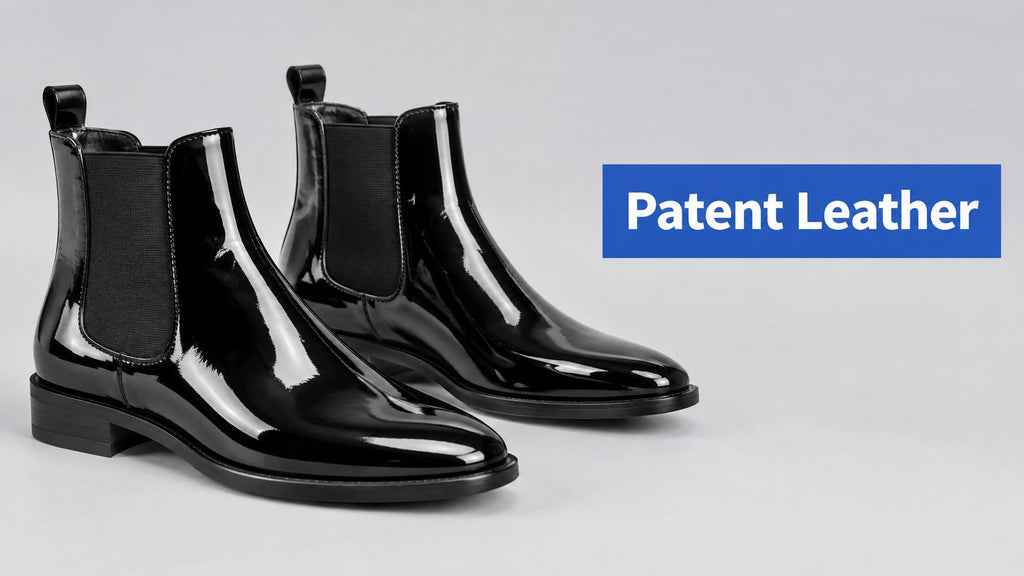
Custom Women's Boots for Fall: Choosing Between Two Black Chelsea Silhouettes
0 Comments








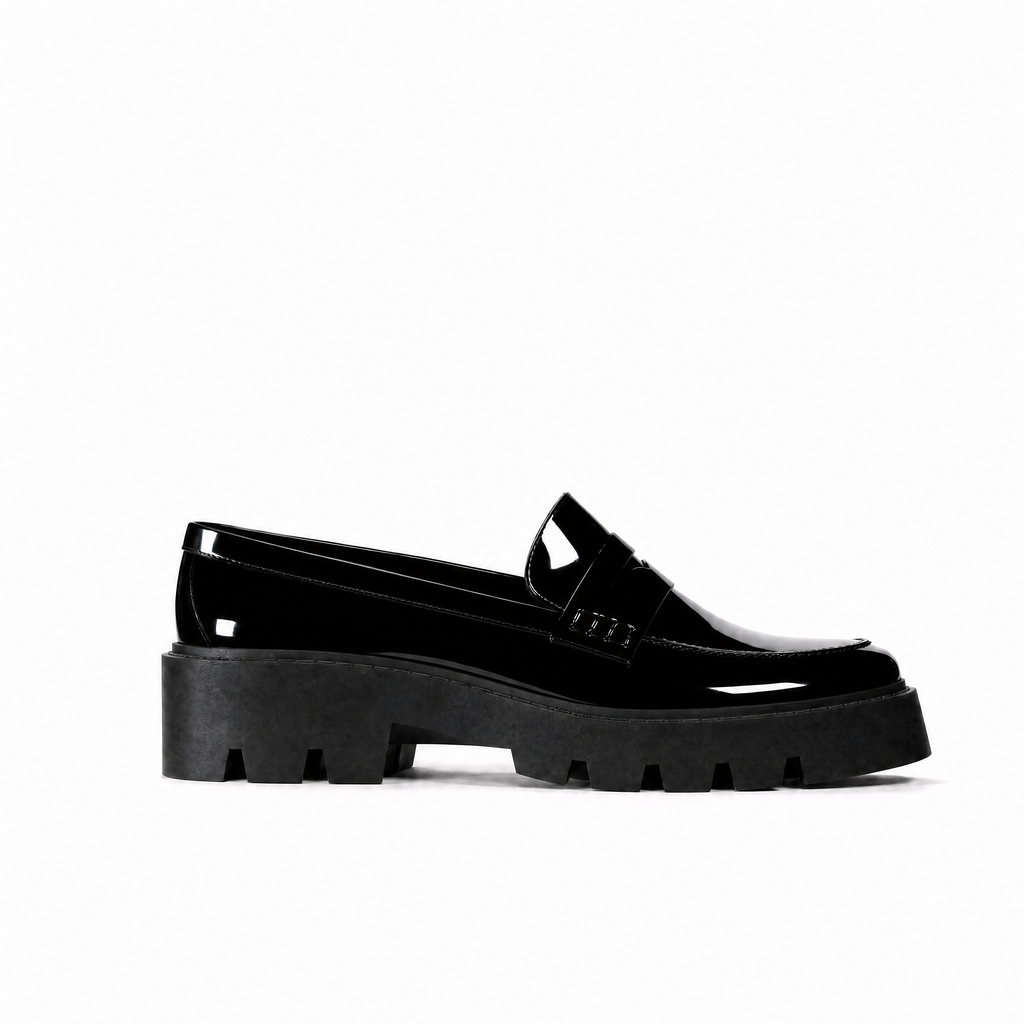
Black Patent Leather Women's Loafers Guide!
The popular advice is wrong: black patent leather women's loafers aren't the easy neutral shoe. They're easy to notice, easy to dress up, and easy to wipe clean. They're not easy to live with if your week involves puddles, crowded trains, rough pavement, careless bag straps, or long walks.
Treat patent loafers as a deliberate statement shoe. The shine brings structure to formal clothing and gives simple outfits an evening edge, but it also exposes scuffs, creases, smudges, and water marks. A good pair earns its place because you have specific occasions for that glossy finish, not because black supposedly goes with everything.
Why Black Patent Loafers Are Not the Easy Shoe You Think
The loafer silhouette encourages overconfidence. It slips on quickly, resembles a familiar school shoe, and often appears in chunky block-heel shapes that look practical in photographs. That combination suggests a shoe you can throw on with jeans, trousers, dresses, and everything between. In practice, the high-shine surface makes the styling less forgiving than the slip-on shape suggests.
Patent leather catches light, so every mark becomes part of the visual story. A scuff across the toe doesn't disappear into grain or suede nap. A dull patch from a handbag strap can sit on the vamp like a deliberate design detail, even when it wasn't. Rain and puddles create another problem. Patent leather resists liquid penetration better than untreated leather, but it isn't waterproof, and moisture, humidity, heat, and rough surfaces can damage the finish. Melvin & Hamilton's patent leather care guidance makes that distinction especially important for commuters.

The neutral color creates a false sense of convenience
Black is versatile. Black patent is not automatically casual. The reflective finish adds formality and visual weight, which can make relaxed clothes look disconnected. A soft vintage denim outfit may need a matte loafer, sneaker, or moccasin to keep its ease. Pairing that same outfit with a rigid glossy loafer can make the shoe look overdressed rather than polished.
The assumption comes from several places:
- The slip-on shape: A loafer feels practical because you can put it on without laces.
- The block heel: A stable heel looks ready for walking, even when the upper has limited flexibility.
- School-style nostalgia: The familiar silhouette seems approachable, but patent adds a sharper, more formal finish.
- Editorial styling: Gloss photographs dramatically, especially beside tailoring, satin, and clean architectural lines.
Practical rule: If you want one pair of loafers for most of your week, start with matte leather or suede. Choose patent when you want the shoe to announce intention.
Office carpet won't damage a well-made pair by itself, but daily friction still matters. A handbag swinging against the toe, a metal chair catching the heel, or a wet pavement shortcut can leave marks that glossy leather displays immediately. That doesn't make patent a bad material. It makes it a poor choice for a buyer seeking total convenience.
The right question is simple: does your real wardrobe and real schedule give the shine enough opportunities to work? If the answer involves fitted trousers, evening dresses, presentations, dinners, weddings, or gallery events, patent may be exactly right. If the answer is mostly errands, commuting, casual Fridays, and long walks, a softer finish will serve you better.

What Patent Leather Actually Is
Patent leather is a leather substrate covered with a high-gloss coating. The finish creates the reflective surface and changes how the shoe handles moisture, friction, flexing, and care. The gloss isn't a layer of ordinary polish that you apply, buff, and replace. It is the shoe's finished surface.
Seth Boyden invented patent leather in 1818, using layers of dyes, oils, varnishes, or resins to create a hard, glossy finish, as recorded by Encyclopedia.com's history of patent leather shoes. By the end of the 19th century, black patent footwear had become common in wealthy households, and the material continued as a formal choice for women's shoes, including loafers, through the 20th century.

Think of the finish as a hard shell
A useful analogy is a hard candy shell over softer fruit. The shell reflects light, resists ordinary splashes, and feels smooth under your fingers. The fruit underneath still matters, but your care routine mainly interacts with the shell.
That explains why a calfskin scuff can sometimes respond to brushing, conditioning, or polishing while a patent scuff behaves differently. Rubbing aggressively can cloud or scratch the lacquer instead of restoring it. The correct response is surface care, not the conditioning routine used for untreated leather.
The shopper will generally encounter two broad constructions:
- Patent over a quality leather base: The underlying hide can provide better structure and support, while the coating supplies the mirror finish.
- Coated or corrected-grain split construction: The surface may look similar when new, but the base and coating can age differently as the shoe bends and creases.
You can't judge the entire shoe from shine alone. Look at the last, stitching, lining, sole construction, heel attachment, and the maker's fit information. A brilliant surface won't compensate for a poor shape.
For a deeper explanation of leather and fabric choices, read Alexander Noel's guide to the many leathers and fabrics. The key point is behavioral: patent is a coating system, not untreated hide, so it offers less surface give and makes deformation more visible.
How Patent Leather Changes Loafer Fit
Patent loafers should fit correctly on the first try. Don't buy a painfully snug pair because someone tells you the shoes will “break in.” Patent has less surface compliance than soft calf leather, so a tight topline, low vamp, or narrow forefoot is more likely to remain a problem.
A women's loafer usually combines a moccasin-derived construction with a defined vamp, structured heel, and slip-on fit. The critical zones are the toe box, vamp height, instep volume, saddle placement, heel collar, and forefoot width. Each has a job. The toe box protects your toes, the vamp holds the foot, the instep determines whether the loafer grips without pressure, and the heel collar controls rear-foot retention.
Women's lasts often use narrower heel geometry with relatively broader forefoot proportions than many men's lasts. That can improve retention in a slip-on shoe, but only if the last matches your foot. A low instep may let the heel lift. A shallow toe box may pinch over the toes. A narrow forefoot can become intolerable because the glossy upper won't relax like soft leather.
What to test before you buy
Try the shoes on both feet, with the socks or stockings you expect to wear. Walk on a hard, clean surface and test stairs if the store permits it. Your heel should stay close to the shoe without repeated lifting, while the vamp should hold the foot without cutting across the instep.
A half-size increase may solve length, but it won't always solve width or volume. If the toe box feels cramped, choose a wider last rather than just adding length. If the heel slips in a longer size, the problem may be the shoe's instep shape, not your size.
| Fit Factor | Matte Calfskin Loafer | Patent Leather Loafer |
|---|---|---|
| Surface response | Usually softens and molds with wear | Offers limited give and keeps pressure points noticeable |
| Toe box | Can become more forgiving | Needs adequate depth from the first fitting |
| Vamp pressure | May relax as the leather flexes | Can remain firm and rub the instep |
| Heel retention | Texture can provide more natural grip | Slick finish may increase heel movement |
| Creasing | Often blends into the grain | Creases look sharper because light catches them |
| Break-in expectation | Some gradual adaptation is possible | Fit should feel right immediately |
Patent loafers can still be comfortable. They just demand accurate measurements. ECCO's loafer guidance emphasizes correct length, width, and instep volume, along with natural drying and shoe trees between wears. Follow that logic from the beginning, and use this guide to softening stiff leather shoes for general leather advice without expecting aggressive softening methods to transform a rigid patent upper.
When Black Patent Loafers Earn Their Place
Black patent loafers earn their place when your wardrobe needs one glossy formal shoe. They don't need to become your default pair. They need to solve a styling problem that matte leather, suede, or a casual loafer can't solve as cleanly.
Start with your actual calendar. If you regularly wear cigarette trousers, sharply fitted suits, black slip dresses, satin midi skirts, or tuxedo-inspired evening tailoring, patent adds a precise finish. The reflective surface gives a simple outfit a focal point without requiring elaborate jewelry or dramatic clothing.
Use the shine selectively
Patent works particularly well for:
- Presentations and formal office meetings: The shoe supports tailoring when the dress code leans polished rather than relaxed.
- Dinners and date nights: A glossy black loafer gives a simple dress or trouser outfit evening authority.
- Weddings and receptions: The finish looks intentional beside formal fabrics and structured silhouettes.
- Gallery openings: Creative settings give the shoe room to act as a statement.
- Holiday events: Patent responds well to velvet, satin, wool, and sharp black dressing.
It underperforms as a commuter workhorse, rain-day shoe, or weekend errand pair. Those uses expose the finish to the conditions it handles least gracefully. A matte box-calf loafer can disappear into a broader range of outfits. Suede can add softness and texture. Patent brings drama, but drama isn't the same as versatility.

One practical test is to identify at least four weekly scenarios in which the glossy finish improves the outfit. This isn't a market statistic. It's a buying rule. If you can name only one event, you're buying an occasion shoe and should treat it that way. If you can name four, the pair has a credible role in your rotation.
Patent is usually the second or third loafer, not the first. Buy the foundation in a finish you'll wear without planning.
The cost isn't only the purchase price. Proper care requires the right cleaner, suitable storage, gentle wiping, and protection from heat and harsh products. A patent pair can cost roughly as much to care for properly as any comparable quality shoe, so don't choose it for supposed low maintenance. Choose it because its visual effect earns the extra attention.
Outfits and Occasions That Actually Work
The best black patent loafer outfits balance the shine. Matte wool, crisp cotton, denim with visible texture, and brushed tailoring give the shoe something to contrast against. Satin, vinyl, and patent accessories can work too, but only when the look is controlled.
| Outfit or Occasion | Verdict | Why It Works or Fails |
|---|---|---|
| Wool trousers and a tailored blazer for a Monday meeting | Works | Matte tailoring lets the loafer provide a clean polished accent |
| Vintage denim and a loose knit for a casual Friday | Usually fails | The formal shine can fight the relaxed texture |
| Satin midi skirt and a fitted knit for a gallery opening | Works | The shoe echoes the evening surface without requiring heels |
| Tuxedo-style suit for dinner | Works strongly | Patent reinforces the sharp, formal language of the suit |
| Cream trousers, black top, and structured coat | Works | The black loafer anchors the contrast and keeps the outfit crisp |
| Garden venue or rainy outdoor event | Skip | Moisture, grass, and uneven ground are poor conditions for a glossy finish |
| Simple black slip dress for a date night | Works | The loafer gives the dress a modern, grounded alternative to heels |
| Everyday errands with a casual crossbody bag | Usually skip | Friction and relaxed clothing reduce the shoe's visual advantage |
A smart-casual office can welcome patent more easily than a conservative daytime workplace. Creative industries tend to give the finish more freedom, while traditional business environments may read it as evening-leaning. Dress code matters more than the loafer's basic color.
Three formulas worth copying
Monochromatic black: Pair the loafers with black cigarette trousers, a black fine-gauge sweater, and a structured coat. Keep the fabrics varied so the outfit doesn't become a flat block of black.
Cream trousers and black top: Choose clean cream trousers, a black silk or knit top, and the patent loafers. The shoe grounds the lighter trouser while the top creates a deliberate visual connection.
Satin midi and matte knit: Let the skirt carry the fluidity, then use a matte knit and glossy loafer to create contrast. This works for evening events without becoming overly decorative.
If the outfit already contains a strong glossy element, edit carefully. A patent bag, vinyl trouser, or satin blouse can compete with the shoe. In that situation, choose one shine as the focal point and let the rest of the outfit stay quiet. Alexander Noel's shoe color matching guide can help you assess the relationship between shoe color, clothing contrast, and overall balance.
A Care Routine That Keeps the Shine
Patent leather doesn't need the same conditioning routine as traditional leather. Its main vulnerabilities are scuffs, clouding, humidity marks, creasing, harsh chemicals, and heat, not the dry, thirsty surface associated with untreated hide. Poppy Barley's patent and velvet leather care guidance recommends gentle cleaning, microfiber materials, patent-specific products, and avoiding radiators or hairdryers.

A five-step routine
- Wipe after wearing. Use a soft microfiber cloth to remove dust, skin oils, and light surface residue. Don't use a rough towel. Small abrasions become more visible on a reflective finish.
- Clean with a patent-specific product. Apply a gentle cleaner to a lint-free cloth, not directly to the shoe. Avoid saddle soap, ordinary leather conditioner, abrasive creams, and household solvents. Those products can cloud or weaken the coating.
- Restore sparingly. A patent conditioner or silicone-based gloss restorer can help replenish the surface appearance and reduce the look of fine marks. Use a small amount. Product buildup creates its own dull film.
- Support the shape. Insert shoe trees between wears to reduce vamp collapse and preserve the toe box and heel shape. Store each shoe in an individual dust bag so the uppers don't rub against one another, a belt, a bag strap, or metal hardware.
- Handle weather immediately. A suitable protective spray may add a layer of defense, but it won't make patent waterproof. If the shoes become wet, blot them, stuff them with paper, and let them dry naturally away from radiators, direct heat, and hairdryers.
Creasing deserves special attention. The vamp bends every time you walk, and the glossy coating makes that bend easier to see. Correct sizing, shoe trees, and alternating wears do more to preserve the appearance than forceful polishing.
Watch the care demonstration here before using a new product:
The 60-second after-wear check
- Look over the toe: Remove dust and inspect for new scuffs.
- Check the vamp: Wipe away residue before it settles into creases.
- Feel for moisture: Let damp shoes dry naturally before storage.
- Insert shoe trees: Support the shape while the upper rests.
- Use the dust bag: Keep the pair separate from abrasive objects.
For a broader routine covering different materials and construction types, use Alexander Noel's shoe care guide. Patent care is simple when it stays gentle. It becomes difficult when a buyer treats the coated surface like ordinary leather.
Your Pre-Purchase Checklist
A successful purchase depends on three decisions made together: your feet must fit the last, your wardrobe must need the finish, and your lifestyle must support the care. Ignore any one of those, and a beautiful pair can become an expensive ornament.
Checkpoint one for foot and fit
Measure both feet later in the day, when they've had time to settle. Fit the larger foot, then check width across the ball, toe-box depth, instep pressure, and heel movement. Walk a full circuit on a hard floor. If the vamp pinches, the toes press against the roof, or the heel lifts repeatedly, treat that as a failed fitting rather than a break-in challenge.
Footwear returns are often driven by fit. One industry summary reports that size-related issues account for around 40% of footwear returns, making sizing the largest return driver in that source's comparison of reasons for return. AR Fits' returns and conversion data supports taking width, length, and fit guidance seriously instead of choosing only by appearance.
Checkpoint two for wardrobe match
Open your wardrobe before you pay. Count your existing black shoes and identify the gap. Patent loafers make sense when you need a polished, well-finished shoe, not when you already own a formal black loafer that handles the same outfits.
Use these pass or fail questions:
- Hem: Does your trouser hem finish cleanly at the loafer's topline?
- Pairings: Can you name cigarette trousers, a suit, a dress, or a skirt that benefits from the shine?
- Finish: Do you prefer mirror gloss over the softer look of matte calfskin or suede?
- Rotation: Will the pair have several genuine occasions, rather than one imagined lifestyle?
Checkpoint three for life logistics
Consider the route between your door and your destination. A dry office-to-car routine is different from a long walk through wet streets. Check that you have dry storage, individual dust bags, shoe trees, and the patience to wipe the uppers after wearing.
Ask the salesperson three direct questions:
- What is the return policy if the glossy leather has been worn indoors?
- Does the pair include a suitable care kit or product recommendation?
- Can the shoe be resoled if it uses a welted construction?
Custom fitting can make the category more practical for shoppers who struggle with standard sizes. Bespoke production and personalized sizing address the actual mismatch between foot shape and ready-made last, while custom footwear research cited by Footwear News reports that custom or bespoke footwear can reduce return rates to about 1% to 3% in the referenced summary. Treat that as support for precision fitting, not a promise that every custom shoe will feel perfect without accurate measurements.
If you pass all three checkpoints, buy the patent loafer with confidence. If you fail the lifestyle or wardrobe test, choose matte leather first. Alexander Noel's direct-to-consumer model combines global artisan partnerships with a Design Lab for selecting materials, colors, and styling details, alongside made-to-order production and at-home fitting tools. Visit Alexander Noel to explore a personalized loafer direction that matches your measurements, wardrobe, and tolerance for glossy leather care.
Related post
12
Sep
12
Sep
12
Sep
29
Aug
