

RECENT POSTS
29.August.2026
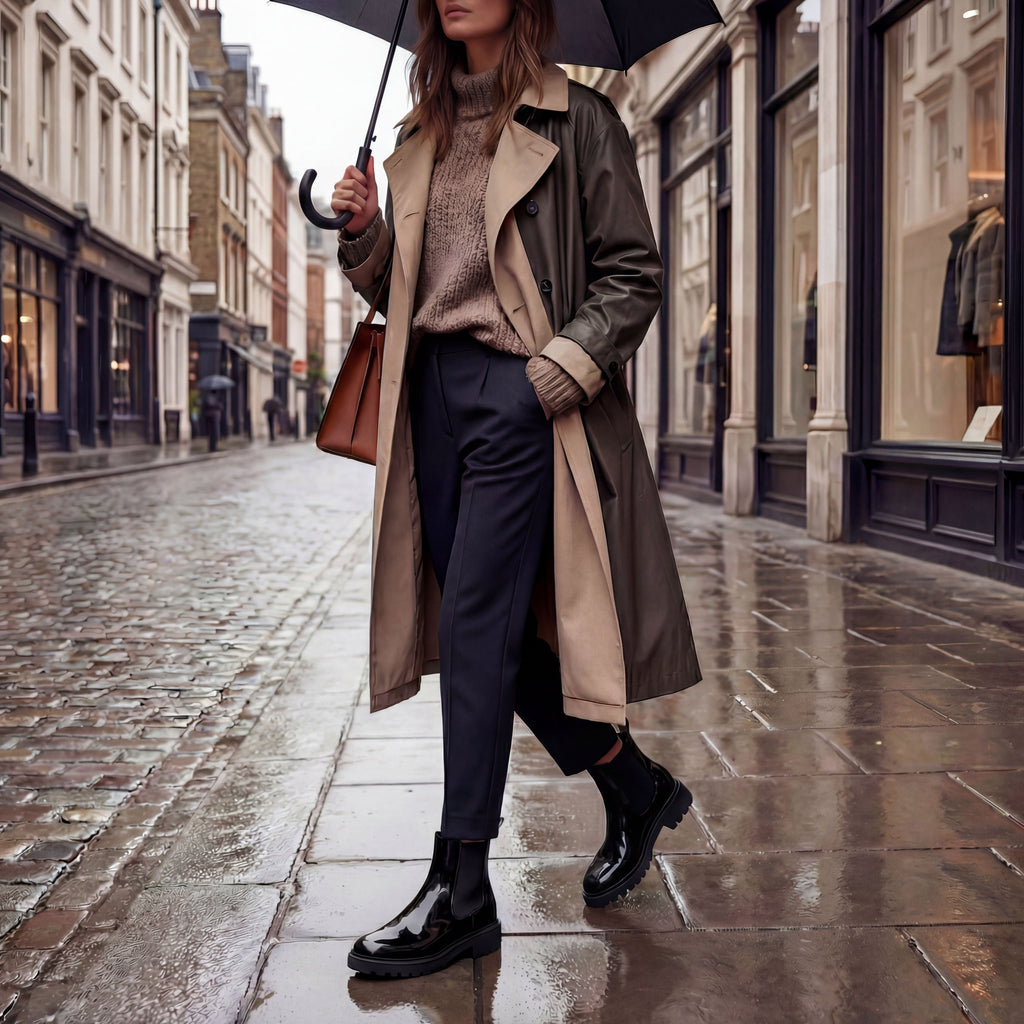
Custom Women's Boots for Fall: Choosing Between Two Black Chelsea Silhouettes
0 Comments



Lug Soles Shoes: Types, Traction and How to Choose
The usual advice about lug soles is to choose the deepest, chunkiest tread you can tolerate. For a professional who walks on pavement, crosses polished lobbies and spends hours indoors, that's often the wrong purchase. The right outsole matches the ground beneath you, not the outdoor image you want the shoe to project.
When you're comparing lug soles shoes, start with your actual working week. A restrained rubber tread can make sense beneath an Oxford; a heavily cut hiking outsole can be unnecessary weight beneath the same upper. Choose for contact, flexibility and fit before you choose for appearance.
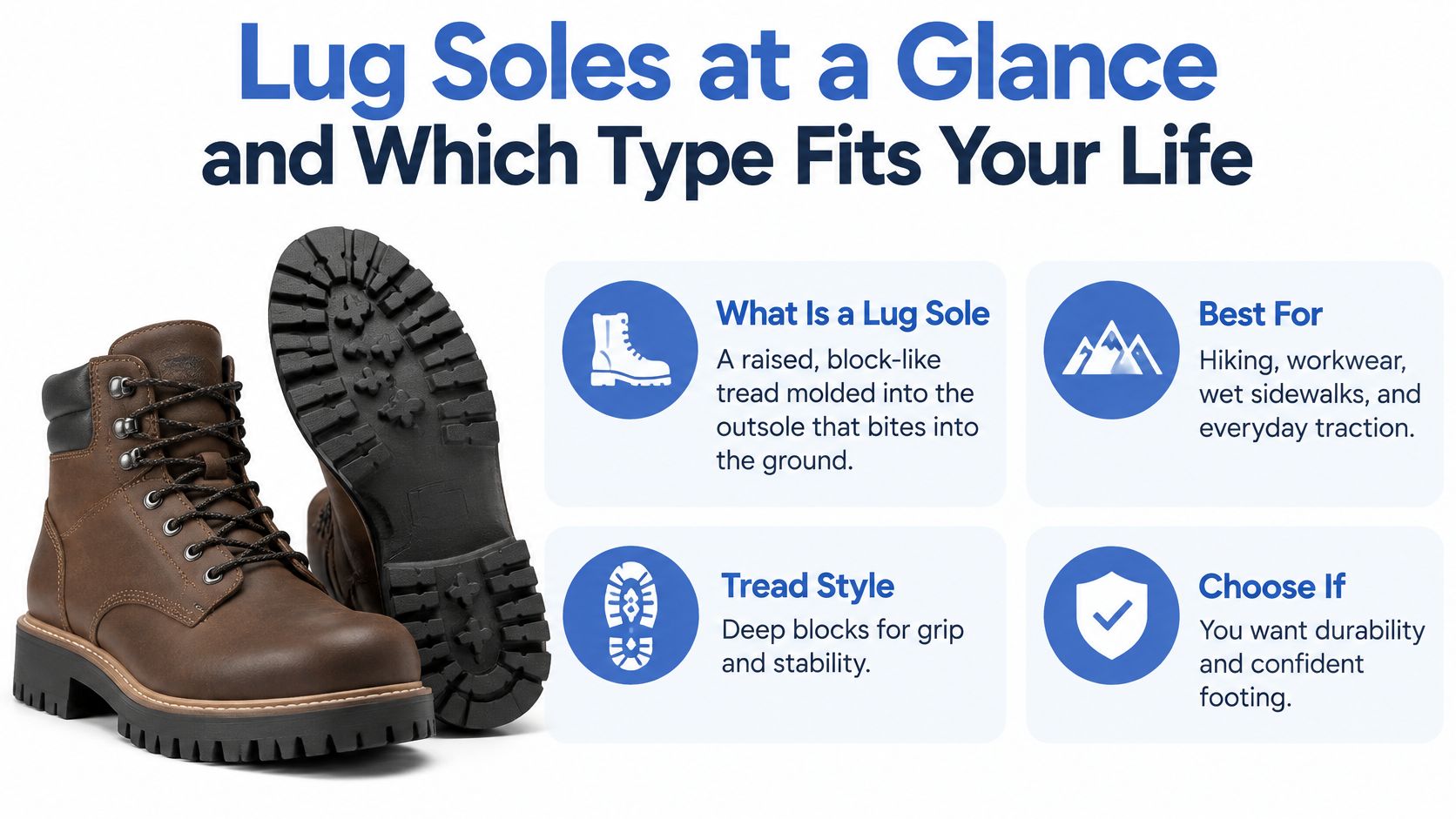
Lug Soles at a Glance and Which Type Fits Your Life
Lug sole types by depth, material and best use
These are practical specification ranges for comparing designs, not standardized categories or guarantees of grip.
| Lug type | Lug depth | Outsole material | Best for | Main trade-off |
|---|---|---|---|---|
| Low-profile city lug | About 2-4 mm | Rubber or TPR | Offices, pavement, travel | Less bite in mud and loose ground |
| Dress-casual lug cupsole | About 3-4 mm | Rubber | Business casual, mixed urban use | Heavier than a leather-only sole |
| Commando-style lug | About 4-6 mm, wide spacing | Rubber | Weekends, rain, uneven pavement | Can feel less stable on polished floors |
| Hiking-style lug | About 6-10 mm | Softer lug rubber | Mud, loose trail, rural ground | Heavy and awkward on smooth floors |
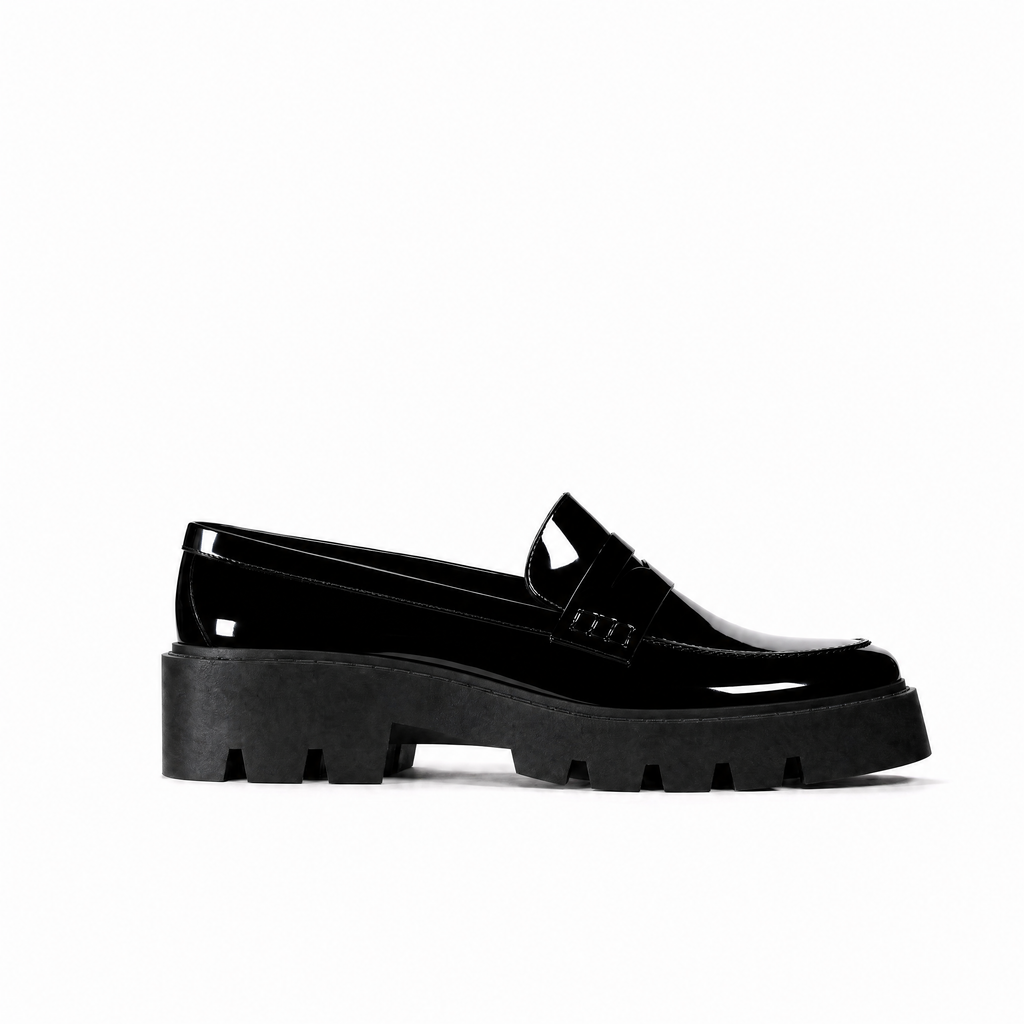
| Platform lug | Chunky stack; check actual tread depth separately | Rubber or EVA | Streetwear, fashion boots | Trend-dependent, weight and comfort issues |
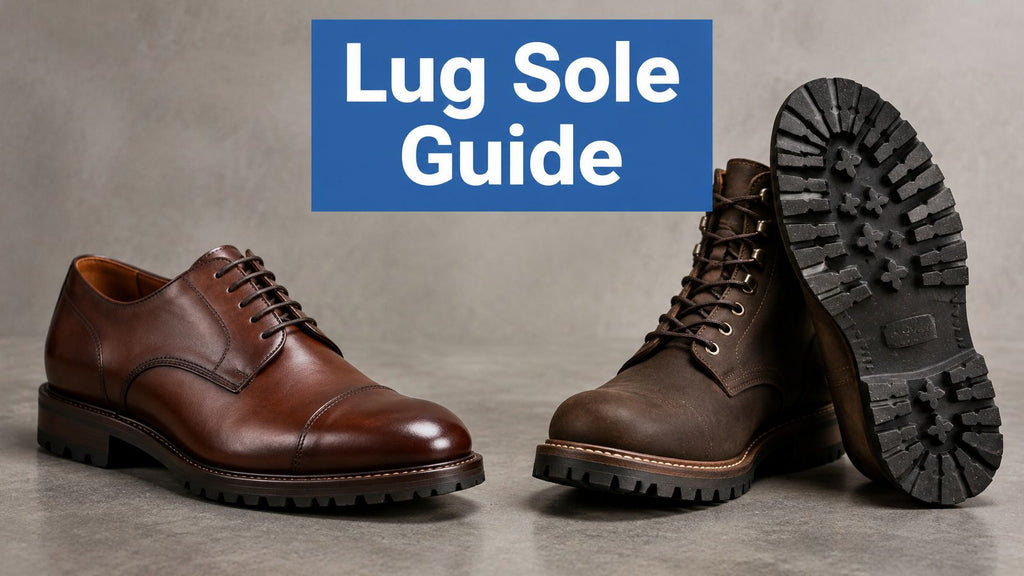
A lug sole is a raised, block-like tread moulded into the outsole that bites into the ground. The blocks are the lugs; the empty spaces between them are the channels or voids.
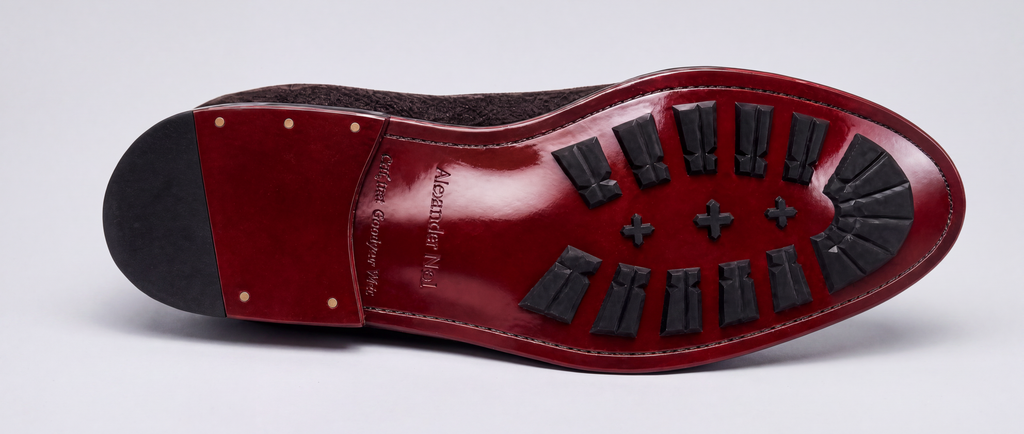
lug depth isn't total sole height. A platform can look substantial from the side while having relatively shallow tread underneath, so ask to see both the side profile and the bottom of the shoe.
Translate the outsole into a walking day
A low-profile city lug suits the person whose commute ends at a desk rather than a trailhead. It gives a dress shoe an outdoor-ready underside without making the outsole the most noticeable part of the outfit. TPR means thermoplastic rubber, a material category worth asking about rather than treating every rubber-looking sole as identical.
A dress-casual cupsole makes more sense when your wardrobe centres on chinos, relaxed tailoring and leather sneakers. Check how the raised cup wraps around the upper, because that sidewall can look sportier than the tread itself.
A commando-style sole is a more assertive choice for boots and substantial shoes. It can suit rougher routes, but a wide, projecting tread needs enough visual weight in the upper to look balanced.
Hiking-style lugs belong on shoes selected for soft ground first. A platform lug, by contrast, is primarily a silhouette decision: buy it because you want that proportion, not because its height proves technical performance.
Practical rule: Choose the least aggressive outsole that handles your normal route comfortably. Keep specialist footwear for genuinely specialist ground.
Start with your routine
Grip comes from depth, outsole material and tread pattern together. Deeper lugs generally suit loose dirt and mud, while shallower patterns feel smoother underfoot on hard surfaces; extra rubber also means extra weight.
Before choosing, answer these questions:
- Where do you walk most? Name the surface, not just the city or climate.
- How many hours do you stand? Consider the working day, not only the commute.
- How often do you dress formally? Buy for the clothes you wear regularly, rather than an occasional weekend outfit.
Where Lug Soles Came From and Why They Last
In 1937, Italian mountaineer Vitale Bramani introduced the Vibram Carrarmato, the company's first signature alpine outsole, according to Vibram's history. Carrarmato means “tank tread” in Italian, a reference to its deep, block-like rubber pattern.
The underside of a hiking boot makes that functional ancestry easy to recognize.
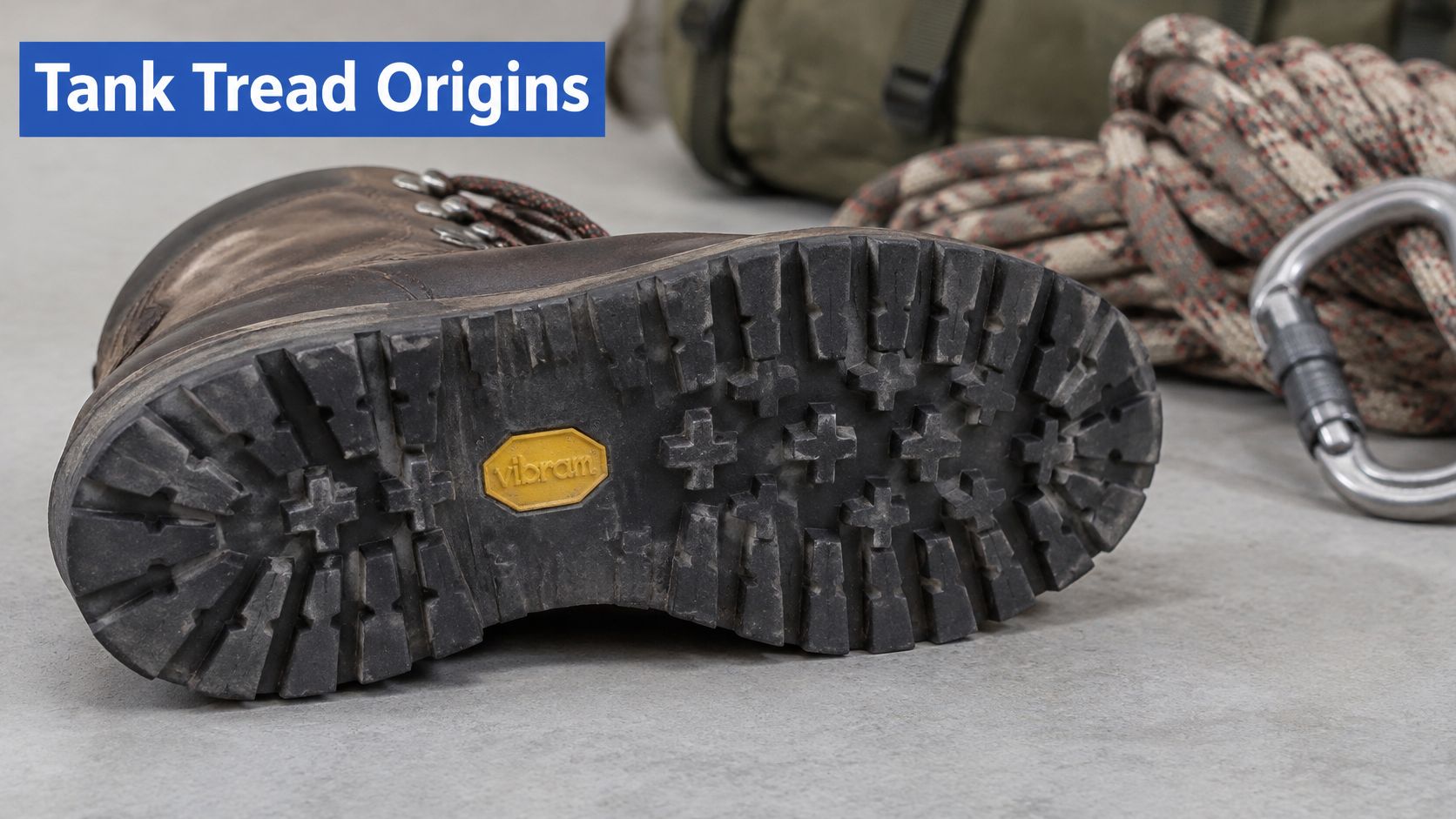
The design replaced leather soles fitted with hobnails or steel cleats with vulcanized rubber and a tread intended to deliver traction and abrasion resistance. Vibram also records that the Italian expedition achieving the first ascent of K2 in 1954 wore boots equipped with its soles.
Lugged rubber subsequently found its way into hiking boots, work boots, military footwear, fashion boots, loafers and sneakers. The move into dressier footwear changed the styling possibilities, but it didn't remove the original engineering questions.
For a closer look at the footwear context, watch the accompanying video.
Buy the function, not the resemblance. A sole that looks mountaineering-inspired still needs an appropriate compound, useful tread geometry and sound construction for your particular use.
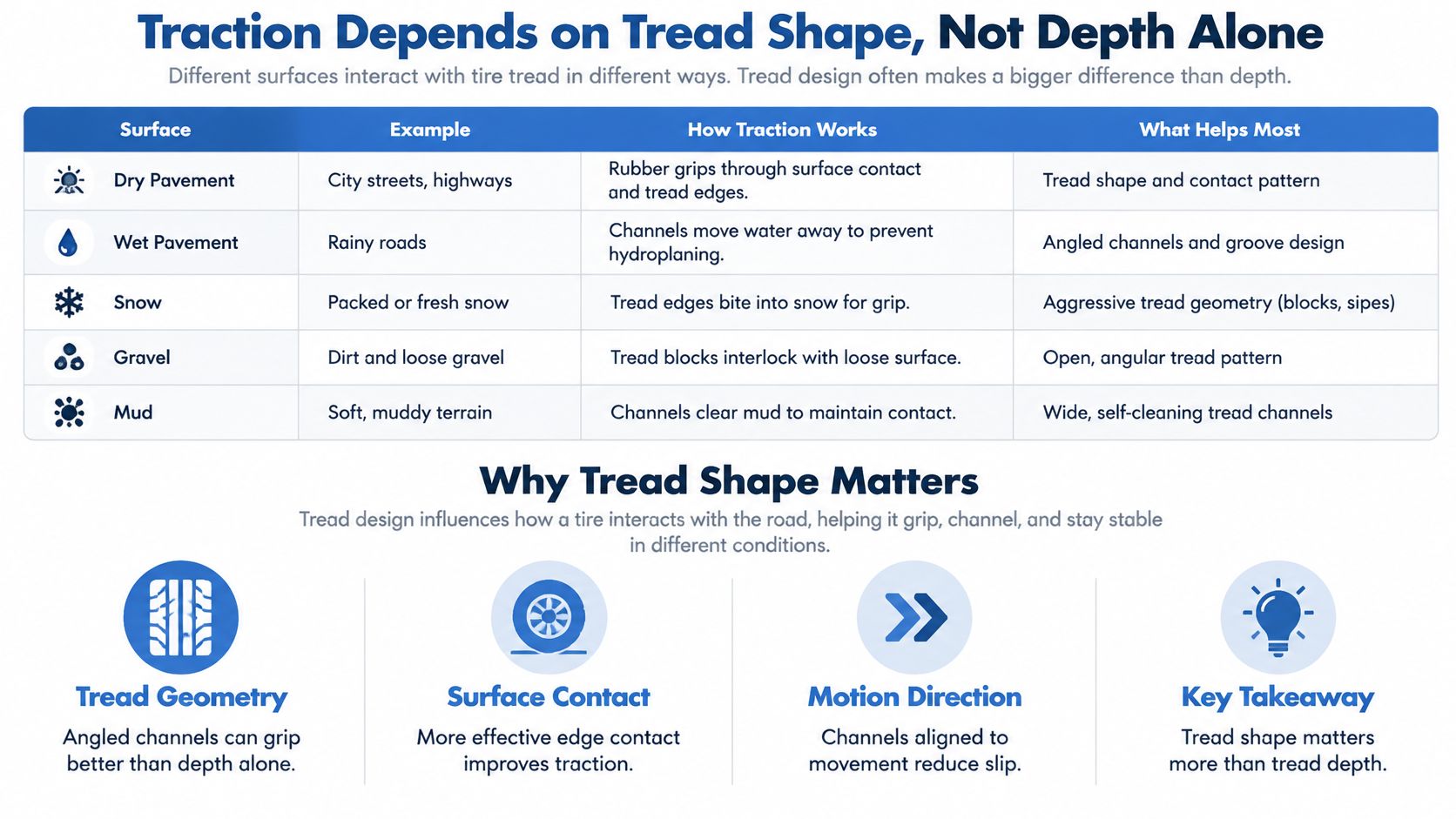
Traction Depends on Tread Shape, Not Depth Alone
Tread choice by walking surface
| Walking surface | Lug geometry to favour | Why it works |
|---|---|---|
| Polished office floors | Small, moderately spaced lugs with continuous contact | Broad contact area gives stable footing |
| Wet pavement and tiles | Angled or multidirectional lugs with clear drainage channels | Shear edges resist slip; test on wet surfaces |
| Dry city streets and stairs | Low, small lugs in a resilient compound | Limits unnecessary bulk while retaining useful contact |
| Gravel and loose dirt | Deeper, widely spaced lugs | Bites into loose material and sheds debris |
| Mud and soft ground | Deep, widely spaced lugs with open voids | Penetrates soil and allows it to clear from the sole |
| Mixed business travel | Moderate lugs with a flexible forefoot | Balances indoor walking with streets and changing weather |
A footwear-friction study published in Tribology in Industry found that tread channels angled relative to the direction of movement generated a higher available coefficient of friction, or ACOF, than horizontal patterns, while small lug designs combined relatively high ACOF with greater wear resistance. That finding concerns the tested designs and conditions, not every outsole carrying an angled pattern.
Why direction matters
When your foot lands, brakes and pushes away, it loads the outsole in different directions. Angled and multidirectional lugs provide edges that can resist forward and sideways movement, whereas parallel channels can offer fewer useful braking edges under some loads.
Think of the tread as a working arrangement of contact patches, not a collection of decorative blocks. Lug orientation, void layout and compound must work together. Deep channels don't compensate automatically for a material that performs poorly on the surface you're crossing.
On hard flooring, the outsole also needs a stable platform of contact. Widely separated, tall blocks can feel less settled than a moderately lugged pattern, particularly when you turn or transfer weight toward the outside of the foot.
Wet surfaces need separate evidence
A wet sidewalk, polished tile and a floor contaminated with oil aren't interchangeable test conditions. Ask what surface and contaminant any slip-resistance claim refers to; an aggressive-looking tread is not evidence of dependable friction everywhere.
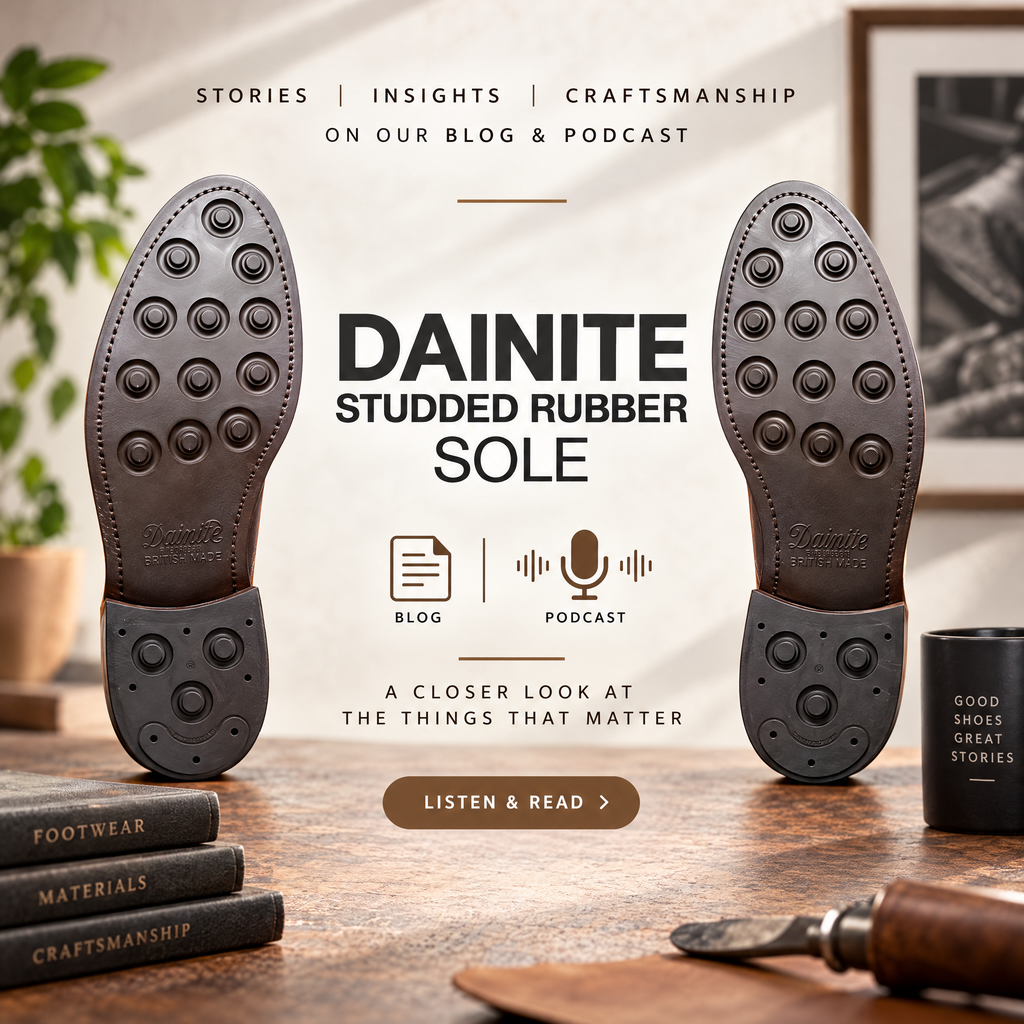
For a dress-shoe alternative, compare the contact layout described in this guide to Dainite studded rubber soles for Goodyear-welted shoes. A studded sole offers a useful comparison when you want rubber underfoot without an overtly outdoor tread.
A normal fitting can reveal wobble, stiffness and awkward transitions. It cannot certify slip resistance on a wet or contaminated floor.
Use these checks during a fitting:
- Walk on a smooth floor. Take ordinary steps and turn gently; don't deliberately provoke a slip.
- Inspect the underside. Look for useful edges in more than one direction and channels that aren't obstructed.
- Stand on firm, flat ground. Notice rocking, isolated pressure beneath individual blocks or a tendency to roll outward.
If the shoe feels unstable indoors, don't assume the tread will become more suitable after break-in.
Wearing Lug Soles to Work Without Looking Casual
Lug sole spec by dress-code setting
Use these as styling targets rather than formal dress-code standards. Outsole height here means the visible rubber profile, not the depth of each lug.
| Dress code | Outsole height | Tread and welt | Leather and colour | Verdict |
|---|---|---|---|---|
| Conservative office | Under 10 mm rubber | Low continuous tread, slim or hidden welt | Black or dark brown polished calf | Lug only if discreet |
| Business-casual workplace | 10-15 mm | Moderate directional lugs, welt optional | Brown, cognac, grained leather or suede | Works well |
| Business travel | Low-to-moderate profile without a platform | Moderate lugs, flexible forefoot | Mid-tone leather with water-resistant finish | Practical for airports and rain |
| Evening or social | Under 8 mm | Minimal tread, slim profile | Black or oxblood, low-sheen leather | Avoid visible lugs |
| Weekend city | 15-25 mm | Visible, bold lugs | Any, including suede or nubuck | Streetwear, not formal |
Lug soles aren't automatically casual. The side profile determines much of what someone sees across a meeting table: a low-profile lug can preserve a formal silhouette, while an oversized platform moves the shoe toward streetwear.
Judge the whole outline
Compare outsole height, welt visibility, tread aggressiveness and toe shape together. A narrow sole edge beneath an almond-shaped Oxford reads differently from a projecting welt beneath a broad, rounded toe, even when both use black leather.
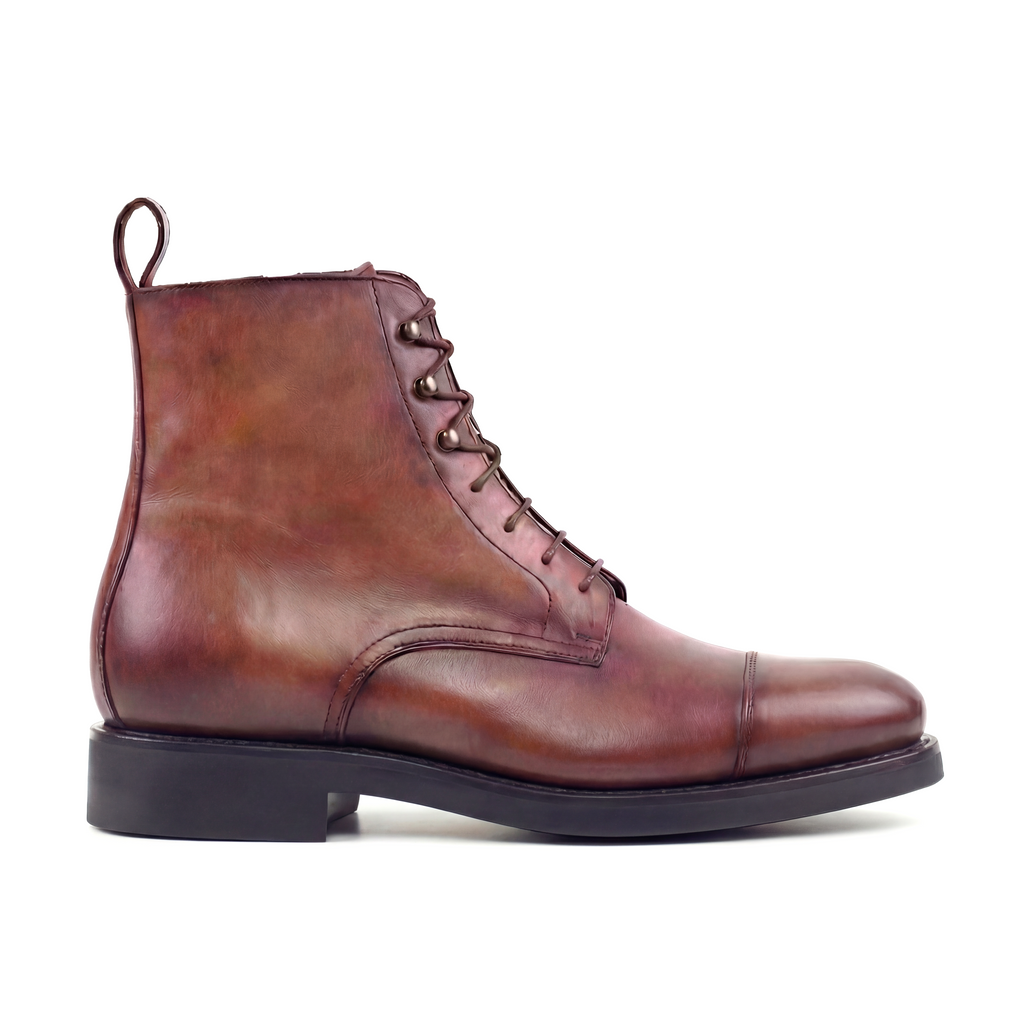
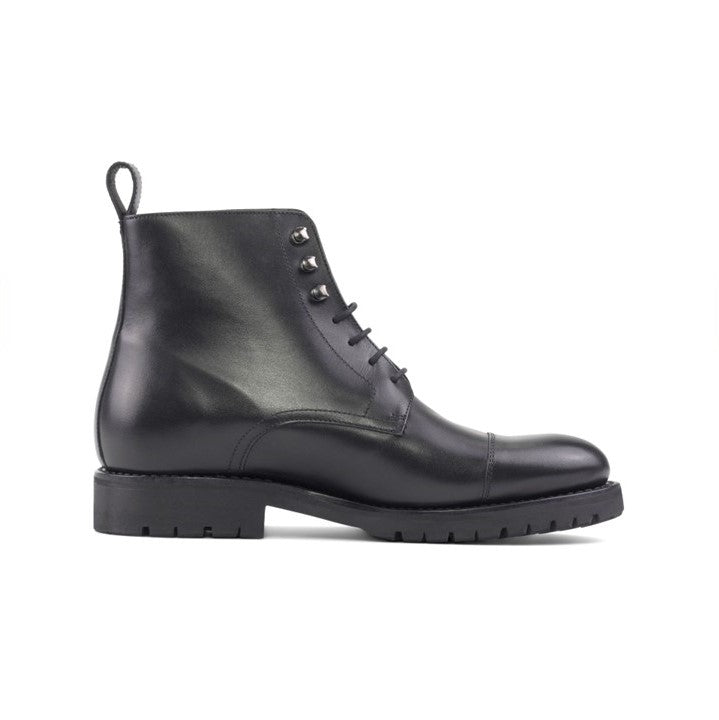
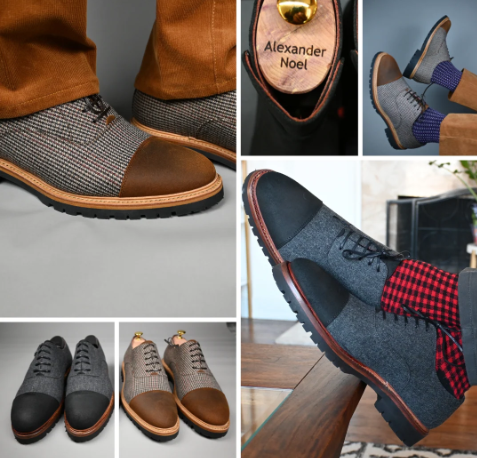
The Langston, a toe-cap Oxford with a black rubber commando sole, is a useful example of that dress-upper and rugged-outsole combination. Assess whether the visible tread suits your workplace rather than assuming the Oxford upper makes the entire shoe formal.
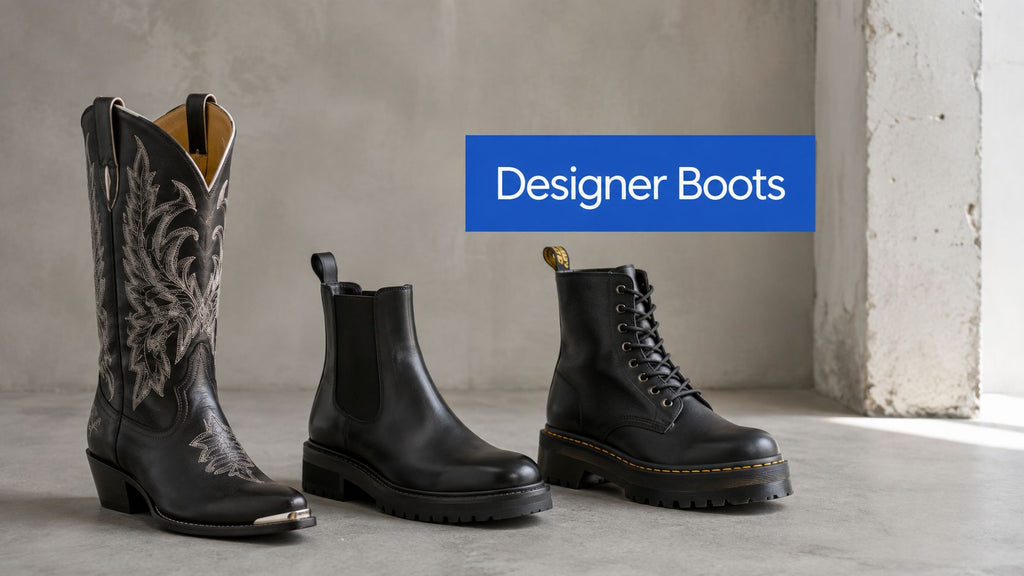
For boots, the same proportion test applies. This guide to styling work boots offers a relevant starting point when your wardrobe leans toward textured trousers and substantial outerwear.
Comfort belongs in the dress-code decision
Independent REI guidance on choosing hiking shoes explains that grip involves lug depth, outsole material and tread pattern, with deeper lugs better suited to loose terrain and shallower lugs smoother on pavement. For an office buyer, that makes an outdoor-looking sole a choice to examine, not an automatic upgrade.
Check weight and heel-to-toe flex before settling on the silhouette. A shoe that looks appropriate but makes you fight the forefoot at every step is a poor working-day specification.
AlixPartners' footwear survey report discusses demand for versatility and durability alongside concerns about chunky-platform fatigue and shoe weight. A restrained lug is the more defensible long-term wardrobe choice when you don't specifically want a fashion platform.
Finish the outfit with straightforward rules:
- Use a low lug with slim suit trousers. Keep the sole edge subordinate to the tailoring.
- Avoid high lugs with formal wool. Save pronounced tread for heavier, more casual fabrics.
- Coordinate leather and belt colour. Keep black with black, or brown tones reasonably close.
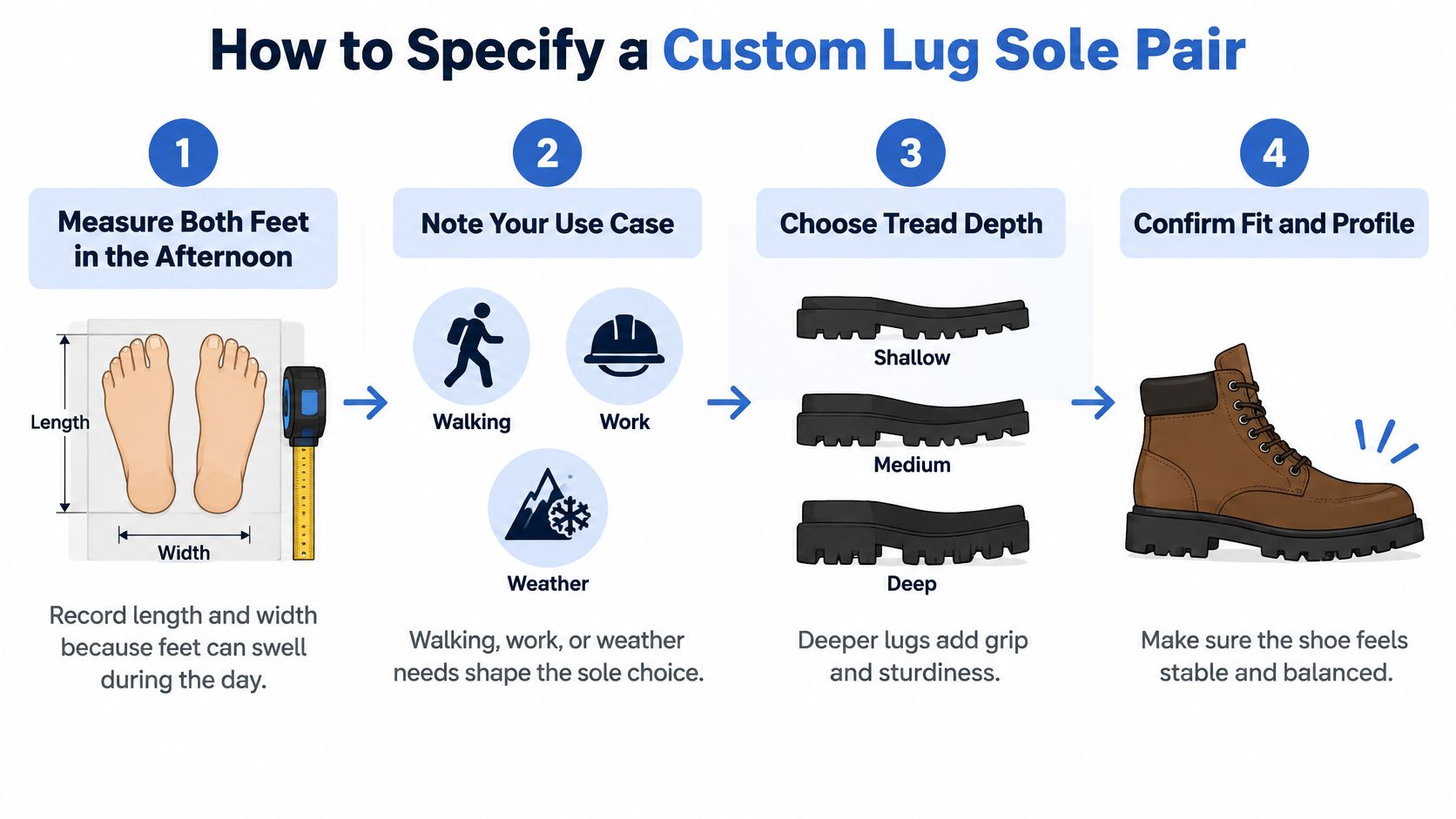
How to Specify a Custom Lug Sole Pair
A made-to-order pair earns its price when fit, outsole function and appearance are decided together; picking an unusual colour is the smallest part of the order. The Alexander Noel Design Lab lets you configure materials and styling through a direct-to-consumer model, with production handled by artisan partners in Italy, Portugal, Spain and India.
Start with a written specification rather than a mood board. The shoe-design guide gives you a structure for recording choices before you confirm a build.
Turn your requirements into build decisions
- Measure both feet in the afternoon. Wearing your intended socks, stand on paper and have someone mark heel-to-toe length and the widest forefoot points, then measure with a ruler. Feet swell during the day, so an early-morning measurement alone is a weak basis for an order.
- Compare length with the relevant size chart and record width separately. Use the chart supplied for the particular construction rather than converting from a familiar sneaker size. Note any difference between your feet, and don't reduce a longer foot's allowance to make the smaller foot feel snug.
- Choose width using measurements, not your usual label. A 2026 study of 107 Australian women found that 72% wore a size different from their measured foot length under U.S. sizing, with joint-girth differences reaching 40 mm among people assigned the same nominal size. Your own feet may not follow that pattern, but the spread makes a clear case for assessing forefoot volume instead of trusting length alone.
- Select the outsole for your dominant surface. Specify city lug, dress-casual cupsole, commando or hiking-style tread, then ask for the actual depth and material of the option on offer. The deepest tread is rarely the right one for a pavement commute, so describe your typical day plainly, such as station stairs, wet flagstones and an indoor office, rather than asking for maximum grip.
- Set the heel and welt profile. State whether the finished pair must work with conservative tailoring, business casual or weekend clothing. Request a side-view review so you can judge sole projection, heel proportions and visible welt together.
- Confirm weight and flex in the order, not just on the page. Ask how the selected outsole changes the finished shoe's weight and where the forefoot bends. On a dress last adapted to a heavier sole, the flex point can shift, so the pair should crease where your toes crease without the heel fighting you at each step.
- Review the complete design and confirm the build. Check construction, leather, lining, outsole, width and colour together before approving production. Widths and constructions vary between designs, so ask the maker which options your chosen model supports before you sign off rather than assuming a wide fitting is available across the range.
Confirm what customization can solve
Digital visualization and traditional craftsmanship do different jobs. The rendering shows you how the pair will look; measurement review and fitting determine whether the build suits your feet. Treat the two as separate checkpoints.
Before approval: Send a concise description of pressure points, orthotics and intended socks. A beautiful rendering won't reveal an instep that needs more room.
Keep a copy of the final specification. It gives you a concrete reference if the fitting needs adjustment, and a reorder becomes a refinement rather than a fresh guess.
Keeping Lug Treads Working Longer
Maintenance affects traction as well as appearance. Rounded lug edges reduce the features that help with braking, while packed grit and abrasion debris obstruct the channels that should remain open.
Controlled testing of square tread geometries published in Tribology Online found that a 6 mm tread with 5 mm spacing retained its topographical features through repeated wear cycles, showed the least wear progression and maintained better friction than smaller patterns. That's a finding for the tested geometries, not a universal prescription for a dress shoe.
Clean the working surfaces
Treat the underside as a functional component rather than the part you ignore until resoling.
- Brush out packed debris. After muddy or gritty days, use a stiff nylon brush on the outsole and a blunt wooden pick for lodged stones. Avoid cutting into the rubber with a knife or sharp metal point.
- Remove salt and road grit. Wipe the sole and welt with a damp cloth after wet journeys, then let the shoes dry at room temperature. Keep them away from radiators and direct heat.
- Rotate your pairs. Give damp shoes time to dry and spread your walking across more than one pair. Rotation doesn't make rubber indestructible, but it avoids concentrating every journey on the same outsole.
Keep leather care separate from tread cleaning. Polish belongs on the appropriate upper, not on the contact surface; the shoe-care guide provides a broader routine for the rest of the shoe.
Inspect before the tread looks finished
- Check heels and outer edges. Uneven wear can indicate fit or loading problems, so have the shoe assessed instead of ordering the same sole again. Wear alone doesn't diagnose the cause.
- Watch the lug edges. Plan a resole assessment when the blocks become visibly rounded or the channels lose useful depth. Don't wait until the outsole wears through.
- Ask about repair compatibility. Confirm that the replacement sole suits the construction and intended profile. Not every lug-soled shoe can be resoled in the same way.
Larger, better-supported lugs can preserve their shape, but excessive spacing also sacrifices contact on smooth floors. Long service life means retaining useful geometry, not merely keeping enough rubber attached to the shoe.
Confirm the Lug Spec Before You Order
The right lug sole is the one matched to your main surface, and a custom order is the moment to get that match right rather than defaulting to the deepest tread on the menu.
Match the outsole to the job the pair must do:
- Office-first buyers: specify a low-profile city lug and a discreet welt.
- Mixed city and travel buyers: favour a moderate tread with a flexible forefoot.
- Rain-heavy or rural buyers: choose deeper lugs for loose or soft ground and accept the extra weight; depth alone proves nothing about wet-floor grip.
- Weekend-only buyers: pick a bolder outsole if it suits your clothes and feels balanced underfoot.
Start a custom pair in the Design Lab with your main walking surface already decided, then confirm the outsole, width and construction options together before you commit. The stated made-to-order turnaround is 48 hours to 10 business days, so check your pair's production timing before relying on it for a trip or event. When the shoes arrive, use the at-home fitting system and report any pressure or movement instead of assuming customization guarantees the fit.
Name your main walking surface and your dress code, and the spec writes itself.
Alexander Noel builds custom footwear with artisan construction and choices in materials, styling and fit. Visit Alexander Noel to explore the Design Lab and discuss a lug-soled pair matched to your working week, rather than choosing the chunkiest tread.
Related post
07
Nov
24
Oct
04
Oct
04
Oct
26
Sep
